

A massage chair can sit comfortably in the living room without taking it over. The best massage chair in living room ideas begin with a quiet corner near a power point, where the chair can recline without blocking a doorway, sofa or walkway. Leave 5–15 cm of space behind it, and allow enough room for its full movement.
It’s understandable to worry that a massage chair will feel bulky or out of place beside your existing furniture. Thoughtful positioning and a few considered styling choices can help it feel like a natural part of the room while keeping the space easy to move through.
In this guide, you’ll learn how to choose a practical spot, coordinate the chair with your lounge décor and adapt the layout for a smaller living room. You’ll also find simple ways to create a soothing relaxation corner, so the chair fits your daily routine and your home.
Key Takeaways
- Choose a calm, accessible spot where the chair can recline without blocking a doorway, sofa or walkway.
- Coordinate the chair’s colour with your existing palette, then use a lamp, rug or soft furnishings to make the area feel intentional.
- In a smaller lounge, plan around the chair’s full movement and keep the layout open rather than crowding it with extra furniture.
- Use a showroom demonstration to experience a chair in person before deciding how it could fit into your home.
1. Where Should You Place Your Massage Chair at Home?
For practical massage chair in living room ideas, start with a quiet, accessible spot near an electrical outlet. A corner beside a reading lamp can create a calm retreat, while a position near the television may suit evening relaxation. Keep the chair clear of the sofa, doorways and main walking routes, including when fully reclined.
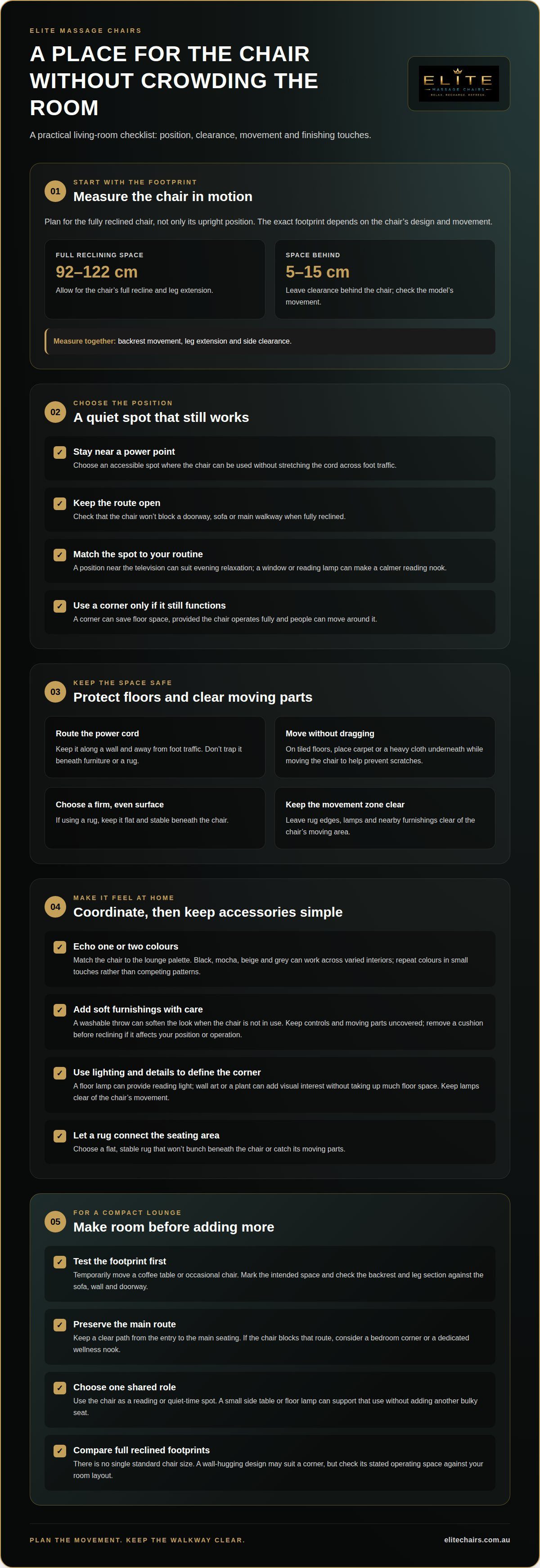
Allow 92-122 cm for the chair’s full reclining space, plus 5-15 cm behind it. The exact footprint depends on its design and movement, so consider the backrest, leg extension and side clearance together. A corner can save floor space, provided the chair still operates fully and people can move around it.
Massage chair prices in Australia vary by model and features, so there’s no single standard cost. When comparing options, focus on what matters for your home and how you plan to use the chair.
Match the upholstery to your lounge’s existing palette. Black, mocha, beige and grey can work across varied interiors, while cream, taupe or light brown may suit a softer, warmer scheme. For an organic modern look, pair a neutral chair with timber, textured fabrics and rounded furniture. A plant or side table can help the chair feel like a deliberate part of the room.
Avoid placing the chair in the middle of a walkway or squeezing it between a doorway and the sofa. Route its power cord along a wall, away from foot traffic, and don’t trap it beneath furniture or a rug. These massage chair in living room ideas keep the area functional as well as restful.
Chair weight varies by model, so there’s no single figure that applies to every chair. On tiled floors, place carpet or a heavy cloth underneath while moving it to help prevent scratches. Don’t drag the chair directly across the floor.
2. Accessorising with blankets, lamps, art and rugs
Build a calm corner around one or two repeated colours. For example, echo a mocha chair with a rust cushion or artwork featuring warm brown tones. If the chair is beige, a cream throw and timber side table can connect it with a neutral sofa. Repeat colours in small touches rather than adding several competing patterns.
A throw blanket can soften the chair’s appearance when it’s not in use. Choose a washable fabric that complements the sofa, and drape it over the back without covering controls or moving parts. A small cushion can add comfort, but remove it before reclining if it affects your position or the chair’s operation.
Use lighting to distinguish the relaxation area from the rest of the lounge. A floor lamp beside the chair provides focused light for reading, while a table lamp creates a softer pool of light nearby. In the evening, dimmable or indirect lighting can feel gentler than a bright ceiling fixture. Keep lamps clear of the chair’s movement.
Wall art and indoor plants add visual interest without taking up much floor space. A calming landscape above a side table, for instance, gives the corner a clear focal point. A rug can visually connect the chair to the sofa and define the seating area; choose a flat, stable style that won’t bunch beneath the chair.
Choose a firm, even surface for a heavy massage chair, with any rug lying flat beneath it. On tiled floors, place carpet or a heavy cloth underneath while moving the chair to help prevent scratches. Avoid dragging it across the floor, and keep rug edges clear of the chair’s moving area.
For a finishing touch, explore massage chair accessories that complement your lounge and support everyday comfort.
3. Adapting massage-chair placement for small living rooms
In a compact lounge, treat the chair as a working seat, not an extra decorative piece. The planning allowance in the room is 92-122 cm, but the chair’s exact footprint depends on its design and recline movement. Measure the intended spot and consider how far the footrest extends before shifting other furniture. A wall-hugging design can suit a corner because it needs less room to recline.
Start by temporarily moving a coffee table or occasional chair. Mark the massage chair’s footprint, then allow its backrest and leg section to move without hitting the sofa, wall or doorway. Keep a clear route from the entry to the main seating. If the only position blocks that route, try a bedroom corner or a dedicated wellness nook instead.
Choose one piece of furniture to share the chair’s role. It might be a reading seat beside a bookshelf or a quiet-time spot near a window. A small side table can hold a book, while a floor lamp adds reading light without requiring another bulky seat. Avoid crowding the area with extra stools, baskets or a large plant.
To make the room feel more open, use light-coloured paint or a mirror to reduce the visual weight of large furniture. Keep the chair’s surrounding palette simple, then repeat one colour in a cushion or artwork. A compact rug can define the relaxation zone, provided it lies flat and stays clear of moving parts.
There isn’t one standard chair size for every Australian living room. Choose a model based on its full reclined footprint and the space available around it, not just how it looks upright.
Australian specialist massage-chair retailers are the relevant source for compact or space-saving options. Look for descriptions such as wall-hugging, then compare the stated operating space with your room layout before deciding.
There is no single standard size; allow roughly 92–122 cm and check that the chair’s full reclined footprint fits with room for movement and clear access.
4. Placing a massage chair in the living room
Place the chair where relaxation fits naturally into your lounge routine. A position near the television suits evening unwinding, while a spot beside a window can create a brighter reading nook. If you prefer quiet, choose a calmer edge of the room, away from the main conversation area. The best location balances easy access with a peaceful feel.
Use the room’s existing furniture as a guide. Set the chair beside the sofa if you want it to feel part of the main seating arrangement. For a separate retreat, place it near a bookshelf with a floor lamp and small table. Keep the centre of the room open, so people don’t have to walk directly past the chair while it’s in use.
Before placing the chair, consider how it moves when fully reclined. Check the backrest, leg extension and side clearance against nearby furniture, then make sure the chair won’t hit a wall or block a doorway. A corner can work well, but only if the chair can operate fully and people can still walk around it.
Plan the power connection as part of the layout. Choose a position near an electrical outlet and route the cord along the wall, away from foot traffic. Don’t run it across a doorway or underneath a loose rug. In a multi-purpose lounge, make sure the chair can recline without interrupting access to the sofa, television or work area.
Create a considered focal point by pairing the chair with one simple feature, such as a floor lamp, side table or small plant. A reading setup might include a bookshelf and warm light; an evening relaxation corner could have a table for a book or remote. Keep accessories outside the chair’s moving space.
To picture how a chair could work in your lounge, explore massage chair options and consider the room’s layout alongside the chair’s full movement.
Elite Massage Chairs: Massage Chair Showroom Demos
Once you’ve considered how a chair could fit your lounge, a showroom demonstration at Elite Massage Chairs is a practical next step. Trying a chair in person lets you experience its feel and movement, helping you consider how it may suit your comfort preferences and home layout.
Explore Zero Gravity Massage Chairs if that style is on your shortlist, and consider Massage Accessories for added comfort. A showroom demonstration can help you move from room-planning ideas to a more informed decision about the chair you’ll use at home.
For a relaxed way to explore your options, book a showroom demonstration with Elite Massage Chairs.
Make room for a more restorative routine
Let your living room support a moment of calm you can return to. Massage chair in living room ideas are most useful when they reflect how you spend time at home, whether you’re unwinding after work, enjoying a quiet read or taking a pause between daily tasks. Treat the chair as part of a personal wellbeing routine, not simply another piece of furniture.
As you settle on a layout, picture the room at different times of day. Consider where you naturally gravitate in the evening, what makes the space feel restful and which small details help you switch off. Those preferences can guide a choice that feels at home in your lounge and suits your routine. If you’re ready to take the next step, start a conversation with Elite Massage Chairs. Your relaxation space can begin with one thoughtful decision.
Frequently Asked Questions
Where Should You Place Your Massage Chair at Home?
Choose a location that suits how you’ll use the chair, such as a reading corner or a quieter part of the lounge. In an open-plan home, position it so the relaxation area feels distinct from dining or work zones. Consider your daily routine too: a chair near the spot where you unwind after work may be more useful than one tucked away.
How can you make a massage chair blend with living room decor?
Make the chair feel connected to the room by repeating a detail elsewhere. For example, echo its upholstery colour in a cushion, artwork or ceramic vase. Balance its substantial shape with softer forms, such as a rounded side table or leafy indoor plant. Keep nearby surfaces uncluttered, so the chair feels like a considered feature rather than another item competing for attention.
What massage chair styles and colours suit modern Australian living rooms?
For a contemporary lounge, a streamlined chair in a restrained neutral palette can sit comfortably alongside timber, textured fabrics and simple furnishings. Choose a look that suits your existing scheme: warm tones pair naturally with earthy finishes, while cooler neutrals work with crisp, pared-back interiors. A single accent colour in a cushion or artwork can bring the arrangement together without making the chair dominate.
What should you consider before buying a massage chair for a small living room?
Consider the room’s usable floor area, not just the empty corner where the chair might go. Sketch the lounge layout or mark the proposed position on the floor, then account for doors, drawers and furniture people use every day. Think about whether the chair will serve another purpose, such as a reading seat. If no arrangement keeps the room functional, consider another room or a dedicated nook.


