

Could fewer trips to the physio still support your progress? Sometimes, yes. The safest alternatives to frequent physiotherapy sessions are usually ways to follow a clinician-guided plan between appointments, not substitutes chosen in isolation.
It’s understandable to want care that fits around work, family and daily commitments, especially when you’re unsure which self-management options suit your condition. But a comforting experience or short-term easing of symptoms doesn’t necessarily mean the underlying problem is improving. Your physiotherapist can help you judge what’s appropriate and when your plan needs a fresh look.
This guide compares five practical options, including prescribed home exercises, remote check-ins and everyday movement strategies, and explains how each may complement your care. It also covers comfort-focused tools, such as a massage chair, as optional ways to unwind, not as physiotherapy or a treatment replacement. You’ll find criteria for building a realistic routine, tracking meaningful progress and seeking professional reassessment if symptoms worsen, change or don’t improve as expected.
Key Takeaways
- Compare alternatives to frequent physiotherapy sessions by purpose, access, clinician involvement and limitations, rather than assuming they’re interchangeable.
- Check that a home exercise plan, group activity or telehealth review suits your needs and supports goals agreed with your physiotherapist.
- Use a simple planning sequence: clarify approved activities, fit them into your routine, monitor symptoms and agree on a review point with your clinician.
- Seek professional reassessment if symptoms worsen, change or leave you uncertain about whether self-management is appropriate.
- A massage chair may offer optional relaxation at home, but it isn’t physiotherapy. Elite Massage Chairs sells equipment, not physiotherapy or professional massage therapy.
Frequent physiotherapy sessions: when should you consider other support?
Fitting regular physiotherapy appointments around work, caring responsibilities and everyday life can be challenging. It’s reasonable to ask whether some support can happen between visits, but fewer appointments aren’t automatically the right choice. Suitable appointment frequency depends on your condition, goals, response to care and any changes in your symptoms.
Think of alternatives to frequent physiotherapy sessions as possible supports or changes to how care is delivered, not automatic replacements for assessment or treatment. Your physiotherapist can help determine whether a home programme, remote review or another option fits your situation.
Complementary self-care can support a care plan, but it can’t replace professional assessment when you need it.
When might a physiotherapy plan be reviewed?
Progress, changing goals and practical barriers are all worth discussing with your treating physiotherapist. For example, you might be moving more comfortably but need guidance on returning to a particular activity. Or appointment times may be difficult to manage alongside work.
Ask what milestones could support spacing visits further apart, and how you’ll check that your plan remains suitable. Improvement is useful information, but it doesn’t automatically mean you’re ready to stop care. Agree on how progress will be reviewed and what would prompt another appointment.
What should not be treated as a replacement?
A massage chair or another source of relaxation may feel comforting, but temporary relief doesn’t establish the cause of pain or show whether an injury is improving. A device can’t assess how you move, diagnose an injury or tailor clinical rehabilitation to your needs. Treat it as optional comfort, not a substitute for advice from a health professional.
Seek prompt professional advice if symptoms are new, worsening or concerning. In particular, sudden loss of bladder or bowel control, numbness around the inner thighs or genital area, or rapidly worsening weakness with back pain needs urgent medical assessment. If you think you may be experiencing a medical emergency in Australia, call 000.
If you’re unsure whether an option is appropriate, check with your physiotherapist or another qualified health professional before changing your care. A clear conversation can help you find support that fits your routine while keeping sight of the clinical guidance your recovery may need.
Alternatives to frequent physiotherapy sessions: compare support options
The right support depends on your diagnosis, how you’re functioning, what you can access and your treating clinician’s advice. Some options are part of clinical care; others offer general movement or comfort. Before changing your routine, consider what each option is designed to do and who will guide you.
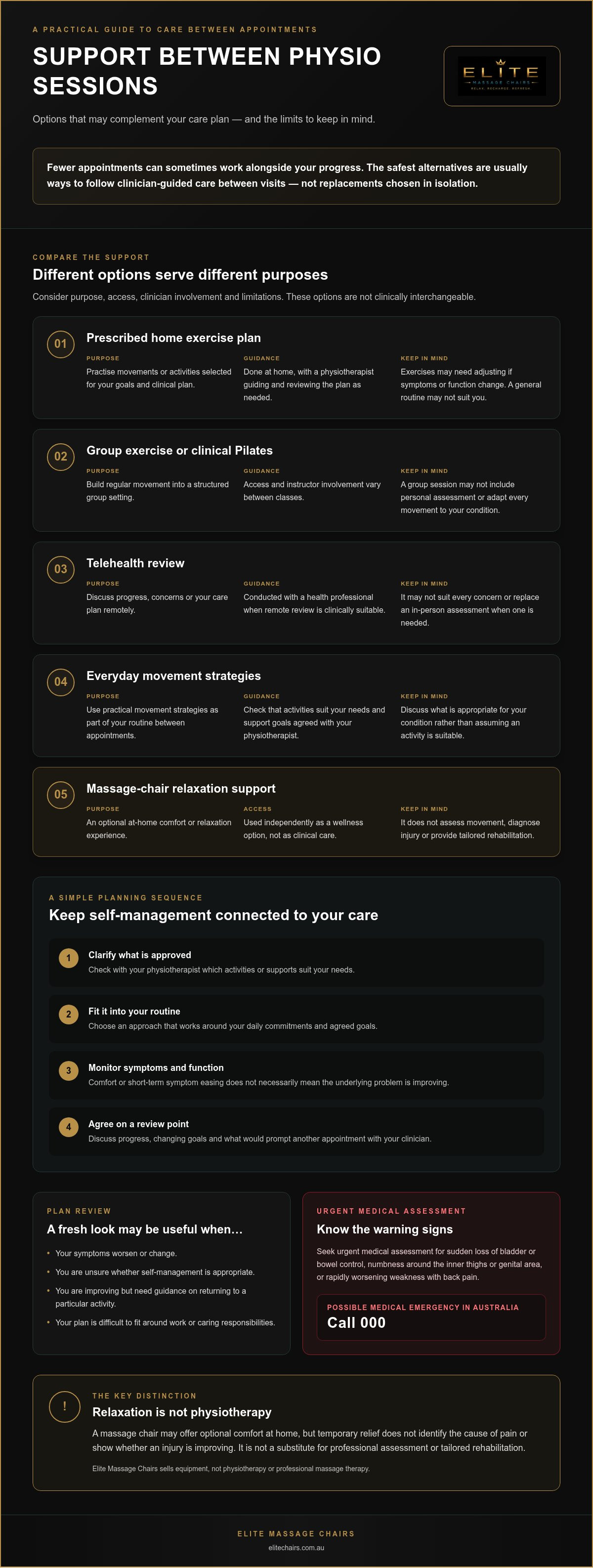
These options differ in purpose; they aren’t clinically interchangeable.
| Option | Purpose | Access and clinician involvement | Important limitation |
|---|---|---|---|
| Prescribed home exercise plan | Practise movements or activities selected for your goals and adapted to your clinical plan. | Done at home, with a physiotherapist providing guidance and reviewing the plan as needed. | Exercises may need adjusting if symptoms or function change. Don’t assume a general routine is suitable. |
| Group exercise or clinical Pilates | Build regular movement into a structured group setting. | Access varies by class. Some formats have an instructor, but individual clinical input can differ. | A group session may not include a personal assessment or adapt every movement to your condition. |
| Telehealth review | Discuss progress, concerns or a care plan remotely. | Conducted with a health professional when remote review is clinically suitable. | It may not suit every concern or replace an in-person assessment when one is needed. |
| Massage-chair relaxation support | Offer an at-home comfort or relaxation experience. | Used independently as a wellness option, not as clinical care. | It doesn’t assess movement, diagnose an injury or provide tailored rehabilitation. |
Home exercise, group exercise and clinical Pilates
A home programme is most relevant when its activities have been selected or adapted to your needs as part of your care. Group exercise, including clinical Pilates, can offer structure and a regular routine, but the level of individual assessment and supervision varies. Before joining a class or changing your exercises, check suitability with your physiotherapist, particularly after an injury or surgery.
Telehealth and at-home comfort options
A telehealth appointment may help you review progress or discuss your plan without travelling, provided your clinician considers remote care appropriate. It remains a clinical conversation, unlike a wellness product. A massage chair may be an optional source of comfort, but it isn’t rehabilitation or treatment. If you’re exploring this kind of relaxation support, read about massage chair options for home, and discuss any concerns about its suitability with your clinician.
There’s no single right choice for everyone. Ask whether an option supports the goals agreed with your physiotherapist, what guidance is available and how you’ll know when your plan needs review.
How to choose an alternative without compromising your care
A useful alternative should fit your clinical goals, not just your calendar or preference. Before changing your routine, use this checklist to consider whether the option:
- Has a clear purpose: Does it support a goal agreed with your physiotherapist, or is it a separate wellness activity?
- Suits you individually: Is it appropriate for your diagnosis, current function and any other health considerations?
- Offers the right supervision: Can you get guidance or adjustments if you’re unsure how to do an activity?
- Is accessible: Can you realistically manage the location, format, equipment and time commitment?
- Includes a review point: How will you decide whether it’s helping, needs adapting or should be stopped?
Ask the provider directly about fees, eligibility and any conditions that apply. Medicare or private health cover depends on current eligibility and your individual circumstances, so check with Medicare, your insurer or the relevant provider before relying on a rebate. Don’t assume a group class, telehealth appointment or wellness product is covered.
Questions to ask your physiotherapist
A focused conversation can clarify what’s suitable to do independently and what needs supervision. Ask which activities you can continue between appointments, what progress measures matter for your goals, and what symptoms or changes in function should prompt a review. If you’re considering an option outside your current plan, explain what it involves and ask whether it fits.
Agree on what to do if your symptoms change or the option doesn’t feel suitable. That gives you a clear next step rather than leaving you to make a rushed decision on your own.
Signs an option may not suit your situation
Arrange a professional reassessment if symptoms worsen, your function declines or progress isn’t matching what you and your clinician expected. A wellness product may feel soothing, but temporary comfort alone isn’t a reason to stop prescribed care or assume the underlying issue has resolved.
For equipment or a new activity, check fit and safe use, and raise individual health considerations with an appropriate professional. The aim isn’t to rule out every alternative; it’s to choose support that complements your plan and allows for review if your needs change.
Build a practical between-session routine with professional guidance
A useful routine is one you can follow consistently and adapt with your physiotherapist’s input. Rather than treating alternatives to frequent physiotherapy sessions as a reason to manage everything alone, use this planning sequence to prepare for a conversation about what belongs between appointments.
- Write down the agreed activities. Note what your clinician has recommended, including any modifications and which activities need supervision.
- Fit the plan to your week. Consider work, caring responsibilities and daily routines. Discuss a realistic way to make room for the agreed activities rather than aiming for a schedule you’re unlikely to maintain.
- Monitor relevant changes. Keep brief notes on symptoms and everyday function, such as whether a usual task feels easier or more difficult. A single day doesn’t tell the whole story.
- Set a review point. Ask when to check progress with your physiotherapist and what changes should prompt earlier advice.
- Bring questions to your next appointment. Record what you’ve noticed, what you found difficult and anything you’re unsure about.
Create a manageable home-support plan
Keep the written plan clear: agreed activities, the frequency your clinician recommends, any modifications, and who to contact if you have concerns. Make it achievable around the shape of your real life. Don’t add strenuous activities or substantially change the plan without checking whether they’re suitable for you. This is a prompt for discussion, not a set of exercises or dosage instructions.
Review progress and adjust thoughtfully
Track function and goals that matter to you alongside symptoms. For instance, you might note how everyday tasks are going, then discuss what you’ve noticed with your physiotherapist before changing the plan. Ask when to review, adapt or stop an activity, especially if symptoms change or the routine feels unsuitable.
If relaxation support is part of your personal wellbeing routine, keep it distinct from rehabilitation. A massage chair may offer optional comfort, but it doesn’t replace your clinician-approved activity plan. To explore this kind of at-home wellness support, explore massage chairs and consider whether the option fits your preferences and broader care routine.
Massage chairs as an optional complement, not a physiotherapy replacement
A massage chair may be an optional way to enjoy at-home comfort and relaxation alongside a clinician-guided care plan. It isn’t an alternative to frequent physiotherapy sessions that can provide clinical assessment or tailored rehabilitation, and it shouldn’t determine whether you continue or change prescribed care.
What a massage chair can and cannot offer
A chair provides a massage experience for personal comfort. It cannot diagnose the cause of pain, assess how you move or create an individual rehabilitation plan. Feeling relaxed afterwards doesn’t show whether an injury has improved, so keep the chair separate from clinical decisions and check with a qualified health professional if you have concerns about using one.
If you’re comparing styles, a guide to zero-gravity massage chairs can help explain the positioning and features to consider. Think of those features in terms of comfort and preference, not as evidence of a medical benefit. Elite Massage Chairs sells equipment, not physiotherapy or professional massage therapy.
Explore the experience before deciding
Reading about a chair can help you narrow down what matters, but personal comfort is best judged by trying the equipment. If you’re interested, you can book a showroom demonstration to experience a chair and ask questions about its features, fit and safe use. A demonstration can help you consider whether it feels comfortable for you; it can’t establish clinical effectiveness or suitability as treatment.
Before deciding, raise any health or mobility concerns with an appropriate health professional. You can also ask the retailer about purchase details and whether financing is currently available, including the applicable terms. Confirm those details directly rather than assuming they’ll suit your circumstances.
Keep your physiotherapist’s advice at the centre of decisions about your care. If a massage chair feels like a suitable optional comfort feature for your routine, take time to explore it without expecting it to replace assessment or rehabilitation.
Explore massage chairs and arrange a demonstration
Make your next step a considered one
Choosing among alternatives to frequent physiotherapy sessions starts with a conversation, not a calendar change. The right support depends on your condition, goals and progress, so ask your physiotherapist what can be done independently, what needs supervision and when your plan should be reviewed.
A manageable routine can help you stay connected to agreed activities between appointments. Keep track of meaningful changes in everyday function, and raise concerns if symptoms worsen or your plan isn’t progressing as expected. Comfort-focused options may have a place in your wellbeing routine, but they don’t assess your needs or replace clinical care.
If you’re considering an at-home massage chair for relaxation, Elite Massage Chairs is an Australian retailer offering online shopping and showroom demonstrations. Explore current product details and use a demonstration to consider comfort and features for yourself. Explore massage chairs and book a showroom demonstration.
With professional guidance and a routine that fits your life, you can make thoughtful choices while keeping your care on track.
Frequently Asked Questions
Can anything replace regular physiotherapy appointments?
Some parts of care may be managed between appointments, but no single option automatically replaces physiotherapy. A clinician-approved home plan, group activity or suitable telehealth review may complement your care, depending on your condition and goals. Discuss alternatives to frequent physiotherapy sessions with your treating physiotherapist, who can help decide whether fewer visits or a different format is appropriate and when reassessment is needed.
What can I do between physiotherapy sessions?
Follow the activities your physiotherapist has recommended, and check before adding strenuous exercise or changing the plan. You could keep brief notes on symptoms, everyday function and questions for your next appointment. These records can help you discuss what feels manageable and whether anything has changed. If symptoms worsen or you’re concerned, contact a qualified health professional rather than relying on self-management alone.
Can a massage chair replace physiotherapy?
No. A massage chair can offer an at-home massage and relaxation experience, but it can’t assess your movement, diagnose an injury or tailor rehabilitation. Feeling more comfortable temporarily doesn’t confirm that a condition has improved or identify its cause. Treat a chair as an optional wellness feature, not clinical care, and don’t stop or change a physiotherapy plan because of how you feel after using one.
Is telehealth physiotherapy as effective as in-person care?
Telehealth can be suitable for some reviews, but it isn’t the right format for every person or concern. A remote appointment may let you discuss progress and your plan, while an in-person assessment may be needed to examine movement or clarify symptoms. Ask your physiotherapist whether a remote review can meet your needs, what it can cover and what would prompt an in-person appointment.
How do I know if I can reduce my physiotherapy appointments?
Discuss appointment frequency with your treating physiotherapist rather than reducing visits on your own. Ask what milestones would support spacing appointments further apart, how progress will be checked and what symptoms or changes in function should prompt a review. Improvement can be encouraging, but it doesn’t automatically mean care should end. Practical barriers, such as work commitments, are also worth raising so you can explore suitable options together.
Are home exercises enough instead of seeing a physiotherapist?
Home exercises may be an important part of your plan, but whether they’re enough depends on your condition, progress and need for clinical review. Exercises prescribed or adapted by a physiotherapist are different from a general routine found online. Ask which activities you can do independently, what needs supervision and when to check in. Seek professional advice if symptoms worsen, function declines or you’re unsure about an exercise.
Can I use a massage chair if I am receiving physiotherapy?
Possibly, but personal suitability varies, so discuss any concerns with a qualified health professional, particularly if you have an injury, health condition or uncertainty about safe use. A massage chair is optional comfort support, not physiotherapy or a replacement for your clinician’s advice. If you choose to try one, consider whether it feels comfortable and keep following your agreed care plan unless your clinician recommends a change.


