
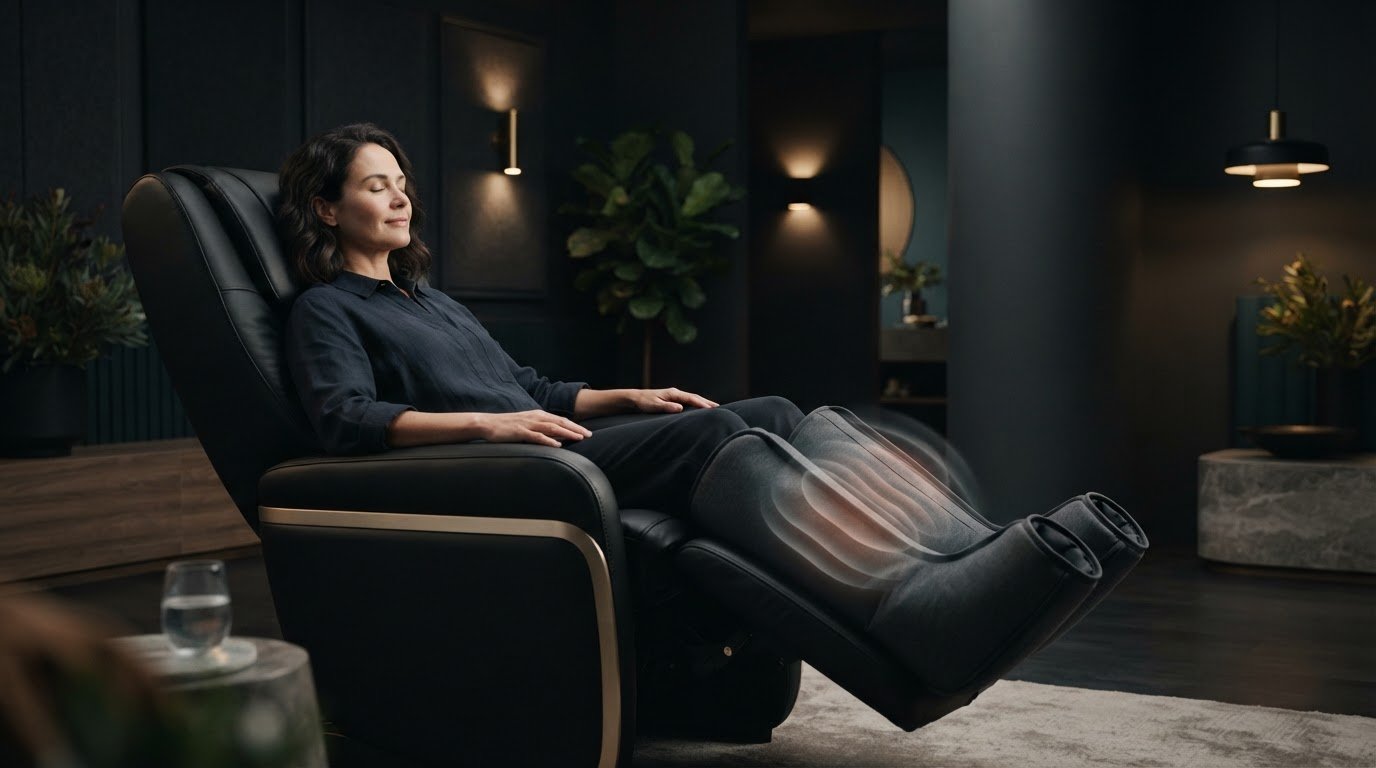
Could a rhythmic squeeze help your legs feel lighter after a long day, without being a medical treatment? If your legs feel tired or tense after sitting or standing for hours, it’s understandable to look for a soothing way to unwind. The air compression massage benefits for legs may include temporary comfort and relaxation, but the experience depends on the device and shouldn’t be mistaken for treatment.
This guide explains how air cells rhythmically apply pressure, what relief you might realistically notice, and how to start gently. It also clarifies an important distinction: air-cell features in some massage chairs are designed for comfort, while medical compression devices are used for specific clinical purposes.
You’ll learn what air compression may and can’t do, how to use it thoughtfully, and when to seek advice from a health professional before trying it. That way, you can approach the experience with realistic expectations and greater confidence.
Key Takeaways
- Air compression massage benefits for legs are best understood as possible temporary comfort and relaxation, not guaranteed results.
- Check which areas a device covers and whether its fit and adjustable settings feel comfortable for you.
- Follow the manufacturer’s instructions, begin gently and stop if the pressure causes discomfort.
- A massage-chair air-cell feature isn’t the same as a prescribed medical compression device; ask a health professional if you have a condition or concerns about using compression.
- Compare confirmed device specifications with your needs, while keeping expectations realistic about what air compression can do.
What Is Air Compression Massage for Legs, and How Does It Feel?
If your legs feel tired or tense after a long stretch of sitting or standing, you might wonder whether a compression feature could offer a more relaxing way to unwind. Air compression massage uses air-filled chambers that rhythmically inflate and release around selected areas of the body, creating a repeated sensation of pressure and relaxation. In a massage chair, it’s a consumer wellness feature; its presence doesn’t mean the chair is a medical compression device or provides medical treatment.
The mechanism is related in broad terms to Intermittent pneumatic compression, a technology also used in medical settings. Similarities in the use of air and pressure don’t make consumer chair features equivalent to prescribed devices, which have different purposes and suitability considerations. That distinction matters when weighing the air compression massage benefits for legs: focus on the experience a chair is designed to provide, not a medical outcome.
How do air cells compress and release the legs?
Air chambers built into selected parts of a chair fill and deflate according to a programmed sequence. Depending on the design and settings, they may gently squeeze and release around areas such as the calves or feet. The sensation is usually a cycle of pressure followed by a pause or release, but how strong or comfortable it feels can vary between people and settings.
This differs from rollers, which move across or press into the body, and from vibration or heat features, which create other sensations. Air-cell compression also isn’t the same as manual massage, where a practitioner adjusts touch and pressure by hand. A chair may combine several features, so check which one is active rather than assuming every kneading or warming sensation comes from air cells.
Which parts of the legs may a massage chair target?
Coverage depends on the chair’s design. A model may include air cells around the feet, calves, thighs, or only some of these areas; don’t assume that “leg massage” means full-leg coverage. Check the confirmed product specifications to see which areas are included and how the feature operates.
Fit matters, too. The position of the air cells and the shape of the chair affect where pressure lands, while body shape can change how snug or noticeable the squeeze feels. If you’re comparing chairs, consider whether the targeted areas and sensation suit your preferences. A showroom demonstration can help you experience a chair’s confirmed features before deciding whether they feel comfortable.
What Benefits Might Air Compression Massage Offer for Leg Comfort?
A sequence of gentle pressure and release may feel relaxing after a day spent sitting at a desk or standing for long periods. For some people, that sensation offers a welcome pause and a temporary feeling of comfort. It’s a personal response, though, not a guaranteed result, and the experience can vary with the chair, its settings and individual preference.
Can compression massage help tired or heavy-feeling legs feel more relaxed?
Potentially, as a comfort experience. The enclosing squeeze and release may feel soothing while you recline and unwind, much like a calming part of a broader relaxation routine. You might find the sensation pleasant, neutral or too intense; comfort is subjective, so there’s no single response to expect.
Keep that expectation specific. Feeling more relaxed after a session doesn’t show that persistent heaviness, pain or swelling has been resolved, or explain what caused it. A massage chair shouldn’t be relied on to manage ongoing or unexplained symptoms. If you’re concerned about them, speak with a health professional rather than assuming a wellness feature is the answer.
What does the evidence say about circulation and recovery?
Be careful about carrying claims from one type of device across to another. Intermittent pneumatic compression devices used in medical settings have a clinical purpose: Johns Hopkins Medicine describes their use to prevent blood clots in the deep veins of the legs. That doesn’t establish that air cells in a consumer massage chair improve circulation, reduce swelling or prevent clots. The device and intended use matter.
A relaxing sensation is a possible wellness experience; improved circulation, reduced swelling, pain relief or faster recovery are separate medical or measurable outcomes that can’t be assumed from that sensation. Likewise, evidence about a prescribed compression device or a different intervention shouldn’t be presented as proof for a massage-chair feature. Without research on the specific device and outcome, claims of measurable benefit remain uncertain.
If you’re exploring the air compression massage benefits for legs, weigh comfort as a possible personal benefit, not a promise of treatment or recovery. You can also explore massage chair options and ask whether a relevant feature is confirmed on the model you’re considering.
Air Compression Massage vs Medical Compression: What Is the Difference?
A massage chair and a medical compression device may both use air-filled chambers that apply pressure, but a similar sensation doesn’t mean they serve the same purpose. A chair’s air cells, where confirmed in its specifications, are a consumer wellness feature. Medical compression is a distinct intervention intended for a clinical purpose, with suitability depending on the person and device.
| Aspect | Massage-chair air compression | Medical compression |
|---|---|---|
| Purpose | Part of a relaxation or comfort experience. | Used for a specific health purpose as part of clinical care. |
| Device type | Air cells built into a consumer massage chair, if the product specifications confirm them. | A medical compression device selected for its intended clinical use. |
| Intended setting | Personal use according to the chair’s instructions. | A setting and care plan appropriate to the device and the person’s needs. |
| Who determines suitability? | The user can assess comfort and follow the manufacturer’s guidance; seek health advice if unsure. | A qualified health professional can advise whether it’s suitable and how it should be used. |
How does a massage-chair air-compression feature differ from compression therapy?
In a chair, air-cell compression is one feature among others that may contribute to a relaxing session. Its exact coverage, pressure pattern and controls depend on the chair, so check the specific product information rather than infer a medical function from the word “compression”. Medical compression devices are designed for clinical use and may be recommended as part of care. Their purpose and use shouldn’t be assumed to match a chair’s programmed massage experience.
Why should you avoid treating the two as interchangeable?
Design, pressure delivery, intended use and personal suitability can all differ. A comfortable squeeze from a chair doesn’t show that it treats a circulation disorder, prevents blood clots or manages swelling. Nor can claims about a particular medical device automatically be applied to consumer massage chairs. Evidence needs to match the device and outcome being discussed.
That distinction is central to understanding air compression massage benefits for legs: a wellness feature may feel pleasant, but it isn’t a substitute for assessment or treatment. If you have a diagnosed condition, ongoing symptoms or questions about whether compression is appropriate for you, ask a qualified health professional before use. They can help you understand which options, if any, suit your circumstances.
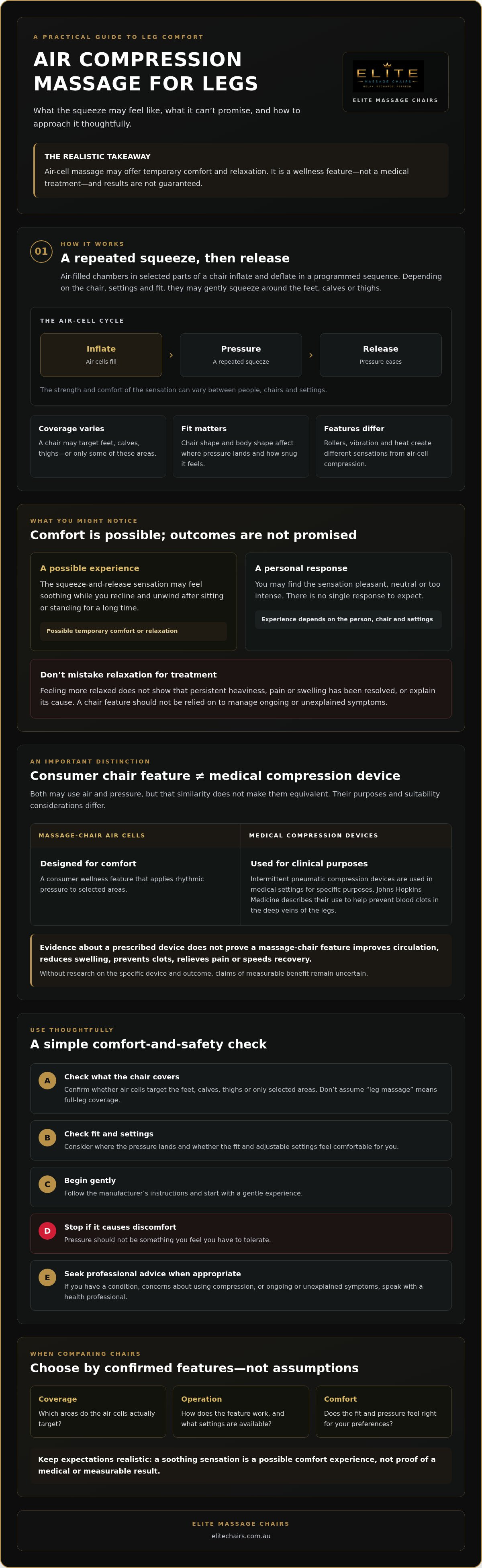
How to Use Leg Compression Massage Thoughtfully and Safely
A considered approach helps keep a chair’s air-compression feature within its intended role: a personal comfort experience, not a way to diagnose or manage a health problem. Device settings and instructions differ, so don’t rely on a general session length or pressure recommendation. Use the guidance for the specific chair.
What should you check before trying compression massage?
Before starting, check the chair manual and confirm the feature’s intended use, how to adjust it and how your legs should be positioned. Make sure the chair is designed to fit you appropriately, and don’t assume a setting or feature works the same way across different models.
If you have a health condition, are unsure whether compression is suitable, or have been advised to take care with pressure on your legs, ask a qualified health professional before using it. The right advice depends on your circumstances; a product manual can explain operation, but it can’t determine whether the feature is appropriate for your health.
When should you stop and seek health advice?
Start gently, following the manufacturer’s instructions, and pay attention to how the pressure feels. Stop the session if it causes pain, numbness, unusual discomfort or distress. Don’t try to push through an unpleasant sensation or increase the intensity to chase a stronger effect.
Pause use and seek qualified advice if compression feels uncomfortable or you’re uncertain about its suitability; seek prompt professional assessment for sudden, severe, persistent or unexplained leg symptoms. Don’t use a massage feature as a response to symptoms that may need medical assessment. A relaxing sensation doesn’t establish what’s causing a symptom or whether it needs care.
It can help to separate two questions: does the feature feel comfortable, and is it appropriate for you? The first is something you can assess during a cautious trial; the second may require professional guidance. That distinction keeps expectations around the air compression massage benefits for legs grounded in comfort rather than treatment claims.
If you’re considering a massage chair, book a showroom demonstration and ask which features are confirmed on the chair you’re trying. A demonstration can help you explore the feel of a feature, while health-related questions are best discussed with a qualified professional.
Choosing an Air Compression Massage Experience That Suits Your Needs
A useful comparison starts with what you want from the experience. If your priority is a comfortable way to relax, consider how a chair fits your body and whether its confirmed features feel pleasant and easy to use. Don’t assume a chair includes air compression, or that the feature targets your whole leg. Check the specifications for the exact chair you’re considering.
Which features matter when comparing massage-chair leg coverage?
Use this checklist to focus on practical details rather than broad claims:
- Coverage: Check which areas, such as feet, calves or thighs, the confirmed specifications say are targeted.
- Fit: Consider whether the chair’s shape and leg supports suit the intended user and position the feature comfortably.
- Settings and controls: Look for confirmed information about adjustments, how the controls work and how to operate the feature.
- Comfort: Think about whether the pressure sensation feels relaxing to you, rather than assuming stronger pressure means a better experience.
- Instructions: Review the manufacturer’s guidance and intended use for the specific chair.
These details can help you judge convenience and personal comfort, but they can’t guarantee a particular result. Any relaxation benefit is individual, and consumer massage-chair features shouldn’t be treated as a substitute for medical advice or care. If you have a health concern or are unsure whether compression is suitable, speak with a qualified health professional before use.
How can a demonstration help you judge comfort?
Trying a chair in person can help you notice how it fits, where any confirmed air cells sit, how the pressure feels and whether you can comfortably use the controls. Take your time, ask which features are included on the chair being demonstrated, and stop if anything feels uncomfortable. A demonstration can inform your personal comfort choice; it can’t assess or diagnose a health condition.
For a clearer sense of the experience, you can book a free showroom demonstration. Ask about the confirmed specifications of the chair you’re trying, then decide whether its fit and features suit your preferences. The aim is to make an informed choice, with realistic expectations about comfort and the limits of wellness features.
Choose Comfort with Clear Expectations
Air compression massage benefits for legs may include a soothing, temporary sense of comfort, but the experience varies from person to person. A massage chair’s air cells are a wellness feature, not a substitute for medical compression or professional advice. Check the specific chair’s confirmed features, coverage and instructions, and speak with a qualified health professional if you have symptoms or concerns about using compression.
If you’re considering a massage chair, trying its features can help you judge fit, pressure and ease of use for yourself. Elite Massage Chairs offers premium massage chairs and wellness accessories, but air-compression features should be confirmed for the specific chair. Explore a free showroom demonstration and check current booking details before you visit.
With realistic expectations and a thoughtful approach, you can make a choice that feels comfortable and right for you.
Frequently Asked Questions
What are the benefits of air compression massage for legs?
Possible benefits are relaxation and a temporary sense of comfort, although responses differ between people and devices. Rhythmic pressure and release may feel soothing while you unwind after sitting or standing for a long time. These are subjective experiences, not guaranteed outcomes. The air compression massage benefits for legs shouldn’t be taken to mean a chair treats pain, swelling or a diagnosed health condition.
Can air compression massage improve circulation in your legs?
A consumer massage chair shouldn’t be relied on to improve circulation or manage a circulation problem. Medical compression devices may be used for specific clinical purposes, but their evidence and intended use can’t automatically be applied to massage-chair air cells. A pleasant pressure sensation doesn’t prove a measurable change in blood flow. If you’re concerned about circulation or have ongoing leg symptoms, ask a qualified health professional for advice.
Is air compression massage the same as compression therapy?
No. Air cells in a massage chair are a consumer wellness feature, while medical compression refers to devices used for specific clinical purposes. The design, pressure delivery, intended use and suitability may differ. Similar sensations don’t make the devices interchangeable. Don’t use a massage chair in place of prescribed compression, assessment or treatment. If you’ve been advised to use medical compression, check with your health professional before using another device.
How does air compression massage work on the legs?
Air-filled chambers in selected parts of a chair inflate and release in a programmed sequence, creating repeated pressure around the areas they cover. Depending on the chair, these may include the feet, calves or thighs, but coverage varies. The sensation can feel like a gentle squeeze followed by release. Check the specific chair’s features and instructions, and don’t assume every massage chair has air compression.
Is air compression massage safe for everyone?
No single device or setting is suitable for everyone. Read the chair manual and ask a qualified health professional before use if you have a health condition, have been advised to be cautious with compression, or aren’t sure it’s appropriate for you. Begin according to the manufacturer’s guidance and stop if you feel pain, numbness, unusual discomfort or distress. A chair’s instructions can’t assess your personal health suitability.
Can a massage chair help with swollen or painful legs?
A massage chair shouldn’t be used to diagnose or treat swollen or painful legs. Air compression may feel comfortable to some people, but that doesn’t establish the cause of symptoms or show that swelling or pain has improved. Don’t use a chair to delay care for symptoms that are sudden, severe, persistent or unexplained. Seek prompt assessment from a health professional, and ask whether compression is suitable for you.
How long should you use air compression massage on your legs?
There isn’t one session length that applies to every massage chair. Follow the manual for the specific device, including its instructions for settings and session duration, rather than borrowing guidance for another product. If you’re trying the feature, use it only as directed and stop if it causes discomfort. Ask a qualified health professional for advice if you’re unsure whether using compression, or its recommended duration, is appropriate for you.


