

Could a massage chair’s gentle hum interrupt the calm you’re hoping to create? It’s a fair concern, especially if you share your home or plan to use your chair while others are relaxing nearby. The question “are massage chairs noisy to operate” has no one-size-fits-all answer: the sound can change with the massage settings, the chair’s mechanisms and the room around it.
You may hear a steady whir from the rollers, a soft pumping or hissing as the airbags inflate, or a brief motor sound when the chair reclines. These can be part of a normal cycle, but their volume and character may feel different on a hard floor or in a quiet room. A product description alone may not tell you how those sounds will feel in your home.
This guide explains the sounds you might hear, what affects how noticeable they are and how to assess a chair before choosing one. You’ll also learn how a showroom demonstration can help you judge whether its sound suits the kind of relaxing space you have in mind.
Key Takeaways
- Are massage chairs noisy to operate? It depends on the chair, the function selected and the space around it, so “quiet” doesn’t mean silent.
- Distinguish sounds that continue during a massage from brief noises that occur when the chair changes position.
- Compare chairs under similar conditions and notice how different settings affect what you hear.
- Placement and room setup may make operating sounds feel less noticeable. Follow the chair’s instructions.
- A showroom demonstration lets you experience a chair’s sound alongside its comfort and functions before deciding if it suits your home.
Are massage chairs noisy to operate, or is the sound usually subtle?
Are massage chairs noisy to operate? They make some sound, but how noticeable it is varies by chair, selected function, operating state and listening environment. The steady movement of a massage may sound different from the brief motor noise of a recline adjustment. The same chair may also seem more prominent in a quiet room than in a busier space.
“Quiet operation” and “completely silent” aren’t the same thing. A massage chair has moving parts, and operating noise comes from its mechanisms during massage functions, movement and changes of position. The type and level of sound depend on the chair’s design and what it’s doing, so a broad description alone can’t tell you exactly what you’ll hear at home.
What sounds might a massage chair make?
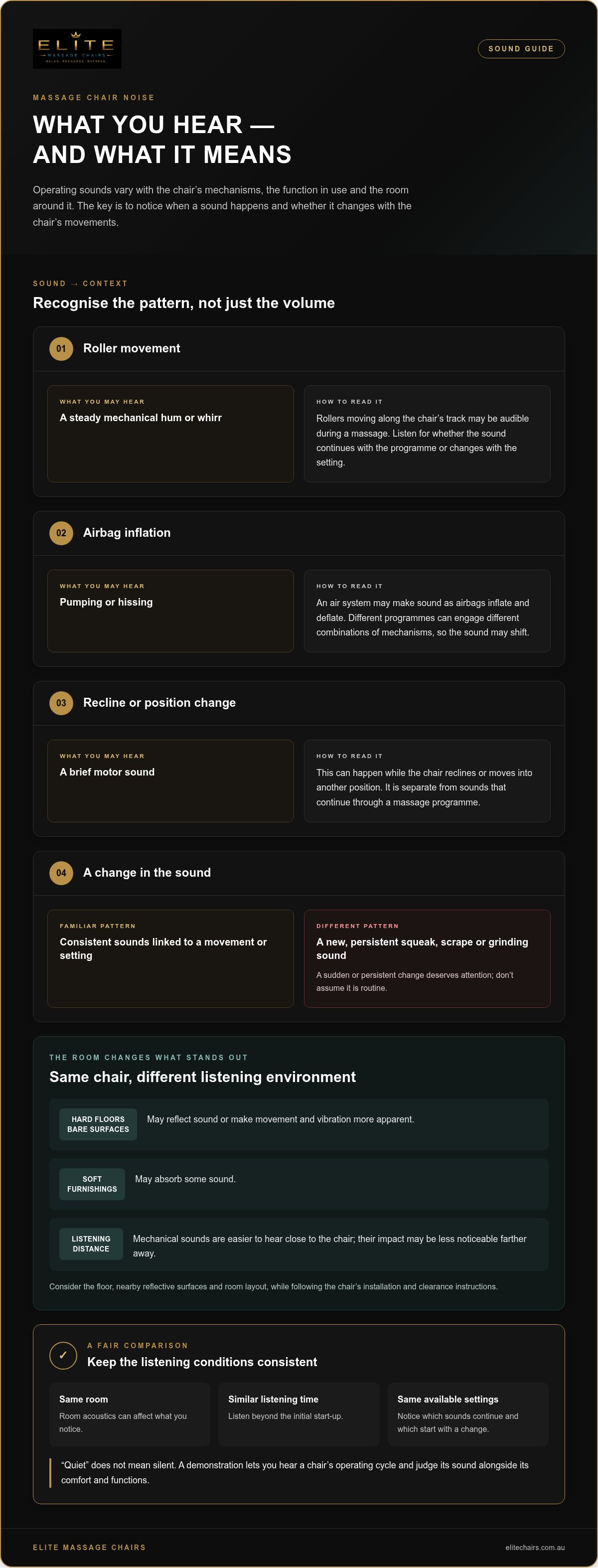
Depending on its design and programme, a chair may produce a soft motor hum, rollers moving along a track, or a pumping or hissing sound from an air system. Percussive functions may add rhythmic tapping, and a recline mechanism can make a brief motor sound as the chair changes position. These are common features of a robotic massage chair, but not every chair uses the same mechanisms or sounds identical in operation.
Some sounds may continue throughout a programme; others happen only when a particular function starts or the chair moves. Listen for the pattern as well as the volume. A consistent hum that changes with the massage cycle is different from a new, persistent squeak, scrape or grinding sound.
Why can the same chair sound different at home?
Where you listen matters. Close to the chair, mechanical sounds are easier to hear; farther away, their impact in another part of the home may be less noticeable. Room size and furnishings also affect how sound travels and reflects. Soft furnishings can absorb some sound, while hard floors and bare surfaces may make movement or vibration more apparent.
A showroom impression or online description may not predict exactly how a chair will sound in your chosen room. Consider where it will sit, what’s beneath it and whether nearby rooms are used for quiet activities. If possible, hear the chair operating in person and listen to different functions, not just the initial start-up.
In short: Familiar, consistent sounds that correspond with a chair’s movements or selected massage functions can be part of normal operation. A sudden or persistent change, such as new scraping, grinding or squeaking, is different and deserves attention rather than being assumed to be routine.
Where does massage-chair operating noise come from?
Operating noise usually depends on both what the chair is doing and how the room carries the sound. During a massage, moving mechanisms may create a steady hum or whirr, while air systems can produce pumping or hissing sounds as airbags inflate and deflate. A recline motor, by contrast, may be heard briefly while the chair changes position.
This helps make sense of the question, “are massage chairs noisy to operate?” A sound that continues during a particular programme may come from a function running throughout the session; a short sound may be tied to movement or a transition. The combination and volume vary between chairs. Designs differ, so descriptions of a particular chair’s mechanisms or sound should be based on reliable information about that model.
How massage mechanisms and settings affect sound
Rollers travel along the chair’s track to deliver massage, and their movement may be audible as a mechanical hum or whirr. If the chair uses airbags, the compressor that inflates them can add pumping or hissing sounds. Changing modes may engage different combinations of rollers, airbags or tapping mechanisms, so the sound can shift with the programme. Don’t assume a particular technology or feature is quieter without comparing chairs under similar conditions.
During a demonstration, note which sounds continue and which appear only when a setting changes. This gives you a clearer picture of the chair’s operating character than listening only at start-up.
How recline movement and room acoustics affect what you hear
Reclining or moving into a zero-gravity position may briefly activate a motor, creating a sound separate from the massage itself. The room then affects how noticeable that sound feels. Hard floors and nearby walls can reflect sound, while soft furnishings may absorb some of it. A chair heard close up may seem more prominent than it does from another room.
Placement matters, too. Consider the floor beneath the chair, nearby reflective surfaces and how close it sits to walls, while following the manufacturer’s clearance and installation instructions. Perceived operating noise depends on the chair’s mechanisms, the functions in use, movement between positions and the room’s surfaces and layout.
A showroom demonstration can help you hear these differences directly by letting you experience a chair through its operating cycle. Explore massage chair demonstrations to assess sound alongside comfort and the functions that matter to you.
How to compare massage-chair noise without relying on vague claims
Descriptions such as “quiet” can be a useful starting point, but they’re subjective unless supported by comparable, model-specific evidence. To judge whether a chair’s sound will suit you, compare it consistently: listen in the same room, for a similar length of time, and try the same available settings. Otherwise, differences in the environment or programme can skew the comparison.
What to listen for during a chair demonstration
During a showroom demonstration, listen from the seated position, then from a short distance away if practical. Notice the sound as the chair starts, runs its massage functions, changes position and stops. Is there a steady background hum, or do particular functions create short bursts of sound? Consider whether the volume and rhythm feel comfortable for the quiet, restorative experience you want.
| Sound source | When it may occur | What to listen for |
|---|---|---|
| Rollers or massage mechanisms | During massage functions | A steady hum, whirr or rhythmic movement |
| Air system | As airbags inflate or release | Pumping or hissing that may follow the programme |
| Recline or position motor | As the chair changes position | A brief sound during movement |
Use the table as a listening guide, not a promise that every chair will produce each sound. Designs and programmes differ, so focus on what you actually hear from each chair under comparable conditions.
How to interpret noise descriptions and specifications
Words such as “silent” or “whisper-quiet” need context. They don’t explain which function was running, where the sound was measured or how the test was conducted. If a model-specific decibel figure is provided, look for those conditions and compare it only with figures gathered in a similar way. A result from an unrelated product test isn’t a like-for-like comparison, and a single number may not represent every setting.
A useful comparison separates ongoing sounds from those tied to a particular function or movement, then checks how each feels in the same listening conditions. A showroom demonstration lets you assess operating sound alongside comfort and features. Explore massage chair showroom demonstrations to experience the difference for yourself.
How can you make a massage chair feel quieter at home?
You may not be able to remove the sounds a chair makes, but thoughtful placement and a routine that suits your household can make them less disruptive. If you’re wondering, “are massage chairs noisy to operate” at home, remember that the room and listening position shape the experience as much as the chair’s operating cycle. Follow the chair’s installation, clearance and operating instructions before changing its position or surroundings.
Choose a considered position for the chair
Think about how close the chair will be to bedrooms, shared living areas and other quiet spaces. A spot beside a hard floor or bare wall may make sounds feel more noticeable as they reflect around the room. Soft furnishings or a suitable rug may change how sound carries, but don’t place anything under or around the chair unless its instructions allow it. Never compromise required clearance or safe operation to reduce noise.
Use settings and routines that suit your household
Explore the available settings and notice which functions are more audible. You might prefer a programme with fewer noticeable air or tapping functions, if the chair offers that choice. Session timing matters too: a sound that feels unobtrusive during the day may be more distracting when someone is reading, working or settling down to sleep. Choose a time and room arrangement that feels comfortable for everyone at home.
If the chair develops an unusual sound, pause use and follow the troubleshooting or care guidance in its manual rather than assuming the change is normal.
- Position: Consider nearby bedrooms, shared spaces and reflective surfaces.
- Instructions: Check the manual before changing placement or adding a mat or rug.
- Settings: Notice which functions affect the sound you hear.
- Routine: Choose a session time that works for your household.
Explore the full experience before choosing
Sound is only one part of finding a chair that suits your home. Consider the seating position and features alongside the operating noise. A massage chair demonstration lets you listen during different functions and position changes. A showroom gives you a chance to hear the chair directly, though your home’s acoustics may create a different impression.
Book a massage chair demonstration to experience the chair’s sound alongside its comfort and functions.
How to decide whether massage-chair noise suits your home
The best choice balances sound with the comfort, massage functions and placement you want. Ask yourself not only, “are massage chairs noisy to operate?”, but also when and where you’ll use one. A sound you barely notice in a living area during the day might feel more distracting beside a bedroom at night. Your tolerance matters, and there’s no single listening experience that applies to every household.
Be cautious of claims that a chair is “silent” unless they’re supported by relevant evidence. Massage chairs use moving mechanisms, so it’s more useful to understand what you may hear during the functions you plan to use than to rely on an absolute description. Consider the room where the chair will sit, who else uses nearby spaces and whether its sound feels comfortable alongside its massage experience.
Who may want to assess operating sounds more closely?
If your home has light sleepers, shared rooms or a preference for quiet surroundings, pay particular attention to sound before deciding. Sensitivity varies from person to person: one household member may find a steady mechanical sound unobtrusive, while another notices it more. That doesn’t automatically make a massage chair unsuitable. It makes your own experience, intended placement and preferred session times especially useful parts of the decision.
Weigh the sound against the features you’ll actually use. A chair may appeal for its comfort or available functions, but if you expect to use it while others are sleeping or concentrating nearby, consider whether the operating sounds fit that routine. Think about the overall experience, not just a label such as “quiet”.
Experience the chair before making your decision
A firsthand demonstration gives you the chance to sit in the chair and listen as different functions run, including position changes. Notice how the sound feels from the seated position, and consider whether you’d be comfortable hearing it during a typical session. At the same time, assess fit, comfort and whether the chair’s features suit your needs. A showroom demonstration can inform your choice, but it can’t reproduce the acoustics of your home exactly.
Before the demonstration, think about where the chair will go, when you’re likely to use it and whether nearby rooms need to remain quiet. This makes the experience more relevant to your everyday routine and helps you judge the trade-offs with greater confidence.
For a calm, practical next step, book a massage chair demonstration and experience the sound and comfort for yourself.
Find the right balance of comfort and sound
So, are massage chairs noisy to operate? They make sounds as their mechanisms and massage functions work, but how noticeable those sounds feel depends on the chair, the settings and the room. “Quiet” doesn’t necessarily mean silent, so pay attention to what you hear during massage and position changes rather than relying on broad claims.
Room placement and household routines can also shape your experience. Consider where the chair will sit, when you’ll use it and how its sound fits alongside the comfort and functions you’re looking for. A firsthand demonstration can help you make that assessment, although your home may sound different from a showroom.
Elite Massage Chairs specialises in premium massage chairs and wellness solutions, with free showroom demonstrations where prospective buyers can experience chairs in operation. Listen to the different functions and consider the overall feel at your own pace. Book a free massage chair demonstration and take a thoughtful next step towards a more restorative home routine.
Frequently Asked Questions
Are massage chairs noisy to operate during a full massage session?
Massage chairs can make audible sounds throughout a session, but how noticeable they are varies by chair, programme and room. A steady hum may accompany moving massage mechanisms, while air functions can add pumping or hissing sounds when active. Some programmes may sound different from others. Consider which settings you’re likely to use and whether the sound feels comfortable in your intended space, rather than expecting a chair to be completely silent.
What sounds are normal when a massage chair is operating?
Depending on the chair and function, normal operating sounds may include a motor hum, rollers moving, air systems inflating and releasing, or a brief sound as the chair adjusts position. Some sounds continue during a particular massage function; others occur only during movement or transition. The exact sounds vary between designs. A new or persistent scraping, grinding or squeaking sound is different from a familiar sound linked to a regular cycle.
Can you hear a massage chair in another room?
You may hear a massage chair in another room, but it depends on the chair, the sound it’s making, the distance and how your home is laid out. A closed door, intervening rooms and soft furnishings can affect how much sound carries, while hard surfaces may reflect it. The sound heard beside the chair can feel more prominent than its impact elsewhere. If this matters, assess the chair near the rooms where quiet is important.
Do massage chairs make more noise when reclining?
A chair may make a brief motor sound while reclining or changing position. This is separate from sounds that may continue during massage functions, and it won’t necessarily be the loudest part of every chair’s cycle. Designs differ, so listen to the position adjustment as well as the massage itself. During a demonstration, notice the transition into and out of recline, and consider whether that sound suits your preferences.
How can I make a massage chair sound quieter at home?
Thoughtful placement may make operating sounds feel less noticeable, though it won’t remove them. Consider positioning the chair away from bedrooms or quiet shared spaces, and be mindful that nearby walls and hard floors can reflect sound. Follow the chair’s installation and clearance instructions before moving it or adding a rug or mat. You can also explore available settings and choose session times that work comfortably for your household.
Is it normal for a massage chair to make a new or unusual noise?
A sound that’s new or noticeably different from the chair’s usual operating pattern shouldn’t automatically be treated as normal. Pause use if you hear persistent grinding, scraping or squeaking, then consult the chair’s manual for relevant troubleshooting or care guidance. Sounds that consistently occur during a familiar massage function or position change may be part of its operation, but a sudden change is a reason to take a closer look.
Can I hear how noisy a massage chair is before buying one?
Yes, a showroom demonstration gives you the chance to experience a massage chair in operation before deciding. Listen from the seated position as different functions run and the chair changes position, while also assessing comfort and ease of use. Elite Massage Chairs offers free showroom demonstrations for prospective buyers. Remember that the sound may feel different at home because room size, flooring, furnishings and placement affect how it carries.


