

A deep-tissue feel depends on how a chair’s rollers move and how precisely you can adjust their pressure, not on a label alone. The most useful deep tissue massage chair features to compare are massage technique, intensity settings, roller movement and air-cushion coverage. Body scanning can also help tailor roller placement to your shape.
If you’re considering a stronger massage for muscle discomfort, it’s natural to focus on how deeply a chair works. Pressure that feels too intense may be uncomfortable, so adjustability matters just as much as the massage technique.
This guide explains how rolling, kneading and other techniques differ, what intensity controls change, and how rollers and air cushions work across the body. You’ll also learn how to compare these features with your comfort preferences and wellness goals, so you can choose a considered experience rather than simply the most powerful one.
Key Takeaways
- Compare how a chair targets specific body areas, including whether body scanning can adapt the massage to your shape.
- Look beyond the massage technique: adjustable intensity helps you choose pressure that feels comfortable for your preferences.
- Rollers and air cushions create different kinds of contact, so their movement and coverage affect the feel of a session.
- Use a showroom demonstration to experience massage options firsthand and judge which features suit your comfort and wellness goals.
What Makes a Deep Tissue Massage Chair Special?
Deep-tissue chairs use massage movements designed to reach deeper muscle layers, while other chairs may focus more on surface-level relaxation. Compare how each option targets different areas, adjusts pressure and supports the kind of session you prefer.
Targeted body-area treatment
Targeted massage focuses on a selected area, such as the shoulders or lower back, rather than following a full-body sequence. This can help direct a session to where stress or tightness feels most noticeable. Kneading and roller movement create different sensations, so a targeted programme is not automatically deeper. Compare the area-selection controls with the massage techniques available.
AI scanning and pressure adjustment
Body scanning maps aspects of your position and shape so a chair can customise roller placement. Some chairs use AI scanning to help adjust pressure or intensity to that position. This differs from manually selecting an area: scanning helps personalise roller placement, while area controls direct the massage. A scan is not a health assessment and does not diagnose a condition.
| Option | Target | What changes |
|---|---|---|
| Body-area selection | Chosen muscle area | Where massage is directed |
| Body scanning | Mapped body position | Roller placement and personalisation |
| Heat or zero-gravity position | Session comfort | Warmth or seated position |
Heat adds warmth, while a zero-gravity position changes how the chair reclines; neither identifies a health concern. Touchscreen controls can make programmes easier to select.
In Australia, a chair’s cost depends on its design and included features, such as scanning, heat and massage controls. Compare the features with the areas and intensity you want rather than choosing by a “deep tissue” label alone.
Before choosing, measure the chair’s width, depth and height, then allow space to recline, move, swivel and access it where applicable. Compare its stated weight limit with the user’s weight. Room clearance and fit are separate considerations.
If you have an injury, health condition or unexplained pain, seek individual clinical advice before using deep pressure. Excessive intensity may feel uncomfortable, and body scanning does not detect health conditions.
Customisable massage techniques and intensity
A chair’s controls shape how its massage feels, from the movement pattern to the pressure applied. The deep tissue massage chair features that matter most are technique, motion and roller depth, since each changes a different part of the session.
Customisable massage techniques
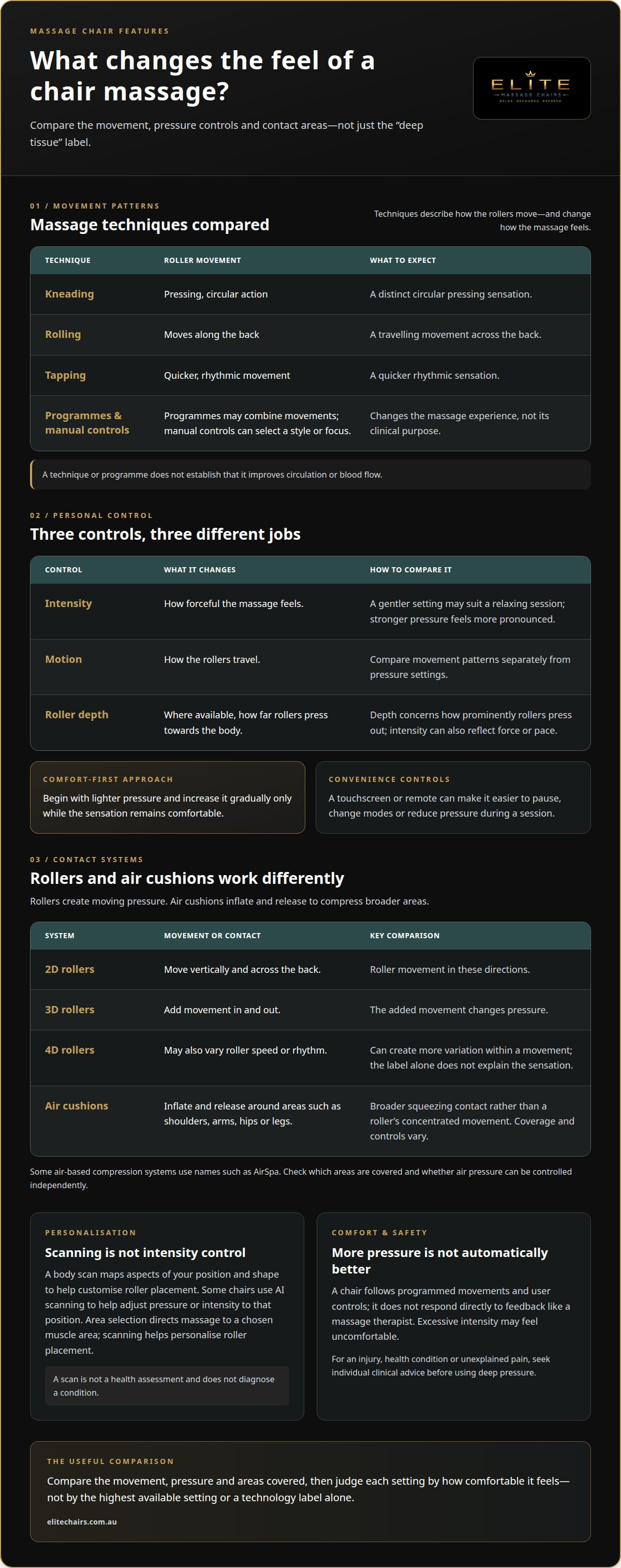
Massage techniques describe how the rollers move. Kneading uses a pressing, circular action, while rolling moves along the back; tapping creates a quicker, rhythmic sensation. A programme may combine movements, while manual controls let you select a preferred style or focus. These options change how the massage feels, not its clinical purpose, and do not establish that a particular technique improves circulation or blood flow.
Intensity and motion controls
Intensity controls change how forceful the massage feels; motion controls change how the rollers travel. A gentler setting may suit a relaxing session, while stronger pressure feels more pronounced. A body scan may help position rollers to match your shape, but it is distinct from choosing the intensity yourself. Unlike a massage therapist responding directly to feedback, a chair follows its programmed movements and user controls.
Roller depth settings
Where available, roller depth settings adjust how far the rollers press towards the body. Start with lighter pressure, then increase it gradually while the sensation remains comfortable. Depth and intensity are not identical: depth concerns how prominently the rollers press out, while intensity can also reflect the force or pace of movement. Compare these deep tissue massage chair features before choosing a deep-tissue-style programme.
For a practical comparison, try a kneading programme at gentle intensity, then use the same movement at a stronger setting. Notice whether the pressure remains comfortable as the rollers move across your back. A touchscreen or remote can make it easier to pause, change modes or reduce pressure during a session. Don’t treat a high setting as a measure of effective therapy; comfort and control matter more than maximum force.
If hands-on comparison would help, a massage chair showroom demonstration lets you experience different movements and settings before deciding.
Massage chair rollers and air cushions
Rollers create moving pressure, while air cushions inflate to compress broader areas. Compare where each system acts and how its massage techniques feel during a session.
2D, 3D and 4D roller technology
These labels describe roller movement, not a guaranteed level of comfort. A 2D mechanism moves rollers vertically and across the back; 3D adds movement in and out, changing pressure. 4D systems may also vary roller speed or rhythm, creating more variation within a movement. Chairs may use 4D technology for deep-tissue-style massage, but the label alone doesn’t explain the sensation.
Air cushions work differently: they inflate and release around areas such as the shoulders, arms, hips or legs. Some systems use names such as AirSpa for air-based compression, while cushion layouts and controls vary. Air pressure creates broader squeezing contact rather than the concentrated movement of a roller. When comparing chairs, check which areas are covered and whether you can control the pressure independently.
Foot rollers and calf kneading
Foot rollers move against the soles, creating a focused sensation beneath the feet. Reflexology-style rollers are designed around foot contact, while calf kneading uses cushions or mechanical movement to compress the lower legs. These features target different surfaces, so one does not replace the other. Check whether the foot and calf areas can be adjusted separately to suit your preferred massage.
For example, a chair might combine back rollers with air cushions around the calves. The rollers travel along the back, while the cushions press and release around the lower legs. This combination creates distinct sensations in one session rather than one uniform massage. A zero-gravity recline changes the chair’s position, not the roller mechanism, so consider it separately when comparing relaxation options.
Choose by matching each mechanism to the areas you want covered: back rollers for moving pressure, air cushions for broader compression and foot rollers for contact underfoot. A feature-rich chair may be less suitable if its placement or movement does not match your preferred experience.
Deep tissue massage and muscle discomfort
Muscle discomfort can vary from one area to another. A tight shoulder, for example, may call for a different pressure level from general back tension. The practical takeaway is to prioritise controllable pressure and a comfortable sensation, not the strongest available setting.
During a session, begin with a gentle programme and notice how your body responds. If pressure feels sharp or uncomfortable around the shoulders, reduce the intensity or stop the massage. A chair’s controls let you change the experience, but they do not identify the cause of discomfort or replace advice from a health professional.
Persistent discomfort deserves particular care. A massage chair is a wellness appliance, not a way to diagnose or treat the underlying cause of ongoing pain. If discomfort continues, worsens or follows an injury, speak with a qualified health professional before relying on massage. Comfort during a session is not proof that a physical problem has been resolved.
Compare options by asking three practical questions: can you select the area, reduce pressure and pause the movement? For example, someone with shoulder tension might choose a shoulder-focused setting, start gently, then stop if the sensation becomes unpleasant. Voice control, where available, can change settings without reaching for a remote, but it does not assess your physical response.
Let comfort guide you throughout each session. A relaxing sensation is different from pain, and more pressure does not automatically mean more relief. Choose controls that let you adjust gradually, and keep the experience at a comfortable level. For persistent or unexplained muscle discomfort, professional guidance is more appropriate than increasing massage intensity.
To compare how different chairs feel in person, book a massage chair showroom demonstration and experience the pressure settings for yourself.
Elite Massage Chairs: Massage Chair Showroom Demos
Elite Massage Chairs offers showroom demonstrations for people who want to experience a massage chair before choosing one. A demonstration lets you notice how different massage options feel and consider whether a chair suits your comfort preferences. This is useful when specifications alone do not tell you how roller pressure, reclining or a zero-gravity position will feel in practice.
Explore Zero Gravity Massage Chairs and Massage Accessories as part of your decision. Focus on the features that matter most to you, such as massage coverage, adjustable intensity and how the chair feels during use. Experiencing options firsthand can help you make an informed choice without relying on feature names alone.
For a calm, hands-on way to compare options, book a showroom demonstration with Elite Massage Chairs.
Make space for a more considered choice
A massage chair is a personal addition to your home, so the right choice should suit you beyond the first impression. Think about when you’d use it, where it would sit and what would make a session comfortable in your everyday routine. This wider perspective can help you weigh deep tissue massage chair features without treating maximum intensity as the main measure of value.
Take the time to choose thoughtfully. A hands-on experience can turn technical descriptions into a clearer sense of what suits your preferences, while keeping comfort at the centre of your decision.
For a calm next step, contact Elite Massage Chairs and explore the massage chair options available to you.
Frequently Asked Questions
Which chair should I choose?
Choose a chair that suits your intended use, available space and comfort preferences. If more than one person will use it, consider whether its controls let each person create a suitable experience. Make a shortlist based on your main needs, such as regular relaxation or attention to a particular area, then compare how each chair feels in a showroom demonstration.
What features make a massage chair suitable for deep tissue massage?
Look for features that let you tailor the massage rather than relying on a “deep tissue” label. Consider whether a chair combines roller massage with adjustable pressure, targeted programmes or body scanning. Also think about where you want the massage to focus. A chair’s combination of controls and coverage tells you more than one headline feature.
How do massage chairs deliver deep tissue massage, and what techniques do they use?
Massage chairs use mechanical movements to create pressure and motion against the body. A programme may use kneading, rolling or tapping, while other systems add air cushions that inflate and release. These techniques produce different sensations, and the selected programme determines how they are combined. Consider which movements feel comfortable to you rather than assuming one mode suits everyone.
What roller types, track lengths, and massage intensity settings should I compare?
Compare how the roller system moves, how much of your back its track covers and whether you can change the pressure. Track length describes the route available to the rollers, so consider whether it reaches the areas you want addressed. Check whether you can reduce intensity without changing the massage area, giving you control over both coverage and feel.
Which deep tissue massage chairs are best reviewed and available in Australia?
No single chair suits every buyer, and review scores alone cannot tell you which option will feel best. Look for recurring comments about comfort, controls and usability, then experience a chair directly where possible. Elite Massage Chairs offers Zero Gravity Massage Chairs and showroom demonstrations, giving Australian buyers a way to explore how the options feel in person.
How do 3D and 4D massage chairs compare for deep tissue massage?
Use the distinction to guide a hands-on comparison, not as a ranking. 3D describes rollers that move towards or away from the body, while 4D adds variation in movement timing or speed. That extra variation may change the character of a massage, but doesn’t guarantee a more comfortable experience. Your preferred pressure and movement matter more than the number alone.


