

The most critical part of your training session isn't the final set at the gym or the last kilometre of your run. It's the hour that follows. With approximately 85% of Australian adults staying physically active, the quest for peak performance is more competitive than ever. Yet, for many, progress is often stalled by Delayed Onset Muscle Soreness (DOMS) and the scheduling friction of professional therapy. Choosing a premium massage chair for post workout recovery transforms this downtime from a passive wait into a sophisticated biological advantage.
You understand that consistency is the foundation of any elite training programme, but persistent fatigue and stiff muscles can easily disrupt your momentum. This guide explores how advanced 2026 massage technology accelerates muscle repair and turns your home into a restorative sanctuary. We'll look at the science of Zero Gravity positioning and AI body scanning to show you how a daily wellness ritual can reduce pain and inflammation. Prepare to discover how these innovations help you return to your peak faster while fitting seamlessly into a busy Australian lifestyle.
Key Takeaways
- Discover how mechanical massage stimulates cellular repair within the critical recovery window to significantly reduce muscle stiffness and inflammation.
- Understand why Zero Gravity positioning is essential for spinal decompression and enhancing circulation in the lower limbs after intense training sessions.
- Identify the technical specifications of a high-performance massage chair for post workout recovery, focusing on 4D mechanisms and precision body scanning.
- Master the "Golden Rule" of recovery by timing your sessions for maximum metabolic benefit without over-stimulating the nervous system.
- Learn how to choose the right recovery partner through private showroom demonstrations and flexible financing options tailored for the Australian lifestyle.
The Science of Muscle Recovery: Why a Massage Chair is Essential
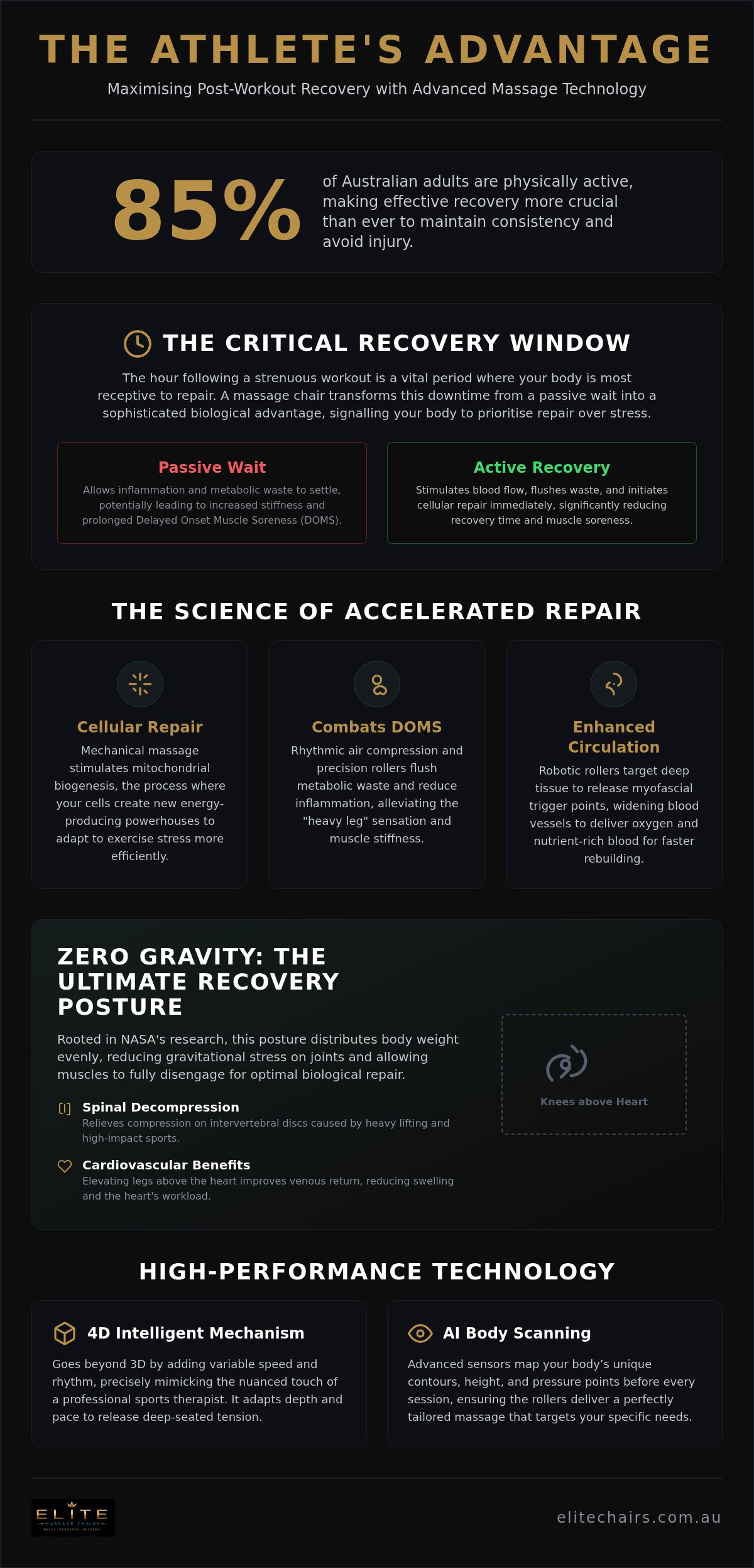
The hour following a strenuous training session is often referred to as the "recovery window," a vital period when your body is most receptive to repair. After a heavy session at the gym or a long run along the coast, your muscle fibres are riddled with microscopic tears and inflammation. Immediate intervention is key. Using a massage chair for post workout recovery isn't merely a luxury; it's a strategic move to capitalise on this biological opening. By introducing mechanical therapy early, you signal your body to prioritise repair over stress.
Research into mechanical massage suggests it does more than just soothe surface-level aches. It actually stimulates mitochondrial biogenesis, the process where your cells create new energy-producing powerhouses. This cellular response helps your muscles adapt to the stress of exercise more efficiently. Understanding the history and types of massage chairs shows how far this technology has evolved, moving from simple vibration to sophisticated systems that mimic the precise touch of a sports therapist. These modern chairs facilitate a vital shift in your nervous system, moving you from a sympathetic "fight-or-flight" state into a parasympathetic state of deep restoration.
Tackling DOMS and Lactic Acid
Delayed Onset Muscle Soreness (DOMS) is the familiar stiffness that can halt your training momentum 24 to 48 hours after a workout. While many athletes believe this is solely due to lactic acid, it's actually a result of inflammation and micro-trauma. Rhythmic air compression and precision rollers mimic the manual drainage techniques used by professionals to flush metabolic waste from the limbs. This process reduces the "heavy leg" sensation that often follows endurance training, allowing you to maintain your training consistency without the debilitating morning-after ache.
Circulation and Oxygen Delivery
Efficient recovery depends on vasodilation, which is the widening of blood vessels to deliver oxygen and nutrients to damaged tissues. Advanced robotic rollers are designed to target deep tissue layers, releasing myofascial trigger points that restrict movement. Robotic myofascial release is the application of sustained mechanical pressure to the connective tissue to eliminate pain and restore a full range of motion. By improving local circulation, these chairs ensure that every muscle group receives the nutrient-rich blood required to rebuild stronger and faster for your next session.
Zero Gravity: The Ultimate Posture for Athletic Restoration
While many view it as a luxury, the Zero Gravity position is rooted in NASA's research into Neutral Body Posture (NBP). For an athlete, this specific alignment is a game-changer. By reclining the chair so your knees are elevated slightly above your heart, you distribute your body weight evenly across the frame. This reduces the influence of gravity on your joints and allows your muscles to fully disengage. When using a massage chair for post workout recovery, this position ensures the mechanical rollers can penetrate deeper into the muscle tissue without you needing to manually adjust your pressure.
This posture isn't just about feeling weightless. It's about creating the optimal environment for biological repair. There is significant scientific evidence for massage and muscle recovery suggesting that reducing physical stress on the body allows the lymphatic system to function more effectively. By removing the burden of supporting your own weight, you allow the chair's technology to focus entirely on flushing metabolic byproducts and soothing inflamed fibres.
Cardiovascular Benefits of Elevation
Elevating your legs above your heart level is a proven method to improve venous return. This means your heart doesn't have to work as hard to pump blood back from your lower extremities, which is particularly beneficial after high-intensity leg days or long-distance cycling. It effectively reduces swelling and that lingering throb in the calves and feet. You can learn more about these specific technical advantages in The Ultimate Guide to Zero Gravity Massage Chairs in Australia.
Spinal Decompression for Weightlifters
For those who focus on strength training or high-impact sports, spinal health is paramount. Heavy lifting compresses the intervertebral discs, often leading to stiffness or long-term injury risk. Neutral Body Posture allows these discs to rehydrate and expand by relieving the constant vertical pressure of gravity. When paired with integrated heat therapy, the muscles surrounding the spine relax, allowing for a deeper and more effective alignment. This systematic spinal decompression prevents long-term training injuries by ensuring your back remains supple and resilient between sessions.
Experience this weightless sensation for yourself by booking one of our massage chair showroom demos to find your perfect recovery partner.
Essential Features for High-Performance Recovery Chairs
Selecting the right massage chair for post workout recovery requires an understanding of the technology that drives biological repair. It's not enough for a chair to simply move; it must intelligently interact with your musculoskeletal system. Modern recovery chairs utilise precision body scanning to map the unique curvature of your spine and the width of your shoulders. This ensures that every mechanical movement is calibrated to your frame, preventing the rollers from making uncomfortable contact with bone while maximising pressure on the muscle belly. When this precision is paired with integrated heat therapy, the results are transformative. Gentle warmth dilates blood vessels and softens the fascia, preparing your muscles for the deeper manipulation required to resolve post-training tension.
The Power of 4D Precision
While 3D mechanisms allow for depth, 4D technology introduces the critical element of variable rhythm. This is essential for athletes because sensitive, post-workout muscles often require a slower, more deliberate cadence to avoid triggering a defensive contraction. A Harvard study on massage for muscle healing highlights that mechanical stimulation helps injured muscles heal stronger and faster. By adjusting the speed and depth of the rollers in real time, 4D chairs mimic the nuanced hands of a sports professional. This technology is often paired with extended L-Track rails, which allow the rollers to travel from the neck all the way down to the glutes and hamstrings. You can explore the full range of these technological benefits in The Therapeutic Massage Chair: A Complete Guide.
Full-Body Air Compression
Air compression therapy uses the "squeeze and release" method to facilitate lymphatic flow and venous return. For athletes, this is particularly effective in the extremities like the forearms, calves, and feet, where blood can pool after intense cardiovascular sessions. By systematically inflating and deflating high-tenacity airbags, the chair physically pushes metabolic byproducts toward the torso for filtration. This process works in perfect harmony with the Zero Gravity positioning discussed earlier, creating a powerful synergy for reducing swelling. To maintain your recovery space, consider using massage chair enhancement accessories that protect the upholstery and ensure a hygienic environment for your daily wellness ritual.
Optimising Your Routine: How to Use Your Chair Post-Workout
Integrating a massage chair for post workout recovery into your daily life requires more than just sitting down and pressing "start". To truly accelerate muscle repair, you must follow the "Golden Rule" of timing. Aim to begin your session within 30 to 60 minutes of finishing your training. This specific window is when your metabolic rate is still elevated and your muscles are most pliable, allowing the mechanical therapy to flush out byproducts before they settle into the tissue. While it's tempting to dial up the intensity to the maximum, remember that "more pain" does not equate to "more gain". Excessive pressure on already inflamed fibres can cause micro-bruising, so choose a setting that feels firm yet restorative.
Your chair can also serve as a sophisticated tool for pre-workout activation. A brief, 5 to 10-minute session with vigorous percussive movements can wake up dormant muscle groups and improve blood flow before you head out for a run or hit the gym. Regardless of when you use the chair, hydration is non-negotiable. Drinking plenty of water after your session helps your kidneys process the metabolic waste released during the massage, ensuring you feel refreshed rather than lethargic.
A Step-by-Step Post-Training Session
Follow this structured 20-minute protocol to transform your recovery into a professional-grade experience:
- Step 1: Start with 5 minutes of gentle heat therapy combined with a full-body scan to align the rollers with your current state of tension.
- Step 2: Transition into 10 minutes of Zero Gravity air compression to facilitate lymphatic drainage and reduce lower-limb swelling.
- Step 3: Spend 5 minutes on targeted deep tissue work, focusing the rollers specifically on the primary muscle groups used during your workout.
- Step 4: Allow for a slow re-emergence. Sit quietly for a minute after the chair returns to the upright position and follow up with immediate hydration.
Consistency vs. Overuse
For elite athletes, a daily session is often the standard for maintaining peak performance. Recreational users might find that three to four times a week is sufficient to manage DOMS and general fatigue. Listen to your body's signals; if you notice lingering tenderness or a bruised sensation, it's a sign you are over-massaging. You can find more detailed advice on balancing frequency in our Massage Chair for Muscle Recovery: The Athlete’s Guide. To ensure you're getting the most out of your investment, explore our range of premium recovery chairs designed for the Australian sporting lifestyle.
Why Elite Massage Chairs Lead the Australian Recovery Market
Elite Massage Chairs operates as an Australian-owned wellness expert, providing a level of local understanding that international retailers often lack. When you invest in a massage chair for post workout recovery, you're essentially securing a 24/7 on-call sports therapist that lives in your home. This immediate access to professional-grade relief ensures that your recovery is never delayed by a therapist's fully booked calendar or the friction of a commute. It's about taking full control of your athletic longevity through sophisticated engineering and reliable local support.
The Showroom Experience
Athletes have unique physical requirements; a marathon runner needs vastly different pressure on the calves compared to a powerlifter's need for deep lumbar work. This is why a private demonstration is essential for any serious competitor. We recommend bringing your training gear to your session so you can test specific recovery programmes while your muscles are actually in need of relief. Our experts work with you to calibrate the intensity and find a model that matches your sport's specific demands. To prepare for your visit, consult our guide on How to Experience a Massage Chair Demo in Australia.
Investing in Your Longevity
Consider the long-term return on investment when comparing a premium chair to traditional therapy. In many Australian cities, a high-quality sports massage can cost upwards of A$130 per hour. Over just two years of weekly visits, that total spend can exceed A$13,000. By contrast, owning your own equipment provides unlimited sessions for a fraction of that long-term cost. We facilitate this transition to home-based wellness through flexible Humm financing, making accessible luxury a reality for Australian households. Beyond the financial logic, there is a profound psychological benefit to establishing a dedicated recovery sanctuary. It serves as a daily ritual that signals to your nervous system that the training day is over and the restoration has begun. Ready to transform your post-training routine? Book your private session at one of our national showrooms today and experience the future of athletic recovery.
Elevate Your Performance and Longevity
Your journey toward peak performance doesn't end when you leave the track or the gym. It's a continuous cycle of effort and restoration. We've explored how the intersection of NASA-inspired Zero Gravity technology and advanced mechanical therapy can fundamentally change your biological response to training. By integrating a massage chair for post workout recovery into your home, you're not just buying a piece of furniture; you're investing in a sophisticated wellness tool that ensures your body is always ready for the next challenge. This dedicated sanctuary allows you to bypass the scheduling friction of traditional therapy and focus entirely on your physical longevity.
Experience the transformative Zero Gravity difference firsthand and receive tailored advice from our Australian wellness experts. We make this premium lifestyle accessible with flexible Humm financing options to suit your personal budget. Book Your Free Showroom Recovery Demo Today at one of our national locations to see how elite technology can redefine your post-training ritual. You deserve a recovery process that is as disciplined and effective as your training itself. Take the first step toward a faster, more comfortable return to your personal best.
Frequently Asked Questions
Is it better to use a massage chair immediately after a workout or later in the day?
It's most effective to use a massage chair for post workout recovery within the first hour of completing your training session. This timing capitalises on your elevated metabolic rate and warm muscle tissue, allowing the mechanical rollers to flush metabolic byproducts more efficiently. If you wait until later in the day, your muscles may have already begun to stiffen, which can make the deep tissue manipulation feel more intense and less restorative.
Can a massage chair replace a professional sports massage therapist?
A premium massage chair provides the consistency and convenience that a human therapist cannot offer on a daily basis. While a professional sports therapist is essential for diagnosing specific injuries or complex musculoskeletal issues, a chair acts as a reliable 24/7 recovery partner. It ensures you never miss a vital recovery session due to scheduling conflicts or high costs, maintaining your muscle health throughout the entire training week.
How long should a post-workout massage session last for best results?
A standard session of 15 to 20 minutes is typically sufficient to achieve significant physiological benefits without over-stimulating the nervous system. Spending too much time in the chair can lead to muscle fatigue or sensitivity, which might hinder your next training session. Focus on a structured programme that includes a gentle warm-up, targeted compression, and a slow cool-down phase for the most balanced results after intense physical activity.
Is heat therapy safe to use on inflamed muscles after a workout?
Gentle heat therapy is generally safe and highly beneficial for soothing the micro-trauma associated with exercise. It promotes vasodilation, which increases the delivery of oxygen and nutrients to the muscle fibres. However, if you have sustained an acute injury with visible swelling or bruising, you should avoid heat and consult a medical professional. For standard post-training soreness, the integrated heat in a massage chair helps relax the fascia for deeper relief.
Will a massage chair help with DOMS (Delayed Onset Muscle Soreness)?
Yes, using a massage chair for post workout recovery is one of the most effective ways to mitigate the severity of DOMS. By improving circulation and stimulating the lymphatic system, the chair helps reduce the inflammatory response that causes that familiar second-day stiffness. Regular use ensures that your muscles remain supple, allowing you to return to your peak performance levels much faster than resting alone would permit.
Can I use a massage chair if I have a sports injury?
You should always consult with your doctor or physiotherapist before using a massage chair to treat a specific sports injury. While these chairs are exceptional for muscle maintenance and general recovery, they are not designed to replace clinical treatment for torn ligaments or bone fractures. Using mechanical pressure on an unstable injury could potentially worsen the condition, so professional medical advice is a necessary first step for your safety.
What is the best massage setting for leg recovery after running?
Runners should prioritise settings that combine intense air compression with Zero Gravity positioning. This combination specifically targets the calves, hamstrings, and feet to reduce swelling and improve venous return. Look for a programme that uses rhythmic "squeeze and release" patterns on the lower limbs. This helps clear the heavy-leg sensation often experienced after long-distance runs or high-intensity interval training, restoring mobility and comfort to your stride.
How does Zero Gravity positioning specifically help athletes?
Zero Gravity positioning places the body in a Neutral Body Posture where the knees are slightly above the heart. For athletes, this is crucial as it decompresses the spine and relieves pressure on the intervertebral discs after high-impact activities. It also facilitates better circulation from the lower extremities back to the heart. This weightless state allows the massage rollers to apply more consistent, gravity-assisted pressure for a deeper and more effective recovery experience.


