

The best massage chair material for durability isn’t a single upholstery choice: it depends on how the cover, frame and cushioning work together. PU upholstery is generally softer and more elastic than PVC, while a sturdy metal frame provides a more dependable foundation than one prone to bending. These materials matter because massage rollers create repeated pressure and friction against the chair’s surfaces.
It’s natural to focus on comfort and appearance when choosing a chair, but the materials beneath the finish can shape how well it stands up to regular use and how much it costs. This guide compares upholstery, frame and cushioning materials, explains the trade-offs between durability and price, and offers a practical decision guide. You’ll be better placed to choose a chair that feels restorative now and suits the way you plan to use it over time.
Key Takeaways
- Compare upholstery by more than appearance: material type, care needs and exposure to sunlight can affect how it wears over time.
- Assess the frame and cushioning together to judge how sturdy and comfortable a chair may feel in regular use.
- Consider materials alongside features and brand when weighing price, rather than treating the upholstery as the only cost factor.
- Use a Massage Chair Showroom Demo to experience a chair’s feel and assess whether its comfort suits you.
Why is it important to check the material of the leather before purchasing a massage chair?
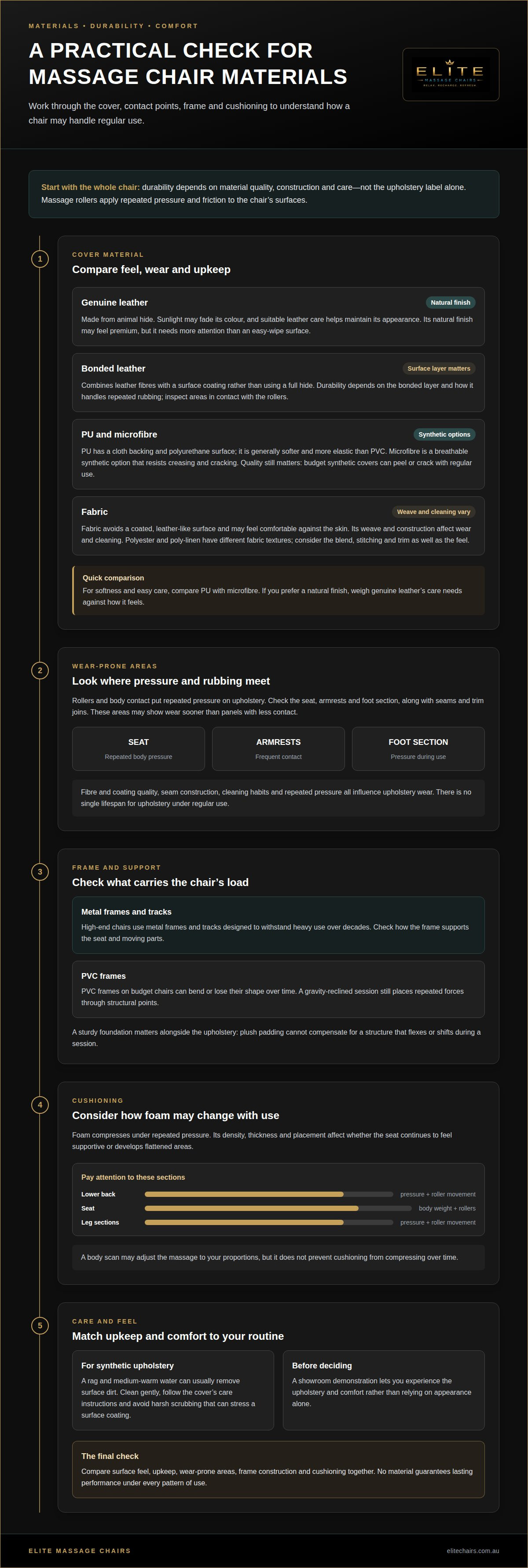
Massage rollers apply repeated friction and pressure to upholstery, so the cover affects both comfort and wear. The most durable choice depends on material quality, construction and care, not the label alone.
Genuine leather upholstery
Genuine leather is made from animal hide and feels different from synthetic covers. Sunlight can fade its colour, while regular care with suitable leather products helps maintain its appearance. Its natural finish may feel premium, but it needs more attention than an easy-wipe surface.
Bonded leather upholstery
Bonded leather combines leather fibres with a surface coating rather than using a full hide. Its durability depends on the quality of that bonded layer and how it handles repeated rubbing. Inspect the areas in contact with the rollers, as surface wear can affect both appearance and comfort.
PU leather upholstery
PU leather is synthetic upholstery with a cloth backing and polyurethane surface. It is generally softer and more elastic than PVC, while microfibre leather offers a breathable synthetic option that resists creasing and cracking. Budget synthetic covers can still peel or crack with regular use.
Compared with PVC, PU is typically softer and more flexible. Bonded leather’s wear depends on its surface layer. No material guarantees lasting performance under every pattern of use.
Fabric upholstery
Fabric avoids a coated, leather-like surface, but its weave and construction affect how it handles rubbing and cleaning. It may feel comfortable against the skin, while synthetic leather is often easier to wipe clean. Choose according to the balance of breathability, upkeep and resistance to repeated contact.
| Material | Wear consideration | Care consideration |
|---|---|---|
| Genuine leather | Sunlight may fade colour | Use suitable leather care |
| Bonded leather | Surface layer matters | Follow upholstery care guidance |
| PU or microfibre | Quality affects resistance to rubbing | Usually easy to wipe clean |
| Fabric | Weave affects wear | Cleaning depends on fabric |
For softness and easy care, compare PU with microfibre. If you prefer a natural finish, weigh genuine leather’s care needs against how it feels.
Australian consumer guarantees are separate from a written warranty; peeling may be assessed against expected product quality and durability. Repair or replacement costs depend on the damaged area, upholstery and parts required. No Australian brand can be named as offering the “best” coverage without comparable warranty terms and replacement-part information.
Massage chair upholstery and frame materials
Upholstery and frame materials work together: the cover meets your body, while the frame supports each session. Compare surface wear, cleaning needs and structural materials before buying.
There’s no single lifespan for upholstery under regular use. Fibre and coating quality, seam construction, cleaning habits and repeated pressure all influence wear, so assess these factors alongside comfort.
Polyester upholstery
Polyester is a synthetic fabric, distinct from coated synthetic leather. Its weave gives the surface a fabric feel, while construction and seam quality influence how it handles repeated contact. Look for wear-prone areas around the seat, armrests and foot section. These areas receive pressure during a relaxation program and may show wear sooner than panels with less contact.
Poly-linen upholstery
Poly-linen combines polyester with linen fibres, creating a fabric surface with a different texture from plain polyester. The blend and weave affect how it feels against the skin and responds to daily contact. Consider the whole chair, including trim and stitching, rather than judging one swatch. A fabric finish may suit furniture-focused styling, while coated upholstery has a different surface and cleaning routine.
The frame matters as much as its covering. Metal frames and tracks in high-end chairs are designed to withstand heavy use over decades; PVC frames on budget chairs can bend or lose their shape over time. Check how the frame supports the seat and moving parts. A gravity-reclined session still places repeated forces through those structural points.
For synthetic upholstery, a rag and medium-warm water can usually remove surface dirt. Clean gently and follow the care instructions for the specific cover; harsh scrubbing can stress a surface coating. Compare stitching, trim joins and contact zones, then consider how easy each area is to maintain between sessions.
Choose a chair by matching its surface feel, upkeep and frame construction to your routine. A showroom demonstration lets you experience the upholstery and comfort before buying, rather than relying on appearance alone.
A rag and medium-warm water can usually wipe synthetic massage-chair upholstery clean. Phthalate plasticiser is used to make PVC flexible and elastic when it is processed into PVC leather.
Cushioning and structural sturdiness
Cushioning shapes how rollers feel against your body, while the frame supports the chair during massage and reclining. Assess both: plush padding can feel inviting, but it can’t compensate for a structure that flexes or shifts during a session.
Foam cushioning compresses under repeated pressure. Its density, thickness and placement affect whether the seat continues to feel supportive or develops flattened areas. Pay attention to the lower back, seat and leg sections, where your weight and roller movement meet the padding. A body scan may adjust the massage to your proportions, but it doesn’t prevent cushioning from compressing over time.
Frame materials and joints influence sturdiness. High-end massage chairs are designed to last over a decade, and some often perform as they did on day one after a decade. By contrast, PVC frames on budget chairs can bend or lose their shape over time. During a demonstration, notice whether the chair feels stable as it reclines and returns upright; movement or creaking can affect the massage experience.
Look beyond the synthetic outer cover. The cushioning underneath absorbs pressure, while the frame carries the forces created by rollers and reclining. A weak point in either can affect how the chair feels and operates, even if the upholstery looks pristine. Check that the seat feels evenly supportive, without obvious dips or hard spots.
- Cushioning: Compare support across the seat, back and leg areas.
- Frame: Notice stability through recline and return movements.
- Warranty: Wirecutter considers sturdiness and a warranty of at least three years important qualities in a massage chair.
Plastic components aren’t automatically a sign of poor construction; their role and placement matter. Judge the complete structure rather than one material in isolation. A well-supported frame and resilient padding work together to maintain comfort during regular use. Warranty terms are another point to consider before buying.
Material choice and chair price
Upholstery affects the overall value of a massage chair, but it’s only one part of its construction. Materials, features and brand all contribute, so compare the complete chair rather than choosing by cover alone. The best massage chair material for durability balances surface quality, structural support and the care your routine allows.
PU upholstery typically costs more than PVC upholstery, reflecting a material difference rather than guaranteeing a longer life. A well-made cover may suit regular use, but the frame, cushioning and stitching also affect durability. Compare seam placement and high-contact panels, where rollers and repeated body pressure can create tension.
Price also reflects design and functionality. A zero gravity position, massage programs and body scanning are examples of features that can influence a chair’s overall value. Consider which functions you’ll use rather than paying for features that won’t improve your massage experience. A chair’s price isn’t a direct measure of how comfortable its upholstery will feel.
Construction matters over time. High-end massage chairs are built to last over a decade, but material alone doesn’t establish longevity. Examine the upholstery alongside the frame and cushioning, then weigh those details against the warranty. A premium finish may look refined, yet a stable structure and suitable support are essential for everyday use.
For a considered purchase, use these steps:
- Separate material from features: Compare the cover, frame and cushioning, then assess programs and reclining positions.
- Match spending to use: Regular sessions may make durable construction a stronger priority than extra features.
- Consider the full experience: A therapist provides hands-on care; a massage chair offers a different at-home experience.
To choose the best massage chair material for durability, weigh upholstery quality, structural materials and features you’ll genuinely use. Brands can vary in how they combine these elements, so compare the specific chair’s construction rather than assuming every premium model is alike. For a tactile comparison, explore massage chair options and consider how their materials feel in person.
Elite Massage Chairs: Zero Gravity Massage Chairs
Elite Massage Chairs offers Zero Gravity Massage Chairs for people comparing comfort, upholstery feel and overall construction. A showroom demonstration lets you experience a chair in person, including how its materials feel as you recline. This can help you judge details that photos alone can’t convey, such as the surface against your skin and the support beneath you.
Massage Accessories are also available to complement your setup. If you’re weighing material, comfort and fit before choosing a chair, a showroom demonstration is a practical next step. Contact Elite Massage Chairs to discuss your options.
Choose a chair that fits your everyday routine
The best massage chair material for durability is the one that suits how you’ll use and care for your chair, alongside the comfort and construction you value. Before deciding, picture where the chair will sit and how it will fit into your routine. This practical perspective can help you focus on qualities that matter in your home, rather than choosing only for a striking finish or a long feature list.
A considered choice should feel right beyond the first impression. Take time to weigh your priorities, then choose a next step that helps you feel confident about the chair’s fit and feel. If you’re ready to explore your options, contact Elite Massage Chairs. A thoughtful decision can make everyday relaxation feel more at home.
Frequently Asked Questions
Which massage chair materials resist sweat, oils, heat, and frequent cleaning best?
Synthetic upholstery is a practical choice for routine cleaning because massage-chair synthetic leather is designed to resist stains and liquids such as sweat. Its surface can usually be wiped with a rag and medium-warm water. Stain resistance doesn’t establish resistance to oils or heat, so follow the care instructions for the specific cover and wipe away residue promptly after a session.
Is genuine leather or synthetic upholstery better for massage chairs in hot, humid Australian climates?
Synthetic upholstery may be easier to maintain, while microfibre leather offers a breathable synthetic option. Genuine leather provides a natural surface but needs appropriate care to retain its appearance. In a warm, humid room, consider how the chair feels against your skin and how readily you can clean it after use. A showroom demonstration can help you compare surface comfort in person.


