

The biggest mistakes to avoid when buying a massage chair are choosing by features alone and overlooking durability, warranty coverage and support. Look for parts and in-home labour coverage of at least three years, and remember that premium chairs can last up to 10,000 hours.
It’s easy to be drawn to an impressive feature list, but lasting comfort depends on how well a chair suits your body and preferences. Before deciding, consider the brand’s reputation and support, then assess which massage techniques, target areas and intensity levels feel right for you.
This guide explains how to evaluate durability and warranty terms, assess brand support, match features to your needs, and judge speed and pressure before you buy. A considered choice can help you find a chair that feels comfortable in use and makes sense for your home over the long term.
Key Takeaways
- Look beyond the chair’s feature list and weigh durability, warranty coverage and the practical support available over time.
- Consider the brand’s reputation, maintenance needs and spare-part access as part of your buying decision.
- Match massage techniques and target areas to your comfort preferences, body shape and intended use.
- Experience a chair before buying to judge whether its speed, pressure, padding and adjustability feel right for you.
1. Assessing durability and warranty coverage
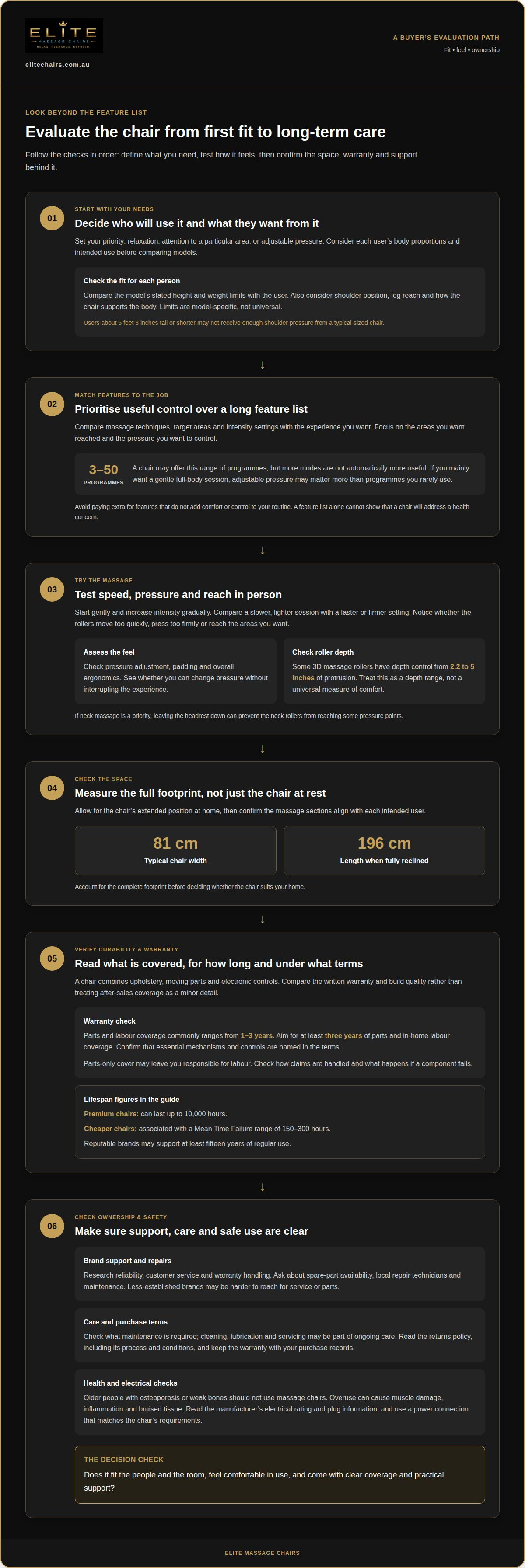
Durability matters because a massage chair combines upholstery, moving parts and electronic controls. Premium massage chairs can last up to 10,000 hours, while cheaper chairs are associated with a Mean Time Failure range of 150-300 hours. Reputable massage chair brands may support at least fifteen years of regular use. These figures make build quality and after-sales coverage important considerations, not minor details.
Read the warranty terms before committing. Coverage commonly ranges from 1-3 years for parts and labour, but aim for at least three years of parts and in-home labour coverage. A longer term can reduce the chance of facing repair costs soon after purchase. Confirm that the warranty names essential components, rather than offering broad wording that leaves key parts unclear.
Review what happens if a component fails. Check whether parts and labour are covered, how warranty claims are handled, and whether coverage includes the chair’s essential mechanisms and controls. For example, a warranty covering parts but excluding labour could leave you responsible for repair costs. Focus on what the written terms cover and for how long.
Spare-parts availability affects how practical repairs may be after the warranty ends. Before buying, find out which parts may need replacement, whether they can be obtained, and what maintenance the chair requires. Cleaning, lubrication and servicing may be part of ongoing care. Follow the manufacturer’s instructions and keep the warranty with your purchase records. Clear warranty terms, accessible parts and a realistic care routine help you assess long-term value beyond initial comfort.
2. Checking a massage chair brand’s reputation and service support
A manufacturer’s reputation matters beyond the first massage. Research reliability, customer service and warranty handling, then look for consistent feedback about support and repairs. Less-established brands may be harder to reach for service or parts. Ask how maintenance is handled, which spare parts are available, and whether local repair technicians can service the chair. These details can shape the ownership experience as much as its wellness features.
Massage chair prices in Australia vary by model, construction and features. Compare the quoted price with the chair’s support, intended use and fit, rather than judging value by the number of functions alone. Read the returns policy before purchase, including the process and conditions for returns. Clear terms matter for a large item that must suit your home and body.
Fit depends on the proportions of each person who will use the chair. Treat the manufacturer’s stated limits as model-specific, not universal. Compare each user’s height and weight with those limits, then consider shoulder position, leg reach and how the chair supports the body.
Massage chairs may be unsuitable for some people with health concerns. Older people with osteoporosis or weak bones should not use them; overuse can also cause muscle damage, inflammation and bruised tissue. For electrical safety, read the manufacturer’s rating and plug information, and use a power connection that matches the chair’s requirements. Don’t assume every model has identical electrical details.
Common reliability complaints can involve difficulty obtaining spare parts or arranging repairs, particularly with less-established brands. Before buying, review the support process, local servicing options, maintenance needs and parts availability together. This gives you a clearer picture of what ownership may involve if the chair needs attention after purchase.
3. Matching chair features to relaxation or pain-relief needs
Start with the experience you want: relaxation, attention to a particular area, or adjustable pressure. Compare massage techniques, target areas and intensity settings with those preferences. A chair with 3 to 50 programmes may offer variety, but more programmes aren’t automatically more useful. If you mainly want a gentle full-body session, controls that let you adjust pressure may matter more than modes you rarely use.
One of the mistakes to avoid when buying a massage chair is paying extra for features you won’t use. Prioritise adjustable intensity, massage techniques and target areas that suit your routine. Extra programmes may be unnecessary if they don’t add comfort or control. A feature list alone also can’t show that a chair will address a health concern.
Body proportions affect whether the rollers reach the areas you expect. However, users about 5 feet 3 inches tall or shorter may not receive enough shoulder pressure from a typical-sized chair. Check how the shoulder, back and leg sections align with each intended user.
Another of the mistakes to avoid when buying a massage chair is overlooking the space it needs. A typical chair is 81cm wide and extends to 196cm when fully reclined, so account for its full footprint. During a demonstration, notice whether the massage reaches your chosen areas and the intensity feels comfortable. If a neck massage is a priority, leaving the headrest down can prevent the neck rollers from reaching some pressure points.
4. Choosing appropriate massage speed and intensity
Test speed and pressure before buying, rather than relying on a feature list. Start with a gentle setting, then increase intensity gradually to find a comfortable level. Notice whether the rollers move too quickly, press too firmly or reach the areas you want. Choose settings suited to your health and intended use, not simply the strongest option.
During a trial, assess adjustability, padding and overall ergonomics as well as massage functions. Try a slower, lighter session, then compare it with a faster or firmer setting. Check whether you can change pressure without interrupting the experience. A well-designed control range should help you relax, not leave you tolerating discomfort.
Some 3D massage rollers have depth control from 2.2 to 5 inches of protrusion. This range describes roller depth, not a universal measure of comfort. Test how each setting feels against your body, and don’t assume a “4D” label guarantees a suitable speed or pressure. The practical test is whether adjustments feel controlled and comfortable.
Measure the intended space and the route into your home before ordering. A doorway needs at least 75cm of clearance to bring a massage chair inside. A regular chair needs 2.5 feet of wall clearance when fully reclined; space-saving models need 1-6 inches. Measure hallways and turns too, so delivery access and the final position are both workable.
Delivery, installation and removal costs in Australia depend on factors such as distance, access, stairs and whether old-chair removal is included. Consider these details alongside the chair’s dimensions and setup needs. Testing speed and intensity, then measuring the route and room, helps you assess comfort and practicality before committing.
Elite Massage Chairs: Massage Chair Showroom Demos
Elite Massage Chairs offers showroom demonstrations, so you can experience a chair before choosing one. A demonstration lets you assess its massage speed, pressure and features in practice, rather than relying on descriptions alone. Notice whether the chair fits your body comfortably and whether its settings suit the kind of relaxation you’re seeking.
If a zero gravity massage chair is on your shortlist, experiencing it in person can help you judge its comfort and controls. Bring your priorities, such as preferred intensity or target areas, to guide your comparison. A showroom demonstration is a practical next step when you want to make an informed choice.
Contact Elite Massage Chairs to arrange a showroom demonstration.
Choose a chair with confidence
The right choice is personal: a chair should suit the way you want to unwind, the people who’ll use it and the space it will occupy. Rather than chasing every available feature, focus on what will make everyday use comfortable and straightforward. That’s a practical way to avoid common mistakes when buying a massage chair and feel more assured about your decision.
When you’re ready to explore options in person, Elite Massage Chairs offers showroom demonstrations, zero gravity massage chairs and massage accessories. A demonstration gives you the opportunity to experience a chair’s feel and controls before deciding whether it belongs in your home.
Take the next step at your own pace. Contact Elite Massage Chairs to discuss your massage chair needs and explore a considered path towards everyday comfort.
Frequently Asked Questions
What features should I compare when buying a massage chair?
Compare features with how you expect to use the chair, rather than counting functions. Consider massage techniques, areas covered, programme choices and how easily you can change pressure or speed. For example, someone wanting a brief wind-down after work may value simple controls, while someone sharing the chair may prefer settings that accommodate different preferences. Prioritise functions you’ll use often over extras that don’t suit your routine.
What room size and clearance does a massage chair need?
Allow room for the chair’s full reclined position, not just its upright footprint. Check the manufacturer’s dimensions, then map the chair’s position on your floor, including space to get in and out. Trace the delivery route from the entrance through hallways and turns to the room. A chair that fits the lounge may still be difficult to move through a narrow doorway.
How can I check whether a massage chair fits my height and body shape?
Test the chair with the people who’ll use it, because a comfortable fit depends on more than height alone. Notice where the shoulder rollers sit, whether your back rests naturally against the chair, and whether the foot section reaches comfortably. Someone with a shorter torso, for example, may find the shoulder area sits differently than expected. Check the model’s stated height and weight limits for every intended user.
What massage chair warranty and return policies should Australian buyers check?
Read the written warranty and return terms before purchase, paying attention to when coverage starts and what a claim requires. Check whether parts, labour and in-home repairs are treated separately, and whether the terms explain how to report a fault. For returns, look for conditions covering packaging, delivery and the chair’s condition. Keep your order confirmation and policy documents together for easy reference.
How can I test a massage chair before buying and avoid misleading demonstrations?
Use a showroom demonstration to assess the chair yourself, rather than relying only on a description. Try the controls, compare gentle and firmer settings, and notice how the rollers feel across your back and shoulders. Ask to see how the chair changes between programmes, then consider whether those settings reflect your usual preferences. A feature that looks appealing may feel different once you sit in the chair.
How do massage chair running costs, repairs and replacement parts compare in Australia?
Running costs depend on the chair’s power use, how often it runs and your electricity tariff, so use those details to estimate household energy use. Repair expenses vary with the fault, labour and parts required. Before choosing, consider how servicing is handled and whether replacement parts can be obtained. Keeping a simple record of maintenance, faults and repairs can help you understand ongoing costs over time.


