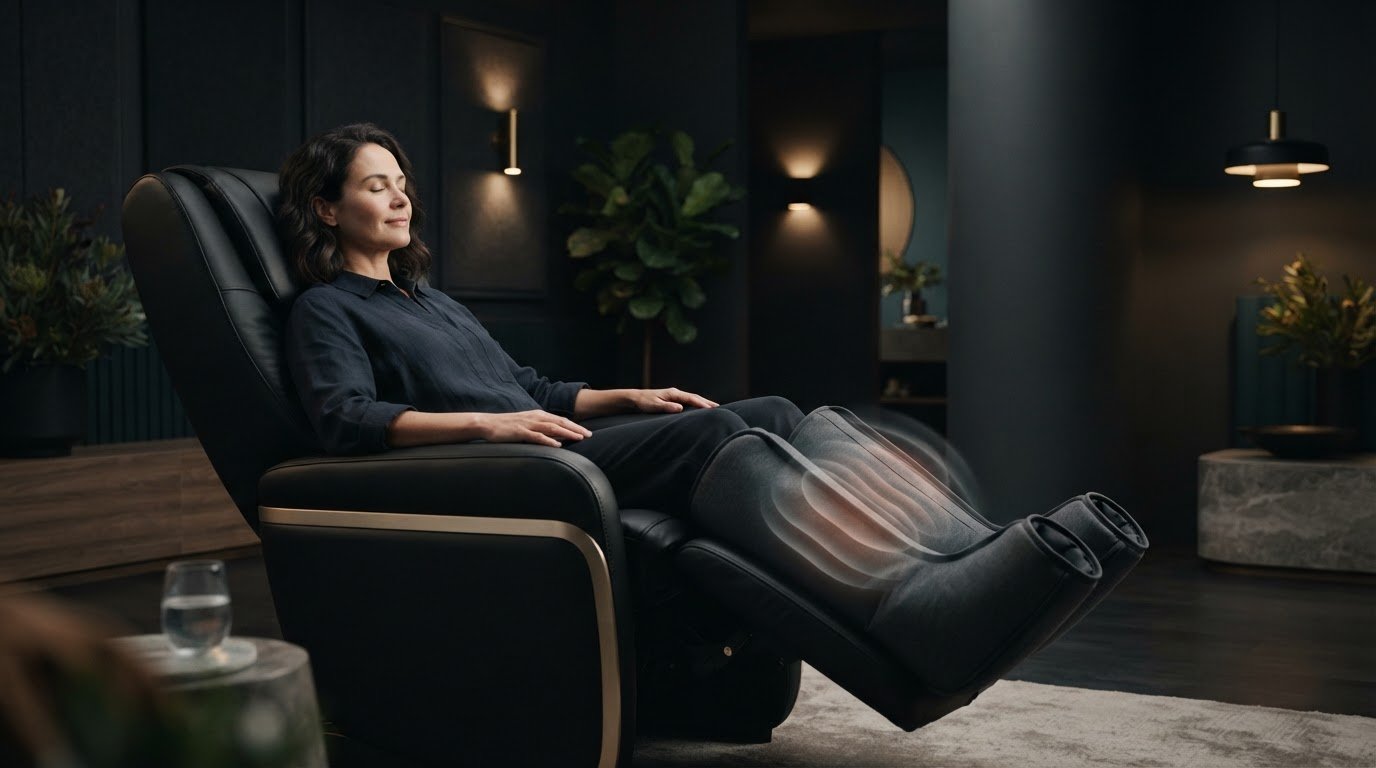

What if the warmth in a massage chair is best understood as a comfort feature, not a cure? It’s easy to see why gentle heat paired with massage feels restorative, but the heated massage chair therapy benefits are more modest than some claims suggest. Warmth may help you feel more comfortable and relaxed during a session; it can’t diagnose or repair the cause of pain.
If you’re weighing up whether heat offers more than temporary comfort, start by separating what you can assess for yourself from what would require evidence of a health effect. This guide explains how heat and massage may feel, how to compare settings and when to seek advice from a qualified health professional. It also covers what to check on an individual chair, because heating features and instructions vary.
Key Takeaways
- Heated massage chair therapy benefits may relate to personal comfort. Claims about treating a condition need appropriate evidence.
- Compare warmth alone, massage without heat and combined use to identify which experience feels right for you.
- Follow the specific chair’s instructions, begin gently and stop if a setting causes discomfort.
- Before choosing a chair, confirm heat is included on the individual model and assess its controls, fit and operating guidance.
- A showroom demonstration can help you assess comfort and fit before making your choice.
What are the heated massage chair therapy benefits, and what is realistic?
Heat adds warmth to a massage chair session. It is intended to make the experience feel soothing and comfortable, not to act automatically as a medical treatment. The heated massage chair therapy benefits someone notices may be limited to feeling more relaxed or temporarily comfortable. Claims about treating pain, injuries or diagnosed conditions need appropriate evidence and should be discussed with a qualified health professional.
Comfort is a personal experience, not proof of a clinical outcome. What feels beneficial can vary with the person, the chair’s design and settings, and the reason for using it. One person may enjoy gentle warmth and massage, while another may find either sensation unpleasant.
What does the heat function in a massage chair do?
The heat function adds warmth during a session, which some people find soothing. Heat therapy provides general background, but it does not establish what a particular chair can do or prove a health outcome from using one. Do not assume every model warms the same areas or uses the same technology. Check the specific model’s confirmed features and manufacturer instructions before use.
Which benefits are reasonable to expect?
For some users, warmth may make a massage feel more inviting. Massage itself creates a separate sensation of pressure or movement. Used together, the two features may feel complementary, but that response is subjective and not guaranteed. Notice which part of the experience you find comfortable rather than assuming heat is responsible for every perceived change.
Keep expectations measured. A relaxing session or short-lived sense of comfort is different from evidence that a chair treats ongoing pain, an injury or an underlying condition. Any claim about health outcomes needs reliable supporting evidence and review by a qualified clinician. A massage chair should not replace medical assessment or care. If you are considering one for a health concern, ask a health professional whether it is appropriate for you.
How might heat and massage work together during a chair session?
During a chair session, warmth and massage are separate sensations that may overlap. Heat is generally felt where the body contacts the chair, while rollers or other massage mechanisms create pressure or movement. Think of warmth as a soothing layer over the session, not evidence that heat is reaching deep into muscle or changing an underlying condition.
The experience depends on the heat feature, its settings and your individual response. Areas warmed, controls and massage sensations can differ between models, so do not assume one chair’s experience applies to another.
Warmth, muscle comfort and relaxation
Some people find warmth calming before or during massage. It may make a session feel more comfortable in the moment, while the massage provides a distinct sensation such as rolling or kneading. Notice whether one or both contribute to your sense of ease. Temporary comfort does not necessarily mean a lasting change to muscle function or a health condition.
Do not assume warmth increases circulation, speeds healing or reduces inflammation just because a chair has a heat feature. These are health effect claims that require reliable evidence. Evidence about heat therapy generally may not establish what a specific chair or programme does.
Why a massage chair is not the same as a clinical heat treatment
Clinical heat treatments and chair functions can differ in equipment, temperature control, contact areas and intended use. A study of a particular treatment cannot automatically be applied to every massage chair or to a programme that has not been evaluated in the same way. The physical benefits of massage discussed by Mayo Clinic Health System relate to massage therapy generally. They do not prove that adding heat to a chair produces the same outcomes.
This distinction matters if you are considering a chair for persistent symptoms or a diagnosed condition. A relaxing experience may be worthwhile for personal comfort, but it is not a substitute for clinical assessment or treatment advice. Ask a qualified health professional whether massage or heat is suitable for your circumstances, particularly if you are unsure what is causing your symptoms.
To assess how massage pressure and warmth feel together, consider trying a chair in person. A massage chair showroom demonstration can help you assess comfort and fit. Confirm the individual model’s heat features and instructions before relying on them.
Heat alone or heated massage chair: which experience may suit you?
Start by considering what you enjoy, rather than how many features a chair has. Warmth alone, massage without heat and combined use create different sensations. More features do not automatically mean better therapeutic results. The heated massage chair therapy benefits you perceive depend on personal comfort, and none of these options should be treated as a proven way to manage a medical condition.
| Option | What it may feel like | Reasonable expectation and limitation |
|---|---|---|
| Warmth alone | A gentle, steady feeling of warmth without rollers or massage movement. | May feel soothing if warmth itself is what you enjoy. It doesn’t provide the pressure or movement of massage, and comfort isn’t proof of a treatment effect. |
| Massage without heat | Pressure or movement from the chair, with no added warmth. | Lets you assess the massage sensation on its own. The experience varies by chair and settings, and shouldn’t be assumed to treat pain or injury. |
| Combined use | Warmth alongside the chair’s massage sensations, if the model has a confirmed heat feature. | Some people may prefer this layered feel. It can also feel too warm or intense, and extra features don’t establish better health outcomes. |
When might warmth alone be enough?
If you mainly enjoy a warm, cosy sensation and do not want rollers or pressure, warmth alone may suit your comfort preference. Consider whether the feeling is pleasant and manageable for you; this is not a recommendation to treat a condition. If you are thinking of using a separate heating product while seated in a massage chair, check both sets of instructions first. Do not combine them unless the manufacturers’ guidance allows it.
When might combined warmth and massage feel preferable?
You may enjoy warmth alongside massage if you like both sensations and the specific chair is confirmed to offer heat. Try a gentle setting first and notice how the warmth and massage feel separately. Stop if the experience becomes uncomfortable. When comparing chairs in person, assess the massage with heat off and on, if the model’s controls allow, so you can tell which combination suits you.
There is no universal winner for comfort, pain, recovery or other health outcomes. Choose based on the experience you prefer, and check the specific model’s heat functionality and operating instructions rather than assuming all massage chairs include the feature.
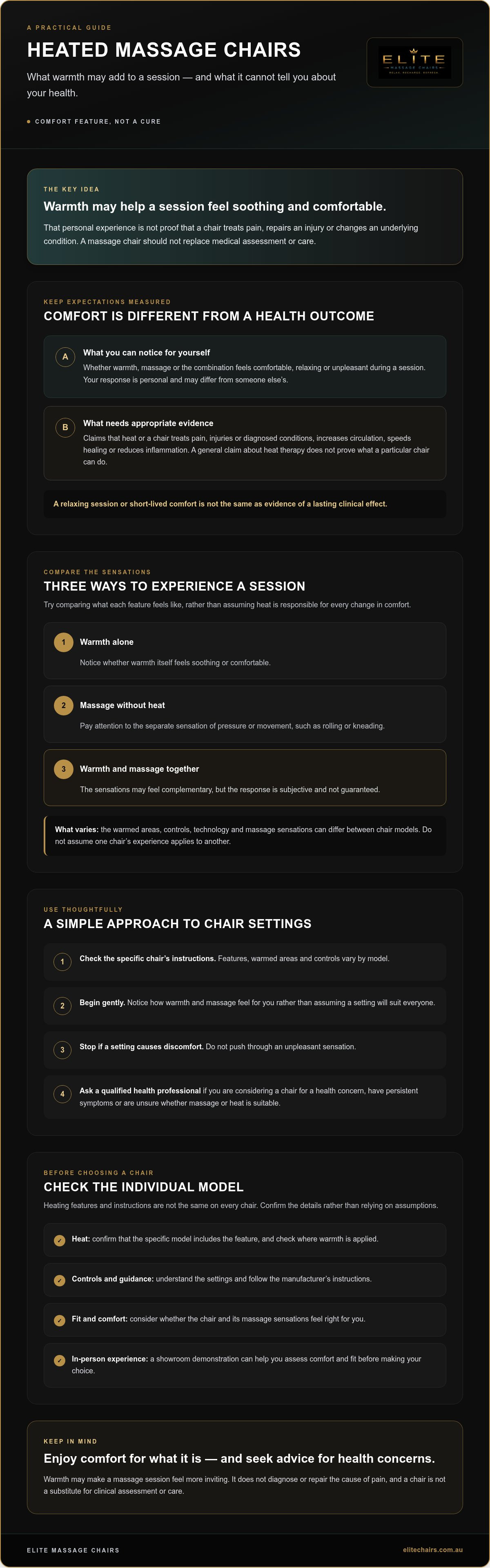
How to use heated massage chair settings thoughtfully and safely
A considered first session starts with the instructions for the exact chair, not a universal heat setting or routine. Features and controls differ between models, so guidance for one chair may not apply to another. The heated massage chair therapy benefits you notice should never come at the expense of comfort or safety.
A cautious first session
Before switching on heat, check which areas the model warms and how to control the feature. Follow the manufacturer’s directions, begin conservatively and pay attention to how both the warmth and massage feel. Do not assume a setting or programme is suitable just because it feels comfortable at first.
- Read the operating instructions, including any cautions about heat and massage.
- Start gently, following the model’s guidance rather than advice for another chair.
- Monitor your comfort throughout the session. Stop if you feel pain, dizziness, excessive warmth or unusual discomfort.
There is no single temperature, session length or frequency that suits every chair and user. Use only the model’s instructions to guide those choices. If you are unsure how its controls work, pause and seek clarification before using the heat function.
When to check with a health professional first
Ask a qualified health professional for personalised advice before use if you have a health condition, circulation concerns, reduced sensation, are pregnant or have a recent injury. Altered sensation may make it harder to judge warmth comfortably, while individual circumstances can affect whether heat or massage is appropriate. Persistent symptoms or uncertainty about using a chair for a particular concern are also reasons to seek professional guidance.
Follow the manufacturer’s instructions, and seek individual professional advice if your health or circumstances raise questions about using heat or massage. General information cannot determine whether a particular feature is suitable for you, and a massage chair is not a substitute for medical assessment or care.
If you are comparing chairs, a massage chair showroom demonstration can help you assess the controls and how the chair feels. Confirm whether the specific model includes heat and review its operating guidance before deciding.
Choosing a heated massage chair: assess comfort before committing
A considered choice starts with the exact model, not broad claims about what heat or massage can do. The heated massage chair therapy benefits you are seeking may come down to whether the warmth, massage sensations and fit feel comfortable. Treat feature descriptions as a starting point, then check what the manufacturer confirms and try the chair if you can.
Questions to ask before choosing a model
Use this checklist to separate confirmed specifications from general wellness language. Ask for clear answers about the chair you are considering rather than assuming features carry across a retailer’s range.
- Heat functionality: Does this specific chair include heat, which areas are warmed, and which settings are confirmed?
- Controls: How is heat switched on or adjusted, and can it be used with the massage programmes you are interested in?
- Comfort and fit: Does the chair support your body comfortably, and do its massage sensations and warmth feel manageable?
- Instructions: Where can you read the manufacturer’s operating guidance and safety information?
- Product questions: Who can clarify the chair’s specifications if anything is unclear?
Give more weight to information that identifies the specific model, its functions and how to use them. Phrases such as “supports wellness” or “therapeutic experience” may describe how a chair is positioned, but they do not prove it treats pain or a health condition. If a claim sounds like a clinical promise, look for reliable evidence and ask a qualified health professional for advice relevant to you.
Experience the chair and make an informed next step
A showroom demonstration gives you the chance to assess comfort, fit and controls firsthand. Notice whether the chair feels supportive, whether the massage pressure suits you and, if heat is confirmed for that model, whether you can adjust it easily. Focus on your experience, not on expecting a cure. You can also ask to see where the manufacturer’s instructions explain the heat feature.
For more preparation, read the article about booking a massage chair demonstration in Australia and note any questions you want answered before visiting. Elite Massage Chairs offers free showroom demonstrations, where prospective buyers can explore chair comfort and usability in person. Book a demonstration when you are ready to compare your options.
Choose comfort with clear expectations
The realistic heated massage chair therapy benefits centre on comfort and relaxation. Warmth may make a massage session feel more soothing, but it is not automatically a treatment for pain, injury or a diagnosed condition. Your experience depends on your preferences and the individual chair.
Before choosing, confirm that the specific model includes heat, check how its controls work and read the manufacturer’s instructions. Compare warmth alone with massage and combined use, and pay attention to what feels comfortable rather than expecting a cure. If you have a health condition, altered sensation or questions about whether heat is suitable, seek individual advice from a qualified health professional.
Trying a chair in person can help you assess its fit, settings and feel before deciding. Elite Massage Chairs offers free showroom demonstrations for prospective customers and flexible financing through Humm. Book a free massage chair demonstration and discover what feels right for you.
Take your time, ask questions and choose the experience that feels comfortable for you.
Frequently Asked Questions
Does heat in a massage chair actually help with muscle tension?
Some people find warmth soothing and may notice temporary comfort during a massage chair session. These heated massage chair therapy benefits are subjective and do not establish that the chair treats the cause of muscle tension or will provide relief for everyone. Your response may depend on the chair and your preferences. If tension persists, worsens or has no clear cause, seek advice from a qualified health professional rather than relying on a chair feature.
Can a heated massage chair help with back pain?
A heated massage chair may feel comfortable for some people, but it should not be relied on as a treatment for back pain. How warmth and massage feel, and whether they are suitable, varies between people and chairs. Seek professional advice for persistent or severe pain, new symptoms, or pain following an injury. Check the specific chair’s instructions, and discuss heat use with a qualified health professional if you have relevant health concerns.
Is it safe to use heat and massage at the same time?
It depends on your circumstances and the design and instructions of the specific chair. Check the manufacturer’s guidance, start cautiously and stop if you feel discomfort. If you have reduced sensation, circulation concerns, are pregnant or have a relevant health condition, ask a qualified health professional before using heat and massage together. General advice cannot replace model-specific instructions or personalised clinical guidance about whether this experience is appropriate for you.
How long should I use the heat function in a massage chair?
There is no session duration that applies to every chair or person. Heat settings and instructions differ by model, so follow the manufacturer’s guidance for the specific chair rather than applying a general rule. Do not extend a session expecting a stronger therapeutic effect, and stop if the experience becomes uncomfortable. If a health condition or reduced heat sensitivity makes you unsure about using the feature, ask a qualified clinician before you begin.
Does a heated massage chair improve circulation or speed recovery?
Claims about heat therapy generally do not automatically apply to a particular massage chair or programme. Do not assume a chair improves circulation or accelerates recovery unless reliable evidence supports that specific claim. You may find the warmth relaxing, but that feeling is not proof of a physiological change or recovery benefit. If you have concerns about circulation or are recovering from an injury or procedure, discuss suitable options with a qualified health professional.
What should I look for in a heated massage chair?
Confirm that the specific model includes heat, which areas it warms, how its controls work and what the manufacturer’s instructions say. Assess the chair’s fit, comfort and massage options separately from general wellness or therapeutic claims. If possible, try the chair before deciding. A showroom demonstration can help you judge comfort and usability firsthand, but it cannot establish that the chair will treat pain or another medical condition.