

Daily use is generally safe for most people, provided you keep sessions comfortable and ease back if soreness develops. If you’re wondering whether you can use a massage chair every day, aim for around 15 to 20 minutes per session. For chronic pain, a gentler starting point is 15 to 20 minutes once a day on 3 to 4 days a week.
It’s understandable to want regular relief, especially when pain or tension keeps returning. But longer or more intense sessions aren’t automatically better. The right routine depends on how your body responds.
Here, you’ll learn how often to use a massage chair, how long to stay in it and what to consider when managing chronic pain. You’ll also find signs that it may be time to reduce the intensity or frequency, so your routine feels restorative rather than demanding.
Key Takeaways
- Use session length and intensity as well as frequency to shape a comfortable routine, and recognise signs that you may be overdoing it.
- Build towards regular use gradually, adjusting your schedule if you notice soreness or discomfort.
- For chronic pain, consider how symptoms and session intensity affect your routine, and what to discuss with a healthcare professional.
- Learn what to look for in warranty terms and how a showroom demonstration can help you experience a massage chair before choosing one.
How long should a massage session last to be effective?
For a massage chair, around 15 minutes is often enough to help relax muscles and loosen knots. Many automatic programs run for 15 to 20 minutes, while shorter options may last 5 to 7 minutes and longer programs can reach 30 minutes. A commonly suggested session range is 15 to 30 minutes, but a longer program isn’t automatically more suitable. Begin with a shorter setting and notice how your body responds.
If you’re new to chair massage, start with 15 minutes once a day on 2 to 3 days a week. Choose gentle intensity, especially during your first sessions. If the massage feels too strong, switch to a gentler program and set the chair more upright. People accustomed to massage may use more sessions, but frequency and intensity still matter.
Weekly recommendations vary with the purpose of use. General guidance ranges from 2 to 5 sessions a week; some recommendations suggest limiting use to 3 or 4 times weekly and leaving a day between sessions. For relaxation, one approach is 15 to 20 minutes on 4 to 5 days a week. Treat these as different routines, not targets to combine: start conservatively and adjust the schedule to your comfort.
Traditional massage follows a different time pattern. A general recommendation is 2 to 3 sessions per week, each lasting about an hour. That longer appointment shouldn’t be used to set a massage-chair session length, as chair programs are typically much shorter.
Frequent or intense sessions can leave muscles fatigued or mildly sore, with temporary aches after massage. Watch for soreness, bruising, skin sensitivity or unusual tiredness after a session. If these effects appear, reduce the intensity, shorten your next session or take a rest day instead of adding another program. A comfortable session should feel manageable, not like a test of endurance.
How often can you use a massage chair?
Daily use may suit some people, but frequency should reflect your purpose, session intensity and how your body responds. General relaxation and muscle recovery can call for different routines.
Daily use recommendations
Daily frequency means how many chair sessions you use across a day or week, not simply whether you sit in it regularly. For general relaxation, guidance suggests 3 to 4 times per week; for muscle recovery, it suggests 4 to 5 times per week. Some people use a chair daily for stress relief, but daily use isn’t a requirement for relaxation. If you’re accustomed to massage, the suggested upper limit is three times a day. Keep sessions comfortable and reduce use if soreness develops.
Daily use and safety
Safe use means paying attention to your body’s response and avoiding unnecessarily long or intense sessions. Daily use is generally considered safe for most people, but soreness is a reason to reduce frequency or session length. Pregnancy calls for extra care: pregnant people, particularly in the first trimester, are advised to use chairs less frequently and consult a healthcare provider before regular use. Some chairs switch off for a few minutes after a session to help prevent overheating. Don’t leave one running for hours.
Machine wear with daily use
Daily use means a chair’s moving parts go through more use cycles than they would with occasional sessions, so frequency can affect machine wear. However, there’s no universal lifespan or specific wear rate. Follow the chair’s programmed session limits rather than running repeated sessions for hours. Some chairs pause automatically for a few minutes after use to avoid overheating. This pause is a reminder that continuous operation and ordinary daily sessions aren’t the same.
Massage types and daily use
Shiatsu, air-compression and heated massage chairs create different sensations, but session frequency should still reflect comfort and intensity. Shiatsu uses focused pressure, air compression applies rhythmic squeezing, and heat adds warmth. A mode’s name alone doesn’t determine how often it suits you. Start gently and notice whether your muscles feel relaxed or sore afterwards. For daily relaxation, choose a comfortable program and reduce use if discomfort appears, rather than assuming one massage type allows longer sessions.
Massage chair use for chronic pain
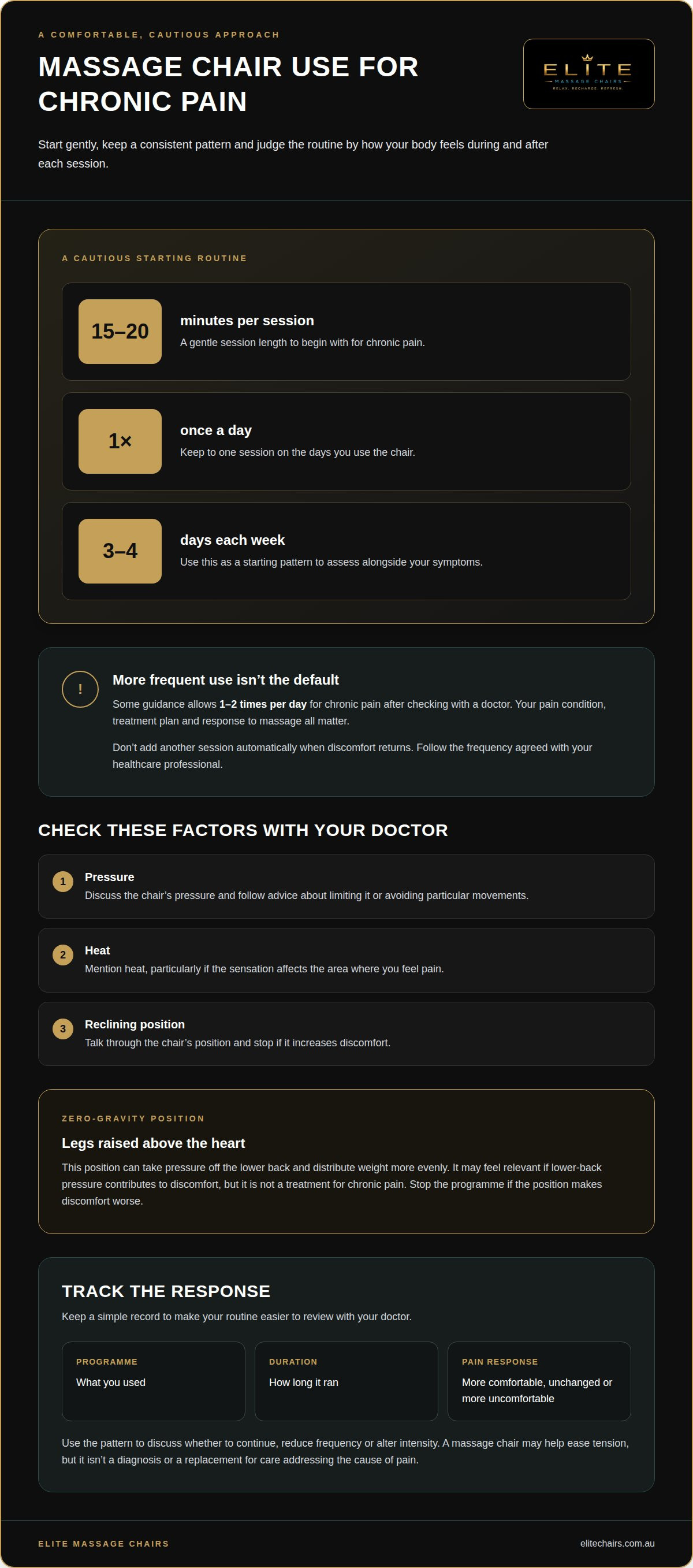
For chronic pain, a cautious starting routine is 15 to 20 minutes once a day, on 3 to 4 days each week. This gives you a clear pattern to assess alongside your symptoms, rather than adding repeated sessions whenever discomfort returns. Keep the program gentle and pay attention to how your body feels during and after each use. Massage chairs can help ease tension, but they aren’t a diagnosis or a replacement for care addressing the cause of pain.
Some guidance suggests people with chronic pain may use a chair 1 to 2 times per day after checking with a doctor. That higher frequency is not a default schedule: your pain condition, treatment plan and response to massage all matter. Before regular use, discuss the chair’s pressure, heat and reclining position with your doctor, particularly if those sensations affect the area where you feel pain. Follow any advice about limiting pressure or avoiding particular movements.
Zero-gravity positioning changes how your body is supported during a session. In this position, the chair raises your legs above your heart, which can take pressure off the lower back and distribute weight more evenly. This may feel relevant if lower-back pressure contributes to your discomfort, but it doesn’t establish a treatment for chronic pain. Focus on comfort, and stop the program if the position increases discomfort.
Use a simple routine to make each session easier to discuss with your doctor: note the program, duration and pain response. For example, record whether a 15-minute gentle session leaves you more comfortable, unchanged or more uncomfortable later. That pattern provides useful detail when reviewing whether to continue, reduce frequency or alter intensity. If pain changes after a session, don’t respond by automatically adding another program; return to the frequency agreed with your healthcare professional.
Daily use and warranties: What do manufacturers say?
There isn’t one daily-use recommendation that applies to every massage chair. Each manufacturer sets operating guidance for its model, so follow the manual’s instructions for session length, rest periods and program settings. A routine that suits one chair shouldn’t automatically be applied to another. The manual is the practical guide to using that specific model as intended.
Warranty terms address a different question: which product faults and components are covered, and under what conditions. Read the warranty alongside the operating manual, paying attention to exclusions, maintenance requirements and instructions about repeated use. Follow any daily-use limit in the documents. If they recommend particular programs or rest periods, build your routine around that guidance rather than assuming every model has the same limits.
Daily use alone doesn’t determine whether a particular fault is covered. That depends on the chair’s warranty wording and the circumstances of the fault. For example, a warranty may distinguish a product defect from damage caused by use outside the manual’s instructions. Keep the warranty and manual together, and refer to both if a fault occurs after regular sessions. Don’t assume the warranty covers every issue.
Separate normal operation from warning signs. If your chair makes unusual sounds, becomes unresponsive or behaves differently after repeated sessions, stop using it and unplug it. Let it cool before considering further use. Don’t keep restarting a chair that remains unresponsive; follow the manufacturer’s troubleshooting and warranty process for that model.
Before settling into a daily routine, compare the chair’s operating instructions with its warranty conditions. To experience how different settings feel before choosing a chair, book a massage chair showroom demonstration.
Elite Massage Chairs: Massage Chair Showroom Demos
Elite Massage Chairs offers showroom demonstrations so you can experience a chair before choosing one for regular use. A demonstration can help you assess how the massage feels, whether the intensity suits you and how a zero-gravity massage chair supports your preferred reclining position. These impressions can help you weigh comfort if you expect to use the chair often.
If you’re considering a chair for daily relaxation or want to explore massage settings in person, a showroom demonstration is a practical next step. You can also explore massage accessories for your wellness setup.
Contact Elite Massage Chairs to arrange a showroom demonstration and explore the available options.
Make comfort the guide for your next step
A lasting routine should fit naturally into your day, rather than become another target to meet. If you’re wondering, can you use a massage chair every day, let your comfort and response to each session guide your decision. For ongoing or complex pain, a healthcare professional can help you decide how chair use fits into your broader care plan.
Choosing a chair is a personal experience: pressure, movement and recline that feel soothing to one person may feel different to another. Trying a chair in person can help you understand those sensations and decide what suits your preferences before choosing.
If you’d like to explore your options or arrange a demonstration, contact Elite Massage Chairs. Take the next step at your own pace and find a more considered way to make room for comfort.
Frequently Asked Questions
How many times a day can you use it?
General guidance advises using a massage chair no more than three times a day, but that’s an upper limit, not a daily target. For regular use, shorter, comfortable sessions are more measured than stacking programs together. If you’re new to chair massage, begin with a single session and see how your body responds before considering another.
Is it safe to use a massage chair every day?
Daily use is generally considered safe for most people if sessions remain comfortable. Reduce use if soreness develops, and pay attention to effects that appear later, not just how the massage feels in the chair. If everyday use leaves you sore or unusually tired, take a break or shorten future sessions instead of keeping the same routine.
How long should you use a massage chair per session?
Around 15 to 20 minutes is a common session length, and many automatic programs run for 15 to 20 minutes. Some programs are shorter, while others can last up to 30 minutes. Start with a brief, gentle program if you’re unfamiliar with the chair. A longer setting isn’t automatically more effective; comfort and your response matter.
How often can you use a massage chair safely?
For general relaxation, recommendations include using a chair 3 to 4 times per week. For muscle recovery, guidance suggests 4 to 5 times per week. Some people prefer daily sessions for stress relief, but frequency should suit their response, not a fixed target. If soreness develops, reduce how often you use the chair or shorten each session.
What are the risks or side effects of daily massage chair use?
Frequent or intense sessions may cause muscle fatigue, mild soreness or temporary aches. Other signs of possible overuse include bruising, skin sensitivity and unusual tiredness after a session. If you notice these effects, stop or reduce the intensity and give your body time to recover. A massage shouldn’t become increasingly uncomfortable as you continue using the chair.
Who should avoid using a massage chair or seek medical advice first?
Pregnant people, particularly during the first trimester, should use massage chairs less frequently and seek advice from a healthcare provider before regular use. People considering a chair for chronic pain should also discuss it with their doctor first. The type of pain, chair pressure and position can all affect whether a particular routine is suitable for their circumstances.


