

What if the most sophisticated recovery suite in the country wasn't a boutique spa in the CBD, but the spare room currently gathering dust in your own home? With Australians now spending an estimated $6,737 annually on wellness, the shift toward creating a wellness room at home has evolved from a luxury trend into a vital lifestyle necessity. You've likely felt the creeping burnout of a relentless work-from-home schedule or the persistent physical aches that follow a long day at a desk. It's exhausting to find the time for external appointments when your body is screaming for immediate relief.
This 2026 guide will show you how to transform any underutilised space into a professional-grade sanctuary that balances high-end aesthetics with advanced recovery technology. You'll discover how to integrate TGA-registered zero gravity massage chairs and biophilic design elements to create a space that offers deep restoration. We'll explore the essential hardware, safety standards like the 2025 toppling furniture regulations, and the smart technology required to elevate your home into a true centre of physical and mental well-being.
Key Takeaways
- Learn why modern Australian design is shifting from high-intensity home gyms to dedicated restoration spaces that prioritise nervous system recovery.
- Discover how biophilic design and specific colour palettes can transform a spare room into a tranquil sanctuary that naturally reduces daily stress.
- Understand the science of neutral body posture and why a zero gravity massage chair is the essential anchor when creating a wellness room at home.
- Explore how to layer your recovery ritual by integrating targeted massage accessories and dedicated hydration stations for a professional-grade experience.
- Identify the practical steps for planning your room layout and the value of testing advanced technology during a professional showroom demonstration.
Defining the Modern Home Wellness Room: More Than Just a Zen Den
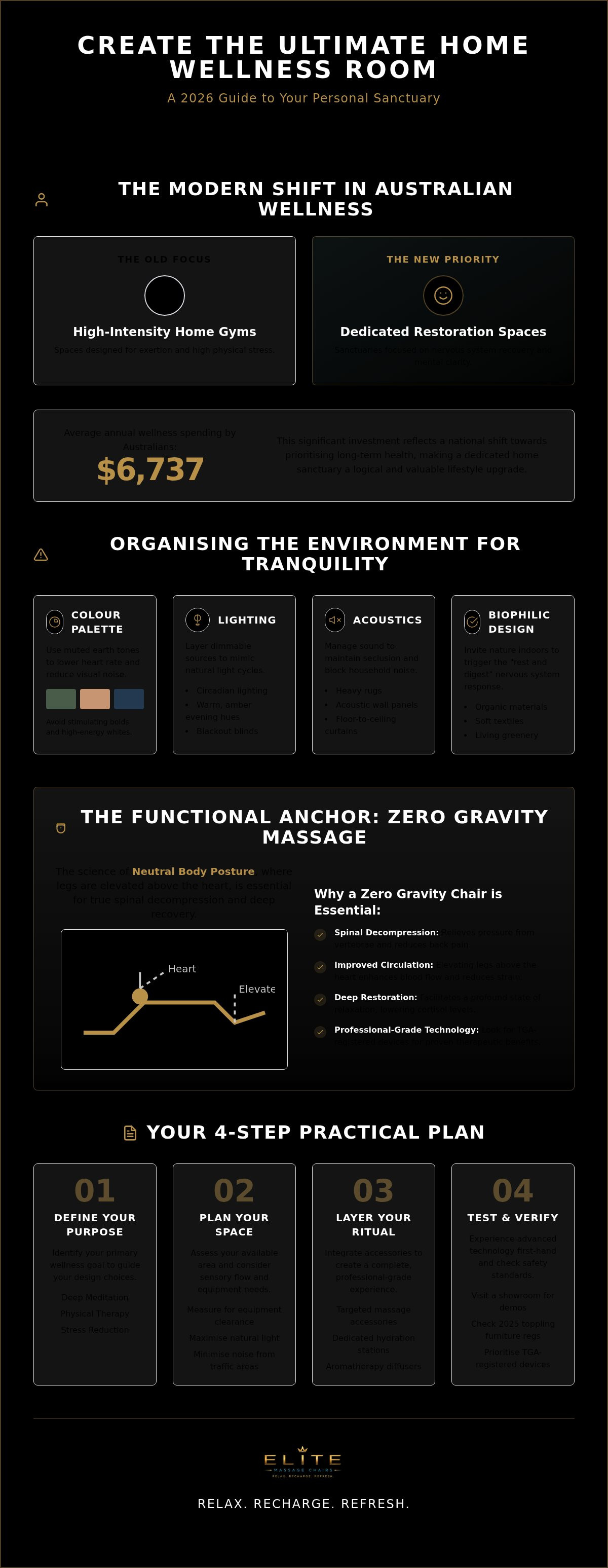
A wellness room is much more than a quiet corner with a yoga mat; it's a deliberate environment engineered for physical recovery and mental clarity. While the previous decade focused on high-intensity home gyms designed for exertion, 2026 has ushered in a new era where restoration is the ultimate performance metric. Australians are increasingly prioritising these spaces to combat the specific fatigue that comes from sedentary work-from-home arrangements and the blurred lines between professional and personal life. With Australians spending an estimated $6,737 annually on wellness, the investment in a dedicated home sanctuary has become a logical step for those seeking long-term health and lifestyle value.
Defining the core purpose of your space is the first step in the design process. You might focus on deep meditation, targeted physical therapy for chronic aches, or pure relaxation to lower cortisol levels after a high-pressure day. By identifying these goals early, you can ensure that every design choice, from lighting to technology, serves a functional health outcome rather than just an aesthetic one.
The Evolution of the Recovery Suite
Post-pandemic self-care has moved beyond occasional treats to integrated daily rituals. A dedicated wellness sanctuary differs from a multi-purpose room because it eliminates the mental clutter of everyday tasks. In high-end Australian homes, we're seeing sophisticated functional technology replace simple decorative elements. This shift reflects a desire for professional-grade results without the commute to a boutique spa. High-performance hardware, such as zero gravity massage systems, now provides the scientific foundation for these rooms, offering relief that traditional furniture simply cannot match.
Assessing Your Available Space
You don't need a sprawling estate to begin creating a wellness room at home. A spare bedroom, a quiet sunroom, or even a partitioned section of a master suite can serve as your recovery hub. When planning the layout, consider the spatial requirements for advanced equipment to ensure the room feels open and inviting rather than cramped. A premium zero gravity massage chair, for instance, requires specific clearance to recline fully into a neutral body posture for spinal decompression. The ideal wellness room is a tech-enabled sanctuary for the modern Australian.
Successful spatial planning also involves considering the sensory flow of the room. Think about the proximity to natural light and the ability to control external noise. By selecting a location that feels naturally separated from the high-traffic areas of your home, you establish a psychological boundary that signals to your brain it's time to transition from work to restoration.
Organising the Environment: Sensory Design and Tranquil Aesthetics
Designing a recovery space requires a deep understanding of how our surroundings influence our biology. When creating a wellness room at home, your primary objective is to trigger the parasympathetic nervous system, shifting your body from a state of high-alert stress into a restorative "rest and digest" mode. This transition is achieved through intentional sensory layering that goes far beyond simple aesthetics. By grounding your room in biophilic design, you invite the calming influence of the Australian landscape indoors through organic materials, soft textiles, and living greenery.
The Psychology of Colour and Light
Your choice of palette acts as the foundation for mental stillness. Avoid high-energy whites or stimulating bolds; instead, opt for muted earth tones like eucalyptus green, soft ochre, or deep coastal blues. These shades are scientifically recognised for their ability to lower heart rate and reduce visual noise. Lighting should be equally deliberate. Replace harsh overhead fixtures with layered, dimmable sources that mimic natural light cycles. Circadian lighting is particularly effective, as it supports your body's nightly recovery rhythms by gradually shifting from cool morning tones to warm, amber hues in the evening. For those focusing on deep meditation, high-quality blackout blinds are essential to eliminate external distractions during your sessions.
Acoustics and Air Quality
In a busy family home, acoustic management is vital when creating a wellness room at home to maintain a sense of seclusion. You can achieve significant sound dampening by integrating heavy rugs, acoustic wall panels, or floor-to-ceiling curtains that absorb echo and mask household activity. Complement these physical barriers with a high-quality air purification system to ensure the environment feels crisp and clean. To enhance the immersion, use white noise machines or nature soundscapes, such as the gentle roll of the ocean or the rustle of a temperate rainforest, to create a consistent auditory cocoon.
Scent provides the final layer of this sensory experience. High-end aromatherapy diffusers using native Australian oils like sandalwood or lemon myrtle can immediately signal to your brain that it's time to unwind. For those beginning their journey, exploring professional-grade recovery tools during the planning stage ensures your environment supports the high-performance hardware you intend to install. This thoughtful preparation ensures your sanctuary is ready to host the advanced technology needed for total physical restoration.
The Functional Anchor: Integrating a Zero Gravity Massage Chair
Every high-end sanctuary requires a centrepiece that does the heavy lifting for your physical health. When creating a wellness room at home, a premium massage chair serves as the functional anchor, offering the most efficient use of square footage compared to bulky saunas or traditional exercise equipment. Unlike static furniture, these chairs are sophisticated recovery systems designed to deliver targeted relief through advanced engineering. By integrating body scan technology, modern chairs automatically map your spinal curvature and shoulder height, ensuring every 4D massage stroke is tailored precisely to your unique frame.
Positioning your chair correctly is essential for maintaining the room's tranquil flow. Aim to place the unit where you can enjoy a calming view, perhaps toward a window or a biophilic plant wall, while ensuring there is enough clearance for the zero gravity recline. Most modern designs feature space-saving technology that allows the chair to slide forward as it reclines, meaning you don't need a massive floor plan to achieve professional-grade results. When creating a wellness room at home, this functional anchor ensures your space isn't just beautiful, but a powerful tool for daily restoration.
Zero Gravity vs. Traditional Seating
The true breakthrough in home recovery is the move toward neutral body posture. This NASA-inspired technology elevates your knees above your heart level, effectively distributing your body weight across the chair to eliminate pressure points. This position facilitates deep spinal decompression and improves circulation by reducing the strain on your heart. If you're looking to understand the mechanics behind this innovation, you can read the ultimate guide to zero gravity massage chairs in Australia. For those managing chronic lower back pain or joint stiffness, this weightless sensation provides a level of relief that standard recliners simply cannot replicate.
Therapeutic Benefits for Daily Use
Consistency is the key to long-term well-being. A 20-minute daily session in a high-performance chair can effectively replace the need for weekly therapist visits, providing immediate intervention for neck and shoulder tension as soon as it arises. These machines use precision 4D mechanisms to simulate the nuance of human touch, reaching deep into the muscle tissue to break down knots caused by sedentary work. You can explore the full range of physiological advantages in the therapeutic massage chair guide. By making professional recovery accessible at any hour, you eliminate the stress of scheduling and travel, allowing your wellness ritual to fit seamlessly into your lifestyle.
Curating Your Wellness Ritual: Essential Accessories and Tools
Creating a wellness room at home isn't just about the furniture; it's about the rituals you build within those walls. To achieve a professional-grade experience, you need to layer your recovery with secondary tools that address specific physical needs. A dedicated hydration station, featuring filtered water or magnesium-infused elixirs, ensures you remain replenished after deep-tissue sessions. Storage also plays a critical role in maintaining the room's tranquility. When selecting storage for your wellness props, ensure any tall cabinetry complies with the 2025 mandatory standard for toppling furniture, which requires specific safety warnings and secure anchoring to prevent accidents in your sanctuary.
Smart home technology can elevate your environment by automating your wellness scenes. Imagine walking into the room and using a simple voice command to dim the lights to a warm amber, start a native forest soundscape, and activate the heating element in your chair. This seamless integration allows you to transition into a meditative state without fumbling with switches or remotes. To keep your equipment in peak condition, use specialised care products designed for high-end upholstery, ensuring your investment remains as pristine as the day it was installed.
Targeted Relief with Massage Accessories
For days when you need a quicker recovery session, targeted massage accessories provide essential support. Dedicated foot massage machines are particularly effective for those who spend long hours standing or experience poor circulation. You can explore a range of essential massage chair enhancement accessories to further personalise your setup. These portable tools allow for an active recovery approach, letting you focus on specific muscle groups while maintaining the room's minimalist aesthetic through clever, hidden storage solutions for your yoga mats and bolsters.
Creating a Daily Wellness Protocol
Structuring a daily wellness protocol transforms the space from a mere room into a result-driven sanctuary. A 30-minute evening ritual might combine air compression for lymphatic drainage with gentle heat therapy to prepare your body for deep sleep. By designating the room as a digital-free zone, you create a psychological boundary against the constant pings of professional life. This commitment to mental clarity is just as important as the physical relief provided by your hardware. When creating a wellness room at home, this protocol ensures you derive maximum value from your space every single day. If you're ready to complete your sanctuary, you can browse our collection of recovery hardware and accessories to find the perfect additions for your home.
Bringing Your Vision to Life: Showroom Demos and Planning
Creating a wellness room at home requires a structured approach to ensure the final result matches your aspirational vision. Start by measuring your chosen space precisely, accounting for the recline clearance required by advanced recovery hardware. Define your primary wellness goal: are you looking for intensive physical therapy or a quiet space for mental clarity? Once your objectives are clear, research the latest 4D and zero gravity advancements to understand which features align with your physical needs. This planning phase ensures every element you introduce serves a specific purpose in your daily restoration ritual.
The Importance of the Showroom Experience
Selecting high-end recovery technology is a sensory decision that shouldn't be made through a screen alone. You must experience the accuracy of the body scan technology and the specific pressure of the massage mechanisms firsthand to ensure they meet your standards. A private demonstration allows you to test how different 4D rollers interact with your unique frame and address your specific aches. To prepare for your visit, you can learn how to experience a massage chair demo in Australia. Look for chairs that offer intuitive controls and a seamless transition into the zero gravity position, ensuring the technology feels like a natural extension of your home sanctuary.
Financing Your Sanctuary
Building a professional-grade recovery suite is a significant commitment to your long-term health and lifestyle. Viewing your wellness room as a permanent investment in your well-being, and potentially your property's value, shifts the perspective from a simple purchase to a vital lifestyle upgrade. To make this elite technology more accessible, flexible financing through Humm allows you to enjoy the benefits of your sanctuary immediately while managing the cost over time. This approach ensures you don't have to compromise on the quality of your recovery hardware to stay within a budget.
After selecting your anchor piece, finalise the layout by layering in the sensory elements we've explored, such as circadian lighting, acoustic dampening, and native scents. This final phase harmonises the technology with the environment, creating a truly immersive escape from the demands of modern life. If you're ready to move from planning to implementation, book your free showroom demonstration to start your wellness journey and experience the future of home-based restoration.
Elevate Your Daily Restoration Ritual
Transforming an underutilised space into a professional-grade recovery suite is a profound investment in your long-term vitality. By harmonising biophilic design with advanced hardware, you create a sanctuary that actively combats the stresses of modern life. Remember that the success of creating a wellness room at home depends on the quality of your functional anchor. Sophisticated zero gravity technology, paired with precision body scan sensors, ensures that your recovery is as unique as your own physiology. This isn't just about decor; it's about engineering an environment that facilitates deep, restorative health every single day.
You don't have to navigate this journey alone. Our premium Australian showroom experience allows you to feel the difference of elite engineering before making a commitment. With flexible Humm financing available, bringing this level of luxury into your lifestyle is more accessible than ever. Experience the future of home wellness with a private showroom demonstration and discover how a dedicated sanctuary can redefine your state of being. Your path to a more tranquil, restored version of yourself begins with a single, intentional step toward better home-based care.
Frequently Asked Questions
How much space do I actually need for a wellness room?
You don't need a massive floor plan to begin creating a wellness room at home. A standard spare bedroom of approximately 3x3 metres is more than sufficient for a professional-grade setup. The key is ensuring you have enough clearance for your equipment to function safely. For instance, a zero gravity chair often requires about 10 to 15 centimetres of space from the wall to recline fully, depending on the specific model's space-saving design features.
Is it better to have a home gym or a wellness room?
The choice depends on whether your priority is physical exertion or nervous system restoration. While home gyms focus on building strength and cardiovascular fitness, wellness rooms are dedicated to recovery and stress reduction. In 2026, many Australians are opting for the latter to combat work-from-home burnout. A well-designed recovery suite provides a tranquil space to lower cortisol levels and manage physical aches, which complements an active lifestyle without the high-intensity environment.
Do massage chairs use a lot of electricity?
Modern massage chairs are remarkably energy-efficient and typically consume about the same amount of power as a desktop computer. Most units operate on a standard Australian power outlet and only draw significant electricity while the motors and heating elements are active. On average, a 20-minute session costs only a few cents in electricity. This makes them a sustainable addition to your home sanctuary without causing a noticeable spike in your quarterly utility bills.
Can I put a massage chair on carpeted floors?
You can certainly place a massage chair on carpeted floors, though using a dedicated equipment mat is highly recommended. A high-quality mat protects your carpet pile from permanent indentations caused by the chair's weight and provides a stable, level surface for the internal mechanisms to operate. It also helps with acoustic dampening, ensuring that any subtle vibrations from the motor don't resonate through the floorboards and disrupt the peaceful atmosphere of your home.
What is the best lighting for a meditation and recovery space?
Layered, dimmable lighting is the gold standard for creating an immersive recovery environment. Opt for warm-toned LED globes that mimic the soft glow of a sunset, as these help signal to your brain that it's time to unwind. Avoid harsh, cool-white overheads that can trigger alertness. Integrating smart bulbs allows you to adjust the intensity and colour temperature to suit different activities, such as deep meditation or focused physical therapy sessions.
How do I choose between a zero gravity chair and a traditional recliner?
When creating a wellness room at home, a zero gravity chair is the superior choice for those seeking genuine therapeutic outcomes. Unlike a traditional recliner, zero gravity technology elevates your legs above your heart to achieve a neutral body posture. This specific alignment facilitates spinal decompression and reduces pressure on your cardiovascular system. If your goal is deep-tissue recovery and chronic pain management rather than just casual seating, the scientific benefits of a zero gravity system are essential.
Can I create a wellness room in a rental property?
Creating a wellness sanctuary in a rental is entirely achievable by focusing on non-permanent enhancements and portable technology. High-quality massage chairs and air purifiers are standalone units that don't require structural changes to the property. You can use tension rods for blackout curtains, battery-operated LED candles for ambiance, and large rugs to manage acoustics. These elements allow you to build a professional-grade recovery space that can easily move with you to your next residence.
What are the must-have accessories for a complete home spa experience?
A complete experience requires sensory layering beyond the primary hardware. Essential accessories include a high-quality aromatherapy diffuser with native oils, a hydration station for post-recovery replenishment, and soft, organic textiles like weighted blankets or linen bolsters. Don't forget a dedicated sound system or white noise machine to mask external distractions. Using secure, compliant storage for your props ensures the room remains a clutter-free zone, which is vital for maintaining a clear and calm mind.


