

A massage chair for lymphatic drainage may provide comfort through compression and leg elevation, but it is not a treatment for diagnosed lymphoedema. Airbags apply pressure and a reclined position can raise the legs, while lymph movement also depends on muscle activity and breathing. These features do not replace clinical lymphatic drainage.
If your legs feel heavy or puffy, it is understandable to wonder whether a chair could offer gentle relief at home. The key is to distinguish everyday discomfort from a diagnosed condition, which requires a clinically guided approach.
This guide explains how massage chairs may support lymph flow, which features may ease leg discomfort and where their limits lie. It also explains why diagnosed lymphoedema calls for a clinician-guided plan rather than relying on a chair alone.
Key Takeaways
- Understand how gentle pressure, muscle movement and breathing contribute to lymph flow, and why a chair’s compression is not the same as clinical treatment.
- When comparing chairs for leg comfort, consider how calf and foot airbags and leg elevation match your needs.
- Airbags, heat and zero-gravity positioning offer different kinds of support; focus on the features that feel comfortable and useful to you.
- For diagnosed lymphedema or ongoing swelling, keep clinical guidance central and don’t use a massage chair as a replacement for prescribed care.
What are the Benefits of Using a Massage Chair for Lymphatic Drainage?
The lymphatic system helps maintain fluid balance by collecting excess fluid from body tissues and returning it to the bloodstream. Its vessels carry lymph, which contains fluid and other material, towards larger drainage pathways. Unlike the heart, this system has no central pump. Breathing, muscle movement and everyday activity help move lymph along.
A massage chair for lymphatic drainage may provide supportive compression, but it is not a clinical treatment. Airbags inflate and release against areas such as the legs, creating pressure that may encourage fluid movement through lymphatic vessels. Sequential compression from the extremities towards the torso follows the direction fluid travels back towards the body’s core. Gentle pressure matters: lymphatic massage works near the skin’s surface, not through forceful, deep muscle pressure. Comfort is more useful than pressure that causes pain or increases tension.
How does lymphatic drainage massage work? It uses gentle, directed movements over the skin to encourage lymph towards functioning drainage pathways. In decongestive lymphatic therapy, massage is one part of a wider clinical approach, not a stand-alone cure for swelling.
Does Medicare or private health insurance cover lymphatic drainage massage in Australia? There is no single answer: Medicare eligibility and private health cover depend on the service and applicable policy terms. A chair’s home massage function is different from a clinical appointment.
For a first chair session, begin with 10-15 minutes, then increase the duration gradually over a couple of weeks. For circulation benefits, the suggested frequency is three to four times per week. These figures describe general use, not a prescribed treatment schedule for lymphoedema.
The potential benefit is comfort: compression may ease a heavy-leg feeling and support fluid movement, while ordinary movement and breathing continue to help lymph flow. If swelling is diagnosed or persistent, a chair should not replace clinical care.
Which massage chair is best for leg circulation and swelling?
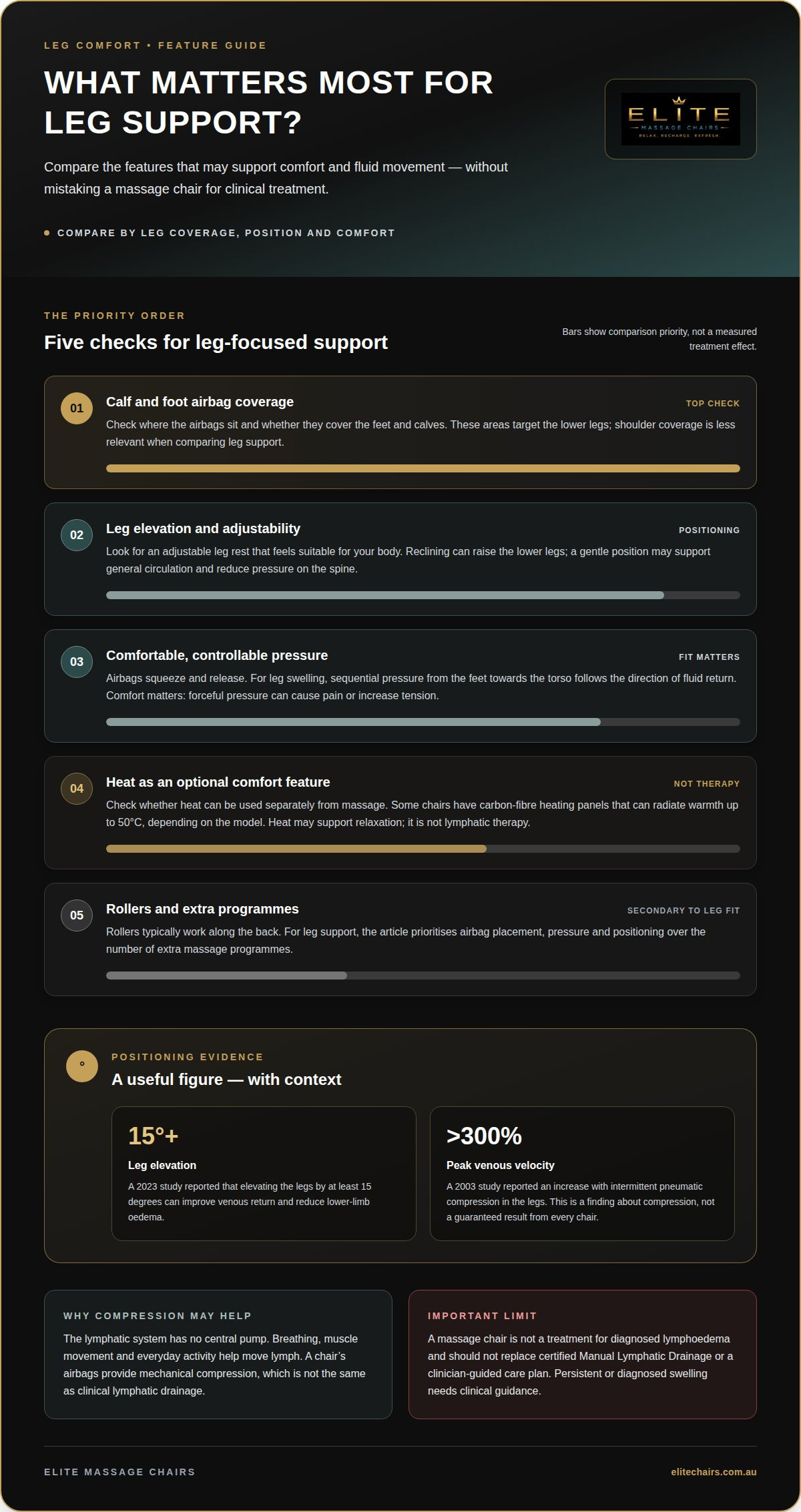
For leg comfort, focus on calf and foot airbags, adjustable leg elevation and pressure that feels comfortable. A 2023 study reported that elevating the legs by at least 15 degrees can improve venous return and reduce lower-limb oedema.
Features for Circulation and Lymphatic Support
Circulation-support features combine leg positioning with airbags that squeeze and release around the calves and feet. This may matter if your legs feel heavy after long periods of sitting or standing, because calf muscles help move venous blood upwards against gravity. Check where the airbags sit and whether the leg section suits your body, rather than choosing by unrelated features such as shoulder coverage.
Effects on Circulation and Muscle Relaxation
Massage chair effects on circulation come from compression and positioning, while massage can also help relax muscles. A 2003 study reported that intermittent pneumatic compression in the legs can increase peak venous velocity by more than 300%. That finding relates to compression, not a guarantee of the same result from every chair. Rollers typically work along the back, while leg airbags target the calves and feet.
Compression and Lymphatic Circulation
Muscle compression repeatedly squeezes and releases soft tissue, which may support fluid movement through the body. For leg swelling, sequential pressure from the feet towards the torso follows the direction of fluid return. Appropriately administered lymphatic drainage massage can reduce swelling. A chair’s airbags provide mechanical compression, so their pressure and coverage matter more than the number of extra massage programmes.
Use these distinctions to compare leg support, pressure and positioning rather than choosing on the basis of rollers alone. To experience how different chair positions feel, compare leg-support features in person.
Massage chair features such as airbags, heat and zero-gravity positioning
For gentle support, compare a chair’s airbag coverage, heat function and leg position. Airbags may sit around the feet, calves, shoulders and arms, while reclining can place the lower legs slightly above the chest. These features work differently: compression applies pressure, warmth supports relaxation, and elevation changes body position. The right choice depends on which area needs comfort, not simply on the number of technologies.
For the AmaMedic AI Revive 4D, Titan Vega Duo 4D+3D and Osaki Aeris 4D Duo, assess the same practical details. Consider whether the feet and calves receive air compression, whether the leg rest can be adjusted, and whether heat can be used separately from massage. A showroom demonstration can help you notice pressure points, how the chair supports your legs, and whether its controls feel straightforward.
Airbags inflate and release against the body, creating cycles of compression. For example, foot and calf coverage targets the lower legs, while shoulder and arm airbags address different areas. Heat functions may widen blood vessels to support blood flow. Some chairs use carbon fibre heating panels that can radiate warmth of up to 50°C, depending on the model. Heat is an addition to comfort, not lymphatic therapy.
Zero-gravity positioning reclines the body and raises the legs, which may support general circulation and reduce pressure on the spine. Placing the lower legs slightly above the chest may allow venous blood and lymphatic fluid to drain towards the core. Chairs can also adjust leg position for people with restricted flexibility. Choose a gentle setting that feels comfortable; stronger pressure or added heat is not automatically better for recovery.
Massage chairs and diagnosed lymphoedema
For diagnosed lymphoedema, a massage chair is not a substitute for certified Manual Lymphatic Drainage or a clinician-guided care plan. Lymphoedema involves impaired lymphatic function, so pressure that feels soothing for ordinary muscle tension may not suit affected tissue. Advanced chair technology cannot assess your condition, identify changes in swelling or tailor treatment like a clinical assessment can.
Can a massage chair replace manual lymphatic drainage therapy? No. A chair’s airbags apply mechanical compression, while Manual Lymphatic Drainage is a specialised clinical technique. Diagnosed lymphoedema needs professional guidance, not chair use as a replacement.
Who should avoid lymphatic drainage massage or massage chairs? People with concerns about blood clots, severe swelling or recent surgery should consult a medical professional before using a chair. The same applies before lymphatic massage if you have a heart condition, blood clots or kidney problems.
What are the risks of using a massage chair for lymphatic drainage? Pressure may be unsuitable for some health concerns, and using a chair instead of prescribed care can delay appropriate management. Stop if compression causes pain, increased discomfort or a change in swelling, and seek clinical advice about what to do next. For example, new or worsening swelling needs assessment, not stronger massage or added pressure.
When discussing a chair with your clinician, describe the affected area, your diagnosis and any recent surgery or clot concerns. Ask how chair compression and leg positioning fit your care plan, and whether any areas should be avoided. This gives you practical criteria for assessing a chair without treating its features as therapy.
If you’re considering a chair for general comfort alongside clinical care, explore chair positioning options and focus on gentle settings that feel comfortable.
Elite Massage Chairs: Zero Gravity Massage Chairs
Elite Massage Chairs offers Zero Gravity Massage Chairs for people seeking a comfortable reclined massage at home. They may suit you if your goal is relaxation or leg comfort, rather than treatment for diagnosed lymphoedema. A chair can complement everyday wellbeing, but it does not replace clinical lymphatic care.
Choosing a chair is personal: leg support, reclining position and how the massage feels all matter. Massage Chair Showroom Demos let you experience the seating and positioning before deciding, while Massage Accessories offer another way to enhance a home massage setup.
If you have diagnosed lymphedema, keep your clinician’s advice central when considering chair use. For a closer look at Zero Gravity Massage Chairs and showroom demonstrations, visit elitechairs.com.au.
Make room for comfort that fits your routine
Start by deciding what you want a massage chair to add to daily life. Is it a quieter pause after work, a more comfortable way to recline or a gentle massage as part of your wellbeing routine? Keeping that priority in mind can make it easier to compare options without mistaking a relaxation feature for medical treatment.
If you are considering a massage chair for lymphatic drainage, keep your goal clear: home comfort is different from care for a diagnosed condition. Think about the seating position and massage experience you enjoy, and let clinical advice guide decisions related to lymphoedema.
Elite Massage Chairs can help you explore its massage chair options and showroom demonstrations. Take the next step at your own pace: contact Elite Massage Chairs to discuss your massage chair needs. A considered choice can bring a more restorative moment into your routine.
Frequently Asked Questions
How Does A Full Body Massage Chair Work?
A full-body massage chair combines mechanical rollers and airbags to massage different areas. Rollers move over the back, while airbags inflate and release around areas such as the arms or legs. Depending on the model, controls let you select a programme or adjust intensity. A gentler setting, for example, can make a first session more comfortable than starting with firm pressure.
What "Toxins" Are People Referring To?
“Toxins” is often used informally to mean waste products or substances the body processes. It is not a precise description of something a massage chair can identify or remove. The body’s normal processes, including those involving the liver and kidneys, handle waste. Feeling relaxed or less tense after a massage is not evidence that toxins have been released.
What Toxins Are Released After a Massage Chair Session?
A massage chair session does not directly release stored toxins from your muscles. You might feel warmer or more relaxed afterwards, but those sensations do not show that a substance has left your body. Temporary redness where an airbag pressed the skin, for instance, reflects local pressure, not proof of detoxification. Treat claims that a chair “flushes toxins” as marketing language, not a medical outcome.
Do massage chairs help with lymphatic drainage?
A massage chair can provide compression and positioning that may support fluid movement, but it is not a clinical lymphatic drainage treatment. A massage chair for lymphatic drainage is best understood as a comfort aid, not a way to manage diagnosed lymphoedema. If swelling is persistent, worsening or linked to a diagnosis, follow your clinical care plan rather than increasing chair pressure or session length.
What massage chair features support lymphatic drainage?
Look for airbags that cover the feet and calves, adjustable leg positioning and pressure controls that let you choose a comfortable setting. These features help tailor the massage to your body without relying on forceful compression. Heat is an optional comfort feature, not a drainage function. For diagnosed lymphoedema, use chair features only in line with your clinician’s advice.


