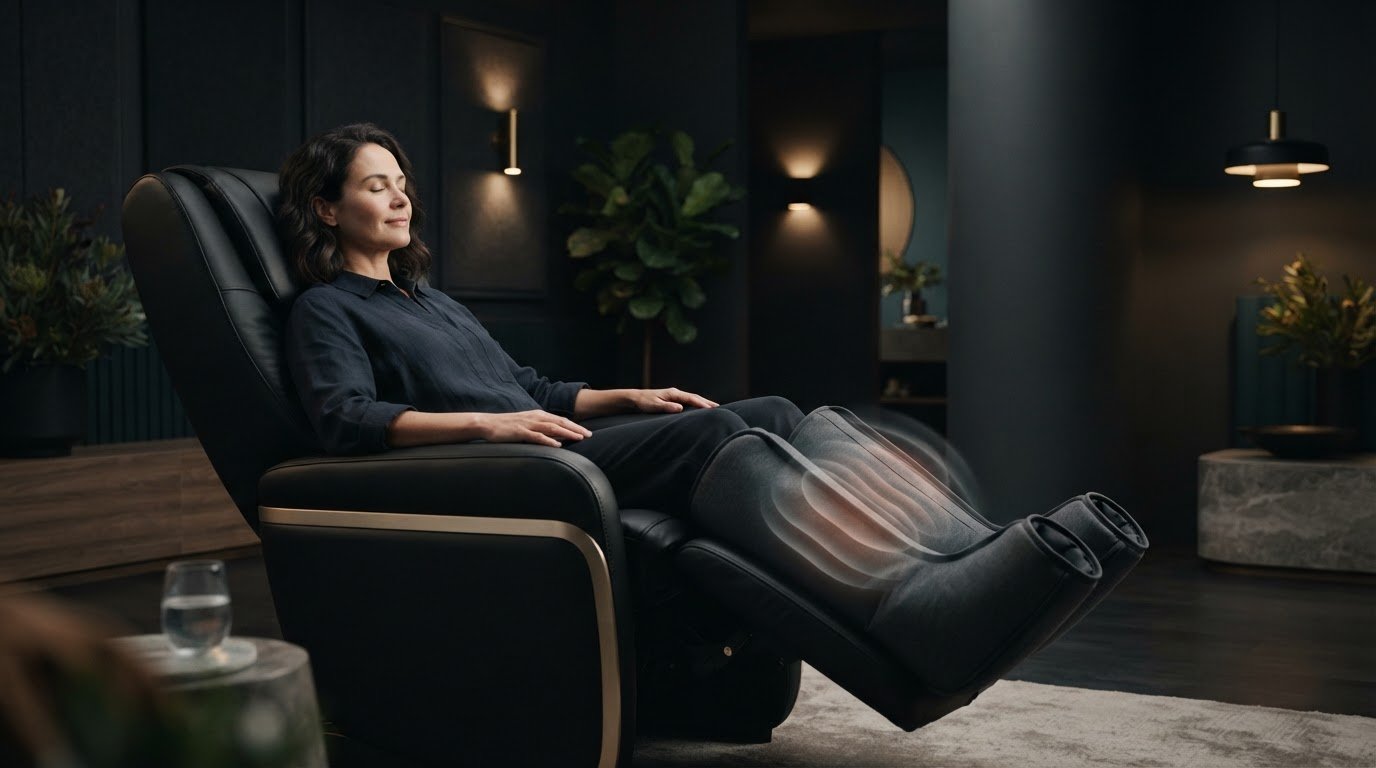

A chair’s “Thai stretch” label tells you less than the movements it actually performs. If you’re wondering whether a thai stretch massage chair program can reproduce hands-on Thai massage, look beyond the name and consider what the sequence does and how it feels in your body.
Depending on the chair, the programme may use air cells to hold parts of the body while the chair reclines or shifts position, creating a guided stretch. That differs from hands-on Thai massage, where a practitioner uses touch, pressure and assisted movements. This guide explains what a chair-based programme may involve, what it can and can’t replicate, and how to assess comfort, fit and suitability before trying one. You’ll also find practical questions to ask about movement, intensity and controls. A showroom demonstration can help you experience a chair’s movements firsthand, but don’t assume a particular model includes a Thai stretch programme.
Key Takeaways
- A “Thai stretch” label isn’t a reliable guide to how a chair moves. Check the exact programme and instructions for the model you’re considering.
- Learn what the thai stretch massage chair program may involve and how programmed chair movements differ from a practitioner’s hands-on, responsive approach.
- Before trying a programme, check that you can sit down and exit comfortably, reach the controls, and adjust or stop the movement.
- Start at the lowest comfortable intensity and stop if a movement feels painful. Comfort and fit matter as much as the programme name.
- Weigh the programme alongside the chair’s fit, controls, other functions and space requirements. Consider a showroom demonstration to assess how it feels.
What is a Thai stretch massage chair program, and what might it feel like?
A Thai stretch massage chair program is a chair setting described as using assisted, stretching-inspired movement. The name isn’t a standardised specification: sequences, controls and sensations can differ between models. Check the manual for the exact chair rather than relying on the programme label.
Some chairs may use reclining, rocking or other changes in position to create a stretch-like sensation, but don’t assume these functions are included without model-specific information. A chair programme also isn’t the same as hands-on Thai massage. A massage chair follows automated movements; a practitioner can guide and adjust bodywork in response to the person in real time.
What does “Thai stretch” mean in a massage-chair setting?
On a chair, “Thai stretch” is best understood as a programme name that may suggest assisted, stretching-inspired movements, not a promise of a particular technique. Manufacturers may use similar labels for different sequences. The name alone doesn’t tell you which parts of the body move or how the chair creates the sensation.
For a clearer picture, look up the programme description in the manual for the specific model. Confirm the sequence and any movement or intensity adjustments before trying it. For context, traditional Thai massage is a hands-on practice. A chair may imitate aspects of stretching, but it doesn’t reproduce a practitioner’s touch, judgement or responsiveness.
What sensations might the programme create?
The experience depends on what the particular chair is designed to do. If its manual confirms that the programme changes the recline or position, you may feel your body being gently repositioned. If it specifies rollers or airbags, these may add pressure as part of the sequence. These are possibilities, not features to expect from every chair carrying the label.
Comfort is personal. The same movement may feel easy for one person and restrictive for another, depending on body shape, mobility and preference. A stretch should feel manageable, not painful or forced. If you try a verified programme, notice how your body responds and use the available controls to reduce or stop the movement if needed. Don’t push through strong pressure or discomfort.
How does a Thai stretch massage chair program work?
There’s no single sequence shared by every chair. The name alone doesn’t reveal the complete movement sequence, so read the manual for the exact model before trying it. Treat general descriptions of “Thai stretch” as a starting point, not confirmation of specific functions.
Use this check-before-you-try sequence:
1. Find the programme instructions. Check the model’s manual or manufacturer’s programme description for the movements it names, and whether the sequence is automatic or adjustable.
2. Check for position changes. Confirm whether the programme alters the backrest angle, recline or leg position. Don’t assume the chair rocks or changes position unless the instructions say so.
3. Identify any massage components. If the model has rollers, check whether they operate during this programme and where. If it has airbags, confirm whether they inflate as part of the sequence. Rollers may apply pressure and airbags may compress areas of the body, but don’t attribute these actions to a programme without model-specific confirmation.
4. Locate the comfort controls. Check whether you can adjust intensity, select other programmes and reach a stop control easily. Follow the manual’s directions rather than experimenting with an unfamiliar sequence.
Which chair movements should readers check?
Separate what the manual confirms from what a general product description suggests. Look for clear details about changes to recline, leg position and backrest angle. Then check whether rollers or airbags are involved. These features vary between chairs, and their presence doesn’t guarantee they’re used in a particular programme. If the instructions don’t explain the sequence, ask for clarification before choosing or using the chair.
How do comfort controls affect the experience?
If the chair allows it, begin at the lowest comfortable intensity and make gradual adjustments, pausing to notice how each change feels. This lets you assess the movement without assuming stronger pressure means a better stretch. Stop the programme if you experience pain, numbness or unusual discomfort, and follow the chair’s instructions. Harvard Health Publishing discusses the benefits of stretching, but general stretching guidance isn’t proof that a chair programme produces the same effects.
A demonstration can help you assess a chair’s movement and controls firsthand. Explore the massage chair range and ask whether a particular model includes a Thai stretch programme. Then verify its sequence in the manual.
Thai stretch massage chair program versus hands-on Thai massage: what is different?
A chair can offer a convenient, repeatable sequence, but it can’t provide the judgement and personal interaction of hands-on bodywork. The difference is more than the setting: a programme follows its design, while a practitioner can respond to what you say and how you move.
| What to compare | Massage chair programme | Hands-on Thai massage |
|---|---|---|
| Who controls movement? | The chair follows its programmed sequence. You may be able to start, adjust or stop it, depending on the model. | A practitioner guides the movements and can respond to your feedback in real time. |
| Personalisation | Options depend on the chair’s settings and features; adjustments may be limited to its available controls. | The practitioner can adapt pressure and movement during the session, based on communication and observation. |
| Setting | Used in a chair, often as a self-operated experience at home or during a product demonstration. | Delivered through direct interaction with a practitioner in a hands-on setting. |
What can a chair programme offer that differs from a practitioner?
If the specific chair allows it, a programme may be convenient to repeat and operate yourself, with controls for selecting a setting or changing intensity. The experience is shaped by the chair’s movements and available adjustments, not by an assessment of your response. A consistent sequence may suit someone who prefers a predictable, chair-based experience, but that doesn’t make it equivalent to practitioner-guided bodywork.
For a broader overview of chair features and their place in home wellness, see this therapeutic massage chair guide. As with any chair, check the exact programme and controls rather than assuming every model offers the same experience.
When might hands-on Thai massage be the better fit?
If you want someone to guide movement, respond to your feedback and adapt the session as it progresses, hands-on bodywork with a qualified therapist may better match your preference. A massage chair can’t assess your needs or adjust its actions with the same real-time judgement. A thai stretch massage chair program is a feature of wellness equipment, not professional massage therapy.
Neither option should be treated as a guaranteed way to address a health condition. If you have a health concern or aren’t sure whether a particular movement is suitable for you, speak with an appropriate health professional before trying it.
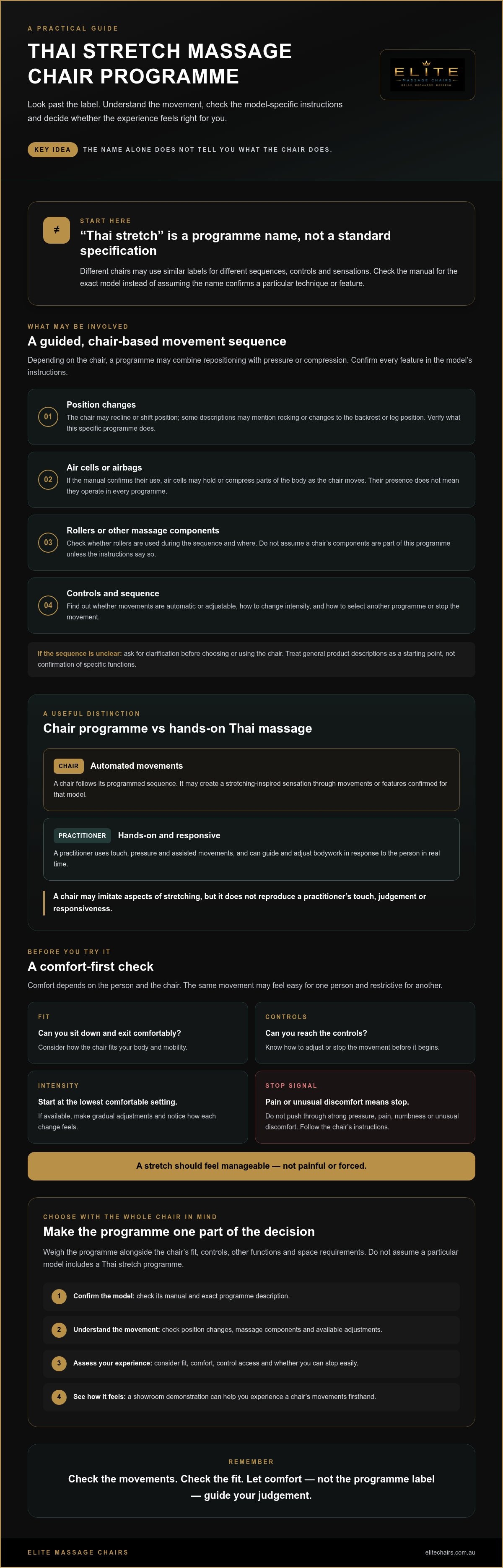
How to assess comfort, fit and safety before trying the programme
A calm, controlled first trial starts before the programme does. Check that the chair suits your body, you can reach its controls and you understand what the selected setting is designed to do. If the model’s instructions are unclear, ask for the manual and confirm the sequence rather than relying on the “Thai stretch” label.
What should you check during a first trial?
Take a moment to settle into the chair before starting. Your shoulders, back, hips and legs should sit comfortably within it, without feeling pinched, unsupported or awkwardly positioned. Make sure you can get in and out without strain, and identify the pause or stop control while the chair is stationary.
- Check the fit: Notice whether your shoulders and hips are aligned comfortably and whether the leg area accommodates you without forcing a position.
- Find the controls: Confirm that you can reach the stop or pause control once reclined and understand how to use it.
- Verify the programme: Ask for the model manual and check which movements and adjustments are actually included.
- Start gently: If intensity is adjustable, begin at its lowest comfortable setting and increase only if the movement still feels easy to manage.
During a showroom demonstration, focus on how the movement feels in your body, not how dramatic it looks. A feature overview such as massage chair features explained can also help you compare controls and comfort features, but the manual remains the best source for a specific programme’s sequence.
Who should take extra care with stretching movements?
If you have an injury, have recently had surgery, are pregnant or have significant mobility concerns, seek advice from an appropriate health professional before trying a stretching programme. This isn’t a judgement about whether a chair is suitable for you. It’s a sensible way to get guidance based on your circumstances rather than a general product description.
Stop the programme if you feel pain, dizziness, numbness or distress. Don’t push through or assume discomfort is part of the stretch. Comfort can change with posture and movement, so keep the stop control within reach and follow the manufacturer’s instructions.
To assess a chair’s fit and movement in person, book a massage chair showroom demonstration. Ask whether the specific model includes a Thai stretch massage chair program and request its instructions before trying it.
Choosing a massage chair: make the programme only one part of the decision
A stretch feature may catch your eye, but the right chair should feel comfortable and practical beyond one programme. Consider how it fits your body, whether the controls are easy to use, which other functions matter to you and whether you have room for the chair to recline. Most importantly, confirm that the exact model you’re considering includes a Thai stretch massage chair program. A label in a general description isn’t enough to verify its availability or movements.
For a broader checklist of features and questions, read this massage chair buying guide.
Which questions should you ask before choosing?
Ask specific questions about the model, not just the programme name. If possible, compare the answers with the manufacturer’s manual so you know what’s confirmed and what may be a general description.
- What movements does this programme perform? Ask whether it changes the recline, backrest or leg position, and whether rollers or airbags are involved.
- Can the intensity be adjusted? Find out how to select a gentler setting, pause the sequence or stop it.
- Will the chair fit me and my room? Check the stated fit range, the space needed for reclining, and whether you can get in and out comfortably.
- How do I operate it? Review the controls and operating instructions before your first use.
- Can you demonstrate this exact programme? Ask for the specific setting to be shown on the model you’re considering. If it isn’t available to try, request the manual or a clear explanation of its sequence.
How can a showroom demonstration support your decision?
Trying a chair in person can help you judge details that are difficult to assess from a feature list: whether your shoulders and legs sit comfortably, whether the controls feel straightforward, and how the chair’s movement feels to you. A demonstration doesn’t confirm that every model has a Thai stretch setting, so verify the exact model and programme before you go.
Elite Massage Chairs offers free showroom demonstrations, giving you a chance to assess comfort and movement firsthand. You can explore massage chairs and book a demonstration, then ask whether the model you’re interested in includes the programme and what its instructions say.
Choose with confidence, one movement at a time
A thai stretch massage chair program is a model-specific feature, not a standardised promise. Check the chair’s manual to understand its actual movements and controls, then assess whether the fit and sensation feel comfortable for you. A chair can offer an automated sequence, but it isn’t a substitute for hands-on Thai massage or practitioner-led care.
Let the programme be one part of your decision. Consider how the chair fits your body and home, whether its controls feel straightforward, and which other features matter to your routine. If you have a health concern, seek appropriate professional advice before trying stretching movements.
Elite Massage Chairs offers premium massage chairs, including zero-gravity models, and free showroom demonstrations where you can experience a chair’s comfort and movement firsthand. A demonstration doesn’t mean a particular model includes a Thai stretch programme, so ask about the exact model and verify its instructions before you choose.
Explore premium massage chairs and book a free demonstration. Take your time, ask clear questions and choose the chair that feels right for you.
Frequently Asked Questions
What is a Thai stretch massage chair program?
A Thai stretch massage chair program is a chair setting described as using assisted, stretching-inspired movements. The name isn’t a standardised specification, so the sequence can vary between models. Depending on the chair, it may involve changes in recline or body position, or other features confirmed in its instructions. Check the manual for the exact model to see which movements and controls are included before trying the programme.
Does a Thai stretch massage chair program work like Thai massage?
No. A chair follows an automated sequence, while hands-on Thai massage is guided by a practitioner who can respond to feedback and adjust movements in real time. Depending on its features, a chair may offer a comfortable, repeatable experience, but it doesn’t assess your body or provide practitioner-led bodywork. Treat them as different experiences rather than assuming a chair programme reproduces a hands-on session.
Can a massage chair stretch your body?
A massage chair may create a stretch-like sensation by changing your position or recline, but the movements vary by model and programme. Check the chair’s manual to confirm what it actually does. Don’t assume that a “stretch” label means the chair moves particular body parts or provides a specific result. During a trial, choose a comfortable setting and stop if movement feels painful or forced.
Is a Thai stretch massage chair program safe for everyone?
No single programme can be assumed suitable for everyone. If you have an injury, have recently had surgery, are pregnant or have significant mobility concerns, seek guidance from an appropriate health professional before trying stretching movements. Follow the chair’s instructions and stop if you experience pain, dizziness, numbness or distress. A massage chair is wellness equipment, not a substitute for professional assessment or care.
How do I know whether a massage chair includes a Thai stretch program?
Check the exact model’s product information and operating manual, and ask the retailer to confirm whether the programme is included. Don’t rely on a general description or assume similar programme names mean identical movements. Ask what the sequence does, whether its intensity can be adjusted and which controls stop or pause it. Verify the details for the specific chair you’re considering before purchase.
Should I try a Thai stretch massage chair program before buying?
If practical, trying the chair can help you assess its fit, comfort, controls and movement firsthand. Ask whether the exact model includes the programme and whether that setting can be demonstrated. A showroom visit doesn’t guarantee every programme is available to try. Elite Massage Chairs offers free showroom demonstrations, where you can assess a chair’s feel and ask questions before deciding. Take your time and prioritise comfort over the programme name.