

What if the secret to easing your fibromyalgia isn't about fixing your muscles, but rather about convincing your entire nervous system that it's safe to let go? If you're living with the daily weight of widespread stiffness and the exhausting haze of fibro fog, you've likely spent years searching for a reprieve that doesn't involve another arduous trek to a clinic. Finding an effective home therapy for fibromyalgia pain management is often the missing piece in reclaiming a life defined by comfort rather than constraint. We understand that your body requires a delicate touch, especially when traditional high-pressure treatments often feel more like a burden than a benefit.
This 2026 guide reveals how to curate a professional-grade sanctuary within your own four walls, using advanced technology to soothe your symptoms and restore your sleep quality. We'll explore the science of weightless decompression and precision customisation to help you build a repeatable daily routine that fits your lifestyle. By the end of this article, you'll discover how to leverage modern innovation to gain a renewed sense of control over your physical well-being and reduce that persistent morning stiffness for good.
Key Takeaways
- Understand why shifting your focus from muscle manipulation to nervous system calming is the foundation of effective home therapy for fibromyalgia pain management.
- Discover why traditional deep-tissue techniques often trigger flares and how to select tools with the precision to respect your body's sensitivity.
- Learn to design a dedicated home sanctuary that optimises ergonomics and sensory inputs to facilitate deep physical and mental restoration.
- Implement a structured daily protocol, from morning heat therapy to mid-day resets, to maintain consistent comfort and prevent fatigue accumulation.
- Explore how advanced Zero Gravity and 4D technologies provide the extreme customisation required to decompress the spine and soothe chronic pain.
Understanding Home Therapy for Fibromyalgia Pain Management
Fibromyalgia isn't simply a collection of stubborn muscle knots or localized aches. It's more accurately described as a state of central sensitisation, where the nervous system remains in a perpetual "high alert" mode. For a comprehensive overview of fibromyalgia, it's clear that the condition involves the brain amplifying pain signals that others might not even notice. Because these sensations can shift and flare without warning, relying solely on occasional clinic visits is often insufficient. You need a solution that's as persistent as the condition itself.
Developing a robust home therapy for fibromyalgia pain management allows you to address these neurological signals the moment they begin to intensify. Instead of waiting for a scheduled appointment, you can provide your body with consistent, low-impact sensory input that works to "down-regulate" the nervous system. This steady approach helps calm overactive pain receptors, moving your daily experience away from constant survival and toward a sustainable state of wellness.
The Shift from Reactive to Proactive Pain Care
Reactive care, or waiting for a flare-up to act, often leaves you trailing behind your symptoms. A proactive daily maintenance routine creates a vital buffer, potentially reducing the frequency and severity of pain episodes before they take hold. There's also a significant psychological benefit to establishing a dedicated "relief station" within your home. Having a sanctuary ready for immediate use removes the mental load of logistics and the physical "travel fatigue" associated with clinic visits. When your body is already sensitive to light, sound, and movement, the simple act of staying home to receive therapy can be a powerful part of the healing process.
The Core Pillars of a Fibromyalgia Home Protocol
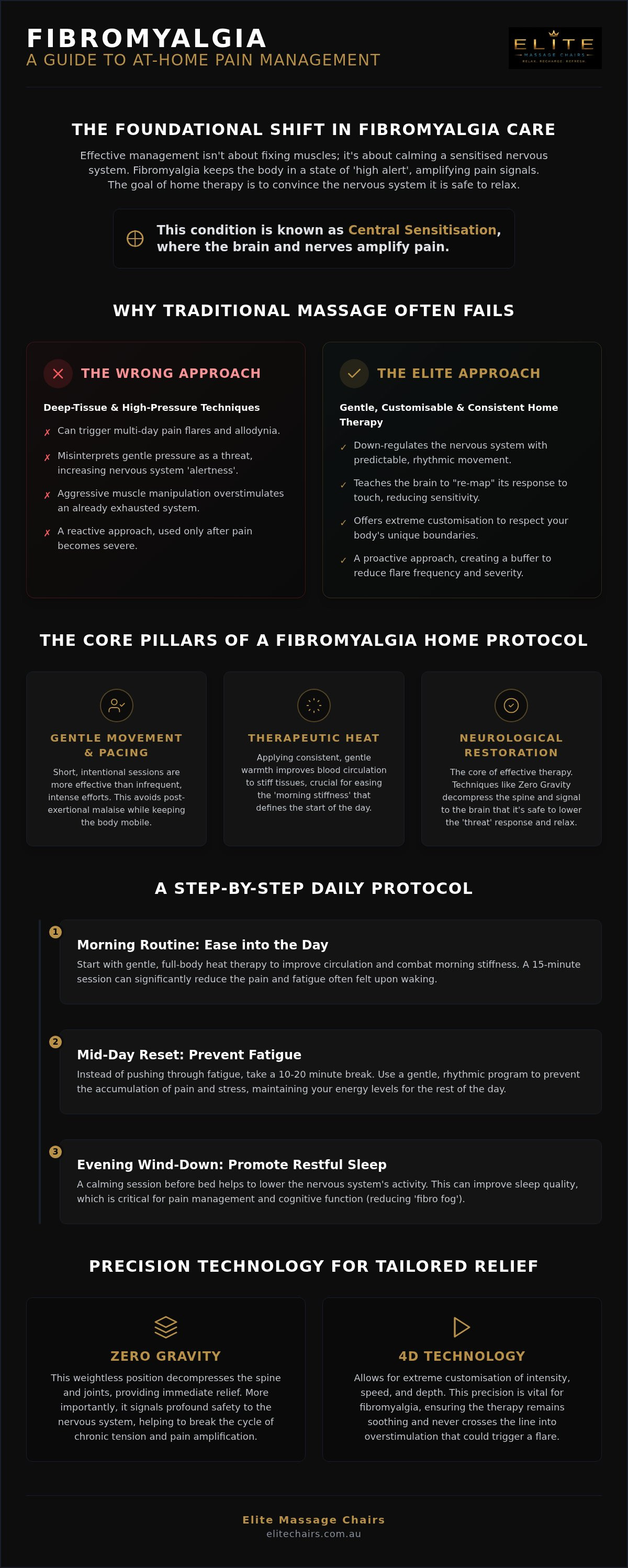
A successful daily routine relies on three fundamental pillars designed to respect your body's unique boundaries:
- Gentle Movement and Pacing: Staying mobile is essential, but it must be balanced to avoid post-exertional malaise. Short, intentional sessions are far more effective than infrequent, intense efforts.
- Therapeutic Heat: Applying gentle, consistent warmth improves blood circulation to stiff connective tissues. This is particularly helpful for easing the "morning stiffness" that often defines the start of the day.
- Neurological Restoration: Techniques that lower the body's "threat" response are the heart of home therapy for fibromyalgia pain management. By using tools that offer Zero Gravity positioning, you can decompress the spine and signal to your brain that it's finally safe to relax.
By integrating these pillars into your lifestyle, you create a repeatable system that prioritises long-term comfort and restores your sense of agency over your own physical well-being.
The Science of Gentle Relief: Why Traditional Massage Often Fails
Many Australians living with fibromyalgia have experienced the frustration of a well-intentioned massage that resulted in a debilitating flare. This happens because of allodynia, a condition where the brain misinterprets gentle pressure as a significant threat. When your nervous system is in this heightened state, traditional deep-tissue techniques don't just feel uncomfortable; they can actually trigger a multi-day pain episode. Effective home therapy for fibromyalgia pain management must respect these boundaries by prioritising predictable, rhythmic movement over aggressive muscle manipulation.
According to Painaustralia's guide to fibromyalgia, managing these sensitivities requires a nuanced approach that avoids overstimulating an already exhausted system. By using tools that offer refined control, you can teach your brain to "re-map" its response to touch. Rhythmic movement provides the brain with a steady, non-threatening stream of sensory data, which eventually helps lower the overall volume of pain signals. This neurological calming is often the missing link in traditional physical therapies.
Customisation: The Key for Sensitive Systems
Generic massagers are often abandoned by chronic pain sufferers because they lack the subtlety required for sensitive tissues. This is where advanced 3D and 4D technologies become essential. These mechanisms mimic the fluid, intuitive touch of a human hand but without the unpredictability that can cause a "startle" response in the muscles. You can customise every aspect of the experience, from the depth of the rollers to the speed of the transition. For those who find even the gentlest rollers too intense, air compression therapy offers a "gentle hugging" sensation. This soft, rhythmic pressure supports lymphatic drainage and eases swelling without the risk of bruising or triggering a flare.
Heat and Circulation: Soothing Stiff Connective Tissue
Fibromyalgia often leaves connective tissues feeling tight and "shrink-wrapped" around the muscles. Infrared heat is a sophisticated solution that penetrates deeper than standard surface heating, relaxing the fascia and improving blood flow to the extremities. This increased circulation is vital for reducing the "pins and needles" sensations and coldness that many patients experience in their hands and feet. Using targeted warmth as part of your evening routine helps prep the body for sleep by lowering the nocturnal pain threshold.
The ultimate goal is to achieve total physical surrender through spinal decompression. Reclining into a Zero Gravity position neutralises the weight of your body, allowing the vertebrae to gently separate and the nervous system to finally disarm. To experience this level of tailored support, you might consider exploring a massage chair showroom demo to find a system that aligns with your specific sensitivity levels. This ensures your home therapy for fibromyalgia pain management remains a restorative sanctuary rather than a source of stress.
Creating Your Home Sanctuary: Tools for Pain Management
Creating a home sanctuary is more than a lifestyle choice; it's a strategic move to manage central sensitisation. By dedicating a specific zone for your home therapy for fibromyalgia pain management, you provide your brain with a clear signal that it's time to transition from a state of high-alert to one of deep recovery. This space should prioritise sensory neutrality. Adjustable lighting helps manage the light sensitivity often associated with fibro fog, while precise temperature regulation ensures your muscles don't contract in response to a chill.
The anchor of this sanctuary should be high-end recovery furniture that supports your body without creating pressure points. Unlike standard recliners, professional-grade tools are designed to facilitate total physical surrender. This allows you to focus on multi-sensory pain reduction through integrated soundscapes and calming aromatherapy, which work together to lower the body's overall stress response. When every element of the room is curated for comfort, the mental load of managing a chronic condition begins to feel significantly lighter.
Zero Gravity: The Gold Standard for Fibromyalgia Comfort
The Zero Gravity position is often regarded as the pinnacle of ergonomic support for those with chronic pain. By reclining the body so that the knees are elevated slightly above the heart, you effectively neutralise the pull of gravity on your spine. For chronic pain sufferers, this means immediate relief from the load usually carried by the lower back and neck. This neutral body posture also expands the chest cavity, which improves lung capacity and oxygenation. Better oxygen flow is vital for cellular repair and can help clear the cognitive haze that often accompanies chronic fatigue. For a deeper look at this technology, explore The Ultimate Guide to Zero Gravity Massage Chairs in Australia.
Essential Accessories for the Complete Spa Experience
To round out your sanctuary, consider the smaller details that address specific symptoms. Targeted foot massage machines are excellent for managing the peripheral neuropathy or burning sensations that many patients feel in their feet. Additionally, using high-quality throws or weighted blankets can provide sensory grounding, helping to calm the nervous system during a session. You can find more ideas in our guide to Essential Massage Chair Enhancement Accessories. These additions transform a functional space into a truly elite recovery centre, making your home therapy for fibromyalgia pain management a highlight of your daily routine.
A Step-by-Step Daily Protocol for Fibromyalgia Relief
Establishing a predictable rhythm is the most effective way to manage a condition that thrives on unpredictability. A structured daily protocol ensures that you aren't just reacting to pain as it arises, but rather maintaining your nervous system in a state of calm. Central to this approach is the concept of the "energy envelope". It's vital to monitor your exertion levels throughout the day to avoid the "boom and bust" cycle that often leads to prolonged flares. By integrating home therapy for fibromyalgia pain management into specific time slots, you create a sustainable wellness routine that respects your body's fluctuating limits.
The 15-Minute Morning Reset
Morning stiffness is one of the most significant hurdles for fibromyalgia patients. To address this, start your day with low-intensity air compression therapy. This gentle, rhythmic pressure helps wake up the circulation and encourages lymphatic drainage without the jarring impact of deep-tissue rollers. While the air cells work on your extremities, use localised heat on the lower back and neck to improve mobility in the spine. This warmth softens the connective tissues, making it easier to perform gentle joint rotations and light stretching. Remember to hydrate immediately after this session to help your body process the metabolic waste released during the therapy.
During the middle of the day, short "reset" sessions are essential for preventing the accumulation of fatigue. Even ten minutes of weightless rest can stop a minor ache from escalating into a full-blown flare. This mid-day pause allows your nervous system to recalibrate before the afternoon slump sets in, ensuring you have enough energy to navigate the remainder of your day with comfort.
The Evening Sleep Induction Routine
Preparing the body for restorative sleep is the final, and perhaps most critical, step in your protocol. Transition into a Zero Gravity recline to fully decompress the spine and signal to your brain that the day's physical demands are over. For the best results, activate slow, rhythmic "kneading" settings. These predictable movements are designed to lower heart rate variability and transition your body into a parasympathetic state. To protect your melatonin production, combine this session with "blue light" reduction by dimming the lights and avoiding screens. This multi-sensory approach ensures that when you finally move to bed, your nervous system is already primed for deep, uninterrupted rest.
Consistency is the secret to long-term success. To find the perfect equipment to support this daily journey, you can book a showroom demonstration and experience how precision technology can be tailored to your specific needs. Implementing this home therapy for fibromyalgia pain management will help you move beyond temporary relief and toward a life of sustained daily comfort.
The Elite Approach: Precision Technology for Tailored Relief
For a sensitive nervous system, precision isn't just a luxury; it's a fundamental requirement. Elite Massage Chairs understands that home therapy for fibromyalgia pain management requires a level of nuance that standard massagers simply cannot provide. While generic devices often rely on aggressive, repetitive movements, our systems utilise advanced 4D mechanisms. These allow for real-time adjustments to the speed and depth of the massage rollers, mimicking the intuitive touch of a professional therapist. This level of control ensures that your therapy remains within your comfort zone, preventing the overstimulation that leads to flares.
The foundation of this tailored relief is our "Body Scan" technology. Before a session begins, the chair's sensors map your unique spinal curvature and shoulder height with clinical accuracy. This digital blueprint ensures that the rollers respect your anatomy, hitting the right muscle groups while avoiding painful contact with bony areas like the shoulder blades or vertebrae. By combining this precision with the rhythmic, predictable input your brain needs to disarm its pain response, you can achieve a state of deep physical surrender that was once only available in a clinical setting.
Tailoring the Experience to Your Frame
Modern sensors do more than just find your position; they adapt to your specific sensitivity levels on any given day. If you're experiencing a particularly sensitive flare, you can decrease the intensity to a whisper-light touch. Once you find the perfect balance of heat, air compression, and roller depth, you can save these custom "Fibro-Friendly" programmes for one-touch access. This removes the mental load of re-configuring your settings every time you need relief. To understand how these features integrate into a broader wellness strategy, read The Therapeutic Massage Chair: A Complete Guide to Pain Relief.
Investing in Your Long-Term Well-being
Choosing to bring this technology into your home is a significant investment in your long-term quality of life. When you compare the cumulative cost of ongoing professional massage fees and the "travel fatigue" associated with frequent appointments, a premium home system often proves more economical. It provides you with 24/7 access to relief, allowing you to manage symptoms the moment they arise. We offer flexible options like Humm financing to make this level of restorative technology accessible to more Australians. The first step toward reclaiming your comfort is booking a private showroom demonstration. This allows you to experience the 4D customisation firsthand and ensure the technology aligns perfectly with your body's needs, making home therapy for fibromyalgia pain management a seamless part of your life.
Reclaiming Your Daily Comfort and Vitality
Living with fibromyalgia requires a strategic shift in perspective. It's about moving from simply managing a condition to curating a lifestyle that prioritises neurological restoration. By establishing a professional-grade home therapy for fibromyalgia pain management, you replace the exhaustion of clinic travel with the tranquility of a personal sanctuary. You've seen how precision technology like 4D mechanisms and Zero Gravity positioning can transform your daily experience, turning morning stiffness into a manageable start and evening pain into restorative sleep.
Taking the next step toward long-term well-being is an investment in your future self. Our wellness consultants provide expert guidance to help you navigate these advanced technologies, ensuring you find the perfect match for your body's unique sensitivities. With flexible financing via Humm and reliable Australia-wide delivery and support, elite comfort is more accessible than ever. Experience the relief of Zero Gravity at an Elite Massage Chairs showroom today. You deserve a life defined by comfort rather than constraint. Your journey to a more vibrant state of being starts with a single, intentional choice to prioritise your recovery.
Frequently Asked Questions
Is a massage chair safe for someone with fibromyalgia?
Yes, a massage chair is safe and highly effective when it features the precise customisation found in 4D technology. These advanced systems allow you to control the depth and speed of the rollers with surgical accuracy, ensuring you never exceed your personal comfort threshold. By prioritising a gentle, rhythmic approach, you avoid the risk of allodynia or "startle" responses. It's always wise to start with air compression and very low intensity to gauge your body's daily sensitivity.
How often should I use a massage chair for fibromyalgia pain management?
Consistency is more important than duration when integrating a massage chair into your home therapy for fibromyalgia pain management. We recommend short sessions of 10 to 15 minutes, twice daily. A morning session helps ease the rigidity of "morning stiffness", while an evening session prepares your nervous system for rest. This frequency helps maintain a "low-threat" state in the brain without over-stimulating the muscles or triggering post-exertional malaise.
Can a massage chair help with fibromyalgia-related sleep issues?
A massage chair significantly improves sleep quality by transitioning the body from a "fight or flight" state into a parasympathetic "rest and digest" mode. Using a Zero Gravity setting before bed decompresses the spine and lowers the heart rate, which is vital for patients struggling with nocturnal pain. By reducing physical discomfort and mental stress simultaneously, you create the ideal physiological conditions for deep, restorative sleep and a reduction in morning "fibro fog".
What is the best massage setting for sensitive fibromyalgia points?
The optimal settings for sensitive points involve a combination of gentle air compression and shallow 4D kneading. You should avoid high-pressure, deep-tissue programmes that might trigger a flare. Instead, look for a "Swedish" or "Relaxation" setting that uses long, fluid strokes. Many users find that air cells provide a comforting "gentle hug" sensation that soothes the nervous system without the direct mechanical pressure of rollers on particularly tender areas.
Do I need a Zero Gravity chair for fibromyalgia, or is a standard recliner enough?
While a standard recliner offers basic rest, a Zero Gravity chair is the gold standard for managing chronic pain. Standard recliners don't elevate the knees above the heart, which means they can't achieve the true spinal decompression required to neutralise gravity's pull. This specific positioning is essential for reducing the load on your lower back and neck while improving oxygenation, providing a level of neurological relief that a traditional chair simply cannot match.
How does heat therapy help with fibromyalgia muscle stiffness?
Heat therapy is a vital component of any home therapy for fibromyalgia pain management because it directly addresses the "shrink-wrapped" feeling of stiff connective tissues. Targeted infrared heat penetrates deep into the muscle fibres and fascia, encouraging blood vessels to dilate. This increased circulation delivers oxygen to oxygen-starved tissues and helps flush out metabolic waste. Using warmth during your morning routine is particularly effective for loosening tight joints and improving overall mobility.
Can air compression therapy help with the "heavy limb" feeling in fibromyalgia?
Air compression therapy is exceptionally effective at relieving the "heavy limb" sensation common in fibromyalgia patients. The rhythmic inflation and deflation of air cells mimic manual lymphatic drainage, which helps move fluid through the body and reduces swelling in the extremities. This gentle pressure provides a sense of lightness and relief in the arms and legs without the need for intense mechanical manipulation, making it an ideal choice during a flare-up.
What should I look for in a massage chair if I have high sensory sensitivity?
If you have high sensory sensitivity, you must prioritise a chair with sophisticated "Body Scan" sensors and 4D customisation. These features ensure the rollers adapt to your specific spinal curvature and avoid painful contact with bone. Look for chairs that allow you to save your own "Fibro-Friendly" programmes for one-touch access. We always recommend booking a showroom demonstration to experience the technology firsthand and ensure the chair's movements feel restorative rather than overwhelming.


