

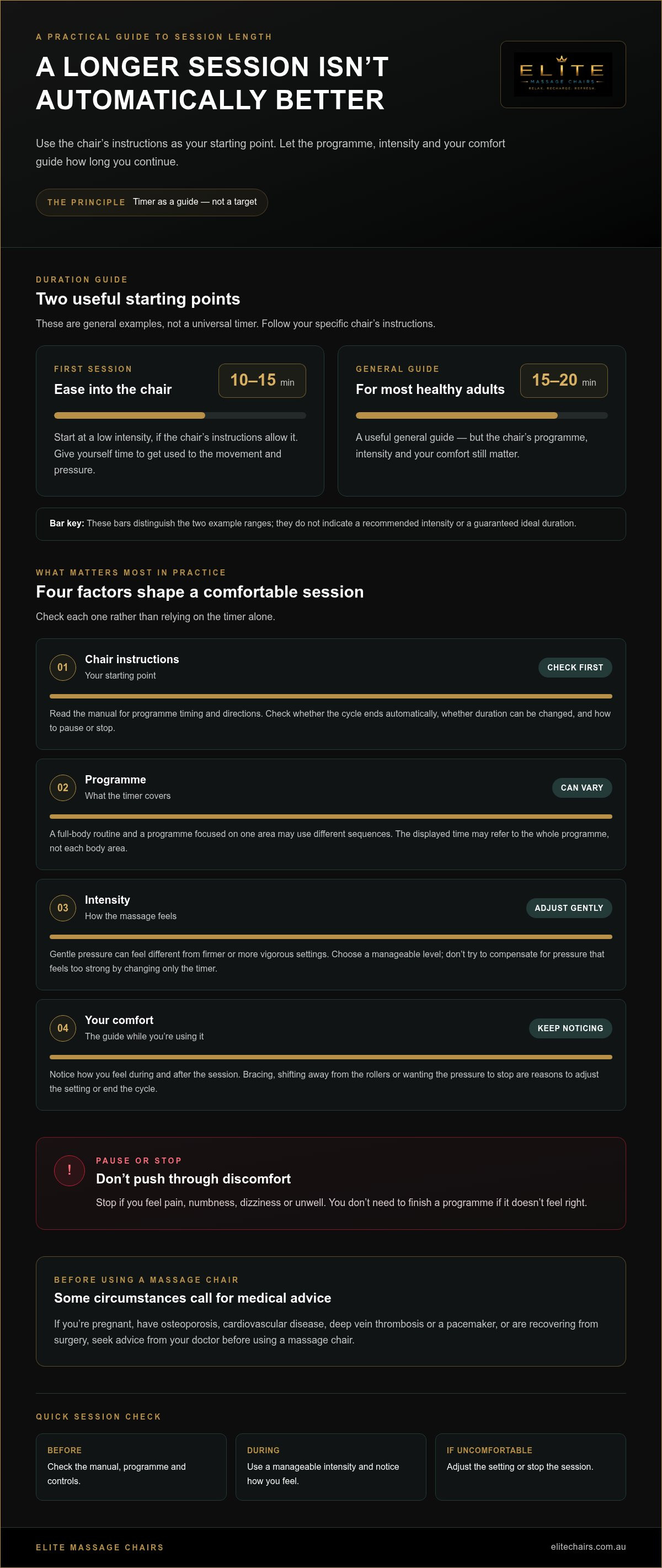
A longer massage isn’t automatically a better one. If you’re wondering how long should a massage chair session be, 15 to 20 minutes is a useful general guide for most healthy adults. Your comfort, the chair’s programme and its intensity matter too, so follow the instructions for your specific model.
For a first session, start with 10 to 15 minutes at a low intensity if the chair’s instructions allow it. This gives you time to get used to the movement and pressure without aiming for the longest available cycle. You don’t need to push through discomfort or finish a programme if it doesn’t feel right.
This guide explains how to choose a starting duration, adjust session length to suit the chair and your needs, and recognise when to pause or stop. It also explains why a longer session may not be more beneficial, and why the right setting is personal rather than fixed.
Key Takeaways
- For how long should a massage chair session be, start with the chair’s instructions and programme rather than relying on one universal timer.
- Use intensity and comfort as your guide. A longer programme won’t necessarily feel better.
- Choose an introductory, usual or extended programme based on how the chair feels and what suits you that day.
- Stop the session if you feel pain, numbness or unwell, and adjust the settings before your next use.
- A showroom demonstration can help you experience a chair’s support and settings before choosing one.
How long should a massage chair session be at home?
There’s no single session length that suits every chair or user. A chair’s programme, the way it applies pressure and your comfort all affect how long a session feels appropriate. If you’re asking how long should a massage chair session be, begin with the instructions for your specific chair rather than assuming one timer suits everyone.
Before your first use, check the manual and look at the programme timer. Find out whether the selected programme ends automatically, whether you can change its duration and how to pause or stop it. The timer shows how the chair’s programme is designed to run, but it isn’t a reason to continue if you feel uncomfortable.
General session examples can help you compare options, but your chair’s guidance and your own comfort should shape your individual routine.
A home massage chair is not the same as a therapist-led chair massage
An automated home-chair session uses built-in rollers and other settings to deliver a programmed massage while you sit or recline. In a therapist-led seated massage, a practitioner chooses and adjusts techniques and timing as they work with the person. These are different experiences, so duration guidance for one shouldn’t automatically be applied to the other. A general overview of the benefits of massage therapy offers background, but doesn’t set a timer for your home chair.
Why one universal session length does not fit every chair
Programmes vary in their sequence, coverage and pace. A gentler routine may feel different from one with firmer pressure or a focus on particular areas. The same timer can therefore feel comfortable in one programme and too intense in another.
Your experience matters too. Someone familiar with a chair may respond differently from a first-time user, and personal circumstances can affect what feels comfortable. Use the chair’s instructions for programme timing, then treat the timer as a guide rather than a target.
Before starting, check the controls. Note the selected programme and intensity, and make sure you can reach the stop or pause function. If the chair has several settings, change one at a time so you can tell which adjustment affects how the massage feels. A showroom demonstration can also help you experience a chair’s support and settings before choosing one for home use.
Keep the distinction clear: a therapist-led seated massage is shaped by a practitioner, while a home chair follows a preset or selected programme. Comparing their durations without that context can be misleading. Let the instructions for your chair establish a sensible starting point, then let comfort guide whether you continue, adjust or stop.
What determines a comfortable massage chair session length?
A session timer is only one part of the experience. The programme’s sequence, the intensity you select and how you respond all affect whether the chair feels comfortable. A longer timer doesn’t automatically mean a better session. It may simply mean more time under settings that don’t suit you.
Use this checklist before starting:
- Chair instructions: Check the manual for how to use each programme, its timing and guidance on adjusting or stopping the cycle.
- Programme: Notice whether it’s a full-body routine or one focused on a particular area. The sequences may differ, even if the timers look similar.
- Intensity: A gentle setting may feel different from firmer pressure or a more vigorous sequence. Choose a level that feels manageable rather than assuming stronger pressure is more effective.
- Comfort: Pay attention to how you feel during and after the session. If you find yourself bracing, shifting away from the rollers or wanting the pressure to stop, adjust the setting or end the cycle.
Let your chair’s instructions and your comfort guide session length, not the idea that longer is always better.
Programme, intensity and chair instructions
Read the manual for your particular chair, as preset timing and directions for use aren’t universal. A full programme may move through several areas, while one focused on a selected area may spend more of its sequence there. The time displayed may describe the entire programme, not the time applied to each body area. Check what the timer represents before deciding whether to run another cycle.
Intensity changes how the massage feels. If you’re unsure, start with a gentler option and notice how the rollers feel against your body. Use the chair’s controls as directed to make an adjustment. Don’t try to compensate for a setting that feels too strong by simply changing the timer. Another chair’s preset duration isn’t a rule for yours.
Comfort, familiarity and personal circumstances
If you’re new to a chair, a gentler introduction can help you get used to its movements and pressure. Familiarity may help you recognise which settings feel comfortable, but it doesn’t mean you need to increase the time. Aim for a settled, comfortable experience, not the longest available cycle.
Personal circumstances matter too. If you’re pregnant, have osteoporosis, cardiovascular disease, deep vein thrombosis, a pacemaker, or are recovering from surgery, seek advice from your doctor before using a massage chair. If you notice pain, numbness, dizziness or feel unwell during a session, stop rather than trying to complete the programme.
If you’d find it helpful to experience a chair’s support and settings in person, a massage chair showroom demonstration offers a practical point of comparison. Use that experience to inform your preferences, while following the instructions for the chair you use at home.
Should you choose a short, standard or extended massage chair session?
Think of these options as different ways to approach a programme, not fixed duration categories for every chair. The right choice depends on the chair’s instructions, the selected programme and how comfortable the massage feels. If you’re deciding how long should a massage chair session be, use the comparison below to find a sensible starting point, then follow the guidance for your model.
Shorter introductory use
Useful when you’re new to the chair or trying a setting you haven’t used before. Choose a gentler programme if available, and follow any first-use directions in the manual. The aim is to get familiar with the sensation, not to reach a particular time.
The chair’s usual programme
A practical option once you understand the controls and feel comfortable with the selected cycle. Use the programme as designed, including its preset timer, rather than assuming you need to add another cycle for a worthwhile experience.
Extended use
Consider this only if the chair’s instructions allow it and the programme feels comfortable. A longer session isn’t automatically more beneficial. Extending a cycle simply because you feel relaxed may mean more time under pressure you don’t need.
When a shorter first session can make sense
A gentler introduction can help you learn how the chair moves, where its rollers make contact and how its pressure feels. Start with a mild setting if the chair offers one, and keep the controls within reach so you can pause or stop. Follow the manual’s first-use guidance, and don’t shorten or alter a programme in a way the instructions advise against.
As you become familiar with the chair, notice how you feel during the cycle and afterwards. If the pressure feels too strong or you’re tensing against it, stop or adjust as the manual directs. Your response is more useful than pushing on to match a timer recommended for a different chair.
When to keep to a complete preset programme
A complete preset programme gives you a defined cycle created for that chair, making its timer a more relevant reference than a duration borrowed from another model. Check what the programme includes: a full-body sequence and one focused on a particular area may distribute time differently. Let the chair complete its cycle if it feels comfortable and its instructions recommend that approach.
Don’t add another cycle by default just because the session was relaxing. A therapist-led massage is timed and adjusted by a practitioner, while an automated chair follows its selected programme. Their durations aren’t interchangeable. For another perspective on chair design, explore this zero gravity massage chair guide.
If you’re comparing how different settings feel, a massage chair showroom demonstration lets you experience a chair’s support and controls in person. Use it to learn your preferences, not as a reason to assume one session length suits every chair or user.
How to adjust a massage chair session and know when to stop
A comfortable session depends on more than the countdown. Understand the chair, start gently, pay attention to your response, and stop or adjust if the massage doesn’t feel right. If you’re still asking how long should a massage chair session be, let the chair’s instructions set the boundaries and your comfort guide what happens within them.
- Read the manual: Check the recommended use, programme timing and how to pause or stop the chair.
- Choose a gentle setting: Select a mild programme or lower intensity if the chair allows it.
- Monitor how you feel: Notice the pressure, your comfort and any unusual sensations during the cycle.
- Stop if needed: Don’t push through pain, numbness or feeling unwell to complete a timer.
A simple first-use routine
Before you sit down, familiarise yourself with the controls and locate the stop function. Choose a gentle programme, then follow its programmed timing and any first-use directions in the manual. During the massage, notice whether you can remain relaxed rather than bracing against the pressure. Afterwards, take stock of how you feel. That response can help you make a considered choice next time.
Signs to pause or stop a session
Stop the programme if you feel pain, numbness, dizziness or otherwise unwell. Unusual discomfort is a reason to pause and reassess, not a challenge to overcome by finishing the cycle. If symptoms don’t settle, return or keep recurring, seek advice from a health professional before using the chair again. A massage chair is for relaxation and wellbeing, not a way to work through severe pain or replace medical care.
Some people may need individual advice before use. If you’re pregnant, have osteoporosis, cardiovascular disease, deep vein thrombosis, a pacemaker, or are recovering from surgery, speak with your doctor first. The chair’s pressure and movement may not be suitable for every personal circumstance, so clinical guidance is more appropriate than relying on a general session recommendation.
Keep frequency separate from duration. A comfortable session doesn’t automatically mean you should repeat it straight away. Follow the manual’s guidance on how often to use the chair, and allow time to notice how you feel before deciding on another session. There’s no need to adopt a universal daily schedule just because a particular routine works for someone else.
If you’d like to understand how a chair’s controls and support feel before choosing one, book a massage chair showroom demonstration. Experiencing the settings can help you make a more informed decision about what feels comfortable.
Find a massage chair session that feels right for you
There isn’t one ideal session length for every person or chair. The chair’s instructions, programme design and your comfort together provide a more useful guide than a universal number. If you’re still weighing up how long should a massage chair session be, focus on a duration and setting that feel manageable rather than trying to reach the longest timer.
Use your experience to refine a comfortable routine
After a session, make a brief note of the programme and intensity you used, along with how the pressure felt during the cycle and afterwards. This can help you recognise which settings you prefer and what you might adjust next time. For example, if the pressure felt too strong in a particular area, refer to the manual and choose a gentler option if appropriate.
Keep your approach steady. Follow the chair’s use instructions, and don’t lengthen a session simply because the timer allows it or you feel relaxed. A comfortable experience is a better guide than chasing extra minutes, and no routine can promise a particular therapeutic result. If your comfort changes, pause and reassess instead of treating your previous preference as a rule.
- Record: The programme and intensity you selected.
- Reflect: Whether the pressure and overall support felt comfortable.
- Adjust: Use the chair’s controls and guidance to make a considered change next time.
Experience a chair before deciding what feels comfortable
Reading about settings can help you understand your options, but trying a chair lets you notice its controls and overall feel for yourself. Pay attention to how the seat supports you, how the reclined position feels and whether the available settings are comfortable. That first-hand impression can help you compare massage chair options without assuming a particular session length will suit everyone.
A showroom demonstration is an optional way to experience a chair before choosing one. At Elite Massage Chairs, free showroom demonstrations let you try a chair’s feel, including zero gravity massage chairs, and explore its settings in person. The aim is to help you form your own preference, not to prescribe a universal session time.
If you’re still exploring your options, book a free massage chair demonstration. Take what you learn back to the chair’s instructions: comfort, programme design and sensible use are the most helpful guides to a session that feels right for you.
Make comfort your next guide
Your next step doesn’t need to be a perfect routine. Treat each session as a chance to learn what feels comfortable in your chair, and keep its instructions as your reference as your preferences become clearer. There’s no need to match someone else’s timer or add extra time to make the experience worthwhile.
If you’re still considering a chair, trying one in person can make it easier to picture how its support, controls and settings might fit into your home. That hands-on impression can help you compare options while leaving the exact session length guided by the chair and your comfort.
Explore the experience for yourself and book a free showroom demonstration. When deciding how long should a massage chair session be, start with what feels right for you and take that considered approach into every session.
Frequently Asked Questions
How long should a massage chair session be for a beginner?
There’s no universal beginner duration. How long should a massage chair session be depends on the chair and its instructions. Read the manual, choose a gentle setting if available, and follow the programmed cycle rather than setting an arbitrary target. Notice whether you can sit comfortably without tensing, and stop if you feel pain or unusual discomfort. If you have a health concern or condition, get clinical guidance before using the chair.
Can you use a massage chair for too long?
Yes. Extending use beyond the chair’s instructions or continuing despite discomfort isn’t a sensible goal. Programme timing and intensity vary, so don’t assume another model’s cycle is suitable for yours. If you feel pain, numbness or unwell, stop the session. If symptoms persist after stopping, or you have a health concern that could affect use, speak with a healthcare professional before using the chair again.
Is a longer massage chair session better?
No. A longer session isn’t automatically more beneficial or comfortable. Chairs vary in programme timing and intensity, and people can respond differently to the same setting. Use your chair’s instructions and preset cycle as your reference, adjusting only through the options it provides. If the massage starts to feel uncomfortable, stop rather than chasing extra minutes. A session that feels manageable is a better guide than a longer timer.
How often can you use a massage chair?
Frequency depends on the chair’s directions, its programmes and your personal circumstances, so there isn’t one routine that suits everyone. Session length and frequency are separate decisions: a shorter cycle doesn’t automatically mean you should use the chair more often. Follow the manual and notice how you feel between uses. If you have a relevant health concern, seek clinical advice before settling into a regular routine.
Should you stop a massage chair if it feels uncomfortable?
Yes. Stop if the massage causes pain, numbness, unusual discomfort or makes you feel unwell. Don’t push through symptoms just to finish the programme or extend a session. Before another use, review the instructions and consider a gentler setting if appropriate. If symptoms continue after stopping, return during later use, or you have a health concern, speak with a healthcare professional for advice.
Are massage-chair session times the same as therapist-led chair massage times?
No, they’re different experiences. During a seated massage, a therapist can adapt techniques and timing to the person. An automated chair follows its own programme and instructions. A duration quoted for therapist-led massage shouldn’t be treated as the rule for a home chair. Check the manual and use the preset timing as your practical reference, even if another type of massage is described with a familiar duration.
Can you use a massage chair every day?
Daily use shouldn’t be assumed suitable for every person or chair. The manufacturer’s directions, programme timing, intensity and your comfort all matter, so check the manual before establishing a routine. Stop if symptoms occur rather than keeping to a schedule at any cost. If you have a relevant health condition, ongoing discomfort or uncertainty about whether massage is appropriate for you, seek guidance from a healthcare professional.


