

High blood pressure doesn’t automatically rule out a massage chair, but it doesn’t mean every setting is suitable either. If you’re considering using a massage chair with high blood pressure, the decision depends on your health, symptoms, treatment and the advice you’ve received, not a one-size-fits-all rule.
It can be hard to sort conflicting online advice from useful guidance. Research into hands-on massage can’t establish that a particular massage chair or programme is safe for you, or that it can treat or control high blood pressure. Start with your own circumstances and, if you’re unsure, discuss the chair’s features with a healthcare professional.
This guide explains what the evidence can and can’t tell you, why controlled and uncontrolled blood pressure may call for different levels of caution, and what to discuss with your clinician. It also covers practical points to consider before a session, including when to stop and seek medical advice, so you can make a considered decision.
Key Takeaways
- Consider your diagnosis, symptoms and care plan rather than relying on a universal cut-off figure.
- Separate possible short-term responses to massage from evidence of lasting effects. Neither is proof of medical benefit.
- Before using a massage chair with high blood pressure, consider your health circumstances and ask your healthcare professional about any concerns.
- Follow the chair’s instructions, stop if you feel unwell and seek individual medical advice when uncertain.
Using a massage chair with high blood pressure: what the question really means
A high blood pressure diagnosis can make an everyday choice, such as settling into a massage chair after a long day, feel less straightforward. It’s reasonable to wonder whether massage pressure, reclining or heat might affect you. There isn’t one answer for everyone: your health circumstances and any advice you’ve received matter.
A massage chair is designed to provide massage and relaxation. It can’t diagnose hypertension, measure your blood pressure or treat it, and it shouldn’t replace prescribed care. The practical question is whether a particular chair and its settings are appropriate for you, not whether all massage chairs are safe or unsafe for everyone with high blood pressure.
What does high blood pressure mean in this context?
Healthdirect Australia describes high blood pressure, or hypertension, as blood pressure that stays higher than normal. A clinician considers measurements alongside your health and circumstances when diagnosing and advising on management. Your care plan may therefore differ from someone else’s, even if you both have hypertension.
One higher-than-usual result from a home monitor doesn’t, by itself, establish a diagnosis. Readings can vary, and your clinician can advise how to measure and interpret them in your situation. If a reading concerns you, follow your clinician’s advice rather than using a massage session to test whether your blood pressure changes.
Why might massage chair use raise questions?
Massage chairs combine features that can prompt reasonable questions: rollers or airbags apply pressure, some models offer heat, and reclining changes your body position. Relaxation may also affect how you feel. Your response can depend on your health, medicines, symptoms and the chair’s settings. A general description of the benefits of massage chairs can introduce chair types and features, but it can’t establish whether a particular chair is suitable for you.
A relaxing experience isn’t proof that blood pressure is controlled, and a possible short-term response shouldn’t be mistaken for a lasting medical effect. If your blood pressure is being monitored or treated, keep following the plan you’ve discussed with your healthcare professional. Don’t change medicines or monitoring because a chair feels soothing.
A massage chair may offer comfort, but it isn’t a treatment for hypertension or a substitute for medical advice. If you’re considering using a massage chair with high blood pressure, discuss any concerns about pressure, heat or reclining with your healthcare professional, especially if your health or treatment has recently changed. Describing the features you’re considering can make that conversation more useful.
What massage and reclining may mean for blood pressure
Massage, warmth and a reclined position may feel calming, but a pleasant sensation doesn’t tell you what’s happening to your blood pressure. Research on massage can help frame the question, but the type of massage studied matters. Findings from hands-on treatment can’t automatically be applied to a powered chair, which may use different pressure, movement and settings.
What can the evidence tell us, and what can’t it?
A study available through the National Institutes of Health examined massage therapy in women with prehypertension. It offers a reason to study how massage may relate to blood pressure, but it wasn’t a trial of massage chairs. Its participants and intervention also don’t represent every person with diagnosed hypertension or every chair programme.
Studies can differ in who took part, how massage was delivered, how often it was given and how long outcomes were followed. A blood pressure change measured around a treatment doesn’t establish a lasting effect or show that a chair can prevent, treat or control hypertension. Evidence about hands-on massage is not proof of a chair’s medical benefit.
Why individual responses and chair settings matter
Chair programmes can vary in pressure and intensity, while some include heat or reclining positions. These are factors to discuss with your health professional, not proven hazards for everyone with high blood pressure. You might find a particular pressure uncomfortable or prefer a less intense setting; another person may respond differently. Your symptoms, medicines and health history also shape the questions worth raising.
Reclining, including a zero-gravity-style position, may change how your body feels, but it shouldn’t be assumed to lower blood pressure or suit everyone. If you have concerns about heat, pressure or positioning, describe the chair’s features to your clinician and ask how they relate to your circumstances. Follow the manufacturer’s instructions when operating and adjusting the chair.
Feeling calmer isn’t the same as having medical control of blood pressure. Keep prescribed treatment and monitoring separate from comfort choices. If you’re using a massage chair with high blood pressure, don’t use a reading taken before or after a session as a reason to change your care plan without clinical advice.
For broader context on chair functions and home wellness, explore this therapeutic massage chair guide. If you’ve discussed suitability with your healthcare professional, you can also book a showroom demonstration to experience a chair’s comfort. A demonstration helps you explore how a chair feels; it isn’t a medical assessment or treatment.
High blood pressure and massage chairs: address the safety concerns
A massage chair shouldn’t replace blood pressure checks, prescribed medicines or follow-up with your GP. Feeling relaxed during or after a session doesn’t show that hypertension is controlled, and a chair can’t assess whether your treatment is working. Keep comfort choices separate from your clinical care plan.
That doesn’t mean every person with high blood pressure must avoid massage chairs. Suitability depends on individual health, symptoms and the chair experience. If you’re unsure, pause and get advice rather than relying on a general rule found online.
When should someone seek individual advice first?
Speak with your GP or treating clinician before use if your blood pressure has been difficult to manage, your health has recently changed, or you have questions about how a condition or medicine could affect your comfort in the chair. This is particularly relevant if you have a history of heart or circulation problems, or you’re recovering from a recent health event or procedure. Your clinician can consider your circumstances; no single answer applies to everyone.
Explain what you’re considering, including features that concern you, such as strong pressure, heat or reclining. Mention relevant medicines and symptoms, such as feeling light-headed. Don’t stop or alter prescribed treatment to use a chair, and don’t rely on the chair to monitor your blood pressure. If you’ve been given specific instructions about activity or positioning, follow them and ask your clinician how they apply.
Which symptoms mean stop rather than push through?
If you feel dizzy, faint, unusually uncomfortable or generally unwell, stop the programme. Don’t try to finish the session or increase the intensity to see if the feeling passes. Leave the chair carefully, get into a safe position and ask someone nearby for help if needed. If symptoms don’t settle or you’re concerned, contact a health professional for advice.
Some symptoms need urgent action, not routine follow-up. Healthdirect Australia advises calling 000 for an ambulance in an emergency. Call 000 for signs that could indicate a heart attack, such as chest pain or tightness, or stroke symptoms such as sudden facial drooping, weakness in an arm or difficulty speaking. Don’t use the chair while waiting for help, and don’t drive yourself if you may be having an emergency.
For less urgent concerns, contact your GP or call Healthdirect on 1800 022 222 for health advice. If you’re considering using a massage chair with high blood pressure and something about your health or treatment has changed, get individual advice before you begin. You don’t need to push through uncertainty for the sake of a relaxing session.
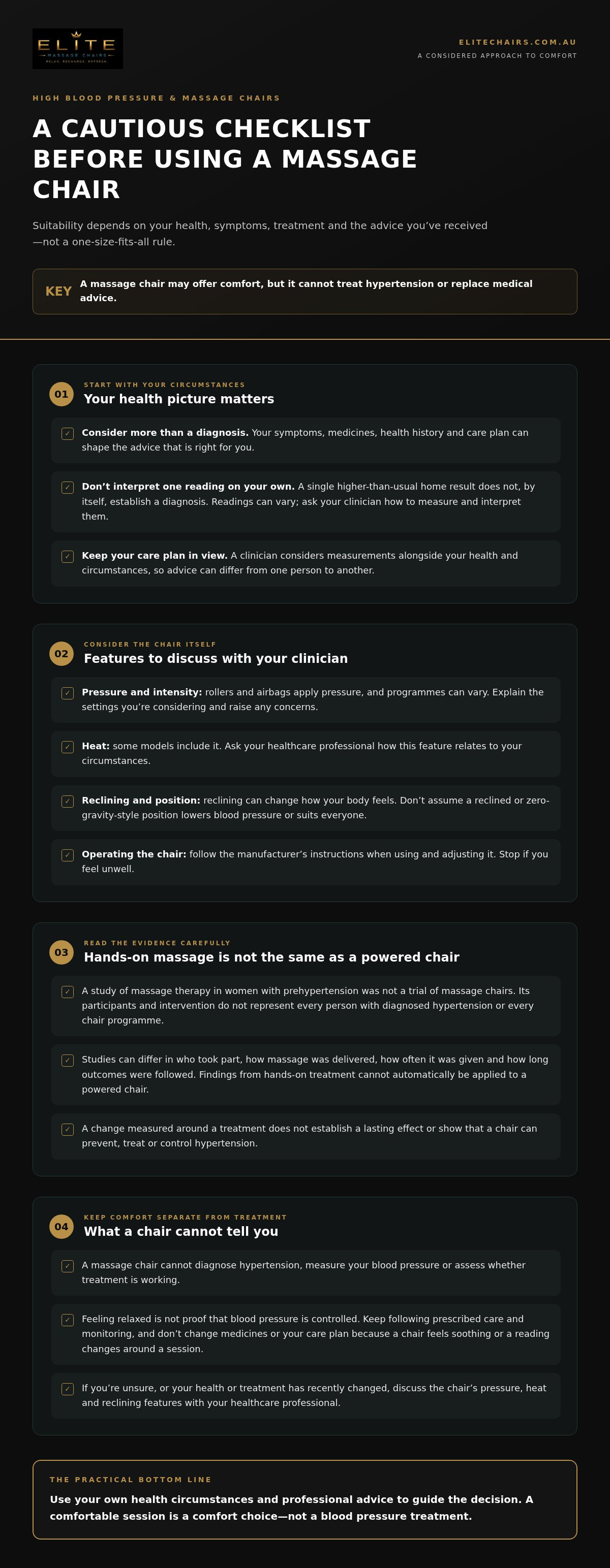
A cautious checklist for considering massage chair use
A considered plan can help you decide whether a chair feels appropriate without turning a relaxation session into a health test. If you’re using a massage chair with high blood pressure, keep your care plan at the centre of the decision and work through these steps:
- Consider your health context. Think about your current symptoms, recent health changes and any instructions you’ve received from your healthcare professional.
- Discuss questions before use. Ask your GP or treating clinician how your circumstances, medicines or health conditions relate to chair use.
- Read the chair instructions. Use the chair only as its manufacturer directs, including guidance on settings, positioning and operation.
- Stop if you feel unwell. Don’t push through discomfort or concerning symptoms to complete a programme.
Before a session: prepare a useful conversation
Give your clinician a clear picture of the chair experience you’re considering. Mention its massage action, any heat function and the reclined positions. Ask whether your symptoms, conditions or medicines raise specific concerns. If you have a blood pressure monitoring plan, ask whether you should continue it as usual. Your clinician can advise based on your circumstances.
During use: prioritise comfort and responsiveness
Follow the manufacturer’s instructions and choose only settings that feel comfortable within those directions. You don’t need to increase intensity or continue through discomfort. Stop if you feel dizzy, faint, unusually uncomfortable or otherwise unwell, and seek advice if symptoms concern you. A relaxed feeling, or information shown on a chair display, isn’t a blood pressure assessment and shouldn’t guide changes to medicines or monitoring.
Positioning can be another point to discuss if you’re unsure. A zero-gravity massage chair guide can explain the general idea of reclined positioning, but it can’t determine whether a position is medically suitable for you. Follow individual advice you’ve received rather than assuming a particular posture will affect blood pressure in a predictable way.
Once you’ve considered medical advice, a showroom demonstration can let you experience a chair’s comfort and positioning for yourself. Book a massage chair showroom demonstration to explore comfort, not as a medical assessment or treatment.
Choose your next step with confidence and care
The clearest takeaway is that personal medical advice comes first. A massage chair is for comfort, not hypertension treatment, and it can’t replace prescribed care or blood pressure monitoring. If you’re unsure, feeling unwell or dealing with a recent change in your health, defer use until you’ve spoken with your healthcare professional. There’s no need to rush the decision.
Questions to take to your healthcare professional
A focused conversation can help you make a choice that fits your circumstances. Explain the chair’s massage, heat and reclining features, then ask whether your health history, current symptoms or medicines call for caution. Mention any recent change in your condition or treatment. Your clinician can advise how to proceed and whether to keep particular precautions in mind.
- Are there aspects of my health that make massage-chair use inappropriate or call for extra caution?
- Do my current symptoms or recent health changes affect whether I should use one?
- Could any of my medicines or care instructions be relevant to chair use?
- Should I continue my usual blood pressure monitoring routine without changes?
Follow the advice you receive about your care and monitoring. Don’t adjust prescribed medicines or change your monitoring plan to accommodate a massage session. If you’re advised to wait, or remain uncertain after the conversation, it’s reasonable to leave the chair for another time.
Experience comfort without confusing it with care
Once you’ve considered your health advice, a showroom demonstration offers a chance to experience how a chair feels and whether its position is comfortable for you. Elite Massage Chairs offers free showroom demonstrations for this purpose. A demonstration can’t provide medical advice, assess your blood pressure or determine whether a chair is clinically suitable. Keep those decisions with your healthcare professional.
If you’ve received advice that you’re comfortable proceeding, you can explore the massage chair range and book a demonstration as a way to experience chair comfort. Take your time, follow the manufacturer’s instructions and stop if you feel unwell. Using a massage chair with high blood pressure is a personal decision guided by your health circumstances, not a promise of medical benefit.
Make your next step a considered one
Let health advice guide your decision, rather than pressure to try a new wellness experience. If you’re uncertain, unwell or waiting for guidance about a recent change, it’s reasonable to pause. Choosing comfort should never mean setting aside the care plan that supports your wellbeing. Just as cardiovascular care calls for an individualised approach, broader wellness routines can also benefit from tailored solutions like Zenutri Personalised Vitamins to meet specific daily nutritional needs.
Before using a massage chair with high blood pressure, take questions about your health, medicines or monitoring to your GP or treating clinician. If they’re comfortable with you exploring chair use, follow their advice and the manufacturer’s instructions, and pay attention to how you feel. A measured approach can make the experience more reassuring.
When you’re ready to explore a chair’s comfort, Elite Massage Chairs offers massage chairs and accessories online and in-store, along with showroom demonstrations to experience the chairs firsthand. A demonstration is a chance to discover how a chair feels, not a health assessment. Explore the massage chair range and book a free showroom demonstration when you’re ready.
Take the time you need. Your next step can be both considered and calm.
Frequently Asked Questions
Is it safe to use a massage chair if my high blood pressure is controlled?
It may be suitable for some people, but controlled blood pressure alone can’t confirm that a chair is right for you. Your overall health, symptoms and care instructions also matter. If you’ve discussed massage-chair use with your GP, follow their guidance and the chair’s instructions. If you haven’t, ask before trying a new programme, particularly if your health or treatment has changed.
Can a massage chair change your blood pressure during a session?
Blood pressure can vary over time, but research on hands-on massage doesn’t show exactly how a massage chair will affect you during a session. Pressure, position and programmes differ between chairs and users. A reading taken around a session can’t show that the chair has controlled your hypertension. Don’t use a perceived change as a reason to alter your treatment.
Should I speak to my GP before using a massage chair with hypertension?
It’s sensible to ask your GP or treating clinician if you’re uncertain, have symptoms, or have had a recent change in health or treatment. Describe the chair’s features and ask whether any personal precautions apply. This conversation is especially useful if you’re managing other conditions as well. Keep following your existing care advice while you decide whether chair use feels appropriate.
Can blood pressure medication affect how a massage chair feels?
Discuss your medicines with your clinician, as some treatments may affect how you feel, including sensations such as light-headedness. That doesn’t mean you should stop or change a medicine before using a chair. If you’ve noticed dizziness or another new symptom since starting or changing treatment, mention it to your GP or pharmacist and get advice before a session.
Should I check my blood pressure before or after using a massage chair?
Follow the monitoring schedule your healthcare professional has recommended. Don’t add readings solely to judge whether a massage chair is suitable unless they advise it. If you’re due to measure, use your usual method and follow your clinician’s instructions about timing and rest. A chair display isn’t a blood pressure monitor, and a single reading after relaxing shouldn’t prompt a change to your care plan.
Can I use a massage chair if I have high blood pressure and heart disease?
Ask your GP or treating heart specialist before use, because heart conditions vary and individual advice depends on your circumstances. Explain the chair’s massage action and reclining positions, and mention recent symptoms, procedures or changes to your care. Don’t assume advice given to someone with hypertension but no heart condition applies to you. Wait for guidance if you’re unsure.
What should I do if I feel dizzy or unwell in a massage chair?
Stop the programme and get out of the chair carefully, asking someone nearby to assist if needed. Don’t resume while you feel unwell. If symptoms are severe, or include chest pain, sudden weakness, facial drooping or difficulty speaking, call 000 for an ambulance. For symptoms that are concerning but not an emergency, contact your GP or call Healthdirect on 1800 022 222.


