
Did you know that 41% of Australian workers now face constant, unrelenting stress every single day? It is a staggering figure that explains why your shoulders often feel like granite by 5:00 PM and your mind refuses to quieten down long after the laptop is closed. You likely feel the weight of decision fatigue and the persistent buzz of digital notifications, making it nearly impossible to actually relax when you finally step through your front door. It's a common struggle to find the energy for meaningful self-care when your body remains locked in a cycle of professional pressure.
This guide introduces a science-backed framework designed to transform your evening from a state of "fight or flight" into one of total physical neutrality. By refining your after work recovery routine, you can move beyond passive scrolling and into a state of deep, restorative rest. We will explore advanced recovery techniques tailored for the modern Australian home, including NASA-inspired technology and physiological resets. You will discover how to achieve immediate relief from lower back pain and mental clutter, ensuring you wake up feeling vibrant and restored rather than sluggish.
Key Takeaways
- Discover why modern digital boundaries make switching off difficult and how to bypass the 'tired but wired' cycle for a more restorative sleep.
- Learn the science of activating your parasympathetic nervous system to transition your body from professional pressure to a state of profound calm.
- Identify the most effective elements of an after work recovery routine, focusing on high-tech passive recovery that requires zero mental effort.
- Explore the benefits of Neutral Body Posture and zero gravity technology in providing immediate, high-end relief for lower back and shoulder pain.
- Understand how to curate a sophisticated home sanctuary that uses sensory strategies to signal a complete psychological break from your workspace.
Why the 'Switch Off' is Harder Than Ever in 2026
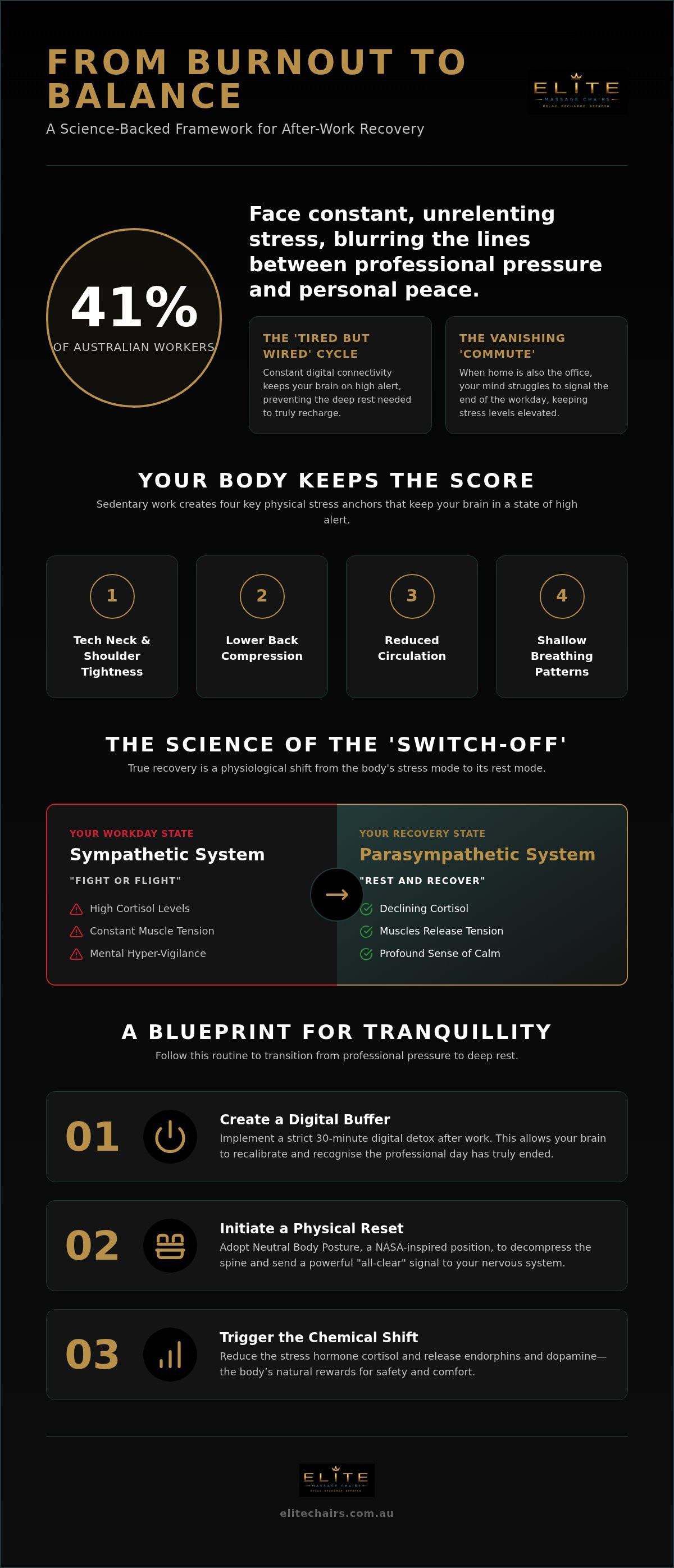
The modern Australian workplace has undergone a profound transformation, yet our biological stress responses remain tethered to an older era. Recent data reveals that 41% of Australian workers face constant stress, with half of the workforce reporting burnout in the last year. This isn't merely a result of a heavy workload; it's the consequence of the "digital commute". In 2026, the traditional buffer between the office and the home has vanished. When your kitchen table doubles as a workstation, your brain struggles to signal the end of the professional day, keeping cortisol levels elevated long after you've technically logged off. Building a sustainable after work recovery routine requires acknowledging these physiological barriers first.
The Blurred Lines of Modern Work
The psychological impact of checking a single email in your personal living space is more damaging than most realise. It creates a state of "hyper-vigilance" where the mind remains on standby, waiting for the next notification. This constant connectivity prevents the transition from the sympathetic nervous system, your "fight or flight" mode, to the parasympathetic state required for true rest. Without a clear transitional ritual, you remain in a "tired but wired" cycle. To break this, consider a strict digital detoxification for the first 30 minutes after finishing work. This allows your brain to recalibrate and recognise that the professional threat has passed, making space for genuine tranquility.
Identifying the Physical Toll of Office Fatigue
While the mental strain is evident, the physical manifestation of sedentary work is often more insidious. Hours spent leaning into screens result in "Tech Neck" and significant lower back compression, which act as physical anchors for stress. When your muscles are locked in tension, your brain receives constant feedback that you're still under pressure. This physical discomfort feeds into "decision fatigue", a state where your cognitive resources are so depleted that choosing a healthy after work recovery routine feels like an insurmountable chore. Common physical symptoms of office fatigue include:
- Persistent neck and shoulder tightness that limits range of motion.
- Lower back compression from prolonged sitting, leading to dull, aching pain.
- Reduced circulation in the lower limbs, causing a heavy, sluggish sensation.
- Shallow breathing patterns that reinforce a state of high physiological anxiety.
Traditional hobbies, while enjoyable, often fail to provide the deep restoration needed because they still require active mental or physical effort. To truly de-stress, you need a solution that addresses the spinal health and muscular tension that sedentary work creates, allowing the body to lead the mind into a state of total peace.
The Science of De-stressing: Activating Your Parasympathetic Nervous System
True de-stressing is far more than a simple mental choice; it is a complex physiological event. It is the process of shifting your body from the Sympathetic Nervous System, which governs the "fight or flight" response, to the Parasympathetic Nervous System, which facilitates rest and recovery. When you consciously integrate this biological shift into your after work recovery routine, you are effectively telling your brain that the survival mode required for professional performance is over. This transition is essential for clearing the mental fog and physical tension that accumulates over an eight-hour day.
A primary catalyst for this neural reset is the adoption of Neutral Body Posture. Neutral Body Posture is a NASA-inspired position that aligns the body to minimise gravitational strain. By achieving this specific alignment, you naturally reduce your heart rate and promote a state of deep, physical calm. This physical state of spinal decompression acts as a powerful neurological signal. It informs your nervous system that the "threat" of the workday has passed, allowing your muscles to finally release the tension they have held since your first morning meeting.
From Cortisol to Calm: The Chemical Shift
Achieving deep relaxation triggers a vital chemical transformation within your body. As you settle into a fully supported state, your brain begins to release endorphins and dopamine, which are the body's natural rewards for safety and comfort. Simultaneously, the production of cortisol, the primary stress hormone that keeps you "on edge," begins to decline. Many Australians mistakenly believe that simply reclining on a standard sofa is enough to de-stress. However, a traditional sofa often fails to support the natural curvature of the spine, leading to continued muscular strain that prevents cortisol levels from dropping to their optimal baseline.
The Power of Zero Gravity Technology
For those seeking a more sophisticated reset, zero gravity technology provides the ultimate physiological solution. By elevating your knees slightly above the level of your heart, you improve systemic circulation and naturally lower your blood pressure. This weightless sensation significantly reduces the pressure on your intervertebral discs, which are often heavily compressed after hours of sedentary desk work. You can explore the technical details in our guide on The Science of Zero Gravity to understand how it facilitates cellular repair. To truly appreciate this level of restoration, you might consider visiting a private showroom demonstration to experience the technology firsthand. This targeted approach ensures your after work recovery routine becomes a high-performance ritual for your well-being.
Active vs. Passive Unwinding: Which is Better for You?
Choosing the right balance between active and passive unwinding is essential for a sustainable after work recovery routine. Active recovery, such as yoga or a brisk walk, is excellent for circulation and mental clarity, yet it requires a level of willpower that many professionals simply don't have at 6:00 PM. Passive recovery, on the other hand, allows high-tech wellness tools to facilitate relaxation for you. While both have their place, understanding when your body needs a gentle nudge versus a complete neural reset is the key to long-term health ROI.
Movement and Mindfulness: The Active Approach
Engaging in "Green Exercise", such as a stroll through a local park or along the coast, is a powerful way to reset the mind using the natural Australian landscape. These activities help lower blood pressure and provide a psychological break from the digital world. Simple stretching can also alleviate the immediate tightness caused by a long commute or hours spent at a desk. However, active recovery has its limitations. When you are experiencing chronic physical fatigue or severe decision fatigue, even a "relaxing" yoga class can feel like another exhausting chore on your to-do list. In these moments, forcing an active session can actually keep your cortisol levels higher for longer.
Technology-Assisted Relaxation: The Passive Edge
This is where technology-assisted relaxation provides a distinct advantage. High-end therapeutic massage chairs offer a state of "forced" relaxation, where the body is guided into a restorative state without any mental effort from the user. These systems use rhythmic compression to assist with lymphatic drainage and the removal of metabolic waste, which is vital for those who spend most of their day sedentary. Passive technology is often the most sustainable choice for a daily after work recovery routine because it removes the barrier of effort. It allows you to simply sit down and let the engineering do the work of decompressing your spine and soothing your nervous system.
The ultimate "sweet spot" for recovery involves a multi-sensory approach that combines both worlds. A short, ten-minute walk to clear the mind, followed by a twenty-minute session featuring heat, targeted pressure, and a curated soundscape, is far more effective than any single method. This combination addresses the physical, mental, and sensory aspects of stress simultaneously. By integrating these elite recovery techniques into your home sanctuary, you ensure that your transition from professional pressure to personal peace is both immediate and profound.
Creating Your Home Sanctuary: A Blueprint for Tranquillity
Establishing a home sanctuary is about more than aesthetics; it is about spatial signalling. When you designate a specific area for restoration, you provide your brain with a clear psychological break from the office environment. This spatial boundary is vital for a successful after work recovery routine, as it helps quieten the mental chatter of deadlines and digital notifications. By curating an environment that prioritises physical and sensory peace, you make the transition to personal time feel effortless and luxurious. Establishing a non-negotiable 15-minute "Sanctuary Window" every evening ensures that this space becomes a reliable anchor for your daily well-being.
Sensory Organisation for Maximum Relief
To lower your cognitive load after a high-pressure day, start by reducing visual clutter. A clean, minimalist space allows the mind to settle without being distracted by unfinished household tasks or work-related reminders. Lighting plays a crucial role here; shifting your environment to warm, amber tones helps signal the body to begin melatonin production, preparing you for deeper rest later. You can further enhance this experience by integrating a "Scent and Sound" strategy. Using aromatherapy, such as lavender or sandalwood, alongside curated soundscapes can naturally lower blood pressure and heart rate. To complete this sensory retreat, consider integrating essential massage accessories like foot rollers to address the specific tension points that accumulate during a long commute.
The 15-Minute Reset Ritual
A structured ritual is the most effective way to ensure your recovery is consistent. This three-step process is designed to reset your physiology quickly and effectively:
- Step 1: Hydrate and Disconnect. Drink a glass of water and silence all digital devices immediately upon entering your sanctuary. This breaks the "always-on" cycle.
- Step 2: Neutral Body Position. Transition into a state of weightlessness. The centrepiece of any modern sanctuary should be a dedicated zero gravity massage chair, which allows you to decompress the spine and neck instantly.
- Step 3: Targeted Heat Therapy. Utilise integrated heat functions to soothe "office shoulders" and improve blood flow to tired muscles, facilitating faster cellular repair.
This ritual ensures your after work recovery routine is not just a luxury, but a high-performance tool for longevity. If you're ready to elevate your home environment, you can explore our premium range of wellness solutions to find the perfect centrepiece for your sanctuary.
Elevating Your Recovery with Elite Massage Technology
The final stage of a truly transformative after work recovery routine involves the integration of advanced engineering designed to meet your body's specific needs. Modern wellness technology has moved far beyond generic vibration; it now utilises sophisticated body scan sensors to map your unique spinal curvature and shoulder height. This ensures that every movement is tailored to your frame, providing a level of precision that was once only available through professional manual therapy. By incorporating these innovations into your home, you eliminate the stress of travel and scheduling, allowing for a seamless transition into deep restoration whenever you require it most.
A personalised Shiatsu session in your own living room is the height of modern luxury. These systems replicate the intricate thumb and palm pressures of traditional Japanese techniques, targeting the deep tissue knots that accumulate during high-pressure workdays. Investing in this level of premium wellness tech is a strategic choice for your professional longevity. It ensures that the physical toll of office life does not compromise your long-term health or cognitive performance. When your body is properly maintained, your capacity for focus and creativity remains at its peak.
The Zero Gravity Difference
Elite recovery solutions prioritise the NASA-pioneered zero gravity position because it provides the most comprehensive neural reset possible. By aligning your heart and knees, the system creates a sensation of weightlessness that immediately relieves the compression in your lower back. This specific alignment is particularly effective for preparing the body for rest. As your heart rate slows and your muscles soften, your system naturally begins to transition into the restorative phases of the sleep cycle. This preparation is vital for ensuring that you wake up feeling vibrant and prepared for the challenges of the following day.
Making Premium Wellness Accessible
Bringing an elite sanctuary into your Australian home is more achievable than ever before. We offer flexible options like Humm financing to ensure that high-end recovery technology is an accessible investment for busy professionals. When you consider the long-term ROI of reduced stress and improved daily productivity, premium recovery tech essentially pays for itself. To find the perfect match for your specific stress profile and body type, we invite you to experience the difference firsthand with a private showroom demo. Discovering the right technology is the ultimate way to perfect your after work recovery routine and secure your physical well-being for years to come.
Elevate Your Evening Restoration
Transitioning from professional pressure to personal peace is a physiological necessity in 2026. You now understand that true restoration requires more than just sitting on a sofa; it demands a deliberate shift into your parasympathetic nervous system. By adopting a neutral body posture and utilising advanced body scan technology, you can effectively decompress your spine and quieten the mental noise of a digital workspace. A sophisticated after work recovery routine isn't just a luxury. It's a vital investment in your long-term health and professional longevity.
To truly understand the transformative power of this technology, we invite you to take the next step. Book your free private showroom demonstration to experience total restoration and witness the world’s most advanced Zero Gravity technology firsthand. Our expert wellness consultants provide national support to help you curate your ideal home sanctuary, with flexible Humm financing available to make premium wellness an immediate reality. You deserve a home that feels like a retreat. Start your journey toward a more vibrant, restored version of yourself today.
Frequently Asked Questions
What is the fastest way to de-stress after a long workday?
The fastest way to de-stress is to trigger an immediate shift from your sympathetic to your parasympathetic nervous system. This is best achieved by disconnecting from digital devices and adopting a neutral body position. Spending just 15 minutes in a zero gravity environment allows your heart rate to slow and your muscles to release tension. This rapid physiological reset is significantly more effective than passive activities like watching television or scrolling through social media.
Is it better to exercise or relax immediately after work?
Choosing between exercise and relaxation depends on whether your fatigue is mental or physical. If you have been sedentary all day, a brisk ten-minute walk can help clear mental fog. However, if you are experiencing extreme burnout, which affects 50% of Australian workers, a passive after work recovery routine is often superior. Forcing a high-intensity workout when mentally exhausted can keep cortisol levels elevated, whereas passive recovery facilitates a necessary neural reset.
How long should a post-work recovery session last to be effective?
An effective recovery session typically requires 15 to 20 minutes to produce measurable physiological benefits. This window is sufficient for advanced body scan technology to identify tension points and for your heart rate to reach a resting baseline. Consistency is more important than duration; a brief, daily ritual is far more effective for long-term health ROI than a single long session once a week. This short investment fits easily into a busy professional schedule.
Can a massage chair really help with mental stress, or just physical pain?
High-end massage technology addresses both mental stress and physical pain by exploiting the mind-body connection. While the rollers and air compression soothe "office shoulders" and lower back compression, the rhythmic nature of the treatment induces a meditative state. This process reduces cortisol and triggers the release of endorphins. By physically forcing the body to relax, the mind naturally follows, providing a comprehensive solution to the "tired but wired" cycle common in corporate culture.
What are the signs that my work stress is becoming a health risk?
Physical signs that work stress has become a health risk include persistent neck and shoulder tension, frequent headaches, and disrupted sleep patterns. In Australia, 41% of workers report constant stress, which often manifests as chronic lower back pain. If you find it impossible to "switch off" from digital notifications or feel extreme distress at the thought of the next workday, your current after work recovery routine may need a more sophisticated, technology-driven upgrade.
How do I create a relaxation ritual if I have a busy family life?
Creating a ritual with a busy family requires prioritising efficiency and clear boundaries. Establish a 15-minute "Sanctuary Window" immediately after arriving home where you are unavailable for household demands. Using a high-tech massage chair as the centrepiece of this ritual ensures you receive a deep-tissue reset in a fraction of the time required for traditional therapy. This brief period of total peace allows you to show up more vibrantly for your family afterwards.
Why is the zero gravity position recommended for de-stressing?
The zero gravity position is recommended because it minimises the strain of gravity on your vertebrae and circulatory system. By elevating your knees above your heart, you improve blood flow and reduce the pressure on your intervertebral discs. This NASA-pioneered alignment is the most effective way to signal to your brain that the workday is over. It provides immediate relief from the compression caused by hours of sedentary desk work and promotes deep tranquillity.
How can I stop my mind from racing when I am trying to unwind?
To stop a racing mind, you must engage your senses to ground yourself in the present moment. Utilising a multi-sensory approach that combines heat therapy, rhythmic pressure, and curated soundscapes can bypass the mental chatter. When your body is placed in a state of total physical neutrality, your nervous system naturally quietens. This sensory immersion makes it much easier to disconnect from professional pressures and transition into a state of personal peace and mental clarity.


