

What if the traditional idea of rest is actually the very thing preventing your recovery? For many Australians, the reality of living with Myalgic Encephalomyelitis or Chronic Fatigue Syndrome means that even the simplest tasks can trigger a debilitating wave of Post-Exertional Malaise. You've likely felt the frustration of waking up just as exhausted as when you went to bed, finding that traditional sleep simply isn't restorative enough for your system. Successfully managing chronic fatigue with home therapy requires more than just doing less; it's about maximising the quality of the stillness you choose and ensuring every minute of downtime counts toward your recovery.
This guide provides a clear path toward reclaiming your energy through strategic pacing and the restorative power of passive recovery technology. You'll learn how to implement a sustainable home routine that minimises physical discomfort and reduces muscle tension without over-exerting your limited reserves. We'll explore the intersection of modern wellness and clinical pacing, showing you how to use advanced tools like zero gravity positioning to create a truly restorative environment. By the end of this article, you'll have the insights needed to elevate your quality of life and turn your home into a sanctuary for genuine healing.
Key Takeaways
- Master the art of pacing by understanding your unique energy limits and implementing strategies to prevent debilitating Post-Exertional Malaise.
- Discover how managing chronic fatigue with home therapy focuses on deep, passive recovery to restore the body without the risks associated with active exertion.
- Learn why creating a dedicated home sanctuary with specialised furniture is essential for providing the physiological support needed for true restoration.
- Understand the science of zero gravity technology and how achieving a neutral body posture can significantly alleviate muscle tension and physical discomfort.
- Explore how gentle, customisable massage features can support circulation and wellness while respecting the sensitivities of a fatigued system.
Understanding Chronic Fatigue and the Role of Home Therapy
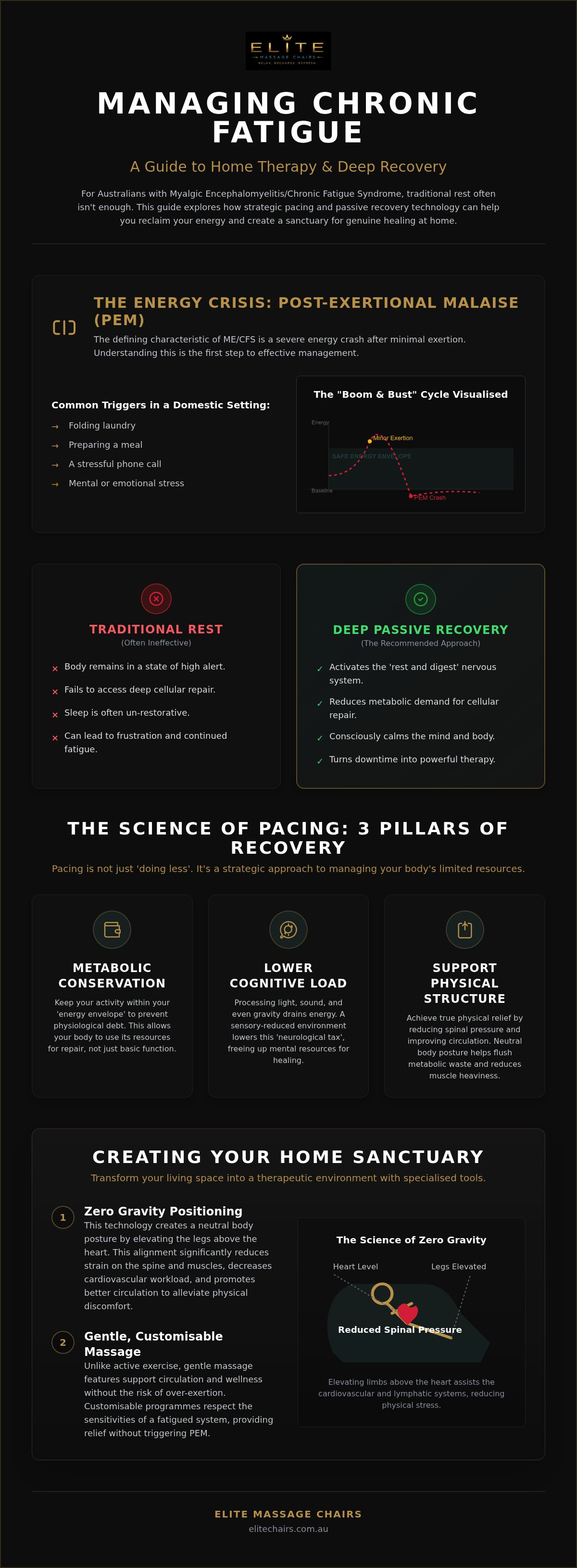
Living with Myalgic encephalomyelitis/chronic fatigue syndrome involves much more than enduring persistent exhaustion. It is a complex, multi-system condition where the body's internal battery fails to recharge, often leading to a profound impact on every aspect of daily life. The defining characteristic is Post-Exertional Malaise (PEM), a state where even minor physical or mental activity triggers a disproportionate crash in energy levels. Control is essential. Your home serves as the primary theatre for recovery, where every choice in your environment either supports or depletes your reserves. By 2026, the clinical focus has shifted significantly toward empowering individuals to take control of their surroundings. Managing chronic fatigue with home therapy has become the gold standard for maintaining stability and preventing the "boom and bust" cycles that hinder long-term wellness.
The Symptoms That Demand a Home Strategy
The central concept in any recovery plan is the "energy envelope". This represents the total amount of energy you can expend before triggering a relapse. In a domestic setting, common triggers might include something as simple as folding laundry, preparing a meal, or engaging in a stressful phone call. Traditional rest often feels insufficient because the body remains in a state of high alert, unable to access the deep cellular repair required for genuine relief. Rest must be restorative. Creating a home strategy allows you to identify these triggers and adjust your surroundings to minimise unnecessary physical strain. When your living space is organised around your needs, you can ensure your home remains a place of recovery rather than a source of stress.
The Evolution of Home Therapy for Wellness
We have moved far beyond the outdated advice of simple bed rest. Modern approaches prioritise active relaxation, which involves consciously calming the nervous system to encourage healing. This process focuses on activating the parasympathetic nervous system, the "rest and digest" mode that counteracts the chronic stress response often seen in fatigue sufferers. Home-based tools now bridge the gap between clinical appointments and daily life, providing sophisticated ways to support the body's natural rhythms. By integrating restorative technology into your living space, you can transform passive downtime into a powerful therapeutic session. This shift allows for a more nuanced approach to managing chronic fatigue with home therapy, where the goal is to cultivate a lifestyle of sustainable wellness and quiet luxury.
The Science of Pacing: Why Deep Passive Recovery is Crucial
Pacing is often misunderstood as simply doing less. In reality, it's a sophisticated strategy of metabolic conservation designed to keep your activity within a safe "energy envelope." For those managing chronic fatigue with home therapy, the goal is to prevent the body from entering a state of physiological debt. While sleep is a vital part of life, it often fails to provide the restorative depth required to repair cellular energy in fatigue sufferers. Therapeutic deep relaxation differs from sleep because it involves a conscious reduction of metabolic demand while the body remains in a state of quiet, healing awareness. By lowering the "noise" of the nervous system, you allow your body to redirect its limited resources toward cellular repair rather than simply maintaining basic functions.
Cognitive load is another silent drain on energy reserves. Processing light, sound, and even the physical sensation of gravity requires neurological effort. Creating sensory-reduced environments at home is essential for lowering this neurological tax. When you remove these external stressors, you create a vacuum that the body fills with restorative processes. This isn't just about avoiding a crash; it's about building a foundation for long-term stability through intentional, high-quality stillness.
Neutral Body Posture and Circulation
Achieving true physical relief requires more than just lying on a standard mattress or sofa. When you elevate your limbs above the heart, you assist the lymphatic system and reduce the workload on your cardiovascular system. This position facilitates better circulation and helps flush metabolic waste that can contribute to muscle heaviness and discomfort. Reducing spinal pressure is equally vital, as it allows the intervertebral discs to rehydrate and the surrounding muscles to finally release their protective tension. Neutral body posture is the gold standard for passive rest. To experience this level of support, many Australians find that a premium zero gravity massage chair provides the perfect environment for these daily recovery sessions.
Circadian Rhythms and Recovery Cycles
Fatigue often wreaks havoc on the body's internal clock, leading to a "wired but tired" state that makes traditional sleep difficult. Using home therapy to regulate these cycles is a powerful tool for managing ME/CFS symptoms effectively. Integrating gentle, rhythmic stimulation through air compression or light vibration can help lower sleep latency by coaxing the brain into a more relaxed state. Rather than waiting for a total collapse, it's more effective to schedule recovery "snacks" throughout the day. These short, 15 to 20-minute windows of deep passive recovery help maintain a steadier energy baseline, ensuring you don't exhaust your reserves before the day is through.
Passive Therapy vs. Active Exercise: Choosing Low-Exertion Relief
For decades, the default medical advice for fatigue was Graded Exercise Therapy (GET). We now understand that pushing through the pain is often counterproductive. Modern ME/CFS diagnosis and treatment protocols have evolved to prioritise the prevention of Post-Exertional Malaise (PEM). Over-exertion isn't just a minor setback; it's a physiological crisis that can reset weeks of progress. This is why the shift toward passive therapy is so transformative. Managing chronic fatigue with home therapy allows you to maintain physical health without the metabolic "bill" that active exercise demands. Passive therapy delivers the benefits of movement, such as improved circulation and muscle relief, while your body remains in a state of total rest.
Advanced home tools, like air compression systems and gentle rollers, essentially provide a workout for your lymphatic system. They facilitate the movement of fluids and help clear metabolic waste without requiring your heart rate to climb. This ensures your body stays "mobile" at a cellular level, even when your energy levels won't permit a trip to the gym or a walk around the block. By delegating the physical work to sophisticated technology, you can protect your energy envelope while still addressing the physical symptoms of stagnation.
The Case for Passive Physical Stimulation
Maintaining muscle tone and circulation is a delicate balance when every movement has a price. Consider the metabolic cost of a simple 10-minute walk. It requires balance, cardiovascular output, and significant neurological processing. For many, this is enough to trigger a crash. In contrast, a 10-minute massage session offers comparable circulatory benefits with almost zero metabolic expenditure. By using mechanical stimulation, you can encourage lymphatic drainage and keep tissues supple without exhausting your energy reserves. It's a way to keep the body's internal systems moving while the person stays in total repose, ensuring you don't overdraw from your daily energy account.
Customising Your Intensity Levels
For someone with a highly sensitive nervous system, "gentle" is the most important word in the vocabulary. Standard massage settings can often be too aggressive, potentially causing more harm than good. You need sophisticated, adjustable technology that lets you find the perfect "sweet spot" for your current energy state. Managing chronic fatigue with home therapy requires a high degree of personalisation. Start with the most subtle settings and pay close attention to how you feel the next day. By monitoring your physical response and using customisable tech, you can enjoy deep relief while ensuring you never push your system into a state of metabolic distress.
Creating Your Home Sanctuary: Tools for Managing Fatigue Daily
Managing chronic fatigue with home therapy requires a shift in how you view your living space. It's no longer just a house; it's a carefully curated environment designed to protect your energy reserves from unnecessary depletion. The psychology of space is a powerful tool in recovery. When you designate a specific area for deep rest, you create a neurological shortcut that helps your body transition into a restorative state more quickly. This dedicated zone acts as a sanctuary where the rules of the outside world don't apply. By organising your home to minimise hidden energy drains, such as frequent trips across the house or reaching for high shelves, you can save significant amounts of energy for the things that truly matter. Even small adjustments, like keeping a recovery kit of water and medication within arm's reach of your primary resting chair, can make a measurable difference in your daily energy levels.
The Anatomy of a Recovery Zone
A successful sanctuary is built on the pillars of ergonomic support, temperature control, and quietude. You need furniture that doesn't just look good but actively assists your body in finding a neutral state. Positioning your zone to catch natural morning light can help regulate your circadian rhythm, provided you have high-quality window treatments to prevent over-stimulation during a crash. Maintaining a steady, comfortable temperature is also vital, as the body uses significant energy to regulate heat when the environment is too cold or too warm. To truly elevate the experience, consider incorporating massage chair enhancement accessories like weighted blankets or noise-cancelling headphones. These additions transform a simple seat into a multi-sensory recovery station that blocks out the chaos of daily life and encourages deep cellular repair.
High-Tech Aids for Low-Energy Days
Technology should work for you, not the other way around. Smart home integration is a lifesaver on low-energy days, allowing you to adjust lighting, temperature, and music through voice commands without leaving your chair. Using voice-activated systems reduces the physical movement required to manage your environment, preserving your energy for healing. Zero gravity recliners are the centrepiece of a fatigue-friendly home, providing the precise physiological positioning needed to reduce the heart's workload and alleviate spinal pressure. For those with limited space, portable wellness tools can offer targeted relief, ensuring that every corner of your home can support your recovery journey. To find the perfect foundation for your sanctuary, you can explore our range of premium zero gravity chairs designed for high-end home wellness. Investing in these tools represents a commitment to your long-term health, providing a reliable way to manage symptoms from the comfort of your own living room.
Elevating Your Recovery with Zero Gravity and Therapeutic Massage
Integrating advanced technology into your daily routine is the final step in mastering a lifestyle of restorative wellness. While pacing and sanctuary design provide the framework, the tools you choose dictate the depth of your physical recovery. Zero gravity technology offers a unique physiological advantage by mimicking the weightlessness of space, effectively neutralising the constant tax that gravity places on a compromised system. For those managing chronic fatigue with home therapy, this position represents the pinnacle of passive recovery, allowing the body to exist in a state of near-total suspension where healing can take priority over basic maintenance.
Zero Gravity: The Ultimate Restorative Position
Experience a profound shift in your physical comfort by elevating your knees above your heart level. This specific alignment is essential for addressing the "heavy limb" sensation that many ME/CFS sufferers describe as a constant burden. By redistributing your body weight evenly across the chair, you alleviate the pressure on your spine and joints, which in turn reduces the background noise of physical pain. The zero gravity chair health benefits extend to your respiratory system as well. This posture facilitates deeper diaphragmatic breathing and improved oxygenation by allowing the lungs to expand fully without the compression of traditional sitting or lying down, providing a quiet boost to your cellular energy.
Precision Tech for Personalised Relief
Precision is vital when your nervous system is in a state of heightened sensitivity. Elite Massage Chairs prioritises sophisticated body scan technology to ensure every session is tailored to your unique frame. This non-invasive scanning process maps your spine and shoulder height, ensuring the rollers and air compression bags deliver a gentle, supportive experience rather than an aggressive one. You can manage muscle aches and stiffness from your own living room, removing the need for exhausting trips to a manual therapist that often trigger Post-Exertional Malaise. This convenience is a cornerstone of managing chronic fatigue with home therapy, as it allows for immediate relief the moment symptoms begin to flare.
Choosing the right support is a significant decision for your health and quality of life. Finding a solution that respects your specific energy limits while providing genuine relief is the key to long-term success. We encourage you to try a massage chair before buying at one of our national showrooms. This allows you to experience the customisable, gentle programmes firsthand and ensure the technology aligns with your personal sensitivity levels. Making an informed investment in your home wellness is about more than just comfort; it's about securing a reliable partner for your journey toward a better state of being.
Elevate Your Daily Path to Restoration
Navigating the complexities of ME/CFS requires a shift in perspective, moving away from the pressure of "doing more" toward the profound power of intentional stillness. By prioritising the energy envelope and embracing passive recovery, you can break the cycle of exhaustion and reclaim a sense of physical agency. Successfully managing chronic fatigue with home therapy is no longer about simple bed rest; it's about utilising advanced technology to achieve a state of neutral body posture that facilitates genuine cellular repair.
Transforming your living space into a sanctuary of recovery is a vital investment in your long-term quality of life. Whether it's through the weightless relief of zero gravity or the gentle support of air compression, these tools provide the physiological foundation your system needs to heal. Explore our range of Zero Gravity Massage Chairs for home therapy and discover how a sophisticated approach to relaxation can change your daily experience. With free national showroom demonstrations, expert guidance on therapeutic features, and flexible Humm financing available, finding your ideal wellness companion is simple. You deserve a home that supports your recovery journey every single day.
Frequently Asked Questions
Can a massage chair help with chronic fatigue syndrome?
Yes, a premium massage chair can be a valuable tool for managing chronic fatigue with home therapy by facilitating deep, passive recovery. These chairs allow for physiological restoration without the metabolic cost of active movement. By using gentle air compression and zero gravity positioning, you can improve circulation and reduce muscle tension while staying within your energy envelope. It's a sophisticated way to ensure your rest periods are truly restorative rather than just sedentary.
Is deep tissue massage safe for someone with ME/CFS?
Deep tissue massage is often too intense for those with a highly sensitive nervous system and may trigger Post-Exertional Malaise. For fatigue sufferers, the focus should be on gentle, customisable programmes that support the body without causing further stress. Modern therapeutic chairs offer precise control over intensity, allowing you to enjoy the benefits of physical stimulation through subtle air compression and light rollers that respect your body's current energy limits.
What is the best home therapy for managing PEM?
The most effective approach for managing PEM is a combination of strict pacing and high-quality passive rest. Utilising a zero gravity position is particularly beneficial as it reduces the heart's workload and alleviates spinal pressure. This neutral body posture helps your system redirect energy toward cellular repair. Integrating these recovery "snacks" into your daily routine ensures you don't overdraw from your energy account, making managing chronic fatigue with home therapy a sustainable long-term strategy.
How often should I use a massage chair if I have chronic fatigue?
Start with short, gentle sessions of around 10 to 15 minutes once a day to gauge your body's response. Because every individual's energy envelope is different, it's crucial to monitor how you feel the following day before increasing frequency. You might find that two shorter sessions are more beneficial than one long one. Always prioritise the most subtle settings initially to ensure the stimulation remains restorative rather than a source of physical exertion.
What is the difference between a zero gravity chair and a standard recliner for fatigue?
A standard recliner often leaves weight concentrated on the lower back and hips, which can cause discomfort over time. In contrast, a zero gravity chair elevates your knees above your heart level to achieve a neutral body posture. This NASA-inspired position distributes your weight evenly across the chair, significantly reducing the "heavy limb" feeling common in fatigue. It facilitates deeper breathing and better circulation, providing a level of physical relief that standard furniture cannot match.
Can home therapy replace professional physiotherapy for chronic fatigue?
Home therapy is designed to complement, not replace, the expert guidance of a qualified physiotherapist or medical professional. While your therapist provides the clinical framework and diagnosis, home-based tools allow you to manage your symptoms consistently between appointments. This daily support is essential for maintaining stability and preventing crashes. Always discuss new home therapy routines with your healthcare provider to ensure they align with your specific clinical management plan and recovery goals.
Does heat therapy help with chronic fatigue muscle pain?
Yes, gentle heat therapy is an excellent way to soothe the persistent muscle aches and stiffness associated with chronic fatigue. It works by dilating blood vessels and increasing oxygen flow to tired tissues, which aids in the removal of metabolic waste. When combined with the weightlessness of zero gravity, heat provides a multi-sensory experience that encourages the nervous system to shift into a restorative state. It offers a luxurious sense of relief without any physical effort.
Are there any side effects of using massage chairs for fatigue sufferers?
The primary risk for fatigue sufferers is over-stimulation, which can potentially trigger a flare-up of symptoms if the massage is too vigorous. This is why selecting a chair with highly customisable intensity levels and body-scanning technology is so important. If you experience increased exhaustion or muscle soreness after a session, it's a sign to reduce the duration or intensity. When used correctly at a gentle level, these chairs provide a safe and effective sanctuary for daily recovery.


