

A massage chair isn’t suitable for everyone, and some health concerns call for medical advice before use. Contraindications for using a massage chair can include fragile bones, recent surgery or injury, open wounds, and circulation or heart concerns. If you have a medical condition, don’t assume a gentle setting makes massage safe for you.
It’s understandable to want soothing relief while being cautious about how pressure, heat and repeated sessions may affect your body. This guide explains who may need to avoid a massage chair or seek medical advice first, and how circulation concerns, inflammation, bruising and overuse can affect what’s safe.
You’ll find practical guidance on warning signs, sensitive or injured areas, and when to stop a session. The aim is to help you make an informed decision about massage-chair use, without assuming the same advice applies to everyone.
Key Takeaways
- Fragile bones and osteoporosis can make massage-chair pressure risky; learn why medical advice matters before use.
- Circulation concerns, varicose veins, clotting issues and heart conditions may affect whether massage is suitable for you.
- Identify health conditions and affected areas that may call for avoiding a session or taking extra care.
- Recognise how excessive pressure or repeated sessions can contribute to soreness, inflammation and bruising.
1. Massage chair and health: can everyone use it?
Osteoporosis weakens bones, making strong pressure a particular concern. Massage-chair rollers can press along the back and spine, where fragile bones may be vulnerable to injury. People with osteoporosis or fragile bones should consider whether massage-chair pressure is suitable for them. With moderate or severe osteoporosis, strong pressure around the spine or other affected areas can raise fracture risk. These are important contraindications for using a massage chair, especially when bone strength is reduced.
Pregnant people should consult a doctor before using a massage chair, because every pregnancy is different. Massage-chair heat is unlikely to overheat the mother’s body, and chair vibrations are not considered strong enough to harm the baby. Still, medical advice matters, particularly for a pregnancy considered high risk. Ask whether pressure, heat or a full-body programme should be avoided before trying a session.
Treat symptoms as a reason to pause, not to push for relief. Massage can raise circulation and heart rate, which may leave some people feeling fatigued or exhausted. If pressure causes pain or discomfort, stop the chair rather than increasing the intensity. If an area is injured or inflamed, avoid directing massage there until you’ve received medical advice. The question isn’t simply whether a chair feels relaxing, but whether its pressure suits your bones and current health.
2. Can massage chairs cause blood circulation issues?
Massage pressure may affect people with circulation problems, varicose veins, blood-clotting conditions or heart conditions differently. These concerns can make massage-chair use unsuitable without medical advice. Before starting sessions, describe your condition to your doctor, including any diagnosed clot, vein symptoms or heart treatment. Their advice should take account of your health, current symptoms and the areas a chair would massage.
Deep vein thrombosis (DVT) calls for particular caution. A person with DVT should avoid massage-chair use without prior medical clearance, because pressure over an affected area could pose a risk. Don’t use a programme on a leg with new swelling, pain or unusual tenderness; seek medical advice about those symptoms instead. Varicose veins are another reason to ask a healthcare professional before using pressure on the legs.
Bleeding disorders such as haemophilia, or medication that affects clotting, also warrant individual medical advice before a session. People with thrombocytopenia can bruise easily, so strong pressure may be inappropriate; ultralight massage or no-pressure options may be more suitable. A visible bruise, unexplained bleeding or a recent change in treatment is a reason to pause rather than test a chair setting. The key question is how pressure could affect your particular bleeding risk.
Is it safe to use a massage chair with a pacemaker or other implant? People with a pacemaker or cardiovascular implant should consult their doctor before starting a regular routine, as electromagnetic fields may affect implanted devices. Share the implant type and any manufacturer guidance with your healthcare team; don’t assume a low-intensity setting removes that concern. Other implanted electrical devices also call for medical advice before use.
These are important contraindications for using a massage chair, but the decision depends on the specific condition, treatment and affected area. If your healthcare professional approves use, ask which areas and pressure settings suit your circumstances, and stop if you feel pain or discomfort. For general information on massage chair options, explore the available range once you’ve addressed your health concerns.
4. Massage chair contraindications
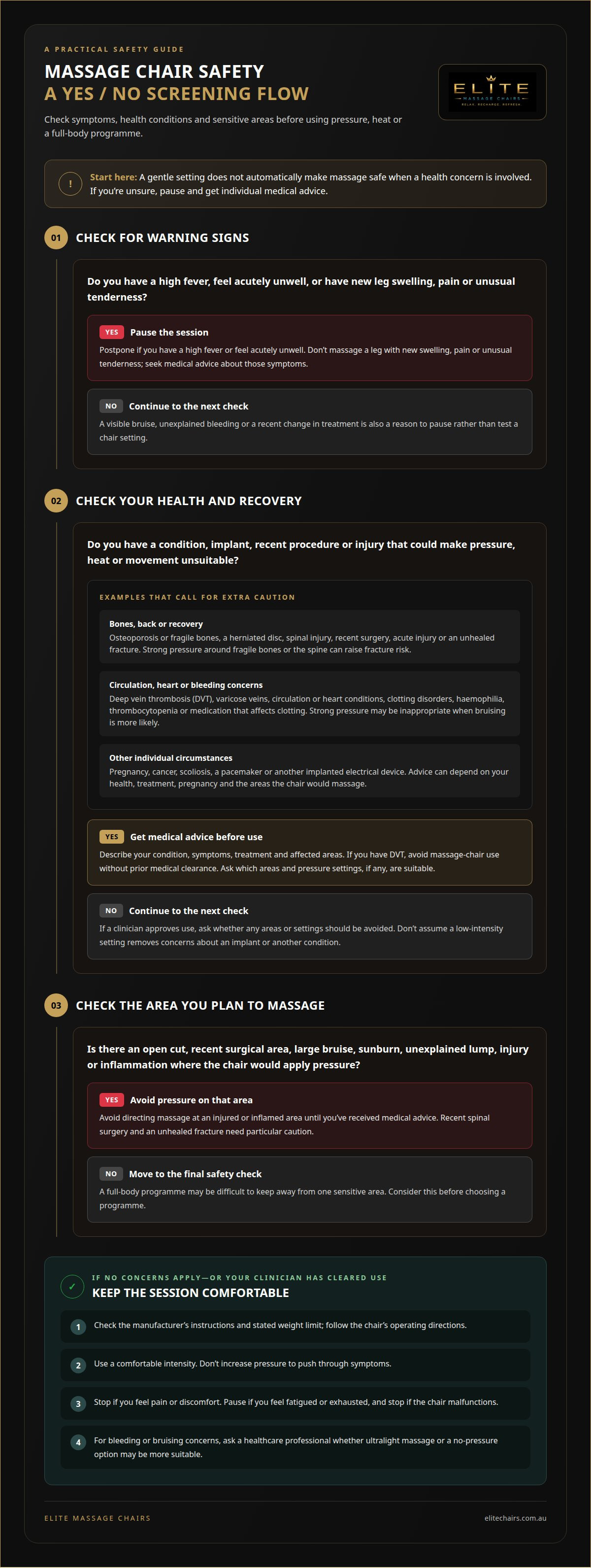
Some health conditions call for avoiding a massage chair or getting medical advice first. Examples include high fever, acute injury, recent surgery, osteoporosis, spinal injury, deep vein thrombosis, open wounds and varicose veins. Recent spinal surgery or an unhealed fracture needs particular caution because pressure may affect the healing area. Cancer, scoliosis and pregnancy may also make chair use inadvisable, depending on the person’s circumstances.
Australian health advice for people with pre-existing medical conditions is to consult a doctor before regular massage-chair use. Manufacturer instructions also matter: check the chair’s stated weight limit, follow its operating directions and stop if it malfunctions. These practical steps don’t replace medical assessment when a health condition could make pressure or movement unsafe.
Consider the location and timing of symptoms, too. Avoid massaging open cuts, recent surgical areas, large bruises, sunburn or an unexplained lump. If you have a high fever or feel acutely unwell, postpone a session rather than trying a gentler intensity. During menstruation, intense massage may worsen cramps or dizziness, and it may increase bleeding or discomfort for some people.
Other concerns may require an individual plan rather than a simple yes-or-no rule. Pregnancy, cancer, scoliosis and sensitive skin each raise different questions about pressure, heat and affected areas. A full-body programme may make it difficult to avoid one specific region, which matters when an injury or operation affects only part of the body. Ask your doctor whether massage is suitable, which areas to avoid and whether your treatment or stage of recovery changes the advice.
If you’ve been cleared to try a chair, use a comfortable intensity and stop if you feel pain or discomfort. Don’t increase pressure to push through symptoms. A sound decision weighs your physical condition, current symptoms and the chair’s instructions together, rather than relying on a general contraindication list.
4. Who should not use a massage chair?
Some people should postpone a session during an acute illness or active symptom flare. A high fever, acute meningitis or a long COVID crash period can make massage inappropriate while the body is unwell. Massage during acute meningitis is particularly unsuitable because the illness can be life-threatening and contagious. Wait until the acute symptoms have passed before considering chair use.
Recent vaccination can also affect timing. Massage is advised to be postponed for 24-72 hours after vaccination, with swollen or tender areas avoided. If the injection site remains sore, don’t direct pressure or heat onto it. People with an active infection, fever or new local tenderness should prioritise rest rather than use a massage chair to try to ease discomfort.
Local skin and tissue problems call for a different kind of caution. Avoid direct massage over an open cut, sunburn, a large bruise, exposed veins, an undiagnosed lump or a recent surgical area. Heat can irritate skin or cause burns if used improperly, so people with eczema or sensitive skin should limit heat or seek medical advice before regular use. A full-body programme may make it hard to avoid one affected area.
Overuse can make a session unsuitable even for someone without a diagnosed condition. Sitting continuously for over 30 to 45 minutes may lead to soreness, inflammation or increased nerve sensitivity, while excessive intensity can strain muscles and joints. For those active in combat sports who regularly manage body conditioning alongside premium gear from The Fight Club, listening to physical warning signs is just as critical during recovery as it is during training. Avoid multiple intense sessions in one day. If muscles feel tender after use, take a day or two off; stop sooner if pain or discomfort starts during a session.
For someone with liver failure and ascites, techniques that move a lot of fluid should be avoided. People with a weakened immune system should also avoid heavy pressure and choose short, moderate sessions only when appropriate. The clearest rule is to postpone use during acute illness, avoid injured or irritated areas, and stop at the first sign of pain.
Elite Massage Chairs: Massage Chair Showroom Demos
Elite Massage Chairs offers showroom demonstrations so you can experience a chair’s feel and controls before choosing one. If you’ve considered the health guidance above and are ready to explore a chair, a demonstration can help you understand how its pressure and movement feel in practice. It isn’t a medical assessment, so speak with your doctor first if you have a health condition or have been advised to avoid massage.
Explore Zero Gravity Massage Chairs and Massage Accessories at your own pace, keeping your comfort and clinician’s advice in mind. If a massage chair isn’t appropriate for you, there’s no need to proceed until your circumstances change or you receive suitable medical advice.
Contact Elite Massage Chairs to arrange a showroom demonstration or discuss your options.
Make your next step a considered one
Choosing a massage chair is a personal decision, shaped by what feels comfortable and supports your wellbeing. Understanding the contraindications for using a massage chair can help you make that choice with greater clarity, rather than focusing only on features or settings. If your health circumstances are changing, let appropriate medical advice guide when you explore massage again.
If you’re ready to consider your options, think about the experience you want: a gentler feel, adjustable pressure or a more restful routine at home. A conversation can help you explore what matters to you without rushing the decision. If massage isn’t suitable right now, prioritising your health is a worthwhile next step in its own right.
Contact Elite Massage Chairs to continue the conversation at your own pace. With thoughtful guidance, you can move towards a choice that feels right for your wellbeing and your home.
Frequently Asked Questions
Massage chair and health: can everyone use it?
No. Whether a massage chair is suitable depends on your health, symptoms and the type of pressure involved. If you’re recovering from an injury, for example, a chair’s full-body programme could reach an area you’re trying to protect. Treat massage as a wellness activity, not a replacement for medical treatment, and discuss any health-related use with your healthcare professional.
Are there any side effects of using a massage chair?
Yes. Excessive pressure or prolonged use can leave muscles sore and contribute to bruising or inflammation. If a session feels uncomfortable, stop rather than turning up the intensity. If your muscles feel tender afterwards, pause use for a day or two before considering another session, and resume only if the discomfort has settled.
Can massage be harmful?
Yes. An awkward position in a massage chair can contribute to back or neck pain, while moving around during operation can reduce massage effectiveness and may damage chair parts. Sit comfortably and remain still while the chair is running. Stop the session if pain or discomfort develops, rather than trying to adjust your body against the rollers.
Can massage chairs cause blood circulation issues?
Massage can increase blood flow and heart rate, and some people feel exhausted afterwards. This response matters if you already have a circulation concern or heart condition. Keep your healthcare professional informed about symptoms and any changes in your condition or treatment. Don’t use a massage session to manage new or unexplained symptoms such as leg swelling or pain.
Safety Features of Massage Chairs: Are They Safe?
A safety feature doesn’t make a chair suitable for every health condition. Follow the manufacturer’s instructions, including its stated weight limit, and stop using the chair immediately if it malfunctions. Many massage chairs automatically switch off after 15–30 minutes, but that limit doesn’t replace medical advice or mean longer use is appropriate for you.
Are massage chairs safe for people with osteoporosis, blood clots, or heart conditions?
These conditions call for individual medical advice before massage-chair use. Osteoporosis can increase fracture risk under strong pressure, while deep vein thrombosis and heart conditions raise separate concerns about massage. Tell your doctor which condition you have, where symptoms occur and whether you’re receiving treatment. Don’t rely on a chair’s gentler setting as a substitute for medical clearance.


