

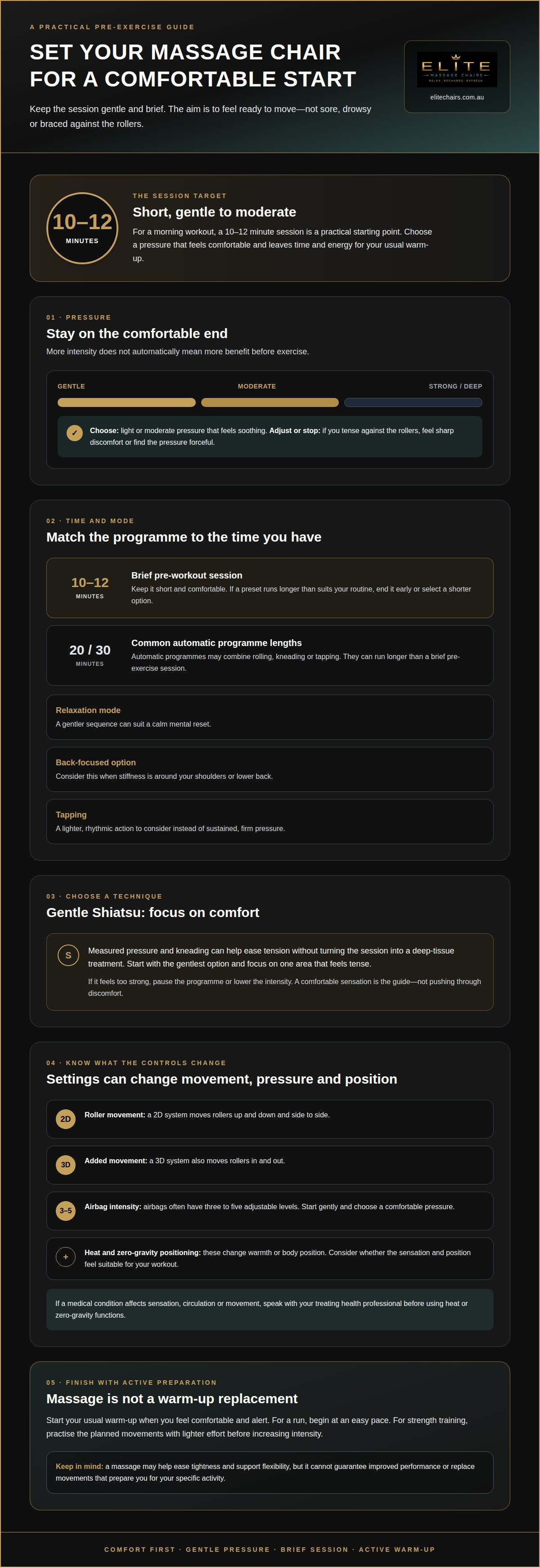
For a morning workout, pre-workout massage chair settings should stay gentle to moderate, with a session lasting 10 to 12 minutes. The aim is to feel comfortable and ready to move, not to turn a short pre-exercise massage into an intense treatment.
It makes sense to wonder whether stronger pressure will loosen tight muscles faster, but a gentler approach may feel more suitable before exercise. This guide explains how to choose an intensity for your routine and what automatic programmes, gentle Shiatsu, heat and zero-gravity positioning can add. You’ll also learn how to consider session length and features together, so your settings feel comfortable and appropriate.
Key Takeaways
- Choose an automatic program with its duration in mind; many run for 20 or 30 minutes.
- Explore how heat and zero-gravity positioning can shape a more comfortable, targeted session.
- Consider gentle Shiatsu before exercise to ease into massage without excessive intensity.
- A showroom demonstration can help you experience a zero-gravity massage chair and its settings firsthand.
Automatic massage programs and modes
For a pre-workout massage, keep the approach gentle and brief rather than choosing deep pressure. A short session may help ease tight muscles and support flexibility before movement. Australian health professionals’ recommendations can vary with the person and activity, so treat chair programmes as a comfort setting, not a substitute for a warm-up. If a preset runs longer than suits your routine, end it early or select a shorter option.
Automatic programmes combine techniques such as rolling, kneading or tapping into a preset sequence. Many run for 20 or 30 minutes, which may be longer than you want before exercise. A relaxation mode can suit someone seeking a calm mental reset, while a programme that targets the back may feel more relevant when stiffness sits around the shoulders or lower back. The chair’s rollers move through the chosen sequence without needing you to adjust each technique.
- Relaxation: choose a gentler sequence when your priority is easing into the session.
- Targeted relief: select a back-focused option if that is where you notice stiffness.
- Tapping: consider this lighter, rhythmic action instead of sustained, firm pressure.
Before starting, consider the time available and how the massage feels. For example, if an automatic programme offers 20 or 30 minutes, but you only want a brief pre-exercise session, choose a shorter mode where available. Stop if the pressure feels uncomfortable; a setting that feels soothing should not leave you bracing against the rollers.
Automatic modes are convenient, but a programme’s name doesn’t tell you how intense it will feel. Start gently, then adjust the pressure or technique to your comfort. Use the chair alongside your usual exercise preparation, including movements suited to your activity, rather than relying on massage alone. The right setting leaves you comfortable and ready to move, not sore or distracted.
Exploring massage chair settings and functions
The right pre-workout massage chair settings depend on comfort, workout type and how your body responds. A massage may help loosen tight muscles and support flexibility, but it can’t guarantee improved performance or replace an active warm-up.
Session length and workout timing
Session length and timing affect how comfortably you move into exercise. A brief, gentle massage may ease tension, while a long or forceful one could leave you feeling too relaxed.
There’s no fixed waiting interval that suits everyone. Start your usual warm-up when you feel comfortable and alert. For a run, begin at an easy pace; for strength training, practise the planned movements with lighter effort before increasing intensity.
Settings to avoid before training
Avoid settings that feel painful, forceful or overly relaxing before strength training or cardio. Deep pressure just before exertion may feel uncomfortable, so choose a gentler intensity instead of strong kneading or prolonged compression.
For strength training, a deeply reclined position may not feel like useful preparation for lifting. Before cardio, avoid a mode that leaves you drowsy. Stop or adjust the setting if you tense against the rollers or feel discomfort.
Chair functions can change the sensation. A 2D system moves rollers up and down and side to side; a 3D system also moves them in and out. Airbags often have three to five adjustable intensity levels. Start gently and choose a pressure that feels comfortable, rather than assuming more intensity means more benefit.
Pre-workout massage chair settings may include heat or zero-gravity positioning, which changes warmth or body position. If a medical condition affects sensation, circulation or movement, speak with your treating health professional before using these functions. Massage may support flexibility, but it doesn’t replace movements that prepare you for your specific workout.
Pressure and kneading motions stimulate circulation, delivering oxygen and nutrients to muscles, while chair stretching and compression can loosen tight muscles and increase range of motion before exercise. Modern massage chairs may include 5D AI rollers, allowing sessions to focus on what users need and when they need it.
Gentle Shiatsu mode
A gentle Shiatsu mode uses measured pressure and kneading movements to work on tense muscles. Before exercise, its purpose is to ease tension and help activate muscles without excessive strain.
Choose a gentle setting before a run, gym session or cycle, rather than treating Shiatsu as a deep-tissue treatment. The sensation should be comfortable, not sharp or forceful. If the pressure feels too strong, pause the programme or lower its intensity. Keep the focus on comfort rather than pushing through discomfort.
Use the mode with a specific area in mind. If your upper back feels tight after sitting, for example, choose a setting that reaches that area rather than applying firm pressure across your whole body. A gentle sequence may help you settle before exercise, while leaving time for active warm-up movements.
- Before a walk: use a light setting if your shoulders feel tense from desk work.
- Before strength exercises: keep pressure comfortable around the back, then prepare with movements suited to your workout.
- Before cardio: choose a calm, brief sequence rather than a forceful massage that dominates your preparation.
Shiatsu doesn’t replace exercises that prepare your body for a particular activity. A chair session may ease tension around your back, for example, but it won’t rehearse a squat or running stride. Follow it with a warm-up that reflects the workout ahead.
Notice how your body responds as the rollers move. Feeling relaxed is a useful cue; bracing, sharp discomfort or lingering soreness suggests the pressure is too much for that moment. Adjust the setting or stop. A gentle Shiatsu session should help you transition comfortably into exercise, not leave you distracted.
For your first session, choose the gentlest Shiatsu option and focus on one area of tension. Notice how you feel when standing and moving afterwards, and use that response to guide your next session. Aim for a calm start while leaving enough time and energy for your planned exercises.
How long should a pre-workout massage chair session last?
A gentle morning session can last 10 to 12 minutes, with comfort guiding the pressure. Another recommendation is a 10-15-minute full-body session, so choose the shorter end when exercise follows soon. The aim is to feel ready to move, not deeply relaxed or sore.
Those timings serve slightly different needs. A 10 to 12-minute session gives you a concise option before training; a 10-15-minute full-body session allows more coverage. For example, if your shoulders feel tight before a morning walk, a shorter session focused on that area may suit better than a full-body programme.
Automatic programmes can run for 20 or 30 minutes, which may exceed your preferred pre-workout window. Choose a shorter setting if available, or stop the programme once you’ve had enough. Don’t extend a session just to complete a preset; the time available and your comfort matter more than finishing every cycle.
There’s no single waiting interval that suits every session. Start exercising when you feel comfortable and alert, and use an active warm-up to prepare. For strength training, practise the planned movements with lighter effort. Before cardio, start at an easy pace and build towards your intended intensity.
- Morning: keep the massage gentle and within the 10 to 12-minute range.
- Short window: select a targeted area rather than using a longer full-body programme.
- After the chair: transition into movement-specific preparation before training.
For a first session, notice how your body feels when you stand and move afterwards. If a 10-minute massage leaves you too relaxed to begin your planned warm-up comfortably, shorten the next session or lower its intensity. Use that response to shape a routine that supports, rather than delays, exercise. To explore options and settings in person, book a massage chair demonstration.
Elite Massage Chairs: Massage Chair Showroom Demos
Elite Massage Chairs offers showroom demonstrations, so you can experience a chair’s feel and settings before choosing one for your routine. A demonstration is useful if you’re comparing pressure, massage modes or zero-gravity positioning and want to see how they feel in practice.
During a demonstration, you can try a Zero Gravity Massage Chair and consider whether its reclining position suits your comfort preferences. Massage accessories are also available to complement your setup. Trying a chair makes the choice more tangible than comparing features alone, especially when comfort and fit matter.
For a calm, hands-on way to explore your options, contact Elite Massage Chairs.
Make your pre-workout routine your own
The most useful pre-workout massage chair settings are those that feel comfortable alongside your usual preparation, not those with the strongest pressure or most features. Let your exercise routine guide your choice: what feels right before a relaxed morning walk may differ from what you prefer before strength training. Adjust gradually and notice how you feel as you move from the chair into exercise.
If you’re considering a chair, experiencing its feel and controls can help you decide which features suit your preferences. Contact Elite Massage Chairs to explore your options and take the next step towards a more considered wellness routine.
Frequently Asked Questions
What massage chair settings are best before a workout?
Choose a gentle programme focused on the areas you want to loosen, rather than strong pressure across your whole body. Before cycling, for example, a light setting around the lower back may feel more relevant than a full-body sequence. Follow the massage with movements that prepare you for cycling, so the chair complements rather than replaces active preparation.
Should you use low or high massage intensity before exercise?
Low intensity is the more suitable starting point before exercise. High pressure may feel uncomfortable or distract you from your planned activity. If you find yourself tensing against the rollers, reduce the intensity or stop the programme. A comfortable setting should let you stand and move freely afterwards, without distracting tenderness or a strong urge to rest.
Which massage chair programs are suitable for warming up muscles?
Choose a gentle Shiatsu or relaxation programme if it feels comfortable and doesn’t leave you overly relaxed. Before an upper-body workout, for example, select a gentle sequence for the area you want to ease, then practise the movements planned for your session. A chair programme can support comfort, but it doesn’t rehearse exercise technique or replace an active warm-up.
Are there medical conditions that make pre-workout massage chair use unsafe?
If a medical condition affects sensation, circulation or movement, speak with your treating health professional before using massage chair functions.


