

A massage chair’s monthly electricity use is generally modest: a 30-minute daily session uses around 1.5 to 4.5 kWh a month. The average energy consumption of a massage chair depends on its power rating and how often you use it, with average 2D models rated at around 180 watts and 3D models at around 220 watts. Your electricity rate then determines what that use adds to your bill.
It’s understandable to wonder whether regular, restorative sessions will noticeably increase household energy costs. This guide explains how a massage chair’s wattage, session length, standby use and your electricity tariff affect its average energy consumption in Australia. It also shows why the power rating alone does not tell the whole story: how long the chair operates matters just as much.
Key Takeaways
- A massage chair’s power draw is modest compared with some common household appliances, but the comparison depends on how long each appliance runs.
- Session length, frequency, chair wattage and standby use all influence the electricity it consumes.
- Use your chair’s power rating alongside your daily routine to estimate monthly energy use more meaningfully.
- Small changes to session habits can help you enjoy regular relaxation while keeping energy use in perspective.
Do Massage Chairs Use A Lot Of Electricity?
Usually, a massage chair draws less power than high-demand household appliances. The average energy consumption of a massage chair varies by model, but a typical rating sits around 180 to 220 watts. Actual electricity use depends on how long the chair runs, not its wattage alone. For an hour’s operation, estimates range from 0.05 to 0.3 kilowatt-hours, reflecting differences between chairs.
Compare those figures with common appliances. A kettle typically draws 1,200 to 1,500 watts, while a vacuum cleaner uses about 1,000 watts. A microwave or electric oven may use around 1,500 watts. These appliances can draw considerably more power while operating, although their use patterns differ. A kettle runs briefly; a massage chair may run through a longer session.
- Desktop computer: typically 200 to 400 watts.
- Refrigerator: typically 100 to 400 watts.
- Older standard light bulb: 100 watts.
- Massage chair: commonly around 180 to 220 watts.
These ratings compare power, not total energy. Kilowatts describe the rate an appliance draws electricity; kilowatt-hours measure energy over time. For example, a 200-watt chair used for 30 minutes consumes 0.1 kilowatt-hours. A 1,200-watt kettle draws more power, but its total energy use depends on how long it boils.
Standby use is another part of the household picture. A chair in standby typically uses less than 5 watts, so leaving it plugged in differs from running a full session. Switching it off when not needed reduces standby draw further. To judge the monthly impact, consider both the chair’s rating and its hours of operation. Comparing wattage alone with a kettle or vacuum can make the chair seem more or less demanding than its actual use suggests.
What Factors Affect the Running Cost?
A massage chair’s running cost depends on its wattage, active features, session length and your electricity tariff. Comparing these factors makes it easier to assess different models before buying.
Power Use Across Chair Types
A chair’s massage mechanism influences its rated power consumption. An average 2D massage chair is rated at around 180 watts, while an average 3D model is rated at around 220 watts. That difference helps frame comparisons, but doesn’t determine the final bill alone. A lower-rated chair used for longer may consume more energy than a higher-rated model used briefly. Match the rating to your likely routine.
Features and Power Consumption
Features affect how much power a chair draws while operating. A massage chair may use between 50 and 300 watts, depending on its model and features; most draw 150 to 300 watts during active use. A typical full-featured chair uses about 200 watts. Motors and other powered functions operate during sessions, so the combination of settings and session duration matters. Comfort options can shape both the experience and energy use.
Power Use During and Between Sessions
Active operation uses more power than standby, but standby draw can continue while the chair remains plugged in. A typical standby range is 0.1 to 1 watt. So, yes, massage chairs use electricity on standby, generally at that low level. Switching the chair off when it’s not needed reduces standby consumption. For context, a 150-watt chair running for one hour uses 0.15 kilowatt-hours.
Finding a Chair’s Wattage or Energy Rating
In Australia, look for the wattage rating on the label near the power cord or in the chair’s manual. The label gives a useful starting point when comparing models; the manual can provide additional operating information. For example, a 180-watt rating means the chair’s rated power draw is 180 watts, not 180 kilowatt-hours. Multiply kilowatts by operating hours to estimate energy use in kilowatt-hours. Your electricity tariff then determines the cost.
Monthly energy use from daily sessions
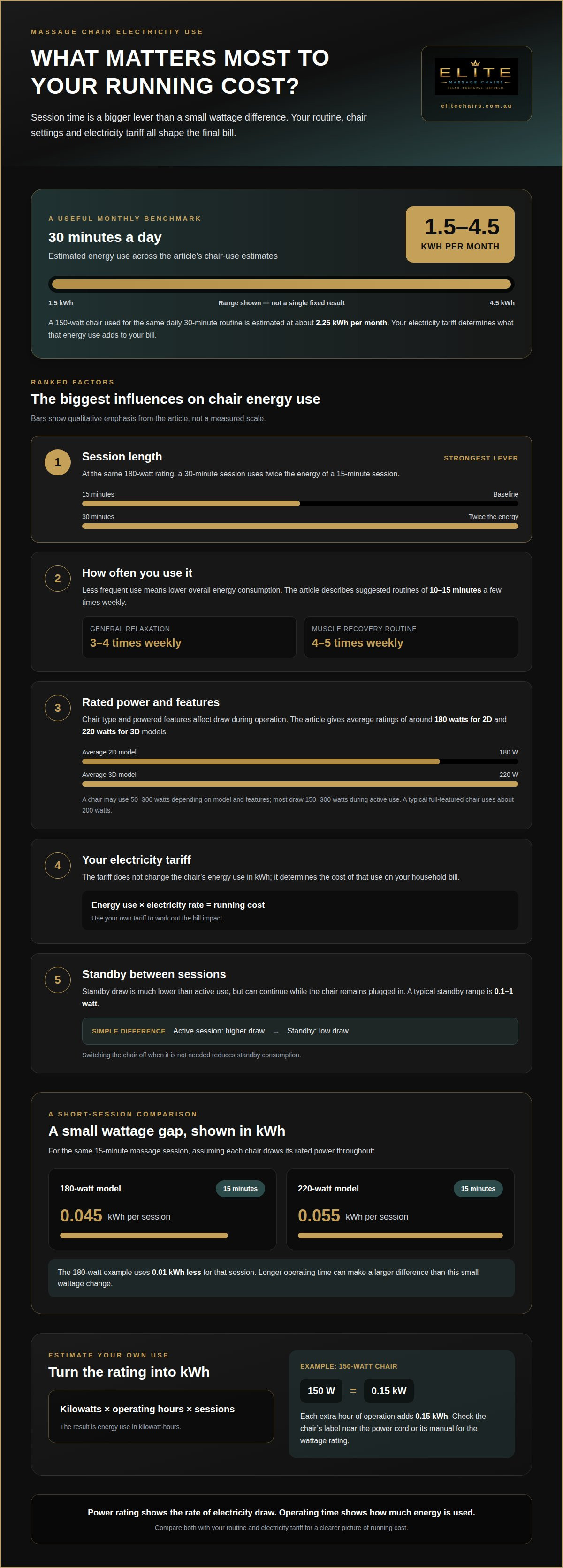
Monthly energy use depends on chair wattage and session time. A daily 30-minute routine uses 1.5 to 4.5 kWh monthly across estimates. A 150-watt chair following that schedule uses about 2.25 kWh per month. These figures show how consistent use turns a short massage session into measurable household electricity consumption.
Your electricity bill reflects both the chair’s energy use and your household tariff.
Less frequent use means lower overall energy consumption. These examples help compare a regular routine with daily use.
Timing can help a session fit your day. A morning massage may help you wake up and loosen tight muscles, while an evening session may support winding down before sleep. You might also use the chair before or after a workout as part of a routine focused on loosening up or recovery.
Session length matters as much as frequency: massage-chair sessions can range from 5 to 30 minutes. A suggested routine of 10 to 15 minutes a few times weekly uses less operating time than longer daily sessions. For general relaxation, the suggested frequency is 3 to 4 times weekly; muscle recovery routines suggest 4 to 5 times weekly.
To estimate your own monthly use, multiply the chair’s kilowatt rating by hours used, then by sessions each month. For example, a 150-watt chair equals 0.15 kilowatts; each extra hour adds 0.15 kWh. That calculation connects your chosen routine with energy use, while your electricity rate determines its bill impact.
Energy-efficient massage chair examples
To reduce electricity use, choose a chair with a suitable power rating, keep sessions purposeful and switch it off between uses. Shorter operating time lowers energy consumption while still leaving room to relax.
Consider two chairs used for the same 15-minute massage session. At rated power, a 180-watt model uses 0.045 kilowatt-hours, while a 220-watt model uses 0.055 kilowatt-hours. The lower-rated example uses 0.01 kilowatt-hours less for that session. This comparison assumes each chair draws its rated power throughout operation.
Session length can make a larger difference than a small change in wattage. A 180-watt chair running for 30 minutes uses twice the energy of that chair running for 15 minutes. A 10-to-15-minute session a few times weekly is one suggested routine. Repeating longer sessions more often increases operating time and total consumption.
Standby is another practical place to save. A typical chair uses 0.1 to 1 watt on standby, while switched-off chairs use very little power. If you finish a session and won’t use the chair again soon, switching it off avoids continued standby draw. This won’t reduce the energy used during the massage itself, but it limits consumption between sessions.
When comparing chairs, consider the wattage label alongside your likely routine. A lower rating can mean less energy use over the same operating time, but longer sessions may narrow the difference. Compare models using the same session length, then consider how often you’ll use each feature. This gives you a more useful efficiency comparison than choosing by wattage alone.
Want to compare chair options in person? Explore massage chair options and consider how each model fits your preferred session length and relaxation routine.
Elite Massage Chairs: Zero Gravity Massage Chairs
Elite Massage Chairs offers zero gravity massage chairs for people comparing comfort, features and everyday energy use. Once you’ve estimated how regular sessions may affect household consumption, consider which chair suits your preferred routine.
A showroom demonstration lets you experience a chair before deciding. You can assess its comfort and controls alongside the wattage information, then consider those details against how often and how long you expect to use it. This gives you a more personal basis for comparing options than wattage alone.
Explore Elite Massage Chairs’ zero gravity massage chairs and massage accessories to find options for your wellness space. Book a free showroom demonstration to experience a chair in person before deciding.
Choose a Chair That Fits Your Routine
Let your daily rhythm guide your decision. Knowing the average energy consumption of a massage chair is useful, but comfort, preferred settings and available space matter too. Think about where the chair will sit and how you want a session to feel, then weigh those priorities alongside its power rating.
A considered choice can make regular relaxation feel like a natural part of home life. Focus on features you’ll genuinely use rather than choosing by specifications alone. If you’re comparing options, experiencing a chair in person can help you assess its feel and ease of use.
Explore Zero Gravity Massage Chairs and Massage Accessories from Elite Massage Chairs, or arrange a showroom demonstration to experience the options. Contact Elite Massage Chairs today to take the next step towards a more restorative routine.
Frequently Asked Questions
How Does It Compare to Other Appliances?
A massage chair generally draws less power while running than high-wattage appliances such as kettles or vacuum cleaners. But total energy use also depends on operating time: a chair may run for a longer session, while a kettle runs briefly. For a fair comparison, consider both appliances’ wattage and operating time rather than judging electricity use by wattage alone.
How Much Will This End Up Costing in Energy Bills?
Your actual bill impact depends on the chair’s power draw, your usage pattern and your electricity rate. Treat these examples as routine-based estimates, not a universal charge.
How many watts does a typical massage chair use in Australia?
A typical chair draws around 180 to 220 watts, depending on its model and massage system. For instance, the average rating given for a 2D chair is around 180 watts, compared with around 220 watts for a 3D chair. Use the specific chair’s rating for a closer estimate, since category averages aren’t a substitute for its own label or manual.
What is the average electricity consumption of a massage chair per hour?
Hourly consumption is estimated at around 0.05 to 0.3 kilowatt-hours, depending on the chair. This is energy used over time, rather than the chair’s wattage rating. For a household estimate, multiply the chair’s kilowatt rating by the hours it operates, then apply your electricity tariff. That calculation gives a more useful figure for your own usage pattern.
How much electricity does a massage chair use per massage session?
It depends on both the session’s duration and the chair’s operating draw. As a practical example, a 200-watt chair running for 30 minutes uses 0.1 kilowatt-hours. A shorter session would use less at the same power draw; a longer one would use more. Use the chair’s wattage and actual session time to estimate your own energy per massage.
How much does it cost to run a massage chair in Australia at average electricity rates?
Your household tariff and actual usage determine the amount added to your electricity bill.


