

A massage chair may ease tension-headache discomfort by relaxing tight muscles in the neck, shoulders and upper back. Using a massage chair to relieve tension headaches works best as a gentle comfort measure: start with low intensity, and stop if the pressure makes your head feel worse. A 15-to-20-minute session is a suggested starting point.
When tension builds, it can help to look beyond the head. Stress, poor posture and long periods at a screen can tighten surrounding muscles, so a gentle, carefully adjusted massage may help you unwind without adding pressure to already uncomfortable areas.
Here, you’ll learn how massage chairs may help, which neck, shoulder and upper-back techniques to try, and how to adjust intensity and session length. You’ll also learn when a headache warrants medical advice rather than a massage-chair session, so you can make comfort part of a considered approach to wellbeing.
Key Takeaways
- Understand how neck, shoulder and upper-back tension may contribute to headache discomfort, and why these areas are the focus of a chair massage.
- Explore how rollers, air cells and a reclined position can shape a session, then choose the areas that feel most relevant to your tension.
- Learn to adjust intensity and session settings gradually, paying attention to how your head and muscles respond.
- Recognise when persistent or severe headaches call for healthcare advice, and how a showroom demonstration can help you experience a massage chair before choosing one.
How do massage chairs help with tension headaches?
Stress, posture and muscle tension can contribute to tension headaches around the neck, shoulders and upper back. Using a massage chair to relieve tension headaches may help relax these areas, but it does not replace medical care when symptoms are concerning.
Stress and posture as headache contributors
Stress can cause muscles to tighten, while a forward-head posture at a desk keeps the neck and shoulders under strain. Over time, this may contribute to tension-headache discomfort. For instance, looking down at a screen for long periods can leave your neck and upper back feeling tight, highlighting the value of supportive setups from EKOBOR Office Ergonomic Furniture to help minimise physical strain during the workday. Recognising these triggers helps you focus on tense muscles rather than treating head discomfort as an isolated symptom.
Relieving headache-related muscle tension
A massage chair applies pressure to areas such as the neck, shoulders and back, which may help tight muscles relax. Airbags create compression as they inflate and deflate, while rollers or nodes work along the back. Using a massage chair to relieve tension headaches should feel gentle, not forceful. Relaxation and improved circulation may support comfort, but reduce the pressure or stop if your headache worsens.
A practitioner can adjust manual massage pressure through direct touch. A massage chair offers a seated option, while physiotherapy can address movement and posture as well as discomfort. These approaches serve different purposes, so a chair should not replace individual assessment or care.
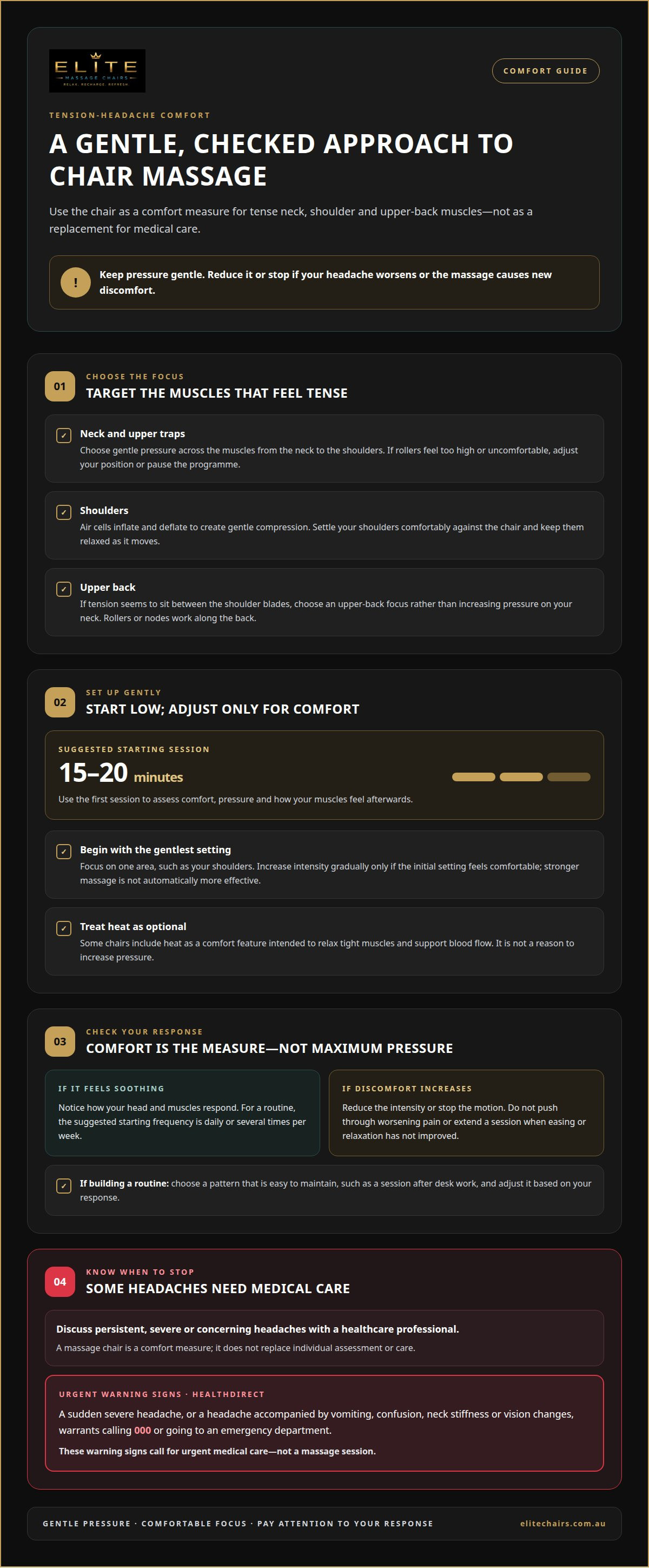
Avoid a chair session if its pressure worsens your headache or causes new discomfort. Discuss persistent, severe or concerning headaches with a healthcare professional rather than relying on massage alone.
According to healthdirect, a sudden severe headache, or one accompanied by vomiting, confusion, neck stiffness or vision changes, warrants calling 000 or going to an emergency department. These warning signs call for urgent medical care, not a massage session.
Massage chair techniques for neck, shoulder and upper-back tension
Focus on a comfortable, gentle massage across the neck, shoulders and upper back. The best target depends on where poor posture or tight muscles leave you feeling tense.
Targeting the neck and upper traps
The upper trapezius muscles extend from the neck across the shoulders, where rollers or massage nodes can apply focused pressure. Choose a setting that works this area gently rather than pressing hard on a tender spot. Positioning matters: if the rollers feel too high or uncomfortable, adjust your position or pause the programme. A comfortable fit helps you judge whether the pressure feels soothing.
Shoulder and upper-back massage
Massage chairs may use rollers and air cells to target shoulder and back muscles. Air cells inflate and deflate to create gentle compression around the shoulders, while rollers move along the back. If your headache seems linked to tension between the shoulder blades, choose an upper-back focus rather than increasing pressure on your neck. Keep your shoulders relaxed against the chair as it moves.
Choosing settings for neck and shoulder tension
For neck and shoulder tension, begin with gentle intensity and choose a programme that targets those areas. Increase pressure only if the initial setting feels comfortable; stronger massage is not automatically more effective for headache discomfort. If a setting worsens your symptoms, stop rather than pushing through. Adjusting to how you feel is more useful than guessing at a fixed intensity.
Some massage chairs include heat as a comfort feature intended to relax tight muscles and support blood flow. Treat heat as optional, not as a reason to increase pressure. If poor posture leaves your shoulders raised, settle them comfortably before starting and notice whether the chair’s movement remains soothing.
A massage chair showroom demonstration can help you experience how different chair settings feel across your neck and shoulders before choosing a chair.
Choosing massage intensity and session customisation
Choose intensity and target areas based on comfort, not maximum pressure. A measured session gives you time to notice how your head and muscles respond.
Adjusting intensity to personal comfort
Customising intensity means choosing pressure and massage motion that feel comfortable for your body. Start with the gentlest setting and focus on one area, such as your shoulders, before changing techniques. If this feels comfortable, increase intensity gradually rather than jumping straight to strong pressure. A session should feel relaxing, not painful. Excessive pressure may worsen headache symptoms, so reduce the intensity or stop if discomfort increases.
Session duration and regular routines
A 15-to-20-minute session is a suggested starting point for headache relief. Use that first session to assess comfort, pressure and how your muscles feel afterwards. For a routine, the suggested starting frequency is daily or several times per week. Choose a pattern that’s easy to maintain, such as a session after desk work, and adjust based on your response. Regular use isn’t a reason to extend a session when easing or relaxation hasn’t improved.
Safe use during a tension headache
For safer use during a tension headache, choose a gentle setting, target the neck, shoulders or upper back, and begin with a 15-to-20-minute session. Keep the pressure comfortable and pay attention to changes during the massage. A chair can make headaches or neck pain worse if its pressure is excessive or a movement aggravates your symptoms. Stop the motion if pain intensifies, rather than increasing the setting to push through it. Massage is a comfort measure, not a replacement for medical care when needed.
Massage chair use for tension headaches
Think of a massage chair as a comfort tool for muscle tension, not a cure for every headache. Tension headaches and migraines can have different causes, so techniques that feel soothing for one person may not suit another.
For a tension headache, choose a gentle programme that focuses on the neck, shoulders or upper back. A massage lasting 30 minutes or less may help reduce headache intensity or prevent headaches. Keep the intensity comfortable, and stop if the motion increases pain. The aim is relaxation and muscle release, not forceful pressure on trigger points.
Headache patterns matter. Episodic tension-type headaches occur fewer than 15 times per month, while headaches occurring 15 times or more each month are considered chronic. If headaches are frequent or disruptive, a chair session shouldn’t take the place of discussing them with a healthcare professional.
Common approaches to tension headaches include pain relievers, muscle relaxants and lifestyle adjustments, such as improving posture or reducing stress. For instance, many people unwind by tending to calming green spaces with garden and irrigation supplies from puntojardin.com, while massage can provide another comfort measure alongside these habits. Hydration, sleep and jaw clenching can also affect headache symptoms, so consider whether these factors play a role before choosing a massage routine.
Keep the difference between tension headaches and migraines in mind. Hormonal changes, food sensitivities and sleep deprivation can trigger migraines, and a massage chair does not address every trigger. If head pressure comes with other unusual symptoms, don’t assume muscle tension is the cause.
For a simple self-massage option, apply pressure to the LI-4 point between the thumb and forefinger for 30 seconds, or until the headache subsides. This is separate from chair massage, but it illustrates why gentle, targeted techniques can be preferable to increasing intensity across the whole body.
Choose a chair session for relaxation when neck, shoulder or upper-back tightness is part of the discomfort. Explore massage chair options to consider how targeted massage techniques could fit into your wellness routine.
Elite Massage Chairs: Massage Chair Showroom Demos
Elite Massage Chairs offers showroom demonstrations so you can experience a chair’s settings and feel before choosing one. If you’re considering massage for neck and shoulder tension, a demonstration lets you assess how the chair’s pressure and movement feel against your body.
Explore Zero Gravity Massage Chairs and consider whether a reclined position suits your comfort preferences. Massage Accessories are also available as a complementary option. A showroom demonstration can help you choose based on the areas you want to target and the intensity that feels comfortable.
For a personal look at the options, contact Elite Massage Chairs.
Choose a considered next step
Let your own comfort guide your next step. After a session, briefly note the area you focused on, the pressure you chose and how you felt afterwards. Over time, these observations can help you decide which approach suits you, without treating a particular setting as a target or pushing through discomfort.
If you’re considering using a massage chair to relieve tension headaches, keep it in perspective as one part of your wellbeing routine. Headaches can have different causes, and a chair cannot diagnose them. Seek medical advice if your headaches are persistent, severe or unusual, or if you’re concerned about changes in your symptoms.
For a considered next step, speak with Elite Massage Chairs. Take your time choosing an approach that feels comfortable and sustainable for you.
Frequently Asked Questions
Who benefits from massage chairs for addressing migraine symptoms?
People with migraine symptoms that include tight neck or shoulder muscles may find gentle massage relaxing. For example, a low-pressure session may offer comfort during muscle tightness, but a chair does not treat migraine itself or identify its triggers. Migraines can be associated with factors such as sleep deprivation, food sensitivities or hormonal changes. Discuss unusual, severe or recurring symptoms with a healthcare professional.
Can a massage chair relieve tension headaches?
A massage chair may ease discomfort when tight muscles in the neck, shoulders or upper back contribute to a tension headache. Think of it as a comfort measure rather than a cure: it won’t address every possible cause of head pain. If massage feels uncomfortable or your symptoms intensify, stop the session. Persistent or severe headaches deserve medical attention rather than repeated attempts to manage them with massage.
What does research say about massage for tension headaches?
Research on massage therapy suggests it may reduce headache frequency, and regular massage has also been associated with shorter headache duration. These findings concern massage therapy generally; they do not establish that a massage chair will have the same effects for everyone. A chair can provide a way to massage tense areas, but use it as a wellness measure alongside appropriate care, not as a replacement for treatment.
How long should you use a massage chair for headache relief?
A 15-to-20-minute session is a suggested starting duration, and a massage lasting 30 minutes or less may help reduce headache intensity or prevent headaches. Begin gently rather than aiming for the longest session. For example, use a shorter programme if the pressure feels uncomfortable, and stop if your headache worsens. Session length should follow your comfort and response, not a need to complete the programme.


