

Could genuine leather be the less practical choice for a massage chair you’ll use often? It may have a familiar, premium feel, but warmth, movement and roller friction make upholstery a practical consideration as well as a matter of taste. In a synthetic vs real leather massage chair comparison, the best fit depends on how each material feels and how it suits your household’s routines.
It’s understandable to focus on comfort and appearance, especially when product listings use terms such as PU, PVC, vegan leather and genuine leather without explaining what they mean. Synthetic materials also vary in finish and construction, so a label alone won’t tell you how an upholstery will feel or what care it needs.
This guide explains common material terms and compares feel, cleaning and everyday wear, so you can weigh the trade-offs against your preferences. If you can experience a chair in person, a showroom demonstration can help you assess the upholstery and the complete chair before making your choice.
Key Takeaways
- Learn what “genuine leather” means and why grades and finishes can make material labels less straightforward than they seem.
- Use a hands-on comparison to judge texture, warmth and breathability against your own comfort preferences.
- Consider how perspiration, spills, sunlight and regular use fit into your upholstery care routine.
- When comparing a synthetic vs real leather massage chair, separate stated material details from broad marketing language.
- Follow a simple decision process to weigh touch preference, care habits and how often you expect to use your chair.
Synthetic vs real leather massage chairs: what is the difference?
Upholstery matters when a massage chair becomes part of everyday home life. It’s the surface you settle onto, and it contributes to the chair’s appearance and feel. But a material name on a product listing is only a starting point: the finish, construction and the rest of the chair all shape the experience.
Genuine leather is made from animal hide. Its characteristics vary according to the hide’s grade and how it’s finished, so the label alone doesn’t tell you whether a particular surface will feel soft, smooth or textured. Synthetic leather is manufactured to look and feel like leather. It covers different formulations and constructions, rather than one uniform type of upholstery.
Material labels describe composition, not the whole chair experience. They don’t explain the feel of the upholstery, the chair’s cushioning or how it will suit your preferences. For a synthetic vs real leather massage chair comparison, consider the specific material and finish, not just the broad category.
What does synthetic leather mean on a massage chair?
Polyurethane (PU) and polyvinyl chloride (PVC) are common categories of synthetic leather. You may also see terms such as faux leather or vegan leather. Artificial leather is an umbrella term for manufactured leather-look materials, but it doesn’t mean every product has the same composition or feel.
Surface texture, finish and construction can differ between products and manufacturers. A synthetic label alone isn’t a reliable guide to quality or expected service life. Look for specific material details in the chair description, and don’t treat broad claims such as “premium” as a substitute for those details.
What does genuine leather mean in a chair listing?
Genuine leather means the upholstery is made from animal hide, but grades and finishes still vary. The term alone doesn’t describe the hide’s quality, the surface treatment, how soft it feels or what care it may need over time.
Read the chair’s specific upholstery description alongside the general label. If you can experience the chair in person, touch the surface and sit back in it. A showroom demonstration can help you judge the actual finish and comfort for yourself.
For online comparisons, separate details about the material itself from language describing appearance or feel. Terms like “leather-look” describe an impression, while PU, PVC or genuine leather indicate different material categories. None guarantees a particular sensation or outcome. Matching the actual upholstery to your comfort preferences and care expectations is more useful than choosing by label alone.
How do synthetic and genuine leather feel during a massage?
The surface is your first point of contact, but upholstery alone doesn’t determine whether a massage chair feels inviting. Synthetic finishes can range from smooth to lightly textured, while genuine leather also varies in finish and feel. Even within either category, one chair may feel supple and another firmer. Treat material-based impressions as possibilities, not guarantees, and consider your own preferences.
Warmth and breathability are worth considering, but they’re difficult to predict from a label alone. Room temperature, what you’re wearing and how sensitive you are to touch can all affect your impression. Padding, upholstery tension and the chair’s shape also influence how supported or snug you feel once you recline.
Which upholstery feels softer or cooler against the skin?
There’s no universal winner. A particular finish may feel smoother or cooler to you at first touch, but those qualities depend on the specific upholstery and your surroundings, not simply whether it’s synthetic or genuine leather. Clothing and individual sensitivity can change the sensation, too. Sit in the chair and experience its surface before deciding whether it feels comfortable for a full session.
Use this quick comparison to organise what you notice and what to verify in the product information:
- Initial touch: A finish may feel smooth, textured, supple or firm. Check the actual surface rather than assuming from the material category.
- Warmth: Your first impression can vary with room temperature and clothing. Notice how the upholstery feels after sitting for a little while.
- Breathability: Don’t infer this from a broad label. Look for specific product details, then consider your own comfort in the chair.
- Overall support: Assess the padding, fit and contact points as well as the upholstery finish.
Can upholstery change how massage rollers and airbags feel?
Upholstery can affect how the chair feels against your body, but massage intensity primarily comes from the chair’s mechanisms and settings. The way the chair fits, the padding beneath the surface and where your body meets the rollers or airbags can all contribute to perceived comfort. Neither synthetic nor genuine leather should be assumed to improve massage performance or therapeutic outcomes.
A hands-on comparison brings these details together: notice the surface, then pay attention to how the chair supports you and how its massage feels at a comfortable setting. A massage chair showroom demonstration lets you experience upholstery and comfort in context before choosing.
Synthetic vs real leather massage chair upholstery: compare care and everyday wear
Everyday wear depends on more than whether upholstery is synthetic or genuine leather. Perspiration, accidental spills, direct sunlight and frequent use can all affect how a surface looks over time. The result varies with the material’s formulation, finish, construction and care, so a broad material label can’t promise how a particular chair will hold up in your home.
For cleaning and maintenance, follow the care instructions for the specific chair. Don’t assume one upholstery category is maintenance-free or that advice for one finish applies to another. Clear, product-specific guidance is a more dependable starting point than general rules about synthetic or genuine leather.
How should you clean massage chair upholstery?
Start with the chair maker’s care instructions, including advice on suitable cleaning products and methods. For a spill, attend to it promptly using an approach approved for that upholstery. If you’re using a cleaner, test it discreetly first. Avoid harsh chemicals, excess moisture and abrasive tools unless the instructions say they’re suitable, as an unsuitable method may affect the surface.
Which material may suit frequent use or a busy household?
Think about how often the chair will be used and how much care you’re comfortable fitting into your routine. Children, pets and shared use may mean more frequent attention to spills or marks, but they don’t automatically make either material the right choice. Compare the specific upholstery guidance with your household habits, and don’t rely on a general lifespan ranking without product-specific evidence.
A practical comparison can help you focus on what matters for your home:
- Regular use: Consider who will use the chair and how often, then look for product-specific information about the upholstery and its care.
- Spills and perspiration: Check the recommended response for the actual material rather than assuming it can be cleaned in a particular way.
- Sunlight: Consider where the chair will sit and whether its position exposes the upholstery to direct sun.
- Maintenance routine: Choose an option whose care instructions you’re comfortable following consistently.
In a synthetic vs real leather massage chair comparison, the label can identify a material category, but it won’t settle questions of upkeep or long-term wear. The specific finish, construction, everyday conditions and cleaning habits all matter. Read the care guidance before deciding, and weigh it alongside how the chair feels and fits into your routine.
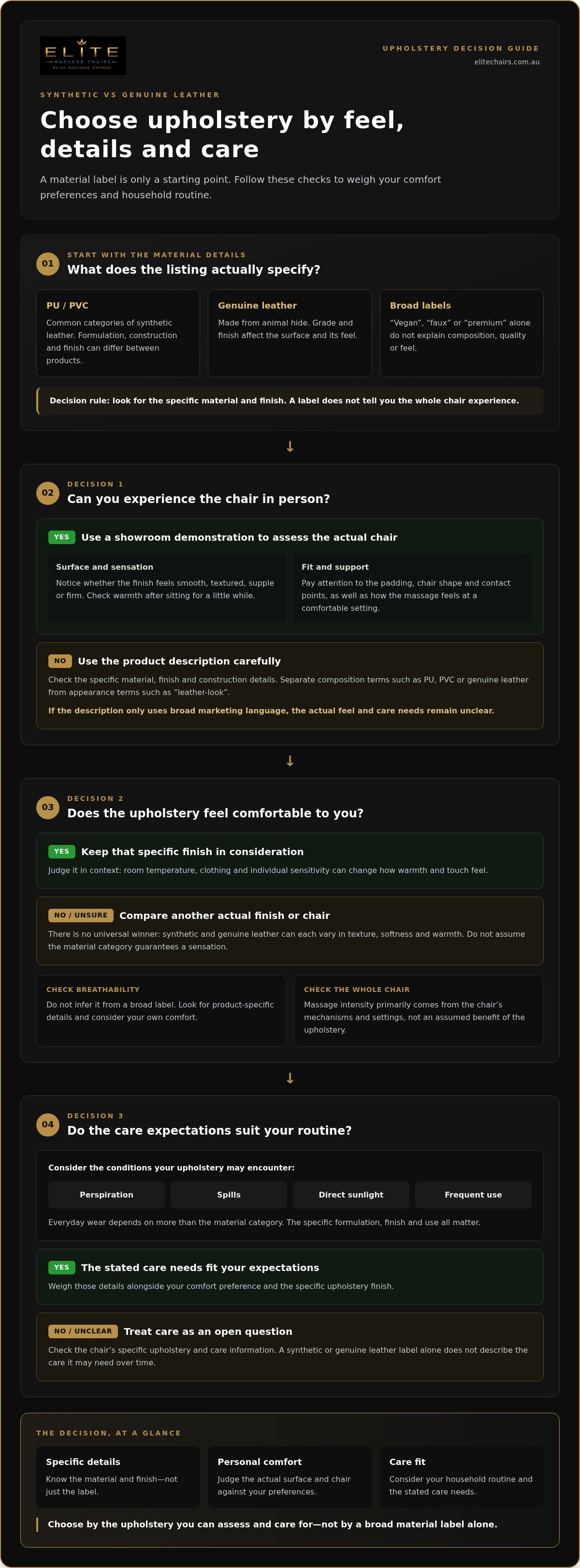
How to choose massage chair upholstery for your home
A useful choice comes from matching the chair to your preferences and routine, not choosing a material based on reputation alone. Use these steps to compare the upholstery while keeping the whole massage experience in view.
- 1. Start with touch. Decide whether you prefer a smoother or more textured surface, then assess the actual chair upholstery where your body will rest.
- 2. Consider your routine. Think about how often you’ll use the chair, who else will share it, and how comfortable you are following the care instructions.
- 3. Read the care guidance. Compare the recommended cleaning approach for each chair with the upkeep you’re prepared to do at home.
- 4. Assess the complete chair. Consider fit, support, padding and massage feel alongside the upholstery. A material preference shouldn’t outweigh whether the chair feels comfortable to use.
This makes a synthetic vs real leather massage chair comparison more practical: you’re weighing the specific chair against your needs, rather than treating a broad material label as a verdict.
What should you check in a product description?
Look for an explicit description of the upholstery material and care guidance for that particular chair. Check whether the material applies to all the surfaces you’ll touch or only to specified sections. Broad phrases such as “premium” or “leather-look” may describe appearance or perceived quality, but they don’t establish composition. Give more weight to clear, product-specific details than to promotional wording.
What should you notice during a chair demonstration?
Feel the upholstery across different contact areas, such as the back, seat and arm sections. Notice its texture and temperature, and whether you can shift comfortably as you settle into the chair. Try a comfortable massage setting and pay attention to how the chair fits your body and how the massage feels overall. These impressions are personal, so take time to form your own judgement.
For more ideas on what to observe, read the massage chair demonstration guide. A hands-on trial can help you connect the upholstery description with the feel of the complete chair.
To compare comfort in person, a free massage chair demonstration lets you assess the upholstery, fit and massage experience for yourself.
Choose a massage chair with upholstery you can enjoy every day
The right choice depends on the specific chair, its care instructions and what feels comfortable to you. A synthetic vs real leather massage chair comparison can help narrow your preferences, but neither label alone tells you how the chair will feel or suit your home. Consider upholstery alongside fit, massage settings and how often you expect to use the chair.
When might synthetic upholstery suit your preferences?
Synthetic upholstery may suit you if you like the feel and finish of a particular chair, or if its care guidance fits your household routine. Synthetic materials vary, so look beyond the category to the formulation, finish and product-specific cleaning advice. Don’t assume synthetic upholstery is automatically less comfortable or less durable. Assess the chair itself and the details provided for it.
When might genuine leather suit your preferences?
Genuine leather may appeal if you prefer its appearance or the feel of a particular leather finish. As with any upholstery, consider the care instructions and how they fit your habits before choosing. The broad label doesn’t tell you everything about softness, finish or upkeep, so focus on the specific chair rather than relying on assumptions about leather.
Elite Massage Chairs is a premium Australian retailer offering massage chairs online and in-store. A showroom demonstration lets you experience a chair directly: notice how its upholstery feels, how your body fits and how the massage feels at a comfortable setting. You can judge the whole chair rather than relying on a product description alone.
If you’re weighing up more than upholstery, the massage chair buying guide is a useful next step for exploring the wider chair decision.
A free showroom demonstration gives you the chance to compare the feel and comfort in person.
Find the upholstery that feels right for your home
The best choice in a synthetic vs real leather massage chair comes down to the specific upholstery, its care requirements and what feels comfortable to you. Material labels are useful clues, but they can’t replace checking the chair’s finish, fit and overall massage experience. Your everyday habits matter, too: choose an option whose care routine feels manageable.
Elite Massage Chairs is a premium Australian retailer with massage chairs available online and in-store. A free showroom demonstration gives you the chance to experience a chair in person and assess its comfort for yourself. Flexible financing options are also available through Humm.
Take the time to compare, settle in and notice what suits you. Book a free showroom demonstration and experience the comfort for yourself.
Frequently Asked Questions
Is synthetic leather good for a massage chair?
It can be a suitable upholstery choice, but quality and feel vary between products. Synthetic leather covers different materials and constructions, so the label alone won’t tell you how a chair will feel or wear. Look for a clear material description and care instructions for the specific chair. If possible, sit in it and assess the upholstery alongside the chair’s fit and massage settings.
Is genuine leather better than synthetic leather for a massage chair?
Not necessarily. Genuine leather may appeal if you prefer its particular appearance or feel, while synthetic upholstery may suit someone whose preferred finish and care routine align with a specific chair. Both categories include variation, so a broad label can’t establish comfort, maintenance needs or durability. Compare the actual upholstery, its care guidance and the complete chair experience before deciding which option suits your home.
What is the difference between PU and PVC leather on a massage chair?
PU leather uses a polyurethane-based surface, while PVC leather uses polyvinyl chloride. Both are manufactured materials designed to create a leather-like appearance, but their finishes and construction can differ between products. The terms don’t, by themselves, confirm how upholstery will feel or perform. Check the chair’s material description and care guidance rather than assuming every PU or PVC surface is made to the same standard.
Can you clean synthetic leather massage chair upholstery with household products?
Don’t assume a household cleaner is suitable. Cleaning products can affect upholstery differently, so start with the chair maker’s instructions for the specific material. If those instructions permit a cleaner, test it discreetly before applying it more widely. Avoid harsh chemicals, abrasive tools or excess moisture unless the care guidance allows them. For spills, follow the approved method and attend to them promptly.
How long does synthetic leather last on a massage chair?
There isn’t one reliable lifespan that applies to every synthetic upholstery. Longevity can depend on the material formulation, finish, construction, frequency of use, exposure to sunlight and perspiration, and how the chair is cleaned. A general estimate may not reflect the specific product. Review any product-specific durability information, follow the care instructions and consider how your household will use the chair.
Does genuine leather feel cooler than synthetic leather?
Not always. The temperature you notice depends on the particular finish, room conditions, clothing and your own sensitivity, so material category alone can’t predict whether a surface will feel cooler. If this matters to your comfort, sit in the chair and notice how the upholstery feels at first and after a little while. Assess the actual chair rather than relying on a general claim.
How can I tell what material a massage chair is upholstered with?
Check the product description for an explicit material name, such as genuine leather, PU or PVC, and look for details about which chair surfaces it applies to. Terms such as “premium” or “leather-look” describe quality or appearance, not necessarily composition. Care instructions can provide useful product-specific context, too. If you can, examine the chair in person and compare the upholstery description with its feel and finish.


