

The strongest setting isn’t necessarily the one that gives you the most comfortable massage. If you’re concerned a chair might feel too intense, that’s understandable: an adjustable intensity massage chair may change roller depth, airbag pressure or both, depending on its design. Product descriptions don’t always make those differences easy to compare.
The right fit depends on how the massage feels on your body, not how powerful a setting sounds. This guide explains intensity controls in plain language, so you can compare features with your comfort level and massage preferences. You’ll learn what to look for in roller and airbag adjustments, how chair fit can affect your experience, and why the strongest option may not be the best one for you. A hands-on demonstration lets you experience a chair before deciding, and Elite Massage Chairs offers free showroom demonstrations.
Key Takeaways
- An adjustable intensity massage chair lets you tailor how gentle or firm a massage feels, but intensity is separate from technique, coverage and recline.
- Compare how clearly you can adjust settings, the massage styles available and how each option feels on your body.
- Don’t assume the highest intensity means the best chair. Comfortable control matters more than maximum strength.
- During a demonstration, settle in, start gently and compare adjustments. Pause or reduce intensity if anything feels uncomfortable.
- A free showroom demonstration lets you experience chairs firsthand and choose with greater confidence.
What does adjustable intensity mean in a massage chair?
An adjustable intensity massage chair lets you change how gentle or firm the massage feels. The adjustment depends on the chair: some designs let you alter roller depth, while others offer changes to airbag pressure. The available controls and their range vary, so the label alone doesn’t tell you how the massage will feel. Look for a description of what each control changes, then assess whether the sensation suits you.
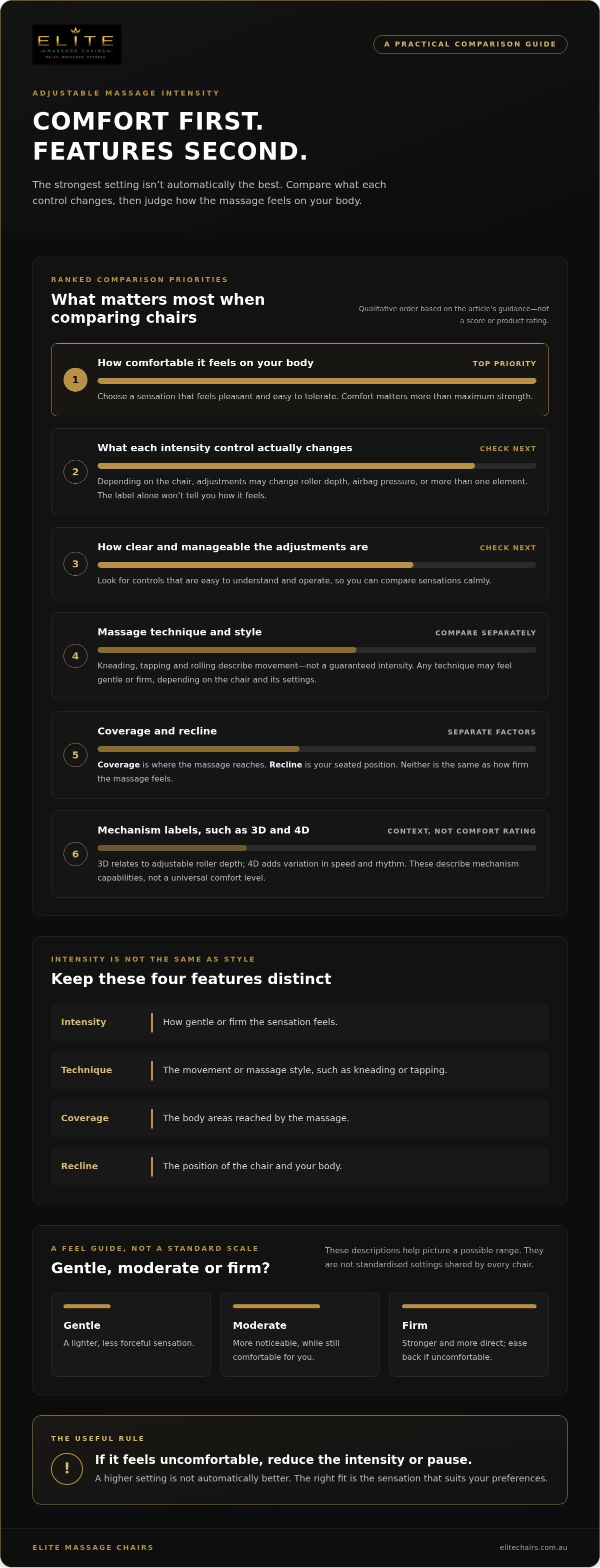
In plain language, massage intensity is the strength of the sensation; massage style is the way that sensation is created. Keeping those ideas separate makes product descriptions easier to interpret. A chair’s technique, the areas it reaches and its recline position all affect the overall experience, but they aren’t the same thing as intensity.
For background on the wider category, Wikipedia offers an overview of the history and types of massage chairs. When comparing chairs, focus on what the controls actually change and whether those changes feel comfortable to you.
Intensity, massage technique and coverage are different settings
Think of intensity as the “how firm” setting and technique as the “how it moves” setting. Kneading may feel like a pressing, lifting motion, while tapping uses quicker, lighter contacts; rolling describes movement along an area. Any of these techniques might feel gentle or firm, depending on the chair’s design and settings. A technique name by itself doesn’t tell you how strong the massage will feel.
Coverage answers a different question: where does the massage reach? One chair may work across a particular part of the back, while another may reach a broader area. That difference is about the body area covered, not the strength of the massage. Reclining changes your seated position rather than directly describing intensity. When comparing product descriptions, consider each feature separately and check how the controls work on that chair.
- Intensity: how gentle or firm the sensation feels.
- Technique: the movement or massage style, such as kneading or tapping.
- Coverage: the body areas reached.
- Recline: the position of the chair and your body.
Why comfort matters more than maximum strength
There’s no universal intensity setting that suits everyone. One person may enjoy a firmer sensation, while another prefers a softer touch. The same person may want a gentler massage on one occasion and a more pronounced one another time. Preferences can also vary with the body area, technique and how the chair feels in that moment.
A higher setting isn’t automatically better, and choosing the strongest option isn’t a reliable way to judge chair quality. Pay attention to whether the sensation feels pleasant and easy to tolerate, rather than assuming more pressure means a better experience. If a massage feels uncomfortable, reduce the intensity or stop the session. The aim is a comfortable fit for your preferences, not a particular maximum.
That distinction gives you a clearer starting point for comparing chairs: look beyond feature labels and consider what each control adjusts. Then compare the available settings and massage styles with the sensations you actually enjoy.
How do massage chair intensity controls change the experience?
Intensity controls shape how pronounced a massage feels, but the adjustment depends on the chair. Some designs let you vary roller depth, while airbag pressure can affect the feel of compression. A control might change one element or several, so look for a clear explanation of what each adjustment does rather than assuming the same setting means the same thing across different chairs.
As you compare an adjustable intensity massage chair, consider the body area being massaged, the movement used and what you want from that session. A firm sensation across the back may feel different from compression around the legs, for example. Elements Massage discusses the impact of massage pressure on the body. For a chair, use pressure descriptions as a starting point, then judge the sensation for yourself.
What to notice when a chair offers different intensity levels
“Gentle”, “moderate” and “firm” are useful ways to picture a possible range, not standardised settings shared by every chair. A gentler sensation may feel lighter and less pronounced; a moderate one may feel more noticeable; a firmer one may feel more direct. Use the table as a comparison guide, not a promise of how any particular chair will feel.
| Perceived feel | What to notice |
|---|---|
| Gentle | A lighter sensation that feels less forceful. |
| Moderate | A more noticeable sensation that still feels comfortable to you. |
| Firm | A stronger, more direct sensation; ease back if it feels uncomfortable. |
Notice whether the controls are easy to understand and operate. Can you tell which adjustment changes pressure? Can you make a change without interrupting the experience? Clear, manageable adjustments help you compare sensations calmly. If a setting doesn’t feel right, reduce it or pause rather than trying to push through.
How intensity relates to massage mechanisms
A massage mechanism describes how a chair produces movement. For example, 3D and 4D labels relate to roller movement, with 3D associated with adjustable depth and 4D adding variation in speed and rhythm. These labels describe mechanism capabilities, not a universal comfort rating, and they don’t guarantee that a particular massage will feel right for you.
Mechanism type describes how the massage moves; comfort depends on how that movement feels to you. Separate the mechanism description from the intensity controls when comparing chairs. A mechanism may offer particular kinds of movement, while the experience also depends on the chair’s design, the body area being addressed and your personal preference. Explore the differences between 3D and 4D mechanisms for more detail.
Reading about controls is helpful, but experiencing their effect can make the comparison clearer. A free showroom demonstration lets you try chairs firsthand and notice how the massage feels as you settle in and explore the available adjustments.
How to compare adjustable intensity massage chairs
A useful comparison looks beyond the number of settings or the strongest sensation a chair can produce. Focus on controls you can understand, a massage style you enjoy and a seat that feels comfortable for the people who’ll use it. Use the framework below to compare options consistently, rather than relying on feature labels alone. If you’re comparing several chairs, consider each one against the same questions so a standout specification doesn’t distract from comfort and fit.
| What to compare | Questions to consider | What a good fit means for you |
|---|---|---|
| Intensity adjustment | Can you change how gentle or firm the massage feels? What does the adjustment appear to affect? | You can find a sensation that suits your preference without needing to use the strongest setting. |
| Control clarity | Are the controls and descriptions easy to understand and operate? | You can make a change confidently and tell what it alters. |
| Massage style | Do you prefer a steady, varied or more pronounced sensation? Which movements feel appealing? | The movement feels enjoyable at an intensity you’re comfortable with. |
| Personal comfort | Does the chair feel comfortable as you sit in it and experience its massage? | The overall fit and sensation work for you, not just on paper. |
Match control and massage feel to your preferences
Start by describing what you like in everyday terms: a gentler touch, a more noticeable massage or variation between sensations. Then consider whether you’ll be the only user. If household members have different preferences, clear, accessible adjustments may matter more than a wide range that’s difficult to interpret. Compare how easily each person can find a comfortable feel instead of assuming one setting will suit everyone.
Maximum intensity isn’t a reliable measure of quality. A chair may feel powerful but still be a poor match if its massage style isn’t enjoyable or its controls are confusing. The best comparison is personal: can you adjust the sensation towards what you like and keep it comfortable?
Compare intensity alongside chair fit and massage style
Keep the other parts of the experience distinct as you assess each chair. Seat fit is about how comfortably your body sits within it. Coverage describes the areas the massage reaches, while technique describes the type of movement. These features can influence whether a chair suits your preferences, but neither coverage nor technique is a substitute for intensity control.
Think about which areas you want the massage to focus on and who’ll use the chair most often. A feature that sounds impressive may matter less than comfortable fit or attention to your preferred areas. For those planning a dedicated home wellness or recovery space, suppliers such as Nutrihub Store provide fitness infrastructure solutions that can help complete your overall setup. Compare the experience as a whole instead of letting one specification decide for you.
Recline position is another separate choice. Zero-gravity positioning changes how the chair reclines; it doesn’t, by itself, describe how strong the massage feels. If recline preference matters to you, compare zero-gravity and traditional massage chairs as a distinct part of your decision. A useful shortlist weighs fit, preferred massage areas, style and comfortable adjustability together.
How to test massage intensity before choosing a chair
A hands-on demonstration gives you a chance to notice how a chair feels, rather than relying only on descriptions. Use a calm, step-by-step approach: get comfortable first, understand the controls, then compare the massage gradually. This is especially helpful if you’re considering an adjustable intensity massage chair and want to know whether its settings feel intuitive as well as comfortable.
A simple sequence for assessing massage settings
Take your time. You’re assessing personal comfort, not trying to reach the strongest setting or prove how much pressure you can tolerate.
- Settle into the chair. Sit in a natural position and notice whether the seat feels comfortable. Consider whether your body feels well placed for the areas you want the massage to reach.
- Learn the controls before starting. Look at how the adjustments are described and operated. If you’re unsure what a control changes, ask for an explanation during the demonstration so you can make a fair comparison.
- Begin gently. Start with a lower, gentler setting if one is available. Notice the sensation across the area being massaged, and give yourself time to decide whether it feels pleasant and easy to tolerate.
- Compare adjustments only as comfort allows. Change one setting at a time where possible, paying attention to how the sensation shifts. Pause or reduce the intensity if anything feels uncomfortable; there’s no need to continue at a setting that doesn’t suit you.
Use the same approach with each chair you try. Moving between settings gradually can help you tell whether an adjustment makes a meaningful difference. Changing several things at once can make it harder to judge what you’re feeling. Notice the massage areas and technique as well as the intensity, since the overall experience reflects more than one control.
Questions to reflect on after trying a chair
Before moving on, consider what you experienced. These questions can help turn a demonstration into a useful comparison:
- Did the massage feel comfortable at a setting you’d be happy to use?
- Were the controls clear enough to understand and operate?
- Did the massage reach the areas you care about, and did the style suit your preference?
- Would the chair’s fit and available adjustments suit the other people who’ll use it?
Don’t judge a chair by its maximum intensity alone. A demonstration lets you explore comfort and controls, but it isn’t medical advice or a guarantee of how the chair will feel during every session. If you have medical concerns, seek guidance from a qualified health professional before using a massage chair.
Experience the settings for yourself with a free massage chair showroom demonstration. Trying a chair firsthand can help you make a considered choice based on its feel, fit and controls.
Choose your adjustable intensity massage chair with confidence
A confident choice comes from matching the chair to your comfort, not chasing the biggest setting or the longest feature list. Keep your shortlist grounded in four essentials: the feel you prefer, how clearly you can adjust it, whether the chair fits comfortably, and whether its massage style and coverage suit the people who’ll use it.
Turn your comparison into a confident shortlist
Before deciding, describe your preferences in practical terms. Do you enjoy a gentle sensation, something more noticeable, or variety between the two? Which areas would you like the massage to reach? If others will use the chair, consider whether its adjustments can accommodate different preferences. These answers make it easier to focus on features that matter to your household, rather than being swayed by specifications that don’t match your needs.
Use descriptions as a starting point, then compare how a chair feels in person. A feature label can tell you that an adjustment exists, but it can’t tell you whether the sensation will feel comfortable or whether the controls make sense to you. A showroom demonstration lets you experience the massage firsthand and consider fit, comfort and adjustments together. For ideas on what to look for during a visit, read the massage chair demonstration guide.
- Preferred feel: Note whether you lean towards gentle, more noticeable or varied sensations.
- Useful adjustments: Prioritise controls you can understand and use comfortably.
- Fit and coverage: Consider how the chair feels and whether the massage reaches your preferred areas.
- Other users: Think about whether the chair’s feel and adjustments can suit their preferences too.
Explore a considered next step with Elite Massage Chairs
Elite Massage Chairs’ free showroom demonstration offers a practical opportunity to sit in a chair, experience its massage and make a more informed comparison. Take your shortlist with you and focus on what you’ve learnt about your preferred feel, fit and massage style. There’s no need to choose the strongest sensation; what matters is finding a chair that feels right for you.
If you’re considering a premium purchase, flexible financing options are available through Humm. You can include this option in your decision without letting payment features distract from the comfort and controls that matter most.
Compare the feel for yourself with a free showroom demonstration and explore the massage chair range at your own pace.
Take the next step towards a more comfortable fit
Choosing an adjustable intensity massage chair is a personal decision. The right choice is the one that feels suited to you, not the one with the boldest specifications. Focus on the sensations you enjoy and the features that support a comfortable experience, then try a chair in person before you decide.
A free showroom demonstration at Elite Massage Chairs gives you the opportunity to experience chairs firsthand and see how their feel matches your preferences. If you’re weighing up a premium purchase, Humm financing options are also available to explore as part of your decision.
Take your time, trust your comfort and choose with clarity. Book a free showroom demonstration and take a confident step towards finding a chair that feels right for you.
Frequently Asked Questions
Is a higher intensity setting better in a massage chair?
No. A higher setting simply gives a firmer or more pronounced sensation, if that’s how the chair’s controls work. It isn’t a measure of overall chair quality, and it won’t suit everyone’s preferences. For example, someone who enjoys a light massage while reading may not want a stronger sensation. Focus on whether the chair offers a feel you enjoy, rather than how high its maximum setting goes.
Can you adjust the intensity of every massage chair?
No. Chairs differ in the controls they provide and in how much adjustment is possible. Some may offer ways to change massage strength, while others may provide fewer options or adjustments that work differently. A description that mentions multiple massage techniques doesn’t necessarily mean you can change their intensity. Compare the controls and their explanations for each chair, rather than assuming every model gives you the same degree of personalisation.
How do I choose the right massage intensity?
Choose by how the sensation feels to you, not by a number or label alone. Consider the setting you’d genuinely enjoy during an ordinary session and whether you prefer a softer touch or a more noticeable massage. If the chair will have several users, take each person’s preferences into account. A showroom demonstration can help you compare sensations directly, which is often more useful than trying to picture a setting from its description.
Can massage intensity be too strong?
Yes. If a setting feels uncomfortable, reduce the intensity or stop the massage rather than trying to tolerate it. A sensation that feels acceptable to one person may be unpleasant to another, and your preference may vary between sessions. Don’t treat discomfort as a sign that a chair is working better. If you have medical concerns, seek advice from a qualified health professional before using a massage chair.
Does 4D massage mean a chair has adjustable intensity?
Not necessarily. The 4D label generally describes aspects of how a massage mechanism moves, such as variation in speed and rhythm. It doesn’t, on its own, confirm which user controls are available or how they change the massage’s strength. Look for a separate explanation of intensity adjustments, and judge comfort independently. A more advanced-sounding mechanism isn’t automatically the best match for your preferred massage feel.
Can I try an adjustable intensity massage chair before buying?
Yes. Elite Massage Chairs offers free showroom demonstrations, so you can experience chairs firsthand before making a purchase. Trying a chair lets you notice how its seating feels, explore its controls and decide whether the massage suits your preferences. Take time to compare the sensation rather than focusing only on the feature description. This can make it easier to choose with confidence.


