

The most powerful massage chair isn’t necessarily the most relaxing one. If firm pressure or unfamiliar movements sound uncomfortable, choosing a gentle massage chair for relaxation is less about chasing intensity and more about finding an experience that feels right for your body.
It can be difficult to picture comfort from product descriptions alone. A softer-feeling session may depend on details such as the available adjustments, how the massage feels and how well the chair suits your body. This guide will help you clarify what you want, compare product information and build a calming routine around the features that matter to you.
Comfort is personal, so experiencing a chair can make the choice clearer. Elite Massage Chairs offers free showroom demonstrations by booking, giving you the opportunity to experience a chair before deciding. We’ll also consider how zero-gravity recline and other comfort priorities may fit into your search for a more restful chair.
Key Takeaways
- A gentle massage is a personal comfort preference, not one universal setting or level of pressure.
- When choosing a gentle massage chair for relaxation, focus on whether its available adjustments and controls suit the experience you want.
- Compare chairs by noting your preferred sensation, intended routine, product details and personal impressions rather than relying on a generic ranking.
- During a demonstration, take time to settle in and notice what feels comfortable to you; there’s no single right response.
- Use your own preferences to guide a considered choice, and experience a chair where possible before deciding.
What makes a gentle massage chair feel relaxing?
Some people want a quiet, soothing ritual at home, not a forceful sensation or an intense massage. Yet “gentle” doesn’t describe one setting that feels the same to everyone. A light touch might feel calming to one person, while another may prefer a steady, more noticeable sensation. The useful measure is your own comfort, not how powerful a chair sounds in its product description.
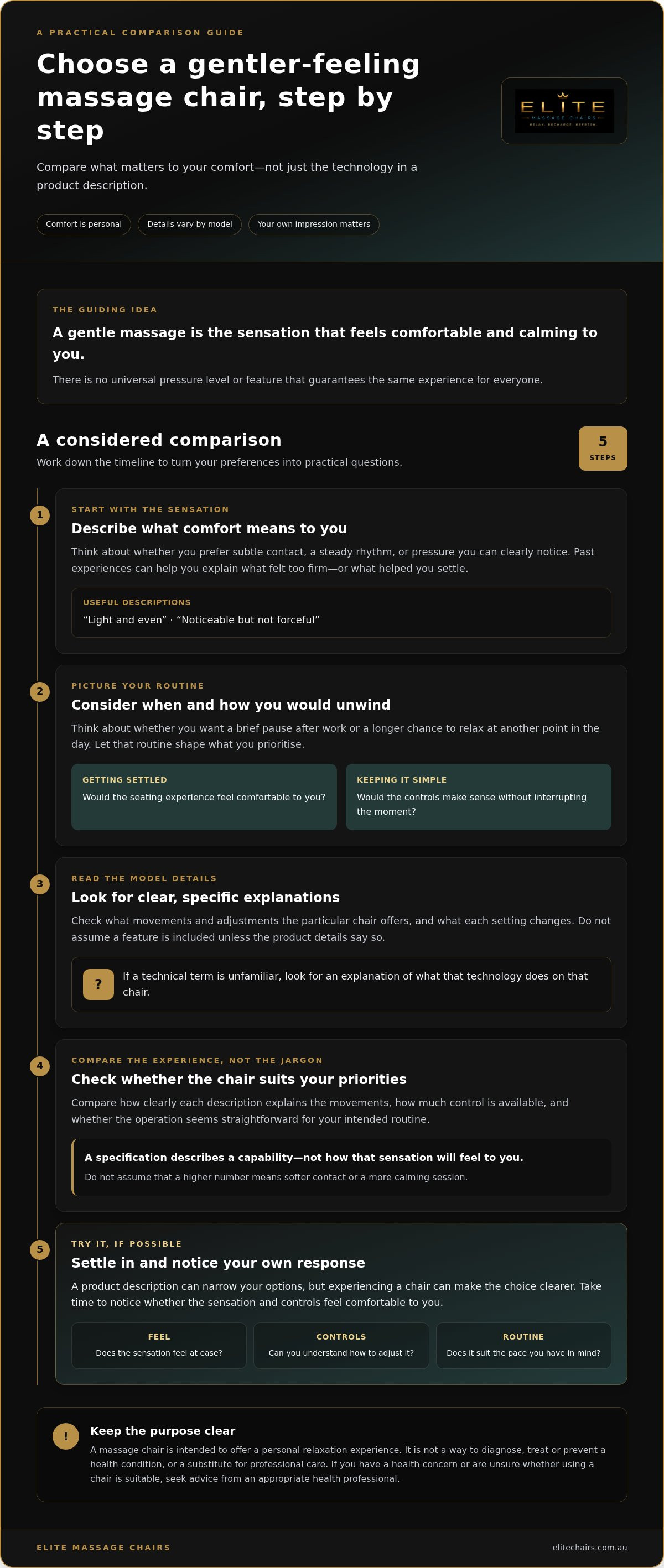
A gentle massage experience is one whose pressure and movement feel comfortable and calming to the person using the chair, without promising therapeutic results. This is a practical starting point when you’re considering a gentle massage chair for relaxation: ask how the experience feels to you, rather than counting features or assuming that more intensity means more benefit.
Massage chairs vary in form and function. A general overview of the history and types of massage chairs can help put the category in context. But technical descriptions alone can’t tell you whether a particular sensation will feel soothing in practice. Comfort also depends on your expectations, your body and how you respond to the chair’s movement.
Gentle massage is personal: start with your comfort preferences
Think about the sensations you’d welcome in a relaxing break. Do you prefer subtle contact, a steady rhythm or pressure you can clearly notice? Past experiences can help you describe your preferences. Perhaps a previous massage felt too firm, or a particular type of touch helped you settle. You don’t need technical terms; descriptions such as “light and even” or “noticeable but not forceful” are useful starting points.
There’s no universally relaxing pressure level or technique. Your preferences may also vary with your mood, the area being massaged or how long you’ve been seated. Treat your first impression as personal feedback, not a test you have to pass. The aim is to recognise what feels comfortable to you.
Relaxation is different from treatment
A massage chair is a home wellness product intended to offer a personal relaxation experience. It shouldn’t be treated as a way to diagnose, treat or prevent a health condition, or as a substitute for professional care. A relaxing sensation may be enjoyable, but it doesn’t establish a medical outcome.
If you have a health concern, or you’re unsure whether using a massage chair is suitable for you, seek advice from an appropriate health professional. Keeping that distinction clear lets you consider comfort on its own terms: as part of a home routine, not a promise of treatment.
Which massage chair features can support a softer-feeling experience?
Features are useful when they help you shape a comfortable experience, not simply because they sound advanced. A control or programme may offer more choice, for example, but the key question is whether it lets you settle into a sensation you enjoy. Read each product description for details about what the chair can do, then consider how those details might fit your preferences and routine.
No single feature guarantees that a massage chair will feel gentle to everyone. The effect depends on how the chair’s movements and pressure feel to you, as well as how easily you can use its controls. Look for clear, model-specific information about available adjustments and what each one changes. Don’t assume a feature is included unless the specific product details say so.
Compare the experience, not just the technology
Technical labels can make comparison feel more complicated than it needs to be. If a model description uses a term you don’t recognise, look for an explanation of what the technology does on that chair. Don’t assume a higher number means softer contact or a more calming session; a specification describes a capability, not your personal impression of it.
Instead, compare the details that matter to your intended experience. Consider whether the description explains the chair’s movements, how much control it gives you and whether its operation seems straightforward. These are useful prompts, not guarantees of how a chair will feel. If you can try it, notice the sensation itself rather than using the specification as a substitute for that experience.
Match the chair to your intended relaxation routine
Picture when you’d use the chair. Would it be a brief pause after work, or a longer chance to unwind at another point in the day? Your routine can guide what to prioritise: ease of getting settled, controls you can understand without interrupting the moment, and a seating experience that feels comfortable to you. There’s no need to choose the most complex option if a simpler experience better suits the way you want to relax.
Use practical questions to clarify your priorities:
- Can you understand how to begin and adjust the experience?
- Does the chair feel comfortable as you settle into it?
- Do its described settings seem suited to the time and pace you have in mind?
- After trying it, do you feel at ease with the sensation and controls?
For broader home-wellness context, explore this guide to therapeutic massage chairs, while keeping your own comfort preferences at the centre of the decision. Product descriptions can narrow your options, but a booked showroom demonstration gives you a practical opportunity to experience a chair before choosing. You can book a massage chair showroom demonstration and assess the feel for yourself.
How to compare gentle massage chairs before making a choice
Product descriptions can make chairs sound easy to compare, but a useful comparison starts with your own priorities. Before looking at specifications, note what you want the experience to feel like, who’ll use the chair and how it might fit into your routine. Then record published product information separately from your personal impressions. This makes it easier to compare like with like, without treating an appealing feature as proof that a chair will feel comfortable.
Use a simple comfort-first comparison checklist
Write down your essentials first. For example, you might prefer a subtle sensation, expect more than one person to use the chair, or want a simple way to settle in after work. Use the same prompts for each model and include only details stated in its product information. If a detail isn’t provided, leave it blank rather than guessing.
A comparison table gives you a clear record to revisit after reading descriptions or trying a chair:
| Comfort preference | Intended routine | Product information | Demonstration impression |
|---|---|---|---|
| Subtle, steady or more noticeable sensation | Who will use it and when | Published details relevant to your priorities | Your words for how it felt |
| What you’d like to avoid | How it fits into your day | Unanswered details to keep separate | What felt comfortable or less suited to you |
Keep must-haves distinct from nice-to-haves. A must-have could be a comfortable seated position or controls you find straightforward; an extra specification may be interesting without changing your decision. Mark each separately, so a long feature list doesn’t outweigh the qualities that matter to your relaxation routine.
Separate practical fit from personal feel
Comfort includes more than the massage sensation. Consider where the chair would sit in your home, the space available around it and whether its presence suits the room. Product imagery can help you picture a chair, but it can’t show how the seat feels or how at ease you are while using it. Keep these practical observations apart from your impression of the massage itself.
During a demonstration, write down your response in your own words rather than scoring the chair based on specifications. “Steady and comfortable” or “more noticeable than I prefer” is more useful than deciding one chair is objectively gentler. Elite Massage Chairs offers free showroom demonstrations by booking, so you can add a direct impression to your comparison. The massage chair demonstration guide can help you prepare. A considered comparison can turn the search for a gentle massage chair for relaxation into a decision grounded in your needs. When you’re ready, you can book a massage chair demonstration.
What to notice when trying a massage chair for relaxation
A showroom demonstration gives you a chance to notice the actual experience, not just imagine it from a description. Keep the process simple and follow your own comfort cues. You’re not trying to identify a universally “best” sensation; you’re finding out whether the chair feels suited to you.
- Arrive with preferences. Recall the kind of sensation you’re seeking, such as subtle, steady or more noticeable, and anything you’d rather avoid.
- Settle in. Take a moment to get comfortable and understand how the demonstration is being started. Notice whether you can relax into the chair or feel distracted by your position or the controls.
- Notice the sensation. Pay attention to pace, pressure and movement. Does the overall experience feel calming, too noticeable or simply unfamiliar?
- Reflect. Once the experience has paused, capture your first impressions before comparing them with another chair or its product information.
Notice comfort, pace and how easily you can settle in
Check in with yourself as the experience unfolds. You might find that a sensation feels pleasant at first but becomes distracting, or that the pace feels comfortable once you’ve settled. There’s no correct response to report. If anything feels uncomfortable, stop or change the experience using the available controls, or ask for the demonstration to be paused. A showroom trial is a personal impression, not a prediction of medical or long-term outcomes.
Comfort includes the chair itself as well as the massage sensation. Notice whether your body feels at ease in the seat and whether you can follow what’s happening without feeling rushed. If you’re comparing more than one chair, give each the same kind of attention so your notes reflect the experience rather than a quick first reaction.
Turn your impressions into a confident shortlist
After each demonstration, write down what felt comfortable and what you’d prefer to change. Use plain descriptions such as “calm, even movement” or “more noticeable than I wanted”. Then compare those personal notes with the published details for that chair, keeping what you felt separate from what the product information states.
- Comfort: What felt pleasant, distracting or too strong for your preference?
- Ease: Did you feel settled, and could you follow the demonstration comfortably?
- Next time: What would you like to experience differently?
A shortlist should reflect personal fit, not a universal ranking. One chair may suit your preferred pace, while another may feel more comfortable to someone else. Elite Massage Chairs offers free showroom demonstrations by booking, making an in-person trial a practical part of your decision. For more structure before you visit, use the massage chair demonstration guide. Then book a free showroom demonstration to experience a chair and see how it feels to you.
Choose a gentle massage chair with a considered next step
Choosing well doesn’t mean finding the chair with the most impressive list of specifications. It means bringing together what you know about your comfort, the product details available and, where possible, your own experience of the chair. A gentle massage chair for relaxation should suit the way you want to unwind, rather than an idea of what relaxation is supposed to feel like.
There’s no need to rush. Start with a few simple questions: What kind of sensation appeals to me? Who else might use the chair? Where would it sit, and when would I use it? Keep your answers close as you explore the range, and let them guide which product details deserve your attention. An attractive specification can be a bonus, but it doesn’t need to outrank your comfort priorities.
Make the decision around your own relaxation priorities
Before choosing, revisit your notes from comparing product information or trying a chair. Separate what you know from what you felt: published details describe the chair, while words such as “steady”, “too noticeable” or “comfortable to settle into” capture your own response. Together, they can help you identify which options seem most aligned with your preferences without turning a personal impression into a promise about results.
Keep your intended use in view, too. A chair that suits a quiet pause in your day may matter more to you than extra capabilities you’re unlikely to use. If a detail is important to your decision, base your comparison on the information provided for that specific chair rather than assuming it has a feature because similar models do.
Experience the range before you decide
Descriptions and photographs help you explore, but experiencing a chair adds something they can’t: your own impression of how it feels to sit and use it. Elite Massage Chairs offers free showroom demonstrations by booking, so you can experience a chair and consider its comfort before making a choice. Use the opportunity to focus on what matters to you, without treating a demonstration as a commitment to buy.
When you’ve narrowed your preferences, explore the Elite Massage Chairs range of massage chairs and accessories. Humm financing is also available for customers exploring a purchase. Take your time, compare the details and decide whether a chair feels right for your home and routine. The best choice is a personal one, guided by your comfort, grounded in product information and made at your own pace.
Make your next step a comfortable one
Before choosing, picture the place a massage chair might have in your everyday routine. Would it be a quiet pause between tasks, or a way to mark the end of a busy day? That detail can help turn a broad search into a personal decision, guided by the experience you’d like to create at home.
A gentle massage chair for relaxation isn’t defined by a particular label or a promise of results. It’s a considered choice based on what feels comfortable to you. Give yourself room to compare, reflect and decide at your own pace. If an option doesn’t feel right, keep looking; your preferences are a useful guide, not a reason to settle.
When you’re ready, explore the range and arrange an in-person experience to help you make your choice. Explore massage chairs and book a free demonstration. Your ideal place to unwind starts with what feels right for you.
Frequently Asked Questions
Is a gentle massage chair suitable if I am sensitive to pressure?
It may be, but comfort depends on your individual response. A sensation that feels light to one person can feel too strong to another, so consider what you’ve found comfortable in the past and try a chair before choosing where possible. If it feels uncomfortable, stop rather than pushing through. If a health concern could affect your use of a massage chair, seek advice from an appropriate health professional instead of relying on a product description.
Can a massage chair help me relax at home?
A massage chair can give you a dedicated place at home to pause and enjoy a massage experience, though how relaxing it feels will vary from person to person. Think about when you’d use it, such as during a quiet break or at the end of the day, and whether its sensation suits you. A gentle massage chair for relaxation is a personal comfort choice, not a guaranteed result or a substitute for professional health care.
How long should I use a massage chair for relaxation?
Follow the usage instructions for the specific chair, as guidance can differ between products. Before starting, take a moment to understand the controls and how to stop the experience. If you’re new to massage chairs, pay attention to how the sensation feels rather than assuming you need to complete a particular session. Stop if you become uncomfortable. If you have a health condition and are unsure about massage use, ask a qualified health professional for individual advice.
What should I do if a massage chair feels too intense?
Don’t push through discomfort. Follow the chair’s instructions to change the experience using its controls, or stop if you can’t find a comfortable setting. During a showroom demonstration, explain what feels too strong or distracting so the experience can be adjusted where the chair allows. Your feedback can help you understand your preferences, but it isn’t a medical assessment. If the discomfort relates to a health concern, seek advice from a health professional.
Can two people with different preferences share a massage chair?
Yes, but each person should judge the experience for themselves. One household member might enjoy a more noticeable sensation, while another prefers something subtle. If you’re choosing a chair to share, have each intended user consider their comfort rather than relying on one person’s impression. Keep the chair’s instructions in mind, too. Comparing individual preferences can help you decide whether the option feels suitable for your household’s different routines.
Is a massage chair the same as a massage from a therapist?
No. A massage chair is a home wellness product that provides a massage experience; it isn’t an individual service from a massage therapist. It shouldn’t be treated as a replacement for professional massage therapy or health care. Consider what you want from a home chair, such as a convenient place to pause, and make your choice based on its comfort and product information rather than expecting it to provide professional care.


