

A massage chair can ease tension, but it can’t correct your posture. That distinction matters when you’re comparing massage chair programs for better posture, especially when programme names suggest more than a comfortable session can deliver.
If you’re choosing between a posture, stretch or relaxation setting, start by looking beyond the label. Compare the massage sensation, areas covered, intensity and recline, then consider whether you want a guided sequence or control over individual settings. A massage may help you feel more relaxed, but lasting changes to your posture depend on habits beyond the chair.
This guide explains what posture-focused programmes can and can’t do, and how to compare them using practical cues. You’ll learn how to start gently, adjust a session to suit your preferences and make it part of a broader wellbeing routine. A showroom demonstration can help you experience a chair’s positioning and programme feel before deciding what suits you.
Key Takeaways
- Programme names vary between chairs, so focus on the massage sensation and areas covered rather than the label alone.
- Compare massage chair programs for better posture by considering comfort, recline and how much control you want over a session.
- Automatic programmes offer a guided sequence, while manual adjustments let you tailor the experience. Neither is right for everyone.
- Start gently and adjust gradually. Choose a relaxed, supported position instead of forcing yourself to sit rigidly.
- A showroom demonstration can help you compare positioning and programme feel in person, so you can identify what feels comfortable for your routine.
Massage chair programs for better posture: what they can and cannot do
Can a chair programme support better posture? It may help you feel more comfortable and settled during a session, but it shouldn’t be mistaken for a way to correct your posture. Posture-focused massage is best understood as a comfort-oriented use of a chair, not a treatment designed to change how your body aligns over time.
In plain English, a posture-focused massage chair programme is a guided or adjustable session intended to help you relax in a supported seated position, not to retrain your posture. The phrase “massage chair programs for better posture” can sound like a promise of lasting change. Separate what the chair does during a session from the habits that shape how you sit and stand every day.
Posture is influenced by more than time spent in a chair. Daily habits, movement, work setup and individual differences all play a part. A comfortable session doesn’t, on its own, show that your alignment has changed or that you’ll sit differently afterwards. For general background on the history and types of massage chairs, you can explore how these chairs are designed as a broad product category.
Comfort, posture awareness and posture correction are different outcomes
Feeling looser or more relaxed after massage is a comfort outcome. Changes in everyday sitting or standing habits are different: they involve what you do beyond the session and can vary from person to person. A soothing sensation doesn’t prove that your posture has been corrected, and a programme label isn’t evidence of a specific result. Use your experience to judge comfort, not alignment.
What a massage chair programme can reasonably contribute
A chair can offer a dedicated pause in your routine, with massage sensations and positioning that some people find relaxing. Rollers may create a kneading or rolling sensation, while air compression can feel like gentle pressure around selected areas. The experience depends on the chair and its settings. Reclining may also let you settle into a supported position, but it doesn’t guarantee a posture change. The therapeutic massage chair guide provides broader context on using a chair for comfort and home wellbeing.
Think of a session as one part of a personal relaxation routine, not a substitute for varied movement or attention to how you sit through the day. If a setting feels uncomfortable, you don’t need to push through it for a supposed posture benefit. Choose a position that feels supported and a sensation you can enjoy. That keeps expectations grounded while allowing the chair to contribute to a restorative moment in your routine.
How massage chair programmes work with your seated posture
A programme changes the experience of a session: its sequence, massage pattern, intensity and, on some chairs, recline. It changes how the session feels, not a person’s posture. The same setting may feel soothing to one person and too intense for another, so treat the label as a starting point rather than a universal description.
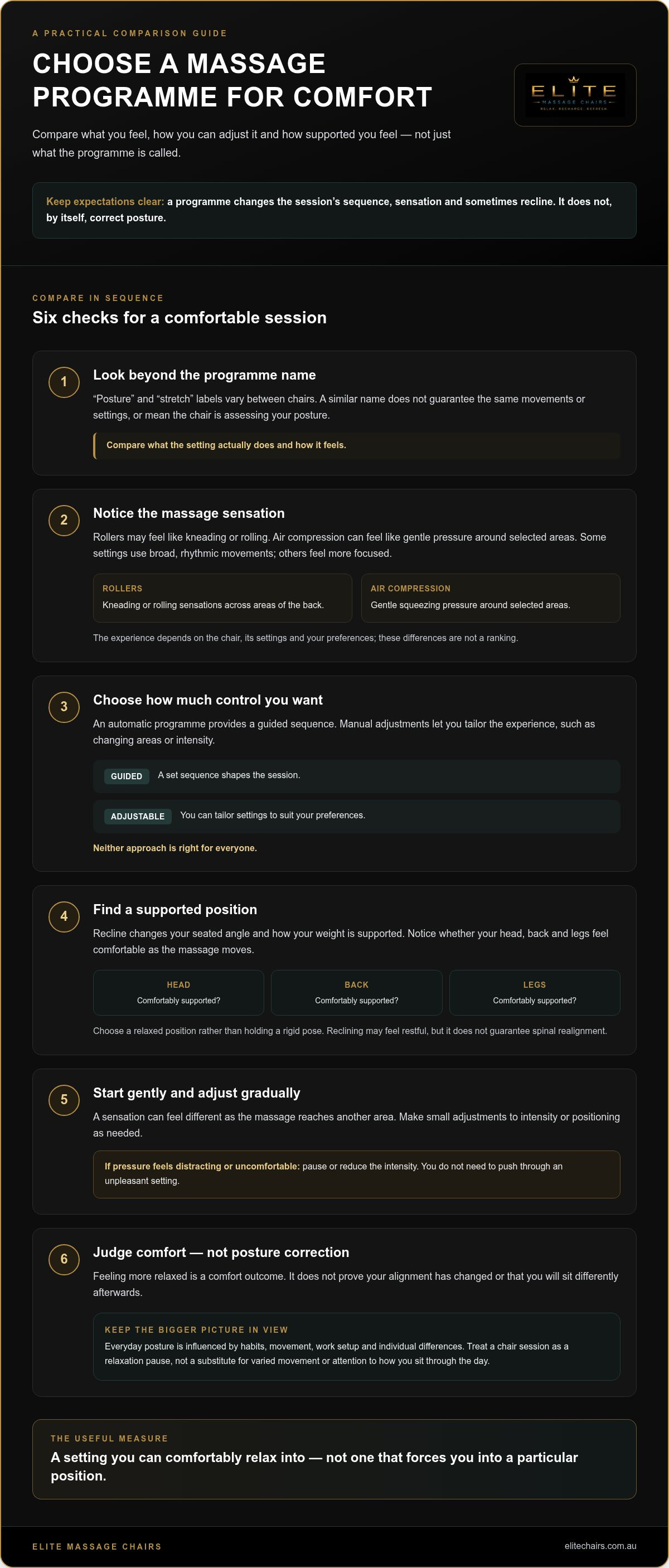
Names and sequences vary between chairs. A “posture” or “stretch” programme on one chair doesn’t necessarily use the same movements or settings as a similarly named programme elsewhere. Rollers can move across areas of the back, while air compression can create a gentle squeezing sensation around selected parts of the body. Recline changes the angle of your seated position and how supported you feel. None of these features, by itself, proves that a chair is assessing or correcting posture.
A programme only measures posture if the chair has specific technology designed to do that. A feature that detects body position to set up a massage isn’t automatically measuring alignment or evaluating how you sit. When comparing massage chair programs for better posture, focus on what you can feel and adjust rather than assuming the name describes a guaranteed outcome.
Massage patterns and intensity shape the experience
Some settings use broad, rhythmic movements that feel even and flowing; others may feel more focused or let you adjust areas and intensity. These are differences in sensation, not a ranking of which programme is best. How strong a massage feels depends on the chair, the setting and your preferences. If pressure feels distracting or uncomfortable, pause or reduce the intensity instead of trying to get used to it.
Recline and body positioning during a session
Reclining changes how your weight is supported and the angle at which you sit. You might find a reclined position more restful than sitting upright, but that comfort isn’t the same as spinal realignment or a prescribed therapeutic posture. Let your body settle naturally rather than holding a rigid pose to match an idea of “perfect” posture. For more detail on reclined positioning, see the zero-gravity massage chair guide.
During a session, notice whether your head, back and legs feel comfortably supported, and whether the massage remains pleasant as it moves. A mild sensation at the start may feel different when the rollers or air compression reach another area. Make small adjustments if needed. Look for a setting you can relax into, not one that forces you into a particular position.
If you’d like to compare recline positions and programme sensations in practice, a showroom massage chair demonstration offers a hands-on way to explore comfort and support before choosing a preferred fit.
Compare massage chair programmes by comfort, control and posture goals
Compare what a programme actually does rather than relying on a label such as “posture” or “stretch”. Consider the sensation, how much you can adjust, the recline position and whether the session stays comfortable for you. These are practical features and preferences, not evidence that a chair can change your everyday posture.
The best programme is the one that feels comfortable and suits your needs. Use this guide to narrow down the experience you want:
| What to compare | What you may notice | Consider if you prefer |
|---|---|---|
| Sensation | Broad, rhythmic movements may feel flowing; more focused movements may feel concentrated on particular areas. | A gentler, even experience or a more targeted sensation. |
| Control | An automatic programme follows a preset sequence; manual settings let you make selections or adjustments. | A guided session or more hands-on customisation. |
| Recline | The chair’s angle changes how you’re positioned and supported during the session. | A more upright seat or a position that feels comfortably reclined. |
| Intensity and duration | The selected pressure and length of a session affect how the experience feels. | A lighter, shorter-feeling session or a stronger, more sustained sensation, if comfortable. |
Keep posture-related hopes separate from these observable differences. A setting can provide a particular massage pattern or recline, but how relaxed or supported you feel is personal. Neither the programme name nor a preferred sensation shows that your posture has been measured or changed.
Automatic programmes versus manual adjustments
Automatic programmes offer a ready-made sequence, which can suit someone who would rather settle in than choose each setting. Manual adjustments offer more direct control over options such as intensity or focus, depending on the chair. One approach isn’t universally better. Consider whether you enjoy a consistent, guided session or prefer to shape the experience as you go.
Match the programme style to the session you want
Start with the mood you’re after: a gentle session to unwind, rhythmic movement for a flowing sensation, or a more focused feel. Then consider how intensity, session length and recline work together. A stronger setting may feel pleasant to one person but distracting to another. Comfort is the useful test, not the programme’s label.
For a practical comparison, notice how the chair feels in its starting position, then assess changes in pressure or recline as the session progresses. If you’re considering massage chair programs for better posture, judge them by comfort, control and positioning, not by a promise of correction. This helps you identify features that suit your routine while keeping posture goals realistic.
Choose and use a posture-focused massage chair programme comfortably
A comfortable session starts with your preferences, not a target posture to hold. Use a programme as an opportunity to settle into supported seating and notice how the settings feel. You shouldn’t need to brace yourself, sit unnaturally straight or tolerate discomfort to get value from the experience.
A simple first-session process
Take a measured approach when trying a new programme. If the chair allows adjustment, begin with a familiar option and gentle intensity, then make changes only as needed. This makes it easier to tell which setting affects your comfort.
- Identify what feels comfortable. Consider whether you prefer a lighter or firmer sensation, a more upright or reclined position, and a guided programme or manual control.
- Choose a gentle starting point. Select a familiar programme and lower the intensity where available. Settle into the chair without forcing a rigid posture, and notice how your body feels against its support.
- Adjust gradually. Pay attention to pressure, positioning and overall comfort before changing a setting. Change one thing at a time so you can judge its effect.
- Keep a note of what suits you. Record the programme and settings you enjoyed, along with anything you’d change next time. This gives you a simple reference for future sessions without assuming the same choice will always feel right.
If pressure becomes uncomfortable or distracting, stop the programme or change the setting. You don’t have to finish a session or push through an unpleasant sensation. Comfort can vary between people and from one session to another, so let your experience guide you.
Build realistic posture habits beyond the chair
A massage chair can be one optional part of a broader comfort routine, not the whole routine. If you spend long periods sitting, vary your position and make room for regular movement through the day. The aim isn’t to maintain one “perfect” pose; it’s to avoid treating a single chair session as a replacement for how you move and sit outside it.
Keep expectations practical. A setting that feels relaxing may make a session more enjoyable, but it doesn’t establish that your everyday posture has changed. Use the chair for the comfort it provides to you, and judge posture-related progress through habits beyond the session rather than a programme name or sensation.
If you have persistent symptoms, a diagnosed condition or concerns about whether massage chair use is suitable for you, seek advice from a qualified health professional. Individual guidance is more appropriate than relying on a preset programme to address a clinical concern.
To compare chair positioning and programme feel in person, book a free showroom demonstration and explore which options feel comfortable for your routine.
Experience massage chair programmes before choosing your preferred fit
Reading about a massage setting can explain its general purpose, but the feeling is personal. A hands-on demonstration lets you compare programme sensations, recline and support for yourself, without relying on a label to predict how comfortable a chair will be. The aim is to find a session you enjoy, not to test whether a chair can correct your posture.
What to notice when comparing chair programmes
As you try a chair, pay attention to how the massage feels across the areas it reaches. Notice whether the pressure feels even, too strong or easy to relax into. Explore whether the controls feel intuitive and whether it’s straightforward to change settings, intensity or position. Small details, such as being able to settle comfortably before adjusting the programme, can shape the whole experience.
- Comfort: Does the massage sensation feel pleasant across the areas being reached?
- Control: Can you understand the controls and make adjustments without interrupting your comfort?
- Positioning: Does the upright or reclined position feel naturally supported for you?
- Intensity: Is the pressure comfortable, or would you prefer a gentler setting?
Assess one feature at a time. For example, notice the recline first, then consider how the massage feels at a comfortable intensity. If a setting feels unpleasant, change it rather than persevering. Your preferences are useful evidence about what suits you; they aren’t a measure of posture or an indication that a programme is changing it.
Make the decision around your own comfort
After comparing a few options, narrow your shortlist by the features you value most: a guided or adjustable session, a particular massage sensation, ease of control, preferred intensity and comfortable positioning. Think of “posture” programme names as labels to investigate, not medical categories or promises. If you’re exploring massage chair programs for better posture, choose the experience that fits your comfort preferences and routine, not an expectation of corrected posture.
Elite Massage Chairs is an Australian retailer of premium massage chairs, including zero-gravity chairs, with online shopping and showroom demonstrations. A showroom demonstration lets you experience chair positioning and programme feel firsthand, helping you make a more informed comparison than a name or description alone can provide.
For a calm, practical way to explore your options, book a free showroom demonstration and discover which chair experience feels right for you.
Choose comfort that fits your everyday routine
Your next step can be simple: decide what you want a chair session to feel like. Perhaps you value a gentle pause, easy-to-adjust controls or a reclined position that feels naturally supportive. Use those preferences to guide your choice, and keep posture expectations grounded. Massage chair programs for better posture are best approached as a comfort option, not a promise of lasting postural change.
Elite Massage Chairs specialises in premium massage chairs and wellness products, available online and in-store. If you’d like to compare how different settings feel before choosing, experience the options for yourself and let comfort lead the way.
Book a free showroom demonstration and take the next step towards finding a chair experience that feels right for you.
Frequently Asked Questions
Can a massage chair programme correct poor posture?
No, a massage chair programme shouldn’t be expected to correct poor posture. It may make a session feel relaxing, but it won’t change factors such as how your workstation is arranged or how you move throughout the day. If you’re hoping to address a particular posture concern, consider the broader everyday context and speak with a qualified health professional if you need individual guidance.
Which massage chair programme is best for posture?
There isn’t one programme that’s best for everyone’s posture. Choose according to the sensation you enjoy and the settings you can comfortably control, rather than assuming a “posture” label guarantees a specific result. For example, if you prefer a lighter massage, a high-intensity setting may not suit you even if its name sounds relevant. Treat massage chair programs for better posture as a comfort preference, not a corrective method.
Can a massage chair detect or assess my posture?
Only a chair with technology specifically designed to measure posture could assess it, and a body scan doesn’t necessarily do that. Some chairs may scan your shape or position to help set up the massage, which is different from evaluating your posture. Check the chair’s instructions to understand what any sensing feature is designed to do, and don’t treat a scan as a posture diagnosis.
Is it better to use a massage chair before or after sitting at a desk?
There’s no universally best time. You might prefer a session after desk work as a relaxing transition, or at another point that fits your routine. If you’re about to return to a task that needs your full attention, consider whether you’ll feel comfortable doing so after a relaxing session. A chair session doesn’t replace taking breaks from prolonged sitting or changing position during the day.
Can I use a massage chair if I have a back condition?
Ask a qualified health professional before using a massage chair if you have a diagnosed back condition, recent surgery or another relevant health concern. They can offer advice suited to your circumstances and care plan. Don’t use a chair to manage symptoms without guidance, and stop if a session causes discomfort or makes you feel worse. A programme isn’t a substitute for clinical care.
Are automatic massage programmes better than manual settings for posture?
No, automatic programmes aren’t inherently better for posture than manual settings. An automatic sequence can be convenient if you’d rather not make selections, while manual controls may suit you if you like adjusting the experience. The practical choice depends on how much control you want and whether the sensation stays comfortable. Neither option should be viewed as a posture assessment or a way to correct alignment.
Should I sit upright during a massage chair programme?
You don’t need to hold yourself rigidly upright during a session. Settle into a position that feels comfortably supported and follow the chair’s instructions for safe use. If you’re unsure whether to recline, try a position that feels natural rather than forcing a particular posture. The goal is a comfortable experience, not maintaining a strict pose or proving that your everyday posture has changed.


