

Recurring back pain doesn’t automatically mean your spine is worsening: everyday loads, movement habits, stress and protective muscle patterns can keep aggravating the same area, even without a new injury. Finding a long-term solution for recurring back tension starts with understanding what may be contributing to it and supporting recovery beyond short-term relief. According to Healthdirect Australia, back pain is considered chronic when it lasts three months or longer.
When back tension keeps returning, it can be frustrating to feel better for a while, only for discomfort to flare during work, exercise or everyday tasks. This article explains why that pattern can develop and how sitting, lifting, stress and sleep may contribute.
You’ll also learn when back pain needs medical attention and how regular movement, strengthening and sustainable daily habits can support recovery. The aim is to help you understand the pattern and identify practical ways to move towards greater comfort.
Key Takeaways
- Recurring back pain can reflect a mix of movement, daily load and protective patterns, not necessarily worsening damage.
- Notice whether prolonged sitting, commuting, lifting or exercise tends to bring on a flare-up; recognising patterns can help you adjust how you move.
- Seek medical advice if lower back pain lasts longer than 6 weeks despite rest or basic pain management, or sooner if serious warning signs appear.
- Regular movement, gradual strengthening and consistent recovery habits can help build your capacity for everyday activities.
- Stress and disrupted sleep can influence muscle tension and pain sensitivity, so recovery includes more than the back alone.
Why Do I Keep Getting Recurring Back Pain?
Back pain can ease, then return when the same movements, demands or protective responses continue. Understanding this pattern helps clarify what a lasting approach may need to address.
Temporary Relief and Returning Pain
Temporary relief can reduce discomfort without changing the factors that keep loading the same area. For example, rest or short-term treatment may ease a flare, while prolonged desk work continues to challenge the lower back. Pain can also return without a new injury, even when imaging appears unremarkable, if the nervous system remains protective.
This distinction matters because returning pain doesn’t automatically mean that tissue is deteriorating. After an injury, long hours at a desk, or physical or emotional stress, protective movement habits can persist even after tissues heal. You may then brace or move differently during ordinary tasks, keeping sensitivity high. A long-term solution for recurring back tension considers both the painful episode and the pattern around it.
Contributors to Recurring Back Pain
Recurring pain can have several interacting contributors rather than one clear cause. Restricted or poorly coordinated spinal movement may concentrate load in the lower back. Limited movement in the hips, upper back or shoulders can also cause the lower back to compensate during everyday activities.
Physical load matters too: a demanding gardening session may exceed what your body is currently conditioned to handle. Common causes of chronic back pain include spinal arthritis, spinal stenosis, disk problems and myofascial pain syndrome. Smoking can heighten pain and delay healing, while maintaining a healthy weight may reduce pressure on the spine. These factors can help explain why the same activity feels manageable one day but brings on symptoms another.
Evaluating the Source of Pain
Understanding the source of pain means considering how symptoms relate to movement, load and daily demands, rather than relying on one clue alone. A thorough assessment may consider spinal movement, posture, work demands, sport, response to load and signs of nervous-system protection. For example, pain during bending may prompt an assessment of hip mobility and movement coordination.
Imaging findings also need context. Disc degeneration can occur with normal ageing, and some people with these changes have no pain. A scan finding alone may not explain someone’s symptoms. A physical therapy evaluation may examine posture, mobility, muscle activation and coordination, then relate the findings to everyday activities. This broader picture can help distinguish a structural issue from movement or sensitivity factors.
Defining Chronic Back Pain
According to Healthdirect Australia, chronic back pain lasts three months or longer. This duration distinguishes a persistent problem from a brief episode, but doesn’t identify the cause by itself.
Symptoms may settle and later return in the same place. Note when they ease, when they recur and which activities came before each flare. For instance, record whether discomfort follows a long commute, lifting or a change in workload. This timeline gives a healthcare professional useful context alongside movement and scan findings. Chronic pain can have several contributing factors, and recurring symptoms don’t necessarily mean permanent damage.
When to seek medical care
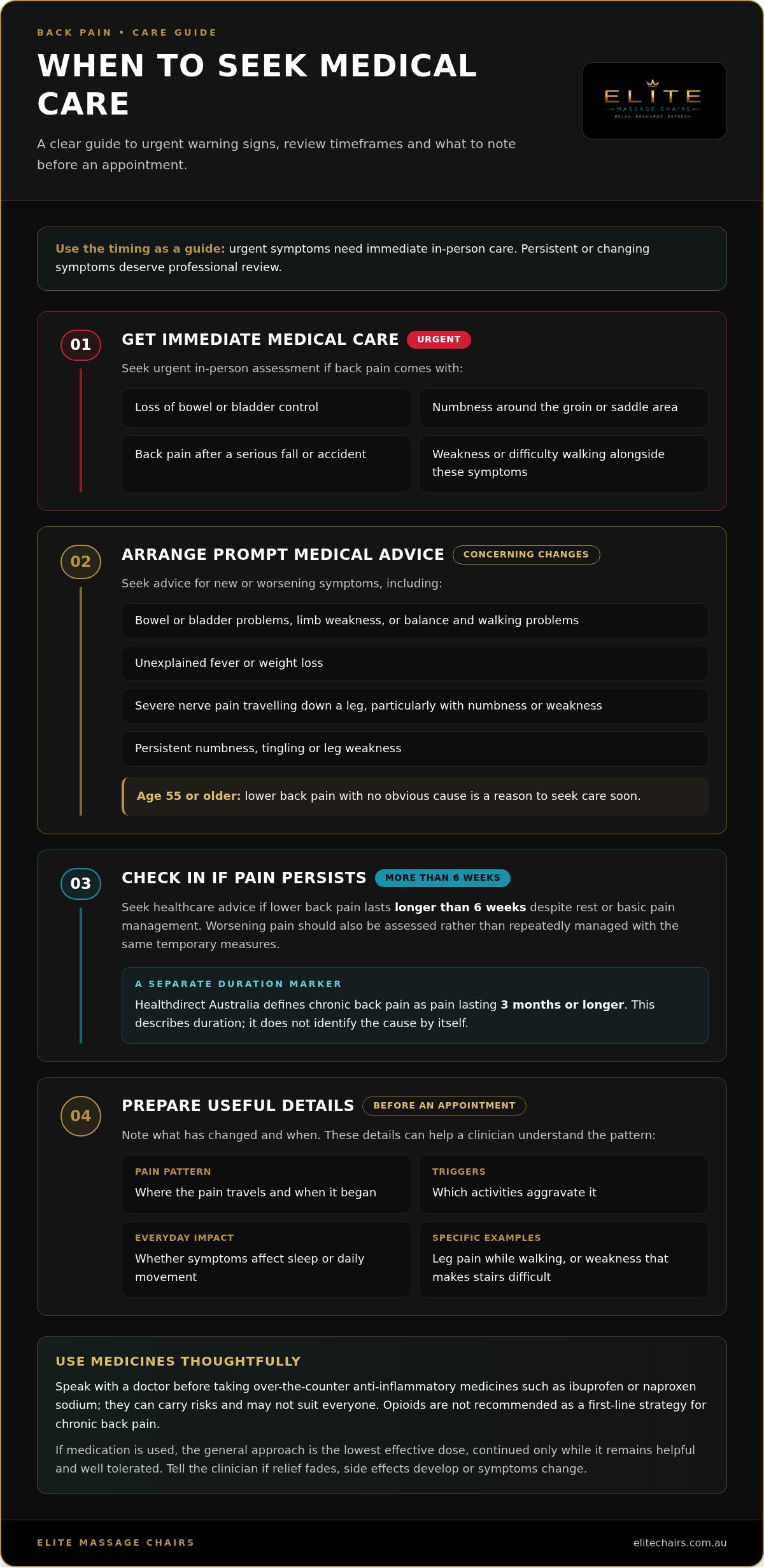
Back pain needs prompt attention if it comes with serious warning signs or persists despite basic care. Tracking changes in pain, sensation and movement can help explain what changed and when.
Recognise urgent warning signs
Seek immediate medical care for loss of bowel or bladder control, numbness around the groin or saddle area, or back pain after a serious fall or accident. These symptoms need urgent in-person assessment, especially if weakness or difficulty walking is also present.
Other concerning changes include new or worsening bowel or bladder problems, limb weakness, balance or walking problems, and unexplained fever or weight loss. Severe nerve pain travelling down a leg, particularly with numbness or weakness, also warrants advice from a healthcare professional. If symptoms affect normal movement, describe what has changed and when it started.
People aged 55 or older with lower back pain and no obvious cause should seek care soon. Persistent numbness, tingling or leg weakness also deserves assessment, rather than being treated as an ordinary flare-up.
Know when persistent pain needs review
People with lower back pain should seek healthcare advice if their pain lasts longer than 6 weeks despite rest or basic pain management, according to Healthdirect Australia. Worsening pain should also be assessed, rather than repeatedly managed with the same temporary measures.
Before an appointment, note where pain travels, which activities aggravate it, and whether symptoms affect sleep or daily movement. For example, record whether leg pain appears while walking or whether weakness makes stairs difficult. This detail helps the clinician assess the pattern and decide whether further examination is needed.
Use medicines and treatments thoughtfully
Before taking over-the-counter anti-inflammatory medicines such as ibuprofen or naproxen sodium, speak with a doctor. These medicines can have risks and may not suit everyone, so discuss your other health conditions and medicines.
Opioid medicines aren’t recommended as a first-line strategy for chronic back pain. If medication is used, the general approach is to find the lowest effective dose and continue only while it remains helpful and well tolerated. Some people also discuss complementary options with their doctor, such as PEA supplements available from Australian retailers like Relieve Therapeutics. Tell the clinician if relief fades, side effects develop or symptoms change.
Injections may ease pain temporarily, sometimes for weeks or months, but aren’t intended as a standalone long-term solution. Spinal surgery may be considered when imaging confirms a cause and other treatments haven’t helped, though it doesn’t guarantee complete relief. Exercise-based physical therapy can be part of care, with movement and function considered alongside pain.
Sitting, commuting, lifting and exercise as flare-up triggers
Recurring flare-ups often follow familiar demands, such as sitting, commuting, lifting, gardening or sport. The aim isn’t to avoid these activities altogether, but to understand how duration, movement patterns and current strength affect the load your back can handle.
Heat, massage, stretching and yoga may support comfort and movement, but shouldn’t replace an active recovery plan. Heat can provide temporary relief, while manual therapy may ease pain, improve mobility and relax tight muscles during a flare. Stretching or yoga may help maintain movement; lasting progress also depends on regular activity and strengthening.
A long spell at a desk can keep your spine in one position and make the next movement feel stiff. During work or a commute, change position regularly and take movement breaks before discomfort builds. Adjusting your chair and screen can also reduce repeated strain, especially if you sit for much of the day.
Repeated bending and lifting can aggravate the lower back when the hips move poorly or the load is far from your body. To lift a heavy grocery bag or garden pot, get close, bend your knees, keep your back straight and avoid twisting. Limited hip mobility may otherwise leave the lower back taking on more stress.
Exercise can build strength and movement control, but a sudden increase in activity may trigger symptoms. A long walk after an inactive period, a demanding gym session or a quick return to sport can exceed your current capacity. Increase activity gradually and notice which movements bring on a flare rather than stopping all movement.
Exercise-based rehabilitation for recurring pain can focus on improving movement patterns, restoring spinal mobility and strengthening the muscles that support your back. A physiotherapist may assess how you bend, walk or lift, then tailor exercises to those activities. Following the programme consistently matters: irregular rehabilitation may leave strength, endurance and coordination below what daily tasks demand.
Mobility work for the hips and upper back can reduce the need for the lower back to compensate during bending. Core and hip strengthening, combined with regular physical activity, can improve support during everyday movement. Pilates is one option for practising flexibility and postural strength. Choose movements that suit your current ability.
Food choices can support a healthy weight, which may reduce pressure on the spine. Combining balanced eating with regular exercise is more sustainable than relying on occasional bursts of activity. If gardening, commuting or sport repeatedly brings on pain, adjust the demand and build your capacity gradually.
Stress, muscle tension and sleep quality
Stress, sleep and daily demands can influence how strongly you feel back discomfort. Considering these factors together may reveal patterns that movement changes alone don’t explain.
Stress and Muscle Tension
Stress can increase muscle tension and heighten pain sensitivity, making familiar back discomfort feel more intrusive. During a demanding workday, for example, you may brace your shoulders and back without noticing. This sustained guarding can make ordinary movement less comfortable, even without a new injury.
This response doesn’t mean the pain is imagined. The nervous system helps regulate protection, and ongoing stress can keep that response heightened. If a tense day coincides with a flare, note your workload, mood and symptoms. Recognising the pattern can help you consider stress management alongside movement and physical recovery.
Choose a calming routine that fits your day, such as a quiet walk after work or a few minutes of slow breathing before bed. These practices don’t replace assessment or strengthening, but may help interrupt a cycle of tension and heightened sensitivity. Notice whether the routine changes how your back feels during everyday tasks.
Sitting, Stress and Travel
Long periods in one position can coincide with mental pressure, particularly during desk work or travel. A tense commute followed by hours at a computer may leave little opportunity to change posture or relax guarded muscles. Together, these factors can make stiffness more noticeable when you stand, rather than pointing to one cause.
Break up seated periods with regular movement, such as standing to refill your water or taking a short walk between tasks. On a long trip, shift position when practical and notice whether discomfort eases after moving. These observations can help distinguish the effects of staying still from stress-related tension.
Sleep matters because inadequate rest can increase inflammation and reduce the body’s ability to cope with physical stress. Aim for at least eight hours of sleep at night, as suggested in the article’s guidance. If back discomfort interrupts your rest, record when it wakes you and which sleeping position feels comfortable. Try a different position or pillow arrangement, then note whether symptoms change by morning.
A simple evening wind-down can make it easier to prepare for sleep: reduce stimulation, settle into a comfortable position and allow time to relax. If stress, poor sleep and back pain repeatedly occur together, track them in a brief diary. This record can help you discuss the pattern with a healthcare professional and consider support for recovery and everyday demands.
Long-term prevention and recovery
Lasting recovery means building your back’s capacity for ordinary demands, not avoiding every activity that might cause discomfort. Exercise-based physical therapy is a foundation of chronic back-pain care because it can strengthen supporting muscles and improve movement. The goal is better function at work, at home and during recreation, with progress shaped around your current ability.
Strengthening your abdominal, hip and back muscles can support the spine during movement. A physiotherapist can tailor a plan to your symptoms, posture and daily tasks, then adjust it as your capacity changes. For example, if carrying groceries is difficult, you might work on controlled lifting and trunk strength before increasing the load. Good technique supports practice, but no single posture prevents every strain.
Consistency matters more than occasional bursts of effort. A programme may include core and glute strengthening, mobility work and regular walking. Back-pain physical therapy programmes typically take about six weeks to complete. If you stop exercising as soon as pain eases, your strength, endurance and movement control may remain underdeveloped. Continuing a suitable home routine can help maintain progress made during rehabilitation.
Build activity gradually after a flare or injury. Start with a manageable walk or familiar household task, then increase the challenge as your movement allows. During strenuous chores, pace yourself, take breaks and ask for help with heavy or multiple items. This approach matches daily demands to your current conditioning instead of alternating between doing too much and stopping altogether.
Make movement part of your day, not just a separate workout. If you work seated, use a chair with lumbar support, position your computer at eye level and change position regularly. A short walk between tasks can break up long periods of sitting. Regular movement supports your back’s ability to handle everyday loads and makes recovery habits easier to sustain.
Keep a simple record of activity, symptoms and recovery. Note which tasks feel easier, what brings discomfort back and how long you need to recover. These observations can guide adjustments with a physiotherapist. Many people recovering from back strains or sprains experience another episode within a year, so maintaining strength and movement habits after symptoms settle is valuable. Continue building capacity after the first improvement rather than treating relief as the end of recovery.
For a calm pause alongside active recovery, make space for restorative downtime in your routine.
Elite Massage Chairs: Zero Gravity Massage Chairs
Elite Massage Chairs offers Zero Gravity Massage Chairs to make restorative downtime part of your wellbeing routine. A chair can provide a comfortable place to unwind after a demanding day, alongside regular movement and any recovery plan recommended by your healthcare professional. It doesn’t replace medical assessment or exercise-based rehabilitation.
Massage Accessories can also support a relaxing routine at home. To experience a chair before choosing one, book a Massage Chair Showroom Demo and try it in person. You can consider how it feels and whether it suits your comfort preferences and available space.
For details, contact Elite Massage Chairs or visit elitechairs.com.au.
Make room for steadier days
Recovery is easier to sustain when it fits your everyday life. Rather than waiting for a flare to prompt change, choose a small, manageable habit, such as taking movement breaks at work or keeping up with exercises from your recovery plan.
A long-term solution for recurring back tension comes from consistent choices, not one perfect day. Notice what helps you move more comfortably, and adjust your routine as work, activity and rest change. If symptoms worsen or change, prioritise medical care: comfort-focused choices don’t replace assessment or treatment.
For your next step, decide what would make recovery more comfortable and manageable at home. Explore whether Elite Massage Chairs fits that personal routine, then contact Elite Massage Chairs to continue the conversation.
Small, steady changes can help you approach everyday movement with greater confidence and care.
Frequently Asked Questions
Can this help if I've had recurring back pain for years?
Yes, persistent symptoms can still be addressed by identifying what affects your pain and daily function. A long-term solution for recurring back tension can focus on practical goals, such as sitting through a meal or returning to an activity you enjoy. Keep a brief record of flare-ups, sleep and difficult tasks. This gives a healthcare professional useful context for tailoring assessment and ongoing care.
What causes low back pain?
Low back pain can have several causes, including muscle or soft-tissue strain, disk problems, spinal arthritis or spinal stenosis. More than one factor may contribute, such as reduced mobility alongside repeated physical demands. Pain may also persist through heightened protective responses, even without a new injury. The symptom pattern and its relationship to movement can guide assessment; a scan alone doesn’t explain every case.
What if my back pain started from a specific injury or accident?
Tell a healthcare professional what happened, where you first felt pain and how your symptoms have changed. A fall, sports incident or awkward lift can provide important context, but ongoing symptoms still need assessment based on your current function and movement. Note whether pain travels into a leg or whether weakness or numbness has developed. After serious trauma, seek urgent medical care rather than trying to manage the injury at home.
What commonly causes recurring back tension?
Recurring tension often follows repeated demands, such as desk work, lifting, gardening or exercise, especially when your back isn’t conditioned for that load. Restricted hip or upper-back movement can also make the lower back compensate. Stress may increase muscle guarding and sensitivity. To spot your own pattern, note what you were doing before symptoms returned, how long they lasted and which movements felt restricted.
When should recurring back tension be checked by a doctor?
Seek immediate care for loss of bowel or bladder control, numbness around the groin, serious weakness, or pain after a major accident. Arrange healthcare advice if lower back pain lasts longer than 6 weeks despite rest or basic pain management, according to Healthdirect Australia. Worsening symptoms, unexplained fever or weight loss, and leg weakness affecting normal movement also need prompt assessment.
Which exercises help prevent recurring back tension long term?
Exercises that build abdominal, hip and back strength can support your spine during everyday movement. A suitable routine may combine gradual strengthening with mobility work and regular walking. Pilates can help develop flexibility and postural strength. Choose exercises suited to your current ability, then increase the challenge gradually. If a movement causes sharp or worsening pain, stop and seek guidance before continuing rather than pushing through.
How can posture, lifting technique and ergonomics reduce back tension?
Changing position can reduce the strain of sitting for long periods. At a desk, place your screen at eye level and use a chair with lumbar support. When lifting, get close to the object, bend your knees, keep your back straight and avoid twisting. For example, turn your feet to change direction while carrying a box. These adjustments can help you manage everyday demands more comfortably.
What pain relief options are recommended for recurring back tension in Australia?
Options include staying active as symptoms allow, exercise-based physical therapy and short-term comfort measures such as heat or massage. Speak with a doctor before taking over-the-counter anti-inflammatory medicines such as ibuprofen or naproxen sodium. Opioids aren’t recommended as a first-line strategy for chronic back pain. The right approach depends on your symptoms, other health conditions and how treatment affects your movement and daily activities.


