

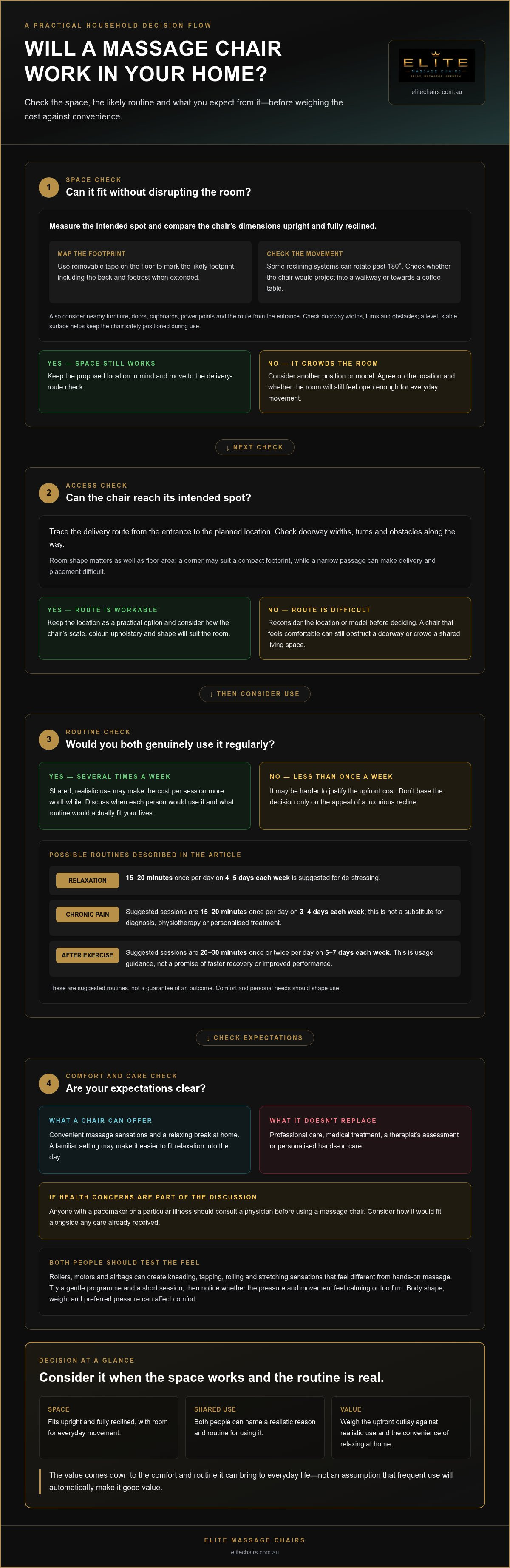
An expensive massage chair is worth considering when it fits your home and you expect to use it several times a week. If you’d use it less than once a week, it may be harder to justify. When convincing your partner to get a massage chair, focus on how often you’d both genuinely use it, not just the appeal of a luxurious recline. Space, comfort and shared use all matter.
It’s reasonable to weigh the upfront cost against the convenience of relaxing at home. A chair isn’t a replacement for professional care or medical treatment. Its value comes down to the comfort and routine it can bring to everyday life.
This article helps you consider space and reclining clearance, relaxation and wellness, claimed benefits, and how to weigh cost against convenience. You’ll have a clearer basis for deciding together whether a massage chair suits your household.
Key Takeaways
- Measure the intended spot and allow for the chair to recline fully before deciding where it will go.
- Estimate how often each person in your household would use it; regular shared use can make the cost per session more worthwhile.
- Separate comfort and relaxation from medical treatment, and consider how a chair would fit alongside any care you already receive.
- Compare the upfront outlay with realistic use over time, rather than assuming frequent use will make it good value.
- Think through the everyday convenience: a chair at home can make it easier to fit a relaxing session into your routine.
1. Considering home space and reclining clearance
Start with the room, not the chair’s appearance. Measure the intended spot, nearby furniture and the route from the entrance. A chair that fits between the sofa and wall when upright may need more room when reclined. Compare its dimensions in both positions and allow clearance for the full recline.
Some reclining systems can rotate past 180 degrees. That movement can affect how far the chair projects into a walkway or towards a coffee table. Mark the likely footprint on the floor with removable tape, then test the space with the chair’s back and footrest extended. Keep access to doors, cupboards and power points in mind.
Room shape matters as much as floor area. A corner may suit a chair with a compact footprint, while a narrow passage can make delivery and placement difficult. Check doorway widths, turns and obstacles along the route. A level, stable surface also helps keep the chair safely positioned during use.
Think about how the chair will look in your home. Match its scale to nearby furniture, and consider its colour, upholstery and shape. One partner may like a sleek, modern design, while the other may prefer a chair that blends with existing furnishings. Agree on the location and style together.
If you’re convincing your partner to get a massage chair, include a space plan in the discussion. Show the measurements, mark the chair’s footprint on the floor with tape, and check how much clearance remains. This turns an abstract concern into something practical and shows whether the room will still feel open enough for everyday movement.
An in-home trial or money-back guarantee can ease concerns about fit and comfort when available. Read the terms closely, including the trial period, return requirements and any costs. These options don’t replace measuring the room: a chair can feel comfortable yet still obstruct a doorway or crowd a shared living space.
Use a simple decision test: measure the space, map the reclined footprint, assess the delivery route and agree on a location. If the chair would disrupt the room, consider another position or model. This practical approach helps both partners weigh comfort against floor space, appearance and everyday convenience.
2. Use for chronic pain, relaxation, and exercise recovery
Consider the routine you want the chair to support. It may provide a calming pause after work, and a familiar setting can make relaxation easier to fit into a busy day. One partner might use it after sitting at a desk; the other might prefer a session after exercise. Discuss those different needs before settling on one shared routine.
For relaxation, a practical starting point is a session of around 15 minutes. For de-stressing, guidance suggests 15-20 minutes once per day on 4-5 days each week. That gives you a defined routine to consider, rather than an open-ended promise of stress relief. Notice whether the chair’s pressure and movements feel calming, or whether they add tension.
Chronic pain calls for a more careful conversation. Suggested sessions are 15-20 minutes once per day on 3-4 days each week. A massage chair isn’t a substitute for medical diagnosis, physiotherapy or personalised treatment. Anyone with a pacemaker or a particular illness should consult a physician before using one. Those limits matter when you’re discussing comfort alongside ongoing care.
After exercise, suggested sessions are 20-30 minutes once or twice per day on 5-7 days each week. Treat this as usage guidance, not a promise of faster recovery or improved performance. A short session after a walk, gym visit or long day on your feet may feel appealing, but comfort and personal needs should shape the routine.
Choose an intensity that feels comfortable. Start with a gentle programme and short session, then notice how your body responds. Massage chairs use rollers, motors and airbags for movements such as kneading, tapping, rolling and stretching. These sensations can feel different from hands-on massage, so trying them helps you judge whether they’re soothing or too firm.
Zero-gravity recline may appeal to someone seeking a more supported resting position. It changes the chair’s angle and can make a quiet relaxation break feel distinct from sitting upright. The term describes a reclined position, not a health outcome. A partner’s weight, body shape and preferred pressure can also affect how comfortable the chair feels, so both people should test it.
Travel can make regular appointments harder to fit around work, exercise and family commitments. At home, a chair offers access without planning a trip, though it doesn’t provide hands-on assessment or individual treatment. To compare the feel of recline and massage programmes, try a massage chair showroom demo together. Discuss which uses feel realistic for both of you, and what would remain part of existing care.
3. Claimed massage therapy health benefits
A massage chair offers convenient massage sensations and a relaxing break at home. Its drawbacks include the purchase cost, the space it occupies and the fact that it can’t provide a massage therapist’s assessment or personalised hands-on care.
Keep health claims in perspective. Research about massage therapy doesn’t automatically prove that a massage chair produces the same effects. A chair uses mechanical rollers and airbags, while a therapist can adapt pressure and technique during a session. That difference matters when weighing a wellness benefit against a medical claim.
A 2010 meta-analysis covered 17 clinical trials of massage therapy for depression and other mental illness. The number describes the trials included, not proof that a home chair treats depression. It can help frame the conversation: massage therapy has been studied in this area, but the finding shouldn’t be turned into a promise about a chair or a mental health outcome.
Blood pressure findings also need careful interpretation. One study of pre-hypertensive women found that blood pressure reduction after massage therapy lasted longer than 72 hours. That result concerns massage therapy and a particular group of participants. It doesn’t establish that a massage chair lowers blood pressure, or that it can replace medical advice or prescribed care.
In 2012, an NCCIH-funded study examined massage therapy and osteoarthritis of the knee. The study’s topic is relevant to people interested in joint comfort, but it doesn’t establish that massage chairs treat osteoarthritis. Before purchase, separate evidence about massage therapy from claims about a specific chair and condition. Look for clear descriptions of what the evidence actually examined.
For a balanced decision, write down the benefit you hope to gain, such as a calming routine after work, and distinguish it from a medical goal. A chair shouldn’t replace diagnosis, physiotherapy or personalised treatment for pain. Anyone with a pacemaker or a particular illness should consult a physician before using a massage chair.
Comfort is personal, too. A massage therapist can adjust their touch in response to feedback, while a chair follows programmed movements. If one partner finds firm rollers uncomfortable, that experience matters more than broad health claims. Try a gentle setting first, stop if it causes discomfort, and discuss whether the sensation suits both people.
If you’re convincing your partner to get a massage chair, make the case honestly: focus on relaxation and convenience, not unsupported health promises. The strongest reason to consider one is a realistic shared use for comfort. Research about massage therapy can inform the discussion, but it shouldn’t be stretched into claims that a chair prevents, diagnoses or cures illness.
4. Comparing massage-chair costs with professional massage and allied health treatments
A massage chair provides repeatable massage sensations at home, while a professional massage offers hands-on care from a therapist. A massage gun is a handheld device for targeted use, not a full-body chair or a therapist’s appointment. Each option serves a different purpose, so compare the experience and likely frequency of use as well as the cost.
These appointments aren’t interchangeable: allied health care can involve assessment and treatment plans, while a chair offers a home wellness routine.
For a clearer comparison, use actual appointment habits.
Those comparisons show why frequency matters, but they don’t prove a chair will be better value. Its cost per session depends on the purchase cost and how often people in the household use it. Work out a realistic routine together, then compare that estimate with the appointments you’d otherwise book. Include other ownership costs in your household budget rather than treating each session as free.
These comparisons don’t establish private health insurance or tax treatment. Don’t count a rebate or deduction as a saving unless it applies to your circumstances. Compare the household outlay separately from professional massage or allied health appointments.
Health risks also matter when weighing costs. A massage chair isn’t a substitute for medical diagnosis, physiotherapy or personalised treatment. Anyone with a pacemaker or a particular illness should consult a physician before using one. Don’t treat a chair as a solution for a condition that needs assessment or ongoing care.
Use a simple comparison: list each person’s current massage and allied health appointments, how often they happen, and the reason for each visit. Keep treatment appointments separate from relaxation sessions. Then estimate how often each person would use a chair, rather than assuming both will use it regularly. If it would sit idle, the convenience may not justify the purchase.
For a fair household discussion, compare like with like: a chair’s comfort and at-home access, a therapist’s tailored care, and an allied health professional’s assessment. The strongest case is a realistic one. A massage chair may complement a wellness routine, but it shouldn’t displace care for a health need.
5. Convenience and on-demand access
Convenience is about fitting a massage into real routines, not simply having a chair nearby. In Australia, an at-home option can suit a quiet evening, a break after gardening or a pause between work and dinner. There’s no appointment to organise or travel time to plan around. But the benefit depends on whether both partners will actually make space for regular use.
Picture a specific moment: after a long day at a desk, one partner wants their shoulders to unwind before bed. A chair can be ready at home, without arranging a professional massage session. Rollers and airbags provide programmed movements rather than a therapist’s hands-on adjustments. The convenience is access to a repeatable routine, not personalised treatment on demand.
Make that routine practical. Choose a time that won’t compete with dinner, family commitments or sleep, then decide how sessions could fit into the week. Using the chair several times a week can make it more worthwhile; used rarely, it may become costly furniture. A short session after work may be easier to maintain than an ambitious plan that disrupts the household.
Consider the small steps involved, too. Keep the area accessible, leave the chair ready to use, and agree on how you’ll share it. If one person prefers a gentler shoulder massage and the other firmer rollers, different programmes may help tailor the experience. Both partners should try the settings and decide what feels comfortable.
Everyday convenience still has practical limits. Massage chairs use between 150 and 250 watts while running, so regular use contributes to household electricity consumption. Session length and frequency affect that use. A realistic routine is more useful than assuming the chair will be used every day. The chair also can’t replace appointments that provide professional assessment or personalised care.
For a joint decision, each partner can note when they’d use the chair, what they’d use it for, and what might interrupt that routine. Compare those answers with existing travel and appointment commitments. If both can name a regular, realistic use, convenience becomes a concrete part of the value discussion rather than a vague promise of easier wellness.
Try the experience before deciding how it fits your home routine. A massage chair showroom demo lets you compare recline and massage sensations firsthand, including how rollers feel across the back and shoulders.
Elite Massage Chairs: Zero Gravity Massage Chairs
Elite Massage Chairs offers Zero Gravity Massage Chairs for households considering a dedicated space for relaxation at home. If you’ve weighed the space, likely use and comfort together, a showroom demonstration lets you experience a chair before deciding. Both partners can try the recline and massage, then discuss whether it suits their preferences and routine.
Massage Accessories are also available for people considering additions to their massage-chair setup. Explore the options that match your household’s priorities, rather than treating a chair as a substitute for professional care. To consider your options together, contact Elite Massage Chairs.
Make the next step a shared decision
A home wellness purchase works best when both people can picture how it fits into everyday life. Rather than trying to win the discussion in one conversation, agree on what would make the decision feel right: comfort, a suitable place in the home and a routine you’d both enjoy. That keeps the focus on shared priorities, not pressure or promises.
If convincing your partner to get a massage chair has been difficult, invite them to explore the experience at their own pace. Elite Massage Chairs offers Zero Gravity Massage Chairs, Massage Accessories and showroom demonstrations, giving you options to consider together. A demonstration can make the idea tangible and help you compare how a chair feels and whether it suits your preferences.
Take the next step when you’re ready to explore those options together. Contact Elite Massage Chairs today to continue the conversation. A thoughtful decision can make room for comfort while respecting what matters to both of you.
Frequently Asked Questions
Are expensive massage chairs worth it?
A massage chair may be worth considering if its features match your household’s needs and routines. Separate features you’ll use from those that simply sound impressive: one person may value a gentler back massage, while another prefers a wider range of programmes. Consider whether both partners find the chair comfortable. A premium purchase is harder to justify if its defining features suit neither person.
Are massage chairs only good for sore muscles?
No. Some people use massage chairs for relaxation, not only muscle comfort. A quiet session might become a way to unwind after work or pause before bed. Massage chairs can feel soothing, but they aren’t treatment for mental or physical health conditions. Consider one for comfort and routine, rather than assuming it will resolve a specific symptom.
Which Features Actually Matter?
Prioritise the features that affect fit and feel: roller coverage, massage intensity, available programmes and recline. An S-track follows the spine’s curve, while an L-track extends from the neck towards the glutes or hamstrings. Airbags provide another type of massage sensation. Decide which areas and movements matter to you, then compare how the chair feels in practice instead of choosing by feature count alone.
How can couples assess whether a massage chair will suit their needs and home?
Both partners should try the chair, since height, body shape and pressure preferences affect comfort. Each person can test a programme they’d genuinely use, then discuss any differences in feel. Measure the intended space and delivery route, and consider how the chair fits the room’s layout. A showroom demonstration helps couples assess the experience before deciding together.
How much space and maintenance does a massage chair require?
Space needs depend on the chair’s dimensions and how far it extends when reclined, so allow room to move around it. Maintenance varies by model. Keep the chair on a level surface and follow the manufacturer’s cleaning and care instructions, rather than using household products that may not suit its materials. Consider access to power and whether the chair will obstruct everyday movement.


