

Could a zero gravity chair for spinal decompression help you feel more comfortable without clinically decompressing your spine? The reclined position may support relaxation and ease the sensation of everyday muscular tension, but a soothing rest is not the same as treatment for a spinal condition. “Zero gravity” describes a position, not literal weightlessness or a medical result.
It’s sensible to question claims of lasting relief. Pressure relief, relaxation and clinical spinal decompression are different things, especially if you’re concerned that a position could aggravate your discomfort. This guide explains what a zero-gravity position may offer, what it can’t promise and how to approach home use thoughtfully. It also covers what to notice when trying a massage chair in person, so you can judge it by comfort rather than hype.
Key Takeaways
- A zero gravity chair for spinal decompression offers a reclined position, but the label alone doesn’t establish a clinical effect.
- Separate the comfort a position may provide from claims of lasting changes to discs, nerves or the spine.
- Compare chair-based relaxation, ergonomic seating and clinician-directed care by their purpose, setting and how suitability is determined.
- Use a chair with comfort in mind: follow its instructions and stop if it increases discomfort.
- Try a zero-gravity massage chair in person to see how it feels as a home wellness option for relaxation and soothing muscle aches.
What does a zero-gravity chair for spinal decompression actually mean?
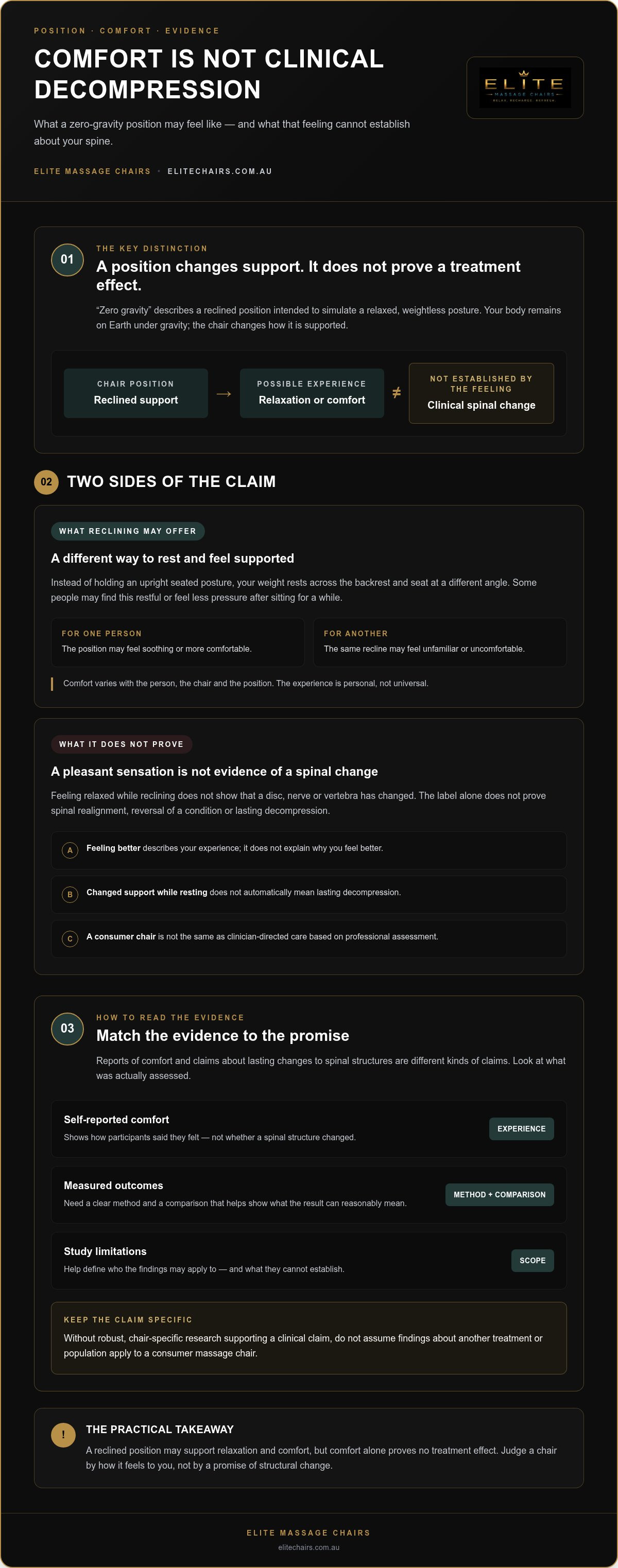
A zero gravity chair for spinal decompression reclines into a position intended to simulate the relaxed, weightless posture associated with microgravity. On Earth, gravity still acts on your body; the chair changes how it is supported. The phrase describes a comfort-focused setting, not a clinical spinal treatment.
Three ideas are often blurred together. Spinal pressure refers broadly to forces acting on the spine and surrounding structures. Perceived comfort is how a position feels to you, which varies with the person and circumstances. Decompression is a broader term for reducing or changing forces affecting spinal structures. A claim of clinical decompression needs more than a relaxing sensation to support it.
What does ‘zero gravity’ describe in a chair?
In a chair, “zero gravity” describes a reclined position designed to simulate weightlessness by changing how the seat supports you. It isn’t literal weightlessness: your body remains on Earth, under gravity, and the chair doesn’t recreate the conditions of space. The term draws on the idea of weightlessness and microgravity, explained in Weightlessness and Microgravity.
People differ in height, body shape and comfort preferences, so the same recline may not feel the same to everyone. The label also doesn’t tell you whether a particular position suits your needs. When trying a home wellness chair, focus on whether the position feels comfortably supportive, rather than whether it matches a universal alignment or guarantees a specific spinal effect.
What is meant by spinal decompression?
Broadly, spinal decompression means reducing or changing forces that affect parts of the spine. The term can refer to different approaches, so context matters. Clinician-directed decompression is distinct from resting in a consumer chair: it involves professional assessment and care suited to an individual’s circumstances. A reclined position may change how your body feels supported, but that alone doesn’t establish that a spinal condition has been treated.
Keep the distinction clear. You may feel more at ease while reclined, but that comfort is a personal sensation, not proof of a structural change to a disc, nerve or other spinal structure. A change in pressure or support while resting also shouldn’t automatically be described as lasting decompression. If you’re considering a chair because of ongoing or concerning symptoms, a health professional can give guidance based on your circumstances.
In brief: “Zero gravity” describes the chair’s positioning concept; “decompression” describes a broader change in forces. The term can indicate an intended reclined posture, but it can’t by itself establish clinical benefit, lasting spinal change or suitability for a particular person.
How zero-gravity positioning may affect comfort, and what the evidence can say
Reclining changes how a chair supports your body. Rather than holding an upright seated posture, your weight rests across the backrest and seat at a different angle. Some people may find that restful or feel less pressure after sitting for a while. Others may find the position unfamiliar or uncomfortable. Personal comfort varies, so a chair can’t promise the same experience for everyone.
Keep sensations separate from treatment claims. Feeling relaxed while reclining doesn’t show that a disc, nerve or vertebra has changed. Nor does “zero gravity” prove that a chair realigns the spine or reverses a spinal condition. A zero gravity chair for spinal decompression may be a comfort choice; the phrase alone isn’t evidence of a clinical result.
Pressure, posture and the feeling of relief
Changing posture can change where and how your body feels supported. If sitting upright feels tiring, reclining may feel more comfortable because you’re resting in a different position. That response is real as an individual experience, but it doesn’t establish why you feel better or whether an underlying structure has changed.
Comfort depends on the person, the chair and the position. A setting that feels soothing to one person may not suit another. Don’t treat a pleasant sensation as proof that the chair has corrected posture, reduced a specific spinal force or addressed a medical condition.
What would count as evidence of decompression?
Evidence depends on what a claim promises. Reports that people felt more comfortable after reclining measure a short-term experience. Claims about lasting changes to discs, nerves or the spine would need relevant clinical outcomes, not just personal impressions. Study details matter: who took part, how the chair or position was tested, what it was compared with and what limitations the researchers identified.
Without robust, chair-specific research supporting a particular clinical claim, don’t assume findings about another treatment or population apply to a consumer massage chair. Be cautious with precise measurements or promises of lasting change if the source doesn’t explain how those outcomes were assessed.
- Self-reported comfort tells you how participants say they felt, not whether a spinal structure changed.
- Measured outcomes need a clear method and a comparison that helps show what the result can reasonably mean.
- Study limits help define who findings may apply to and what they can’t establish.
Chair positioning may support comfort, but comfort alone proves no treatment effect. Relaxation can be worthwhile without being presented as clinical decompression. If you want to find out how a reclined position feels, experiencing it in person lets you assess your own comfort. A personalised massage chair showroom demonstration is a practical way to explore the position without relying on claims or anecdotes.
Zero-gravity chair versus decompression treatment: relief is not the same as proof
A massage chair, an ergonomic work chair and clinician-directed care serve different purposes. A zero-gravity setting may feel soothing, but feeling lighter or more relaxed doesn’t prove that your spine has been clinically decompressed. The distinction matters when weighing a home wellness option against care for pain or a diagnosed condition.
A massage chair is not an ergonomic work chair
An ergonomic chair is designed for upright tasks, with support suited to sitting at a desk. A massage chair is for reclined rest and relaxation, not a replacement for a work setup. Neither is automatically better; they serve different purposes. If you’re comparing reclined massage chairs, this zero-gravity and traditional massage chair comparison can help explain their different experiences.
A massage chair is not a clinical decompression treatment
A consumer chair can’t diagnose a spinal problem or determine which care is appropriate. Those decisions belong with qualified health professionals, who can assess symptoms and individual needs. A chair’s recline or massage may support relaxation, but it shouldn’t replace prescribed care or be treated as an equivalent treatment. For a broader look at home wellness use, explore this therapeutic massage chair guide.
Think of “relief” as a description of how you feel, not proof of what has happened inside the spine. Feeling lighter after reclining can be a welcome comfort response. It doesn’t establish that a disc, nerve or other structure has changed, or that a condition has been treated. A zero gravity chair for spinal decompression is best understood as a home wellness choice, not a substitute for diagnosis or personalised clinical guidance.
How to approach zero-gravity chair use with comfort and care
If you’re considering a zero gravity chair for spinal decompression, approach it as a way to explore a reclined position, not as a treatment plan. Let comfort guide you rather than aiming for a particular outcome. Start gently, notice how your body responds and don’t push through discomfort in pursuit of a supposed therapeutic effect. The chair’s instructions should always take priority over general suggestions.
A comfort-first way to try a reclined position
Take a gradual, attentive approach. Choose a setting that feels comfortable rather than aiming for a particular posture or result. Notice how you feel while reclined and after returning to your usual position. If anything feels unpleasant, stop and adjust or leave the chair; there’s no need to persist.
- Read the instructions. Follow the manufacturer’s guidance for operating and positioning the chair.
- Begin comfortably. Settle into a recline that feels manageable, and change the position gradually if needed.
- Notice your response. Check how your body feels during use and afterwards. A sensation is useful feedback about comfort, not a diagnosis.
- Stop if discomfort increases. Don’t continue in a position that feels worse or causes new discomfort.
There is no universal chair-use schedule established here for spinal decompression. A fixed duration, frequency or routine shouldn’t be treated as suitable for everyone, and this article isn’t prescribing one. Your comfort and the chair’s specific instructions matter more than an arbitrary target.
When to seek personalised health advice
Speak with a qualified health professional if spinal symptoms are persistent, worsening, severe, new or concerning. They can consider your circumstances and advise whether a particular position or activity is appropriate. Don’t let a comfortable session delay an assessment if symptoms are troubling you.
If you have a diagnosed condition or an existing treatment plan, discuss chair use with the clinician involved in your care. They can give guidance that reflects your diagnosis and recommendations. A massage chair doesn’t replace assessment, rehabilitation or other prescribed care, and general information can’t determine whether it’s suitable for you.
- Persistent or worsening symptoms: seek individual advice rather than relying on repeated chair use.
- A diagnosis or treatment plan: discuss how a chair fits alongside your clinician’s recommendations.
- Increased discomfort: stop using the chair and consider getting personalised guidance.
Think of home use as a comfort check, not a test of whether your spine has been decompressed. That keeps expectations measured and gives you permission to stop if the position doesn’t feel right.
If you’d like to judge the reclined position for yourself, a personalised showroom demonstration lets you experience a zero-gravity massage chair before deciding whether it suits your comfort preferences.
Explore zero-gravity massage chairs as a home wellness experience
With the difference between comfort and clinical treatment clear, consider a zero-gravity massage chair for what it is designed to offer at home: a place to relax and soothe muscle aches. Its zero-gravity technology simulates weightlessness and is described as relieving spinal pressure. That’s a wellness benefit, not a promise of clinical spinal decompression or a change to a diagnosed condition.
Smart massage technology intelligently contours to the body, bringing a massage experience into the reclined position. Whether it feels enjoyable or supportive is personal. The practical next step is to experience the chair for yourself, rather than relying on its name or assuming everyone finds the same position comfortable.
What to notice when experiencing a zero-gravity massage chair
When you try a chair, notice how the reclined position feels across your body. Does it feel comfortable and supported, or do you notice pressure or strain? Pay attention to the massage as well: does it feel relaxing, and does the experience suit your preferences? If anything feels uncomfortable, pause and speak up rather than pushing through.
A showroom demonstration helps you assess the chair and its recline in person. It can’t diagnose a spinal condition or tell you whether a chair is appropriate treatment for symptoms. For a simple guide to what to expect during an in-person experience, see the massage chair demonstration guide.
A considered next step for home wellness
Elite Massage Chairs offers a personalised one-on-one showroom consultation, so you can experience the reclined position and massage before deciding. Delivery options are available to suit your needs. Consider whether the experience feels right for your home and wellbeing routine, rather than treating the chair as a clinical solution.
If you’re ready to explore a home relaxation option, take a look at Elite Massage Chairs and experience a zero-gravity massage chair in person. The demonstration is an opportunity to judge comfort, not proof of decompression.
Choose a more considered way to unwind
Let comfort, not a promise of spinal treatment, guide your decision. If you’re considering a zero gravity chair for spinal decompression, think about the role you want it to play at home: a place to pause, relax and enjoy a massage. If you have persistent or concerning symptoms, keep decisions about care with a qualified health professional.
A suitable choice is one that feels comfortable to you and fits the way you want to unwind. Take time to experience the reclined position, notice how it feels and decide without pressure. A calm, informed choice can make a wellness routine feel more personal and inviting—and if you are also looking to cultivate restful spaces outside, resources like mimo-living.com share guidance on selecting comfortable, premium seating for your garden.
Explore zero-gravity massage chairs for a more restorative home routine and take the next step towards creating a space for everyday relaxation.
Frequently Asked Questions
Is a zero-gravity chair the same as a spinal decompression table?
No. A zero-gravity massage chair is designed for reclining and relaxation, while a spinal decompression table may be part of a clinical approach. The terms describe different things and shouldn’t be used interchangeably. If you’ve been advised to consider decompression care, ask the health professional overseeing your care what that means for your circumstances. Judge a massage chair by its comfort and wellness purpose, not by assumptions based on its name.
Can a zero-gravity chair permanently decompress the spine?
There’s no basis here to promise permanent decompression from using a consumer massage chair. Feeling more comfortable after reclining doesn’t establish a lasting change to spinal structures. The zero-gravity feature simulates weightlessness and is described as relieving spinal pressure, but that isn’t a guarantee of a permanent clinical outcome. Be cautious of absolute claims, and discuss ongoing symptoms or treatment goals with a qualified health professional.
How long should you sit in a zero-gravity chair for spinal decompression?
No universal session length has been established here for achieving spinal decompression in a consumer chair. Follow the chair’s instructions and choose a setting that feels comfortable; stop if discomfort increases. Don’t extend a session simply because you expect more time to produce a better result. If you have a diagnosed condition, persistent symptoms or a treatment plan, ask your clinician what use may be appropriate for you.
Can I use a zero-gravity massage chair if I have a spinal condition?
Whether it’s suitable depends on your individual condition and circumstances, so a general answer can’t clear everyone to use one. If you have a diagnosis, a recent injury, significant symptoms or current treatment, seek personalised advice from your qualified health professional before trying a new recline or massage setting. A zero gravity chair for spinal decompression is a wellness option, not a way to assess your condition or replace care.
Does a zero-gravity chair correct posture?
No, reclining in a zero-gravity chair shouldn’t be treated as posture correction. You may find the position comfortable, but that doesn’t show that your spine has been realigned or that a posture concern has been resolved. Enjoying a reclined break, for example, doesn’t tell you how your posture holds up during standing, walking or desk work. If posture or discomfort concerns you, ask a qualified health professional for guidance suited to your daily activities.
Is a zero-gravity massage chair a replacement for physiotherapy or medical treatment?
No. A massage chair may be part of a home relaxation routine, but it doesn’t diagnose or treat the cause of spinal symptoms. Don’t stop or change care recommended by a health professional because a chair feels soothing. If symptoms are persistent, severe or changing, discuss them with a qualified clinician. If they consider chair use appropriate alongside your care, follow their guidance and the chair’s instructions.


