

The chair with the longest feature list may not be the one you enjoy using most. A massage chair with the most features is a smart choice only when its functions suit your comfort preferences, body and everyday routine.
Technical labels and long menus of massage programmes can be tempting, especially when a product description can’t show you how a chair will feel. More functions don’t automatically mean a better fit. What matters is how well the chair’s core massage and comfort features work for you.
This guide explains how to compare features by their everyday value, from roller technology and body-contouring systems to recline positions and personalisation. You’ll also find practical questions to ask about your relaxation and wellness priorities, and how to approach terms such as “4D” and “5D”.
Elite Massage Chairs’ zero-gravity technology and smart massage technology that contours to the body offer a practical example of features designed around comfort, rather than a tally of extras. A showroom demonstration can also help you experience a chair’s feel before making a considered choice.
Key Takeaways
- A massage chair with the most features isn’t automatically the best fit. Prioritise functions that suit your comfort preferences and routine.
- Compare each feature by its intended benefit and relevance to you. Names and available functions can vary between chair models.
- Assess comfort and ease of use as well as specifications. Note what you want to experience during a demonstration.
- Build a shortlist by considering who’ll use the chair, which functions matter and how often you expect to use it.
- Experience features such as zero-gravity recline and body-contouring massage technology in practice before deciding.
Massage Chair with the Most Features: Why Feature Count Can Mislead
A product page may list multiple massage programmes, technical systems and personalisation options. Those details don’t answer the most important question: will the chair feel comfortable and useful in your home? A massage chair with the most features may still be a poor match if its functions don’t suit your preferences or its controls are confusing.
Think of “feature-rich” as a balance, not a tally. A useful mix supports your priorities, feels comfortable and is straightforward to operate. A sophisticated mechanism has little everyday value if you can’t easily choose a setting or adjust the experience.
A feature is valuable when it offers a practical benefit that matches your needs, feels comfortable to use and is easy to control. That’s a more useful test than comparing the length of two feature lists. For general context on the history and types of massage chairs, look beyond broad categories and consider what each function could add to your own routine.
What does feature-rich really mean in a massage chair?
Separate what a chair advertises from what you would actually use. A long menu may sound impressive, but if you want a straightforward session after a busy day, clear controls could matter more than numerous options. Look for descriptions that explain each function in plain language and controls that make it easy to start, adjust or stop a session.
There’s no single chair that is universally best based on feature count. Personal comfort, ease of operation and how a function feels in practice all shape its value.
Start with comfort goals, not the longest product list
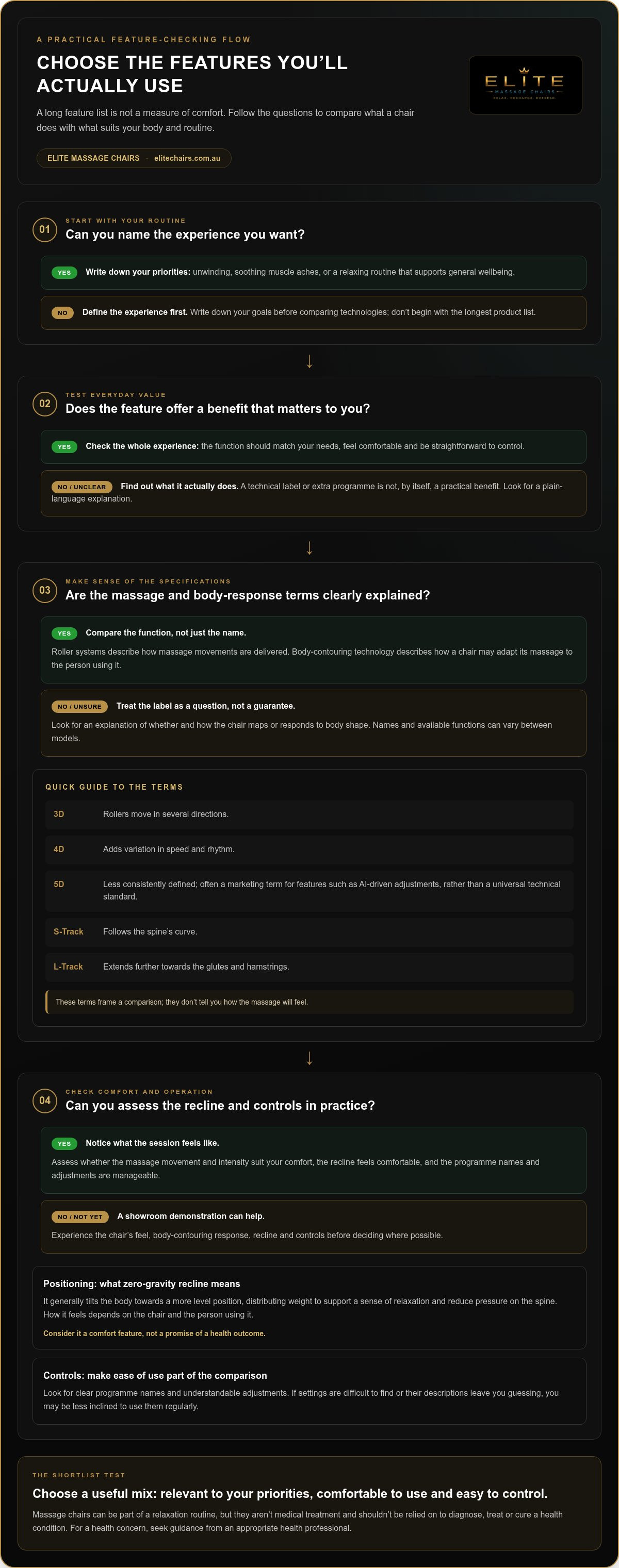
Begin with the experience you want. Is your priority unwinding, soothing muscle aches or enjoying a relaxing routine that supports general wellbeing? Write down your goals before comparing technologies. Then assess each feature by asking how it might contribute, rather than assuming a technical label guarantees the result you want.
Keep wellness expectations realistic. Massage chairs can be part of a relaxation routine, but they aren’t medical treatment and shouldn’t be relied on to diagnose, treat or cure a health condition. If you have a health concern, seek guidance from an appropriate health professional. This distinction helps you compare chairs for comfort without mistaking a product feature for a clinical promise.
Massage Chair Features Explained: What Each Category Can Add
Feature descriptions are easier to compare when grouped by the experience they’re intended to support. A chair may offer different massage actions, respond to body shape, change your recline position or simplify programme selection. These are separate considerations, and a strong specification in one area doesn’t automatically mean the chair will suit you in another. Names and available functions vary between models, so compare what the feature does rather than relying on its label alone.
Feature labels describe a function, not whether it will feel right for your body or routine. Treat each one as a prompt to understand what the chair does and decide whether it matters to you. For another perspective on how features are discussed in chair reviews, explore expert-reviewed massage chair features, then bring the focus back to your own comfort.
Massage technology and body-responsive operation
First, distinguish the massage mechanism from body-responsive operation. Roller systems describe how massage movements are delivered. Body-contouring technology describes how a chair may adapt its massage to the person using it. A product description that explains whether and how the chair maps or responds to body shape gives you more useful context than a technical term on its own.
In general category language, 3D rollers move in several directions, while 4D systems add variation in speed and rhythm. “5D” is less consistently defined and is often a marketing term for features such as AI-driven adjustments, rather than a universal technical standard. Track descriptions can also indicate coverage: an S-Track follows the spine’s curve, while an L-Track extends further towards the glutes and hamstrings. These terms can help frame a comparison, but they don’t tell you how the massage will feel.
Positioning, comfort and controls
Positioning can shape the whole session. Zero-gravity recline generally tilts the body towards a more level position, distributing weight to support a sense of relaxation and reduce pressure on the spine. The feel depends on the chair and the person using it, so consider this a comfort feature, not a promise of a health outcome. Elite Massage Chairs’ advanced zero-gravity technology simulates weightlessness and is designed to relieve spinal pressure.
Controls matter just as much as the mechanism. Look for clear programme names, understandable adjustments and a layout that feels manageable. If a setting is difficult to find or its description leaves you guessing, you may be less inclined to use it regularly. A chair’s technology should make relaxation easier, not turn choosing a session into a task.
- Massage action: Consider whether the described movement and intensity suit your comfort preferences.
- Body response: Look for a plain-language explanation of how the chair contours or adjusts to the user.
- Position and operation: Assess whether the recline feels comfortable and the controls seem intuitive.
Elite’s smart massage technology is designed to contour to the body. To experience how the chair feels and operates in person, book a massage chair showroom demonstration.
How to Compare Feature-Rich Massage Chairs Without Getting Lost
Once you’ve identified the functions that matter to you, compare them consistently. Product pages may describe similar features differently, and available settings can vary between chairs. A simple framework helps you look past persuasive labels and consider what each function might contribute to your comfort, how clearly it’s explained and whether you can see yourself using it.
Compare features by personal relevance, not by how many appear on a page. The massage chair with the most features on paper may not be the most satisfying choice if its functions don’t suit your routine.
A practical feature comparison framework
For each function, record its intended benefit, your level of interest and what you want to experience in person. Mark it as essential, useful or low priority. Include comfort and controls in your comparison, not just technology. If a description uses a term you can’t translate into a clear benefit, note it as a question for your demonstration.
| Feature category | Intended benefit | Personal relevance | Demonstration question |
|---|---|---|---|
| Massage movement or roller system | Delivers the chair’s massage action | Would the described movement and intensity suit my comfort preferences? | Can I try the massage and adjust its feel? |
| Body-responsive operation | May adapt the massage to the user’s body | Would a chair that contours to my body matter to me? | How does this function respond during a session? |
| Recline and positioning | Changes the body’s position for comfort | Do I find the position relaxing and comfortable? | Can I experience the position and return upright easily? |
| Controls and programmes | Helps select and adjust a session | Can I understand the choices and operate them with ease? | Can I try choosing and changing a programme? |
Separate useful differences from impressive-sounding labels
When a feature has a technical name, ask what changes in the massage experience. A label may describe a particular mechanism or adjustment, but it doesn’t tell you whether the sensation will feel comfortable, whether you’ll use the function or how clearly you can control it. Different descriptions may refer to different implementations, so don’t assume two chairs perform identically because their feature names sound alike.
Use a demonstration to compare what you can feel and operate, rather than treating newer terminology as proof of a better fit. Notice whether the chair’s position feels natural, whether the massage suits your preference and whether the controls make sense without lengthy instructions. Keep claims measured: a feature may support relaxation or comfort, but that doesn’t establish a clinical outcome or guarantee a particular result.
Before deciding, review your notes. If a chair’s selling points are mostly low priority, its longer list may add little value for you. Give greater weight to features you understand, can experience and expect to use in your routine.
Choose a Massage Chair by Matching Features to Your Routine
A clear shortlist makes the decision more manageable. Before browsing, think about who’ll use the chair, what kind of comfort you prefer and how often you’re likely to sit in it. A chair for one person seeking a gentle wind-down routine may call for different priorities from one shared by household members with varied preferences. The goal isn’t to find the longest feature list, but to narrow the choice to functions you can imagine using comfortably.
Turn your wellness priorities into a shortlist
Write down your main comfort and relaxation goals, then note any questions about fit, controls and everyday use. Keep the shortlist focused: if a function doesn’t address a priority, it may not deserve much weight. This preparation also helps you compare options without getting distracted by every technical term on a product page.
- Identify your priorities. Decide whether you’re mainly seeking relaxation, muscle comfort or a soothing addition to your regular routine. If more than one person will use the chair, consider each person’s preferences.
- Shortlist relevant functions. Match potential features to those priorities. Note what you understand, what seems useful and which descriptions need translating into everyday language.
- Compare comfort and practicality. Consider whether the chair’s feel, positioning and controls seem suited to the intended users. Think about whether the settings look manageable for the way you expect to use it.
- Experience the chair. A description can explain a feature, but it can’t tell you whether the recline feels comfortable or the massage suits your preference. Use a demonstration to explore those details before making a considered choice.
Use a demonstration to assess the experience
During a demonstration, focus on the experience rather than trying to test every function. Notice how the chair feels as you settle in, whether the position is comfortable and how easily you can understand and operate the controls. If you’re comparing chairs with another intended user, their comfort matters too. A focused trial can help you identify which features feel relevant to your routine.
Bring your shortlist and questions along. You might want to understand how a chair’s body-contouring technology works or experience its zero-gravity positioning to see whether it feels relaxing for you. Elite Massage Chairs offers free showroom demonstrations and personalised one-on-one consultations, so you can explore comfort and operation in person. For a simple next step, book a free massage chair demonstration.
Explore Elite Massage Chairs’ Feature-Led Zero-Gravity Experience
Choosing a massage chair with the most features is less useful than finding functions that support the way you want to relax at home. Elite Massage Chairs is an Australian retailer specialising in premium zero-gravity massage chairs and home wellness. Its feature approach brings together advanced zero-gravity technology and smart massage technology that intelligently contours to the body, with comfort and individual experience at the centre.
These features offer two distinct points to consider. Zero-gravity positioning shapes how you recline, while body-contouring massage technology is designed to respond to the person using the chair. Rather than treating either feature as a promise of a particular result, consider how each might fit your preferences and what you’d want to experience during a demonstration.
A considered blend of positioning and smart massage technology
Advanced zero-gravity technology simulates weightlessness and is designed to relieve spinal pressure. The intended experience is a supported, reclined position that can encourage relaxation. Smart massage technology intelligently contours to the body, bringing a responsive element to the massage experience. Focus on these features without relying on extra model names or assumptions about settings.
Elite’s wellness positioning includes soothing muscle aches, improving circulation and supporting an active lifestyle. These are general wellbeing aims, not medical promises. A chair can be part of a relaxation routine, but it shouldn’t be viewed as a medical treatment or a substitute for appropriate healthcare. Your comfort remains the practical measure: notice how the position feels and whether the massage experience suits you.
Experience the chair before deciding
Reading about comfort can help you form a shortlist, but sitting in a chair gives you a more direct sense of its feel. Elite Massage Chairs offers a free showroom demonstration and personalised one-on-one consultation. Use the demonstration to experience the zero-gravity position, notice how the chair feels against your body and discuss the comfort preferences that matter to you.
A focused demonstration can make the choice clearer. Consider whether the position feels relaxing, whether the body-contouring massage feels comfortable and whether the experience aligns with your intended use. If you’re choosing for a shared household, bring each person’s preferences into the conversation so the decision reflects who will use the chair.
Take your time and focus on what you can experience, rather than trying to count every possible function. The most relevant features are the ones that make sense for your comfort and wellness priorities. To explore the experience in person, Experience a massage chair demonstration.
Make Your Next Choice with Confidence
The right chair is one that makes sense beyond the showroom, fitting naturally into the way you want to pause, unwind and care for your comfort at home. Before choosing, picture an ordinary week: who might use it, when you’d settle in and which qualities would make you look forward to that moment. This simple check can help you distinguish a genuinely useful choice from a massage chair with the most features on paper.
Decide by feel as well as by specifications. A considered purchase doesn’t require you to understand every technical term. It requires clarity about what matters to you and the confidence to experience those priorities first-hand. Bring your questions, take your time and notice which chair feels most in tune with your preferences.
When you’re ready to take the next step, plan a massage chair showroom demonstration and experience the comfort for yourself. A thoughtful choice can make creating a restorative moment at home feel within reach.
Frequently Asked Questions
How much room does a massage chair need?
Measure the space where you plan to use the chair, including the room it needs to recline fully. Check the dimensions and clearance guidance for the specific chair you’re considering, rather than relying on a general estimate. Measure doorways too, and consider the route into the room, including tight turns. A suitable spot should let you use the chair without blocking walkways, doors or other everyday activities.
Can two people use the same massage chair?
Two people may be able to share a chair, but each should assess whether its feel and operation suit them. One person may prefer a gentler experience, while another may find the same massage uncomfortable. Don’t assume that settings or preferences will suit everyone. Elite Massage Chairs’ smart massage technology is designed to contour to the body, but each user should still experience the chair for themselves.
How often can you use a massage chair?
Follow the usage instructions supplied with the specific chair, as guidance can differ by product. Begin with the manufacturer’s directions and pay attention to how you feel during and after a session. If you have a health concern, are pregnant or aren’t sure whether massage is suitable for you, seek advice from a qualified health professional before use. A chair is a relaxation option, not a substitute for care.
Can people with health conditions use a massage chair?
Suitability depends on the individual and their circumstances, so there isn’t one answer for every condition. A massage chair is a wellness and relaxation product, not a medical device or treatment for illness. If you have a diagnosed condition, ongoing symptoms or uncertainty about massage, speak with a qualified health professional before using one. Follow their advice and the instructions supplied with the chair.
Can a massage chair help with everyday stress?
A massage chair can provide a home-based way to make relaxation part of your routine, although individual experiences differ. Elite Massage Chairs says its chairs make it effortless to melt away daily stress and restore your body’s natural balance. Consider whether a chair feels comfortable and suits the time and space you have available. It’s best understood as a wellness option, not a guaranteed result or a replacement for professional support if stress is affecting your wellbeing.
Can a massage chair replace professional medical treatment?
No. A massage chair is intended for relaxation and wellness, not to diagnose, cure or treat a medical condition. Elite Massage Chairs describes benefits such as soothing muscle aches and supporting circulation, but those wellbeing statements don’t make a chair medical care. Follow guidance from your healthcare professional and seek medical attention for symptoms that are persistent, severe or concerning. Don’t delay appropriate care in favour of chair use.
Can I use Humm to finance a massage chair from Elite Massage Chairs?
Yes, Elite Massage Chairs offers flexible financing options through Humm. Eligibility, approval and repayment arrangements are subject to Humm’s current terms, so review these before committing. The repayment amount, any fees and applicable conditions depend on the provider’s arrangements and your circumstances. Approval isn’t guaranteed, and financing may not suit every buyer. Consider your budget and the full repayment obligations before making a decision.


