

The chair with the longest feature list isn’t automatically the one you’ll enjoy using most. Finding the best massage chair under 10000 starts with a more personal question: does it feel right for your body, your home and the way you want to unwind?
If you’re finding it hard to separate useful features from impressive-sounding claims, focus on what you can assess: massage reach, recline, controls and everyday comfort. These details can matter as much as the specification sheet, and comfort varies from person to person. This guide will help you compare options by feel, fit and practical ownership details, so you can build a shortlist without getting distracted by feature counts.
We’ll cover massage performance, body fit, room measurements and practical considerations for Australian buyers. Elite Massage Chairs offers free showroom demonstrations, so you can experience a chair’s comfort in person before deciding. Flexible financing through Humm is another option to consider.
Key Takeaways
- Use your budget to narrow the options, then decide what matters most for your routine, comfort preferences and any shared use.
- Compare massage mechanisms and programmes by how they may suit your preferences, rather than counting features or assuming they guarantee a particular result.
- Build a shortlist around body fit, preferred feel, useful functions, room footprint and ownership terms. Separate must-haves from extras.
- Before choosing the best massage chair under 10000, measure the intended space and access route, then compare those measurements with the chair’s dimensions.
- Try a chair in person at an Elite Massage Chairs showroom demonstration to assess its comfort and feel before deciding.
Best massage chair under $10,000: set a budget that reflects your needs
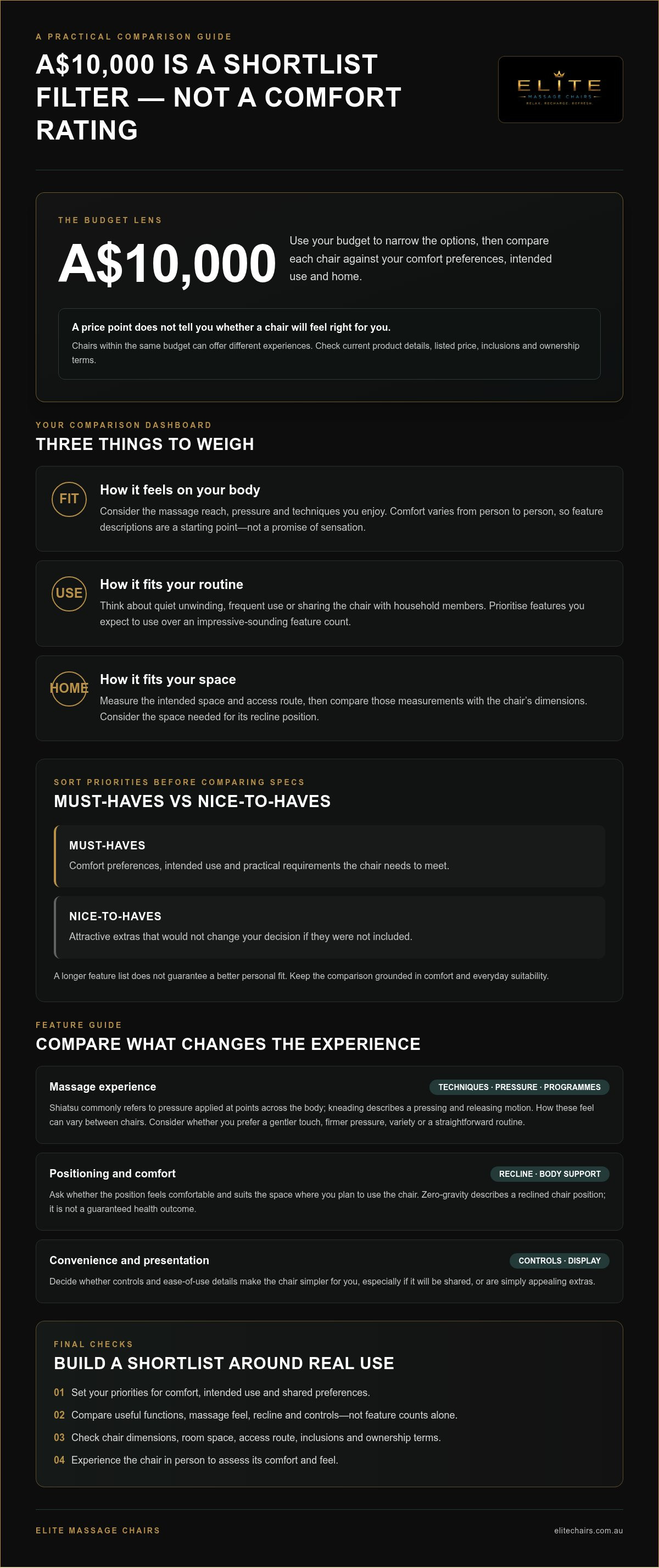
A budget of A$10,000 is a useful starting point for narrowing your search, but it isn’t a comfort rating or a promise that a chair will suit you. Use it as a shortlist filter, then judge each option against your preferences, intended use and home. Chairs within the same budget can offer different experiences, so don’t assume they’re interchangeable.
The best chair depends on personal fit, intended use and suitability for your home. That’s more useful than asking which model has the most features. Your shortlist will be more relevant if you first decide whether you’re choosing for quiet unwinding, frequent use, shared household use or a particular comfort preference.
What does a $10,000 massage chair budget help you compare?
Use your AUD budget to define which options to explore, not to rank them by quality. As you compare, review each chair’s current product details, listed price, inclusions and ownership terms. For an overview of the broader category, Wikipedia outlines the history and types of massage chairs.
Look beyond the headline feature count to the complete purchase. Check what’s included, then consider practical details such as the chair’s dimensions and the space it needs at home. A feature adds value when it matches your priorities and you expect to use it. Keep a note of questions as you compare, rather than letting polished product descriptions make the decision for you.
Start with the experience you want at home
Think about how a chair would fit into your routine. Would you mainly use it to unwind at the end of the day, use it frequently, or share it with household members who have different comfort preferences? Decide what feel you enjoy and whether you want the massage experience to focus on particular areas. Those answers help separate must-haves from appealing extras.
Before browsing specifications, make two short lists:
- Must-haves: the comfort preferences, intended use and practical requirements the chair needs to meet.
- Nice-to-haves: features that sound attractive but wouldn’t change your decision if they weren’t included.
For example, a buyer choosing for shared use may prioritise whether each person finds the chair comfortable over an extensive menu of programmes. Someone looking for a simple at-home routine may prefer straightforward controls to functions they’re unlikely to use. Neither priority is universally better. A longer feature list doesn’t guarantee a better personal fit, and the best massage chair under 10000 depends on the details that matter to you.
Use your budget to make the first cut, then compare the remaining options against your checklist. This keeps the decision grounded in comfort and everyday suitability, rather than the assumption that more features mean a better choice.
Which massage chair features matter most under $10,000?
Feature descriptions are most useful when you turn them into questions about how a chair might feel and fit your routine. Terms such as roller type, massage programme and recline position describe different parts of the experience, but don’t guarantee a particular result. Compare the stated functions across your shortlist and focus on the differences you’re likely to notice and use.
Judge a feature by the experience it creates for you, not by how advanced it sounds on a product page. A useful feature answers a practical question: might this feel comfortable, suit my preferences or make regular use more appealing?
Compare massage techniques by feel and preference
Massage terms offer a starting point, not a precise promise of sensation. Shiatsu commonly refers to pressure applied at points across the body, while kneading describes a pressing and releasing motion. How these techniques feel can vary between chairs, so consider whether you prefer a gentler touch, firmer pressure or a particular sensation.
As you compare, ask whether you can adjust the intensity and whether the described technique sounds pleasant for the way you plan to use the chair. A showroom demonstration lets you experience the feel directly.
Separate features that shape the massage from those that mainly make a chair easier or more enjoyable to use:
- Massage experience: techniques, pressure options and programmes. Consider which sensations you like and whether you want variety or a straightforward routine.
- Positioning and comfort: recline options and the way the chair supports your body. Ask whether the position feels comfortable and suits the space where you plan to use it.
- Convenience and presentation: controls, display style and other ease-of-use details. Decide whether they make the chair simpler for you or are just appealing extras.
This distinction brings the comparison back to daily use. A feature that changes the massage sensation may matter more if you’re particular about pressure; clear, easy-to-use controls may matter more in a shared household. Neither is automatically the better choice. Your priorities determine the value.
Understand positioning and feature claims
Zero-gravity describes a reclined chair position, not a guaranteed health outcome. If you’re considering this position, think about whether it feels relaxing and suits the way you’d like to sit. For more context, explore this guide to zero-gravity massage chairs.
Keep comfort claims distinct from clinical claims. A listed function tells you what a chair is designed to do, but doesn’t establish a medical benefit. Compare each product’s stated functions with your priorities, and give more weight to features you can see yourself using than to technical language alone.
If you’d like to assess positioning and feel in person, you can book a massage chair showroom demonstration and experience a chair before deciding.
How to compare massage chairs under $10,000 without being distracted by specs
A side-by-side comparison can reveal what a feature list leaves out: two chairs may have similar stated functions but differ in fit, feel, room requirements or purchase terms. Before comparing, rank your top three criteria. You might prioritise a comfortable feel, a particular recline position and a suitable room fit. Keep these priorities visible when product descriptions make the differences harder to distinguish.
A set budget can’t tell you whether a chair will feel comfortable to you. Use product descriptions to narrow your options, then treat a hands-on demonstration as a valuable way to assess personal fit. The best massage chair under 10000 on paper may not be your preferred chair once you experience its position and feel.
Use a comparison table that reflects your priorities
Make one row per chair and record only details stated for that specific model. Write “not stated” rather than filling gaps with assumptions. This keeps the comparison fair and helps you identify which options deserve a closer look.
| Option | Comfort preference | Intended use | Product-stated functions | Room fit | Ownership terms |
|---|---|---|---|---|---|
| Chair A | What feel or position are you looking for? | Unwinding, regular use or shared use? | Record listed functions only | Compare dimensions with your space | Note stated terms |
| Chair B | Would it suit your preferences? | Does it match your routine? | Record listed functions only | Compare dimensions with your space | Note stated terms |
Keep your top three criteria visible as you fill in the table. Mark each as a must-have or a lower-priority extra. A function that sounds impressive but doesn’t support your routine shouldn’t outweigh a better match on a must-have. If you’re comparing zero-gravity with a more traditional chair, this zero-gravity versus traditional chair comparison can help clarify what you prefer.
Read reviews as evidence, not a verdict
Star scores are a quick signal, not a measure of how well a chair will suit your body or home. Look for recurring, specific comments about comfort, ease of use and setup. A detailed review describing a preference for gentler pressure may be more relevant than broad praise from someone with different expectations.
Check whether the reviewer’s priorities resemble yours, and separate personal impressions from verifiable details. Reviews describe someone’s experience; product specifications and retailer statements provide stated functions, dimensions and purchase terms. If reviews conflict, don’t treat either as definitive. Use them to identify what you’d like to assess yourself.
Once your comparison has narrowed the field, a showroom demonstration of massage chairs can help you judge personal comfort beyond the product page.
Check comfort, room fit and ownership details before choosing
A shortlist becomes a considered choice only when it works in practice. Check that the chair can reach its intended place at home, feels comfortable to you and comes with purchase terms you understand. Follow this sequence to catch practical issues a feature comparison alone can miss.
Measure your space and access route
Measure the floor area where you plan to place the chair, then compare it with the product’s stated dimensions. Also map the route from the entrance to that spot, including doorways, hallways and tight turns. A chair may fit the room but be difficult to move into position, so account for both the destination and the access route.
- Measure. Record the intended placement area and the dimensions of doorways, hallways and turns along the route. Compare these measurements with the chair’s published dimensions, and use the manufacturer’s guidance for clearance and positioning rather than estimating.
- Shortlist. Keep the options that appear to suit your room and access route. Note any product dimensions or placement guidance beside each chair. Don’t assume another model has the same footprint or clearance needs.
- Test. Arrange a showroom demonstration and take your time. Try the chair using settings that reflect your preferences. Notice how the pressure feels, whether the chair supports you comfortably and whether its controls are straightforward to use.
- Review the terms. Read the information for the specific chair you’re considering, including its delivery, setup, returns and warranty terms. These details can differ between products, so don’t assume terms for one chair apply to every option.
- Decide. Bring together what you learned from measuring, comparing and testing. If the chair suits your comfort preferences, fits your home and its product-specific terms work for you, you’ll have a stronger basis for choosing the best massage chair under 10000.
Test comfort and review the purchase details
A demonstration lets you assess your own experience; it doesn’t prove a product will deliver a particular outcome. Pay attention to the pressure and support you feel, your comfort in the chair’s position and how easily you can use its controls. A massage chair demonstration guide can help you plan what to notice during a trial.
Before purchase, read the relevant product information and terms carefully. Focus on details that matter to your situation, particularly delivery, setup, returns and warranty. Keep the chair’s stated dimensions and your access-route measurements handy when reviewing the purchase. That way, comfort and practical fit stay central to your decision.
Ready to assess comfort in person? Book a free showroom demonstration and try a massage chair before you decide.
Find your best-fit massage chair with Elite Massage Chairs
A shortlist is most useful when it reflects your comfort preferences and the realities of your home. Before taking the next step, bring together the functions you value, the feel you’re looking for and the measurements of your intended space. This gives you a clear reference point for comparing product details with your experience in person.
Elite Massage Chairs is an Australian retailer and showroom for massage chairs and wellness accessories, including zero-gravity massage chairs. A free showroom demonstration gives you the opportunity to experience a chair firsthand and assess whether its position, feel and controls suit you. Use your shortlist to guide what you pay attention to during the demonstration, rather than choosing by appearance alone.
Make a considered shortlist before your showroom demonstration
Bring your notes, not just a favourite product photo. Write down your comfort priorities, the functions you consider essential and any room measurements that could affect your choice. During the demonstration, compare the chair’s feel and use with those priorities. Does it feel comfortable to you? Are the controls easy to use? Does its position suit the experience you want at home?
- Comfort priorities: note the pressure and feel you prefer, and what you want to assess while seated.
- Useful functions: identify the features that support your intended routine, separating them from extras you may not use.
- Home requirements: keep your placement and access measurements handy so practical fit stays part of the decision.
This approach helps you compare the demonstration with your requirements, rather than letting colour, appearance or a long specification list decide for you. If you’re still refining what matters, revisit your shortlist before making a choice. The right next step is one that feels considered and comfortable for you.
Explore the range and take your next step
Use a showroom demonstration to experience chairs at your own pace and see how they align with your preferred feel. Elite Massage Chairs offers free showroom demonstrations, giving you the chance to assess comfort firsthand as part of your decision. If you’re weighing up the best massage chair under 10000, this experience can add context that product descriptions alone can’t provide.
Flexible financing through Humm is also available as an option to consider. Explore the massage chair range when you’re ready, or book a demonstration to experience a chair in person.
Explore massage chairs with Elite Massage Chairs.
Make room for a more considered choice
Choosing a massage chair is an investment in how you want to spend time at home, so give the decision room to feel right. The best massage chair under 10000 isn’t a universal winner or simply the one with the most elaborate description. It’s the option that fits your routine and living space without asking you to compromise on what matters most.
Use your shortlist as a starting point, not a rulebook. An in-person experience can turn preferences on a screen into a clearer sense of what you enjoy, while leaving you free to decide in your own time. If an option feels promising, take the next step and explore it further.
Consider whether the choice still feels right after the excitement of comparing has passed. A chair should earn its place through everyday comfort and genuine usefulness, not pressure to decide quickly. Taking time to reflect can make your decision feel more assured.
Explore massage chairs and book a free showroom demonstration. A thoughtful choice starts with listening to what feels right for you.
Frequently Asked Questions
Is a massage chair under A$10,000 suitable for everyday use?
An under-A$10,000 chair may suit everyday use, but the best massage chair under 10000 depends on your comfort, the model’s instructions and the routine you have in mind. Start with the manufacturer’s guidance, particularly if you’re new to using the chair, and pay attention to how you feel during and after a session. There isn’t one usage frequency that suits everyone. If you have a health condition or concern, seek advice from a health professional before use.
Can a massage chair fit through a standard doorway?
Not necessarily, because doorway and access dimensions vary between homes. Measure the chair and the narrowest points along its route, including door openings, hallways and turns. For example, a chair might clear a doorway but be difficult to manoeuvre around a tight hallway corner. Product dimensions and any guidance about disassembly or access are model-specific, so use the manufacturer’s information and don’t assume a particular chair will fit.
How much clearance does a massage chair need to recline?
There’s no universal clearance figure, as the space required depends on the chair’s design and positioning system. Check the specific product’s dimensions and placement instructions, including guidance about its position when reclined. Then compare that information with the area you’ve measured at home. Don’t estimate from another chair’s footprint: different models may need different amounts of space to recline as intended.
Can two people with different comfort preferences share one massage chair?
They may be able to share a chair, but preferences can differ in pressure, sensation and programme choice. If possible, have each person try the chair and assess the available settings against their own preferences. One person may prefer a gentler feel while the other wants a firmer sensation. Follow the product instructions, and don’t assume the chair will remember each user’s choices or automatically tailor its settings.
Do massage chairs need regular maintenance?
Care requirements depend on the individual chair, so follow the care instructions supplied by its manufacturer. These guide you on appropriate cleaning methods and the environment recommended for the product. Avoid applying cleaners, oils or other treatments unless the instructions specify they’re suitable, as an unsuitable method could affect the chair’s materials. Keep the manual accessible so everyone in the household can follow the same product-specific care guidance.
Can a massage chair replace a massage therapist?
No. A massage chair and a qualified massage therapist provide different experiences and shouldn’t be treated as interchangeable. A chair may suit a home relaxation routine, but it doesn’t diagnose or treat a medical condition. If you have persistent symptoms, a health concern or questions about whether using a massage chair is suitable for you, seek advice from an appropriate health professional rather than relying on the chair for care.


