

Recline clearance matters as much as chair width when choosing a space-saving massage chair design. A standard massage chair may need about two and a half feet behind it to recline fully, while a wall-hugging design may need only four to five inches. The best fit depends on how much space your layout can spare behind the chair.
In a living room, bedroom or shared space, it’s easy to focus on a chair’s footprint and overlook how far it moves as it reclines. That extra clearance can determine where the chair fits and whether it blocks a walkway or nearby furniture during use.
This guide compares compact features and front- and rear-reclining designs to help you match a chair to your space. Learn what to measure, how recline direction affects placement and which design may make everyday relaxation feel at home in your room.
Key Takeaways
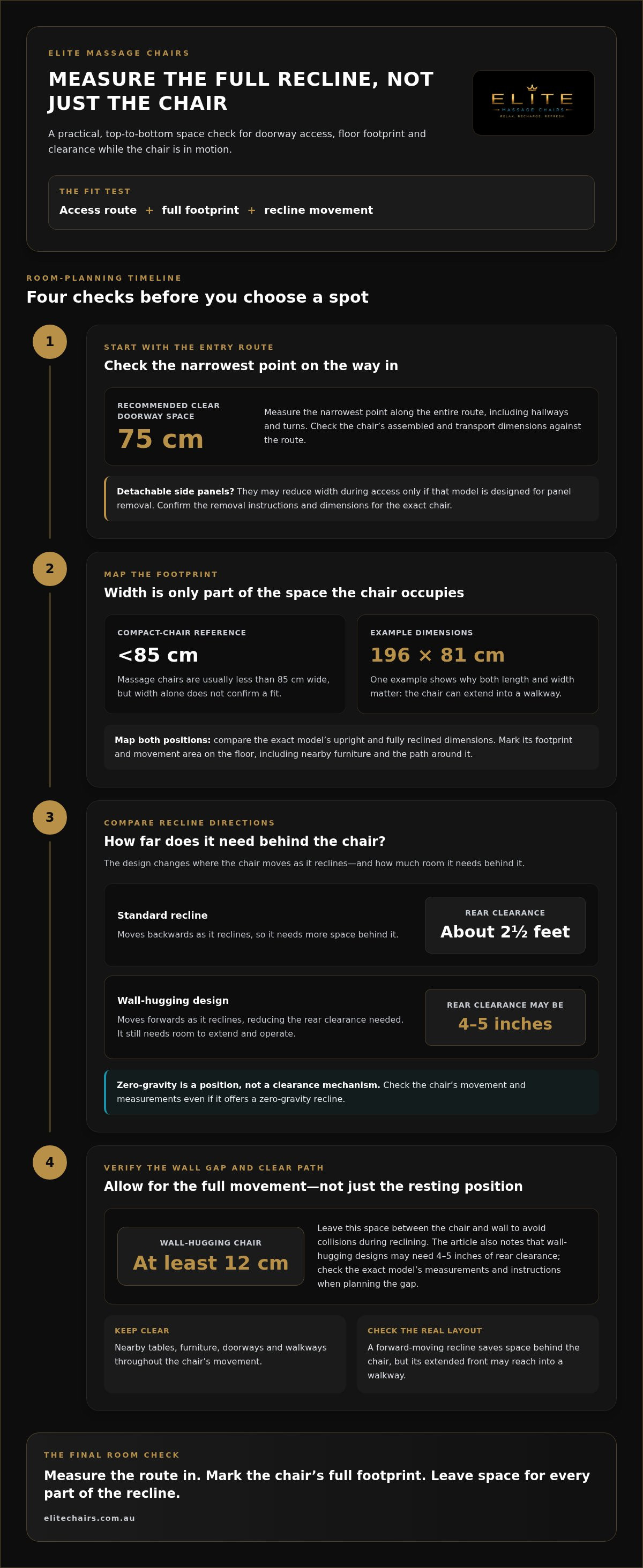
- Measure the doorway and the route into the room before choosing a chair; a clear doorway space of at least 75 cm is recommended.
- Compare chair width and overall footprint with the available floor area, then allow room for the chair to operate fully.
- Check whether the chair extends forwards or backwards as it reclines, and plan its position around walls, walkways and nearby furniture.
- Use your room layout and preferred placement to weigh compact features against recline clearance, then follow the decision guide to narrow your options.
Why Space-Saving Massage Chairs?
Recline clearance and doorway access both determine whether a chair fits. Before choosing a compact design, compare the delivery route, wall gap and operating space.
Doorway clearance and detachable panels
A clear doorway space of at least 75 cm is recommended for getting a massage chair through. Measure the narrowest point along the entire route, including hallways and turns. Detachable side panels may reduce a chair’s width during access, but only when that model is designed for panel removal. Check the assembled and transport dimensions against your doorway before deciding. There’s no single Australian price for every chair; compare the model’s features and options against your budget.
Wall-hugging and rear clearance
A wall-hugging chair moves forward as it reclines, reducing the space needed behind it. These designs may need just four to five inches of rear clearance. By comparison, an average massage chair needs about two and a half feet behind it to recline fully. This difference can determine whether a chair fits near a wall or leaves a walkway clear. Measure from the wall to the chair’s starting position, then allow for its full reclining movement.
Zero-wall and space-saving designs
Zero-wall and other space-saving designs can make tighter layouts more practical by limiting rearward movement. Their advantage is reduced rear clearance, but the chair still needs room to extend and operate. A “compact” label alone doesn’t confirm that it will fit. Compare the measurements and movement direction, and account for nearby furniture and access routes. Follow the manufacturer’s instructions, and stop a session if discomfort occurs. User restrictions depend on the chair’s guidance and individual health circumstances.
Warranty, delivery and return terms vary by seller and purchase. Before buying, read the written terms for coverage, delivery arrangements and returns.
| Option | Rear clearance | Entry consideration | Key trade-off |
|---|---|---|---|
| Standard recline | About two and a half feet | Measure doorway route | Needs more rear space |
| Wall-hugging | Four to five inches | Check full chair width | Still needs operating space |
| Detachable side panels | Depends on recline design | Confirm removal is intended | Panels don’t change every dimension |
Measure the access route first, then match the chair’s recline clearance to your room layout.
Massage chair features in compact designs
Compactness is more than a narrow frame: the chair must fit its resting position and move freely during use. Most massage chairs are usually less than 85 cm wide, but width alone won’t show whether one suits your room. Compare the full footprint, recline movement and access to nearby controls before choosing.
A useful reference is a chair measuring 196 cm by 81 cm. Those dimensions show why both length and width matter: a chair can fit between walls while still extending into a walkway. Measure the intended spot, then mark the chair’s footprint on the floor. Include space for movement around it, especially in a living room shared with other furniture.
Massage chairs and recliners serve different purposes. A recliner is primarily for seating, while a massage chair combines seating with a built-in massage mechanism. That added function affects the chair’s size and operation. A compact recliner may suit a small corner, but compare its footprint with a massage chair’s dimensions and movement before treating the two as interchangeable.
For Positive Posture compact models, use the measurements for the exact model rather than relying on the word “compact.” Compare its width and length with your room plan, and check where it can recline. The same principle applies to any compact massage chair: a smaller frame can help with placement, but you still need to allow space for operation.
- Measure: Record the available floor area and the chair’s full dimensions.
- Map: Mark the footprint and movement area, including nearby furniture.
- Compare: Weigh compact size against the features and operating room you need.
In a multi-use room, preserve a clear path around the chair while leaving enough space for it to operate fully. For a closer look at compact massage chair options, compare the dimensions with your room measurements before deciding.
Rear and front extension when reclining
Reclining changes a chair’s footprint, so compare its movement as well as its upright size. Measure the space it needs in the direction it extends.
Upright and reclined dimensions
Compact massage chairs are usually less than 85 cm wide, and one example measures 196 cm by 81 cm. Those figures don’t describe every model. Compare the specific chair’s upright dimensions with its full reclined measurements before choosing a position. A chair may fit upright beside a wall, then extend into a passage when reclined. Record both footprints on your room plan.
Wall-hugging and zero-gravity recline
A wall-hugging mechanism shifts the chair forwards as it reclines, reducing the space it needs behind it. Even so, leave at least 12 cm between the chair and wall to avoid collisions during reclining. Zero-gravity describes a reclined position rather than a clearance mechanism. A zero-gravity massage chair can help reduce spinal pressure, but its movement still needs to fit the room.
Check the direction and reach of movement before placing a chair near a wall, table or walkway. Use the product’s upright and reclined dimensions to mark its footprint on the floor. Compare the marked area with nearby furniture, doorways and the route through the room. Keep objects clear of the chair throughout its movement, not just when it is upright. In a narrow lounge, for example, a forward-moving recline may preserve space behind the chair, but its extended front could reach into a walkway. In a bedroom, allow for bedside furniture and access around the chair. The best fit is the model whose full range of movement suits the layout, not simply the one with the smallest upright footprint.
Space-saving massage chair design
A space-saving massage chair design works when you consider its footprint, movement and how the room is used together. Start with your main constraint: a tight spot against a wall, a shared walkway or a room with several purposes. The chair that looks smallest isn’t automatically the best fit if its movement disrupts the space.
Start with a simple room plan. Mark the chair’s intended position, nearby furniture and the route people use through the room. Then note the direction the chair moves as it reclines. This makes it easier to compare how different designs affect the whole layout, rather than judging dimensions in isolation.
In a multi-use living area, for example, place the chair where it can operate without blocking access to a sofa or doorway. In a dedicated relaxation corner, prioritise a comfortable position and clear space around the chair. A corner can preserve usable floor space, but only if walls and furniture don’t obstruct the chair’s movement.
Use these steps to narrow the options:
- Identify the constraint: Decide whether wall proximity, walkway access or shared room use matters most.
- Map the movement: Mark where the chair travels when reclining, not just where it sits upright.
- Review the layout: Check that the chair can operate while the room’s other uses remain practical.
Compactness is a balance, not a single measurement. A chair that needs less room behind it may still extend into the space in front. Consider the space required in both directions, along with the furniture and pathways that make the room comfortable to use. The best match fits its intended spot without making the rest of the room awkward.
Use your room plan to compare chairs and explore compact massage chair options suited to the space you have.
Elite Massage Chairs: Zero Gravity Massage Chairs
Elite Massage Chairs offers Zero Gravity Massage Chairs for Australians weighing comfort against room fit. After measuring your available space and considering recline movement, book a showroom demonstration to experience a chair and see how it may suit your home.
Keep your room measurements and intended placement in mind as you explore options. A Massage Chair Showroom Demo lets you experience a chair firsthand, alongside comparing its dimensions and clearance. Massage Accessories are also available to complement your setup.
Explore Zero Gravity Massage Chairs in person or online with Elite Massage Chairs. Visit elitechairs.com.au to get started.
Make room for relaxation that fits your life
Your ideal chair should suit your daily routine, not just fit on a floor plan. Before deciding, consider when you’ll use it, who needs to move around it and how the room is used at other times. These habits can help you choose a space-saving massage chair design that supports restful moments without making the room less practical.
Decide whether you want a quiet corner for unwinding or a flexible space shared with family. Consider how the chair’s position will work in everyday use, including whether you can settle in comfortably and keep the surrounding area accessible. A thoughtful choice can make relaxation a natural part of home life.
When you’re ready to take the next step, explore your massage chair options with Elite Massage Chairs. Your room can make space for a more restorative routine.
Frequently Asked Questions
What features make a massage chair space-saving?
A forward-moving recline, compact frame and removable panels designed for transport can help a chair fit smaller rooms. Look beyond its outline: check whether the arms or footrest move and whether nearby furniture can stay in place during use. A space-saving massage chair design is most useful when its operating movement suits your room, not just its parked position.
How do compact massage chairs compare with full-size models for massage coverage and features?
A compact frame alone doesn’t tell you which parts of the body a chair massages or what functions it includes. Compare each model’s stated massage areas and programs with your preferences, such as a focus on the back or legs. A full-size model may take up more floor space, but its size alone doesn’t reveal its coverage or features.
Which massage chairs fold, recline compactly, or have wheels for easier storage?
Check each chair’s design rather than assuming massage chairs fold for storage. Some designs recline by moving forwards, reducing the space needed behind them, while rear wheels can help with repositioning. Wheels don’t mean that a chair folds away. Before moving one, follow its operating instructions and clear the route.
What room layout and measurements should I check before buying a massage chair?
Measure the chair’s intended spot and full movement area, then check the delivery route from the entrance to that room. Include tight turns, door swings and obstacles such as a hallway console or low shelf. Note nearby power access and plan where the cord will run so it doesn’t cross a commonly used walkway. A simple floor plan can reveal layout conflicts early.


