

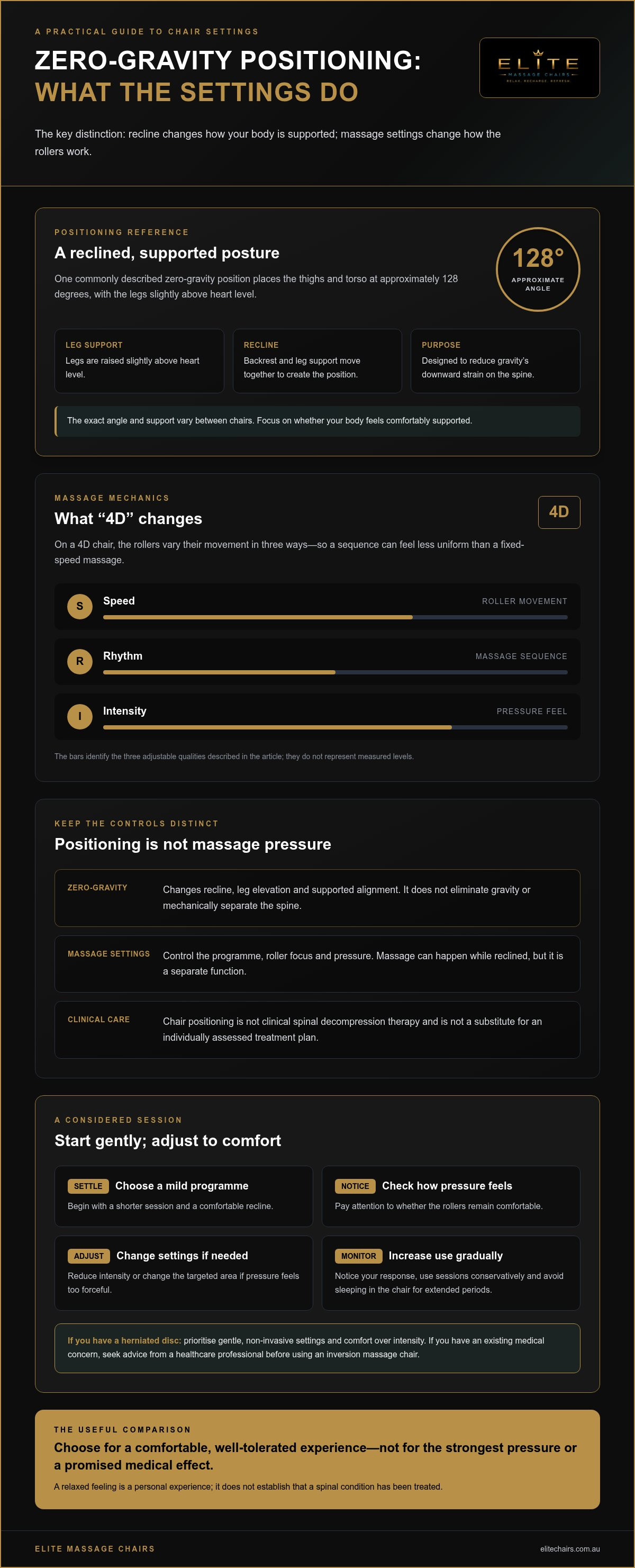
The most important “decompression” feature may be how a chair positions your body, rather than a dramatic stretch. In a spinal decompression massage chair, zero-gravity positioning reclines the body at roughly 128 degrees between the thighs and torso, with the legs slightly above heart level. This position is designed to reduce the strain of gravity on the spine.
If you’re considering a spinal decompression massage chair, you may be wondering what its settings actually do and whether they suit your needs. Understanding the difference between supportive positioning and massage intensity can help you compare features with confidence.
This guide explains what spinal decompression means in a massage chair, how reclining and massage programmes work, and which features and potential benefits to consider in Australia. You’ll also find practical points to weigh before choosing a chair, with a focus on comfort, fit and the experience you want.
Key Takeaways
- Understand how zero-gravity positioning changes your body’s posture and why it’s distinct from a medical spinal treatment.
- Choose massage settings around your comfort, adjusting intensity rather than assuming a stronger massage is better.
- Weigh possible comfort and relaxation benefits without treating them as guaranteed health outcomes.
- Compare chair features such as roller movement and body scanning to find an experience that better suits your needs.
What is Spinal Decompression?
In a massage chair, “spinal decompression” commonly refers to a reclined position intended to reduce the downward strain gravity places on the spine. Zero-gravity positioning raises the legs slightly above heart level while supporting the body in a relaxed alignment. It does not eliminate gravity or mechanically separate the spine.
One commonly described zero-gravity recline places the thighs and torso at approximately 128 degrees. The backrest and leg support move together to create this position, distributing your weight across the chair rather than leaving you upright. The precise angle and support can vary between chairs, so focus on whether your body feels comfortably supported.
How does a spinal decompression massage chair compare with clinical spinal decompression therapy? A massage chair combines reclining and massage functions, while clinical spinal decompression therapy is a separate treatment, not simply a chair setting. Zero-gravity positioning is not equivalent to clinical care or a substitute for an individually assessed treatment plan.
During a massage session, zero-gravity positioning changes how your back, hips and legs rest against the chair. For example, if you usually sit upright, reclining with your legs elevated may feel like a different way to relax. That experience reflects positioning and comfort, not a structural change to the spine.
Think of the setting as a combination of recline, leg elevation and supported alignment, rather than a stretching programme. The chair may also massage your muscles while you recline, but massage pressure and zero-gravity positioning are separate functions. Try the position gently and notice whether your back and legs feel supported, rather than assuming a deeper stretch is better.
Customisable massage settings and programmes
Massage chairs let you tailor a session by choosing a programme, adjusting intensity and selecting where the rollers focus. A gentler setting may suit a quiet wind-down, while firmer pressure can feel more pronounced across your back. These controls shape the massage experience, but they do not make a chair a clinical treatment. Start at a comfortable level and adjust only if the pressure feels manageable.
On a 4D chair, rollers vary their speed, rhythm and intensity. That variation can make a sequence feel less uniform than a fixed-speed massage. Depending on the model, you may be able to combine a programme with adjustments to pressure or targeted areas. For example, select a back-focused routine, then reduce intensity if the rollers feel too forceful around a sensitive muscle.
If you have a herniated disc, prioritise gentle, non-invasive settings and comfort over intensity. Deeper pressure does not mean a better result. If you have an existing medical concern, seek advice from a healthcare professional before using an inversion massage chair. Your symptoms, the chair’s position and your response during use are all relevant.
Use a gradual approach. Begin with a shorter session, choose a mild programme and notice whether the pressure remains comfortable. If it does, increase use gradually while monitoring your response. Use sessions conservatively and avoid sleeping in the chair for extended periods. These points help distinguish a relaxing massage session from prolonged use.
Before choosing a model, compare the controls you’ll actually use: programme selection, intensity adjustment, targeted massage and recline settings. Consider whether you can combine those settings without feeling uncomfortable. A feature-rich console matters less than being able to create a calm, well-tolerated session that suits your preferences.
Potential benefits of spinal decompression
Potential benefits of a massage chair relate to how supported positioning and roller massage feel during a session. Focus on comfort and relaxation rather than assuming the chair changes the spine or treats a medical condition.
Potential outcomes of decompression
For example, reclining while rollers work across your back may feel calming after a day spent sitting. Zero-gravity positioning offers an alternative to an upright posture, while gentle massage may help you settle into a relaxation routine. The experience varies with roller pressure, body position and personal comfort, so notice how you feel rather than judging by intensity alone.
Think about what you want from each session. If your aim is relaxation, a comfortable recline and a mild roller setting may matter more than forceful stretching. Stop or change the setting if the pressure feels unpleasant. The chair’s elevated position and massage functions are separate features, and neither proves a medical effect.
Clinical evidence for chair-based decompression
A massage chair’s recline and roller functions are not the same as clinical spinal decompression therapy. Using a chair alone does not establish clinically proven decompression. Its immediate purpose is to provide a massage and supported position, rather than demonstrate that a spinal condition has been treated.
Look closely at the effect being claimed. Feeling more relaxed after a session is different from evidence that a treatment changes spinal structures or resolves a diagnosis. Rollers may knead your muscles while the chair reclines, but that experience does not establish a clinical outcome. Keep this distinction in mind when assessing claims about relief.
To assess your comfort, note how you feel before and after a session, which setting you used and whether the massage felt different. If you have an existing medical concern, consult a healthcare professional before using an inversion massage chair. This is especially important if a position or roller pressure causes discomfort. Treat relaxation as a personal experience, not a replacement for clinical care.
Spinal decompression massage chair features
Look beyond the recline label: roller movement, body scanning and control settings all shape the massage experience. Compare how each feature works and whether it fits your comfort and wellness priorities.
Roller type affects movement. 3D rollers add depth, pressing further into muscle tissue, while 4D rollers vary speed, rhythm and intensity. A body-scanning system can detect height, shoulder position and spinal shape before a massage, then adapt roller pressure towards muscle groups. These functions can help tailor a session, but don’t establish that a chair provides spinal therapy.
Consider how each feature meets your needs rather than counting features alone. For instance, a body scan may help position rollers for your shape, while adjustable intensity lets you choose gentler pressure. If a model includes heat therapy, treat it as a separate comfort feature, not proof of improved circulation or stress treatment. The practical test is whether the settings feel comfortable and easy to control.
Recline or massage pressure can cause discomfort. Stop using the chair if you experience pain or distress. If you have an existing medical concern, seek advice from a healthcare professional before using an inversion massage chair. Children should use a chair only with adult supervision and seat adjustments suited to their bodies.
People with medical concerns should avoid starting inversion use until they’ve discussed it with a healthcare professional. For safer use, begin gently, stay within the recommended 15 to 30-minute session range, and monitor how you feel. Don’t sleep for extended periods in an inversion massage chair.
In Australia, warranty, delivery and return terms depend on the seller’s written conditions. Before buying, review what the warranty covers, delivery arrangements and the stated return process. To assess how chair positioning feels, experience chair positioning in person.
Massage-chair body-scanning sensors scan your body shape and adapt roller pressure to target muscle groups. This describes how the rollers respond to your form; it does not, by itself, establish that the chair decompresses the spine.
A spinal decompression device listing specifies a 400 lbs capacity. Treat that figure as the listed device's capacity, not as a measure of massage performance, and check the specifications of the particular product you are considering.
Elite Massage Chairs: Zero Gravity Massage Chairs
Elite Massage Chairs offers Zero Gravity Massage Chairs for Australians seeking a more supported, reclined massage experience. If you’re comparing chair positioning, programmes and comfort, book a free showroom demonstration to experience a chair firsthand before deciding whether it suits your preferences.
Use the features discussed in this guide as a practical comparison: notice how the chair supports your body, how the rollers feel and whether the controls are comfortable to use. Massage accessories are also available to complement your setup. A chair can support relaxation, but it is not a substitute for clinical spinal decompression therapy.
For a more personal sense of the recline and massage experience, visit Elite Massage Chairs’ showroom for a free demonstration. You’re welcome to contact Elite Massage Chairs or visit elitechairs.com.au.
Choose a more considered path to everyday comfort
Let your priorities guide your next step. Before choosing a spinal decompression massage chair, consider how you want it to fit into your routine, what kind of seating feels comfortable and whether the controls are easy to use. A clear sense of your preferences makes comparisons more useful than choosing by feature count alone.
Think about the experience you want at home, too. A calming daily ritual may call for a different balance of comfort and massage than an occasional way to unwind. Take time to decide what feels right, and keep medical needs separate from lifestyle preferences as you weigh your options.
When you’re ready to explore, contact Elite Massage Chairs to take the next step at your own pace. A thoughtful choice can bring a more restorative feel to your space and routine.
Frequently Asked Questions
What is spinal decompression in a massage chair and how does it work?
In a spinal decompression massage chair, the term usually refers to a reclined, supported posture paired with massage, rather than a medical procedure. The chair changes how your weight rests while rollers work across your muscles. You might compare a gentle programme with a firmer one and note which feels comfortable. This describes a relaxation experience, not proof of clinical spinal treatment.
What features should I look for in a spinal decompression massage chair?
Prioritise features that let you personalise fit and pressure, such as body scanning, adjustable roller intensity and different roller movements. Consider whether the scan aligns the rollers with your body and whether the controls are easy to adjust during use. For example, if pressure feels too strong around your shoulders, straightforward intensity controls may matter more than extra programmes. Focus on features you can use comfortably.


