

A massage chair can be a good family investment when several people use it regularly, but it doesn’t replace a therapist’s judgement or personalised care. The key question is how often your household would use it and whether anyone still needs professional treatment.
It’s understandable to weigh at-home relaxation against the cost and time of recurring appointments. This guide compares chair ownership with professional massage, shows how household use affects value, and explains when to seek health advice before using a chair.
You’ll also see how shared use changes the cost per session and why comfort at home and hands-on care serve different purposes. This can help you decide whether a massage chair is a good family investment for your household, rather than focusing on the purchase price alone.
Key Takeaways
- Compare the chair’s upfront cost with how often each family member would actually use it; infrequent use can make the per-session cost climb.
- Include delivery, ownership costs and the chair’s expected lifespan when assessing the longer-term value, not just the purchase price.
- Local massage prices can change the break-even point, but a single city benchmark shouldn’t be treated as an Australia-wide average.
- Think of a massage chair as a way to support comfort and relaxation at home, not as a replacement for personalised professional care.
- Before choosing a chair, consider health needs, room dimensions and the route from the entrance to its final position.
How Do You Compare Chair Ownership with Professional Massage Visits?
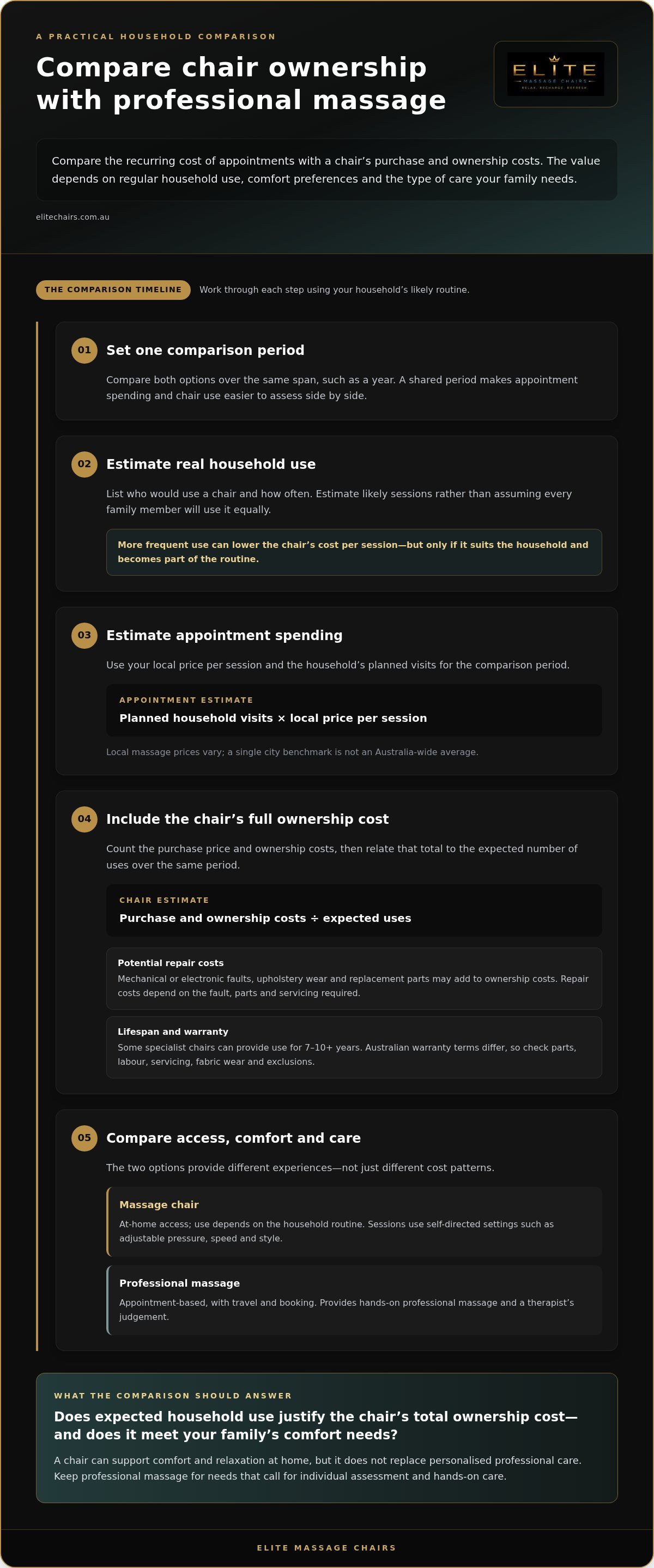
Compare the recurring cost of appointments with the purchase and ownership costs of a chair, then estimate how often everyone in your household would use it.
Whether a massage chair is a good family investment depends on regular use, comfort preferences and the kind of care your household needs. The table highlights the main differences.
Chair Ownership and Massage Visit Costs
Professional massage has a clear cost per visit, while a chair concentrates spending upfront. More household use can lower the chair’s cost per session, but only if the chair suits everyone’s comfort needs and becomes part of the routine.
Compare both options over the same period, such as a year. Estimate likely household sessions instead of assuming everyone will use the chair equally often.
| Option | Cost pattern | Access and use | Care provided |
|---|---|---|---|
| Massage chair | Upfront purchase, plus ownership costs | At home, use depends on household routine | Self-directed massage settings |
| Professional massage | Appointment-based; pay per visit | Scheduled outings requiring travel and booking | Hands-on professional massage |
Choose by comparing expected use and care needs, not just the upfront cost.
Long-Term Costs and Savings
Multiply your household’s planned visits by the price per session to estimate appointment spending. For a chair, divide its purchase and ownership costs by the expected number of uses over the same period. More frequent use can lower the cost per session.
Common chair issues include mechanical or electronic faults, upholstery wear and parts that need replacing. Repair costs depend on the fault, parts and servicing required. Return policies vary according to the seller’s terms and the circumstances of the return.
Chair Lifespan and Warranty
Massage chairs from specialists like Elite Massage Chairs can provide use for 7-10+ years, so lifespan affects the value calculation. Australian warranty terms differ in duration and coverage; compare what applies to parts, labour, servicing, fabric wear and exclusions. A longer ownership period can spread the purchase cost across more uses, but actual household use remains central.
Before deciding, review warranty coverage, servicing arrangements and the availability of local support and replacement parts. These details help you compare potential ownership costs with spending on professional massage.
Are expensive massage chairs worth it?
An expensive chair may suit a household that values regular relaxation at home, but price alone doesn’t make it worthwhile. Consider the features, likely use and professional care your family may still need.
Potential Physical Health Benefits
Massage chair movements are designed to support circulation. Massage can promote blood flow and deliver oxygenated blood to sore muscles. After exercise, massage may help ease muscle soreness and support recovery.
These potential benefits go beyond simple comfort because they relate to how massage affects the body. However, a chair’s pressure, speed and style settings allow self-directed use, not a therapist’s judgement or personalised hands-on care.
For example, someone who prefers a gentler, slower massage can adjust the settings to suit their comfort. Some models also offer heat or zero-gravity positioning. These features may make a session more comfortable, but they don’t make a chair a medical treatment.
Ownership Benefits and Drawbacks
A chair gives the household access to massage at home without arranging a separate visit for each session. It can be convenient when family members prefer different times or massage styles. Adjustable pressure, speed and style let each person tailor a session to their comfort.
The trade-off is that a chair can’t offer a therapist’s assessment and hands-on judgement. It also takes up space and requires an upfront purchase, while professional massage is paid for per visit. A feature-rich chair offers more ways to customise a session, but those options matter only if your household uses them.
Before deciding, weigh these factors:
- Use: Identify who would use the chair and how regularly.
- Comfort: Consider whether adjustable pressure and massage styles suit each person.
- Care: Keep professional massage for needs requiring individual assessment and hands-on care.
- Features: Compare heat or zero-gravity positioning with the settings your household values.
An expensive chair makes the most sense when its additional features match your household’s preferences, rather than simply looking impressive on a specification list. A simpler option may suit people who want occasional relaxation without advanced settings.
To compare which comfort features matter to your household, consider the massage experience you want at home. The best value comes from matching the chair’s capabilities to regular use, while keeping professional care for situations requiring a therapist’s judgement.
Does a higher local massage price make a chair a better financial choice?
A higher local fee for professional massage can shorten the time it takes for chair ownership to break even, provided your household uses the chair regularly. The calculation depends on local session prices, how many visits the chair would replace and any finance costs. Compare these factors before assuming a higher appointment fee makes a chair better value.
Local prices vary, so this benchmark isn’t an Australia-wide average. These examples show how your location and appointment choice affect the comparison.
Treat these as break-even examples, not predictions: they exclude delivery and other ownership costs. They also assume the chair replaces professional visits rather than simply adding another way to relax.
Paying upfront makes the purchase cost clear immediately, while finance spreads payments over time. A smaller regular repayment may fit a household budget more easily, but it doesn’t automatically make the chair cheaper overall. Compare the total amount payable with the upfront cost, including account fees, any deposit, eligibility criteria and late-payment conditions.
- Set a household limit: decide what the budget can accommodate without affecting essential spending.
- Compare total cost: include the full repayment amount and applicable fees, not only the scheduled payment.
- Test the break-even idea: estimate which professional visits the chair could genuinely replace.
- Keep wellbeing in context: don’t count appointments as avoidable if they provide care your household still needs.
Before choosing finance, read the terms for the repayment schedule, fees, deposit requirements, eligibility and missed-payment conditions. These details affect the real cost and can cause problems if repayments don’t suit your cash flow. Paying upfront avoids repayment commitments, while finance preserves more cash initially but adds obligations over the agreed term.
A higher massage fee improves the chair comparison only if the number of visits replaced is realistic. A household booking occasional sessions may take longer to reach the illustrative break-even point than frequent users. Compare local session rates with likely use, then weigh finance costs against the convenience and comfort you expect at home. Keep professional massage in the budget when hands-on care remains important.
Health considerations and when to seek professional advice
A massage chair can support comfort, relaxation and general wellbeing, but it doesn’t provide medical diagnosis or personalised treatment. In Australia, the right choice depends partly on whether you want everyday relaxation or help with a health concern, injury or persistent muscle tension.
Consider your health circumstances before using a chair. People who are pregnant, have recently had surgery, use an implanted medical device, or have concerns about blood clotting, osteoporosis, cardiovascular health or another medical condition should seek advice from a qualified health professional first. These factors can affect whether massage is appropriate and which pressure or movement is suitable.
Use a simple decision sequence before a session:
- Identify the reason: distinguish general relaxation from pain, injury or a diagnosed condition.
- Consider your health: note pregnancy, recent surgery, an implanted device, or relevant medical concerns.
- Seek qualified advice: discuss chair use before starting if any listed health factor applies.
- Stop if uncomfortable: don’t continue a setting that causes discomfort or aggravates tension.
Adjustable pressure, speed and style let users tailor a session, but these settings don’t replace clinical assessment. A chair can’t provide a therapist’s judgement or personalised hands-on care, and it shouldn’t replace medical diagnosis, physiotherapy or an individual treatment plan.
Professional care has distinct purposes and costs. These services aren’t interchangeable: the right appointment depends on the concern and the care required.
Professional massage is a better fit when you need a therapist’s hands-on judgement, tailored attention or treatment for a specific concern. For example, someone managing a diagnosed injury may need an individual plan rather than a general relaxation session. A chair can support comfort at home between appointments, but it can’t reproduce a therapist’s assessment or hands-on care.
Keep the purpose of each option clear when planning appointments. Use a chair for comfort and relaxation, and retain professional care when diagnosis, physiotherapy or personalised treatment is needed. If a family member has a relevant health concern, seek qualified advice before they use a chair. This distinction helps households make a considered wellbeing choice without treating convenience as a substitute for care.
Potential household use across family members
A massage chair’s value to a household depends on shared use, not the number of people at home. Reconsider the purchase if you expect to use it less than once a week. A chair used regularly by several family members may provide more sessions than one used occasionally by a single person, but only if everyone finds it comfortable.
Use a simple household estimate before deciding. Write down who expects to use the chair, how often, and whether they want relaxation or professional care. The illustrative usage scenario of four sessions each week totals 208 sessions each year and 1,040 sessions over five years. Those figures show how regular use can spread ownership cost across sessions; they aren’t a forecast for every family.
Sharing works best when you consider each person’s needs and preferences. Adjustable pressure, speed and style let users choose a more comfortable setting. One family member may prefer a gentler massage, while another may want a different style. A chair’s flexibility can help everyone find a preferred routine, though it doesn’t offer personalised hands-on care from a therapist.
Frequency matters more than an ambitious plan. If your family expects to use the chair several times a week, estimate each person’s likely sessions separately, then add them together. If the total points to occasional use, the chair may be expensive relative to the comfort it provides. Don’t count sessions that are unlikely to happen just to make the investment seem worthwhile.
Consider the shared space, too. Measure the intended room with the chair upright and reclined, and check that doors, walkways and nearby furniture remain accessible. Before buying, map the delivery route through doorways, hallways, staircases, lifts and tight corners. These practical steps help you avoid choosing a chair that suits your family’s routine but not your home.
Use this quick decision guide:
- List likely users: include only family members who want to use a chair regularly.
- Estimate use: total expected sessions across the household, then compare with the once-weekly threshold.
- Compare preferences: consider whether adjustable pressure, speed and style suit everyone.
- Check the room: measure the chair’s upright and reclined space and its delivery route.
The ultimate value comes from a realistic routine, suitable comfort and a workable room layout, not simply household size. If you’re weighing how a chair might fit your family’s shared space and habits, explore massage chair options for your household.
Elite Massage Chairs: Zero Gravity Massage Chairs
Elite Massage Chairs offers zero-gravity massage chairs for households considering regular relaxation at home. If you’ve weighed likely family use, room layout and the difference between comfort and professional treatment, a showroom demonstration lets you experience a chair before deciding.
Try the chair’s feel and consider whether it’s comfortable for the people who expect to use it. Massage accessories are also available as complementary options. A chair is designed for comfort, relaxation and general wellbeing, not to replace medical advice, diagnosis or personalised hands-on care.
If seeing and experiencing a chair would help your household make a considered choice, contact Elite Massage Chairs.
Make room for a more considered choice
A useful next step is to picture how a chair would fit into your household’s daily routine. Think about who would use it, where it would go and whether each person would feel comfortable. For households designing a broader relaxation or entertainment space alongside televisions and home comforts, exploring retailers like Nino's Trading Company can provide practical inspiration for outfitting shared family rooms. These details can turn a broad purchase decision into a practical choice that suits your home and wellbeing priorities.
Ask each family member what they want from an at-home massage experience. Their answers can help you focus on comfort and preferences rather than features that may go unused. If you’re still weighing whether a massage chair is a good family investment, experiencing one in person can make the decision more tangible.
Elite Massage Chairs offers Zero Gravity Massage Chairs, Massage Accessories and Massage Chair Showroom Demos. Explore the options at your own pace, then contact Elite Massage Chairs to take the next step. A thoughtful choice can bring a more restorative moment into your home, while keeping professional care part of your wellbeing routine where needed.
Frequently Asked Questions
How Does Household Usage Change the Result?
Regular use by different household members spreads the purchase cost across more sessions. For example, a parent using the chair after work and another adult using it at weekends creates a steadier routine than occasional use by one person. Make a simple household calendar and record who expects to use the chair. This can reveal scheduling conflicts, likely quiet periods and whether sharing access is practical.
Which Features Actually Matter?
Prioritise settings that meet your household’s actual preferences, rather than choosing a chair for a long feature list. Adjustable pressure, speed and massage style can help family members tailor their sessions. If one person prefers gentler pressure, consider how easily the settings can be adjusted between users. Heat or zero-gravity positioning may also affect comfort, but only if these features suit your household’s plans.
Which Ownership Costs Can Change the Calculation?
The purchase price is only one part of ownership. Delivery, servicing, replacement parts and electricity use can affect the longer-term household budget. Warranty coverage matters too, so understand which components are covered and how servicing is arranged. For a practical comparison, list known costs alongside the expected period of use, then consider whether maintenance or repairs would change your household’s total spending.
How much do massage chairs cost in Australia?
Massage chair prices in Australia vary by model and features, so compare the full purchase cost rather than relying on a single figure. Include delivery and any ownership costs that apply to your choice. Then consider how often family members would use the chair and which features they value. This gives you a more useful household comparison than judging it by the upfront cost alone.
What are the ongoing electricity and maintenance costs of a massage chair?
Electricity use depends on the chair’s power consumption, how often it runs and whether it draws power while idle. Maintenance costs depend on servicing needs, wear and replacement parts. For a practical estimate, use the chair’s power information and your household’s likely routine, then consider the care described in its user instructions. This helps you assess ongoing costs without assuming every model uses the same amount.
Do massage chairs provide proven health or pain-relief benefits?
Massage chairs are designed to support comfort, relaxation and general wellbeing, not to diagnose or treat medical conditions. Their massage movements are intended to support circulation, and massage can help with sore muscles after exercise. These uses don’t mean a chair will resolve an individual pain problem. For persistent pain or a diagnosed condition, professional assessment and personalised care remain distinct from a general massage session.
Are massage chairs safe for children, older adults, pregnant people, and people with medical conditions?
Safety depends on the person’s health and the chair’s instructions. Pregnant people, anyone who has recently had surgery, uses an implanted medical device, or has concerns about blood clotting, osteoporosis or cardiovascular health should seek advice from a qualified health professional before use. For children and older adults, consider whether they can understand the controls and sit comfortably. Don’t assume one setting suits every family member.
How often can family members safely use a massage chair?
There isn’t one safe frequency for every user and every chair. Follow the product instructions for session length and use, and consider how each person feels during and after a session. A family member with a relevant health concern should seek qualified advice before starting. If massage causes discomfort or worsens symptoms, stop using the chair and seek appropriate health guidance rather than increasing the frequency.


