

The cost of weekly massages vs owning a massage chair is a comparison between recurring appointment costs and a one-off purchase, but a chair can’t replace a qualified therapist’s human judgement or personalised hands-on care.
That doesn’t mean the two options can’t suit different needs. Regular appointments offer individual, hands-on treatment, while a chair can make massage more convenient and private at home. If you’re weighing ongoing spending against easier access to relaxation, this guide will show how the costs compare over time and what to consider beyond the upfront outlay. You’ll also see how your routine, use at home and need for professional care can shape the choice, so you can find the option that feels right for your lifestyle.
Key Takeaways
- How often you’ll use a chair is central to its long-term value: consider your realistic routine before weighing upfront cost against cost per session.
- A chair can offer private, appointment-free access at home, while a qualified therapist provides personalised hands-on care and professional judgement.
- Compare the options against your lifestyle, space and access needs, not price alone, to see which approach is the better fit.
- If you’re considering a chair, a showroom demonstration can help you experience the feel of it before deciding.
Massage chair purchase prices
The actual amount depends on the appointment price and how often you book.
Massage chair pricing works differently because the main expense is an upfront purchase, rather than a payment each time you use it. Models vary, so compare the overall features, comfort and fit for your home, not just the purchase figure. If you use a chair regularly, the cost per session falls as the number of uses increases. Occasional use makes the initial outlay harder to spread across sessions.
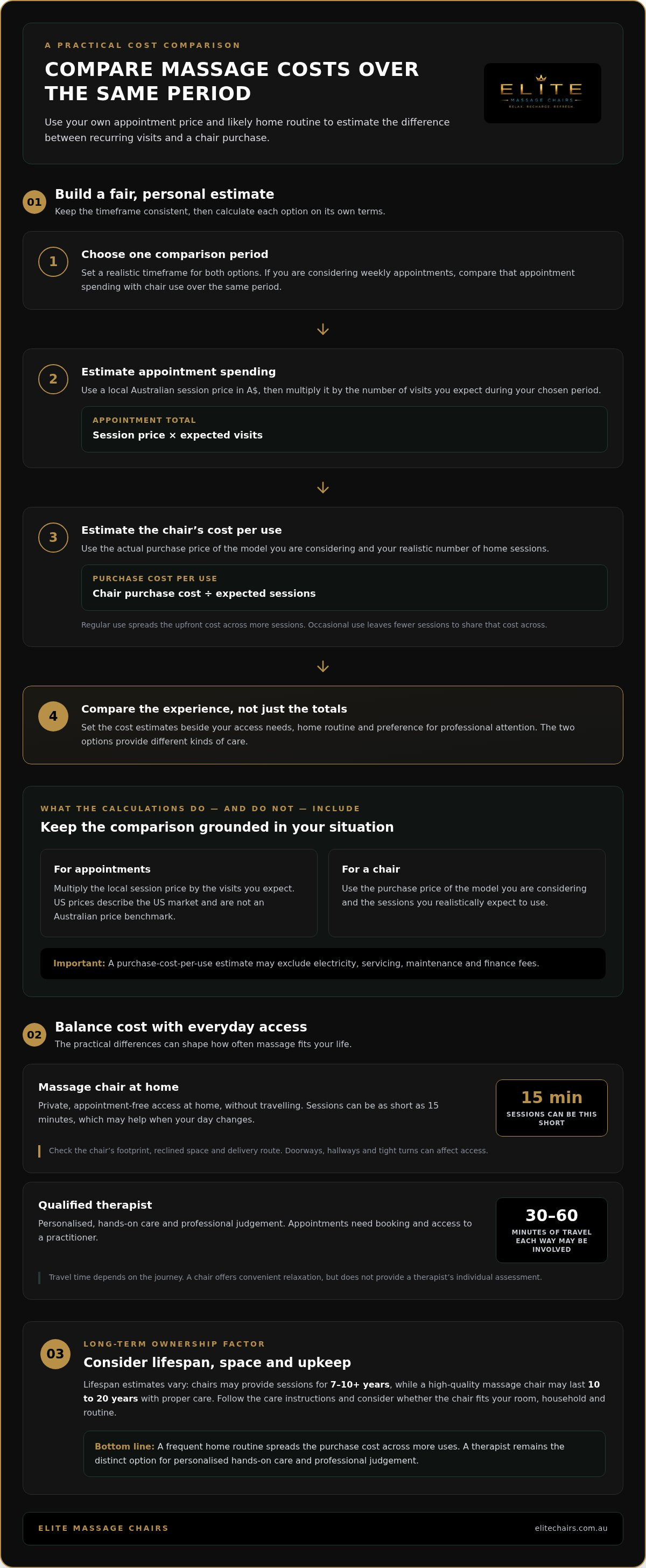
For a fair comparison, set a time period and estimate your own routine. For example, someone considering weekly appointments can compare that annual spending with a chair purchase over the same period. Add the number of sessions they expect to use at home, then divide the purchase cost by those sessions. This gives a personal cost-per-use estimate, rather than relying on a general claim about value.
Use this table to separate recurring appointment spending from a chair’s purchase cost. The figures for Australian massage appointments are in A$; chair prices vary by model.
| Option | Cost basis | Access | Useful comparison |
|---|---|---|---|
| Australian professional massage | Booked appointment | Multiply the session price by visits over your chosen period. | |
| Massage chair | Upfront purchase, varying by model | At home, whenever it suits | Divide purchase cost by the sessions you expect to use. |
| US massage therapy | Booked appointment | Use as US context, not an Australian price benchmark. |
US prices are shown in US dollars because they describe the United States market. They shouldn’t be treated as Australian costs or converted without a current exchange rate. For an Australian comparison, use local session prices and the actual purchase price of the model you’re considering.
Before deciding, write down your expected appointment frequency, preferred chair-use routine and comparison period. Then calculate both totals using the same timeframe. This makes the cost of weekly massages vs owning a massage chair easier to assess, while keeping convenience and the type of experience in view.
Choosing between a chair and a therapist by lifestyle
Your routine matters as much as the purchase calculation. Consider how often you want massage, whether personal therapist guidance matters, and how a chair fits your wellness habits.
Chair Lifespan and Upkeep
A massage chair is a home appliance intended for repeated sessions, so its lifespan shapes its value. Estimates vary: chairs may provide sessions for 7-10+ years, while a high-quality massage chair can last 10 to 20 years with proper care. Follow its care instructions and consider how regular use could affect how long it remains part of your routine.
Therapist appointments don’t require you to maintain equipment at home, but each visit needs a booking and access to a practitioner. A chair instead puts the equipment in your space. Think about room, household use and your willingness to care for an appliance before choosing between recurring visits and at-home access.
Long-Term Savings Over a Chair’s Lifespan
Long-term value depends on how often the chair becomes part of your routine. With occasional use, the same upfront cost is divided across fewer sessions, raising the cost per use. These figures are illustrations, not a prediction of your routine.
That routine amounts to 1,040 sessions across five years. The calculation excludes electricity, servicing, maintenance and finance fees, so it describes purchase cost per use rather than every possible ownership expense.
Professional massage remains distinct: a qualified therapist can apply human judgement and personalised hands-on care. A chair can offer convenient relaxation, but it doesn’t provide that individual assessment. If your priority is targeted therapeutic care, a therapist may better match your needs; if frequent, private sessions appeal, home access may suit your lifestyle.
Try this simple decision process: estimate your likely weekly chair sessions, choose a realistic ownership period, then divide the purchase amount by total sessions. Compare that result with your appointment pattern, while weighing the different experience each option provides. A weekly routine makes the chair calculation more favourable than occasional use, but affordability, space and the value you place on professional attention still matter.
If you’re deciding whether a chair suits your home routine, compare chair comfort in person before weighing long-term use.
Convenience, privacy and appointment-free access
A chair at home offers massage access without arranging an appointment or travelling. A therapist visit brings professional hands-on care, but requires time for booking and getting there.
Before buying, read the written warranty and return terms, and understand what delivery includes. Measure doorways, the intended room and the space needed for the chair to recline before arranging delivery.
Chair Access and Convenience
A home chair lets you choose a session around your household routine, including a brief break between other commitments. Sessions can be as short as 15 minutes, so it may be easier to keep massage consistent when your day changes. Privacy is another consideration: you can relax at home without travelling or sharing an appointment space.
Access depends on more than having a clear floor space. Measure the chair’s footprint and allow for its reclined position, then check the route from the entrance to its intended room. Doorways, hallways and tight turns can affect delivery access. Think, too, about whether the chair’s location suits other household members and leaves everyday pathways clear.
Appointment Access and Travel
A professional massage offers a therapist’s personal attention, but appointments require coordination and travel. A visit may involve 30-60 minutes of travel each way, depending on the journey. That time can make frequent sessions harder to fit around work, family commitments or transport needs. A chair avoids the trip, though it cannot provide a therapist’s human judgement.
Consider what happens in a typical month. If travel makes regular appointments difficult, having a chair at home can make a short session more accessible. The time saved can add up: one estimate puts potential travel savings at up to five hours per month. Actual time saved depends on the journey and how often you would otherwise attend appointments.
Access also affects consistency. A booked appointment gives a set time and a dedicated therapist, while a chair lets you choose when to use it. That flexibility can suit someone whose schedule changes; planned appointments may suit someone who prefers external structure. Either way, align the option with the routine you can sustain, not an ideal week that rarely happens.
For a practical buying check, confirm the written warranty’s coverage and process, review the return conditions, and clarify delivery arrangements before purchase. Measure access points and the room, including recline clearance, then consider who in the household will use the chair. Those steps help prevent a convenient idea from becoming an awkward fit at home.
How much does a high-quality massage chair cost?
In Australia, a chair’s purchase price depends on its model and features. Compare the current price for the specific chair you’re considering, then assess it against your expected use and professional massage spending.
Professional massage gives a useful local benchmark: therapeutic appointments cost around A$100 to A$150 per session. A chair is a different purchase, with an upfront cost rather than a payment for each visit. To compare them, set a time period, estimate how often you’ll use the chair, and weigh its purchase cost against the appointments you might otherwise book.
Think about the experience as well as the arithmetic. A premium chair from Elite Massage Chairs provides at-home massage sessions, while a professional massage involves a qualified therapist’s human judgement and personalised hands-on care. Rollers and other chair features can affect how a session feels, so compare the specifications of individual models instead of assuming every chair offers the same experience.
Using both options can suit a person who values convenient home sessions but also wants a therapist’s individual care. For example, a chair could fit into a regular wellness routine, while appointments remain part of a separate professional care plan. The choice depends on what each session is meant to provide. A chair supports comfort, relaxation and general wellbeing; it doesn’t replace medical diagnosis, physiotherapy or personalised treatment.
Health circumstances matter before adding chair use to your routine. Pregnancy, recent surgery, an implanted medical device, blood-clotting concerns, osteoporosis or cardiovascular health concerns are reasons to seek advice from a qualified health professional first. That advice is also relevant if you’re managing pain, a health condition or mobility concerns. A chair’s general relaxation use isn’t the same as care tailored to a health need.
Use a simple comparison before deciding. First, note the chair’s current listed price and how frequently you expect to use it. Next, calculate the cost of the professional massages you’d book over the same period, using local appointment prices. Finally, consider whether you value private, appointment-free sessions more than therapist-led care. A high session count can make the purchase cost easier to spread; occasional use changes that calculation.
Neither option has to do everything. If you seek targeted care or professional guidance, a therapist provides something a chair cannot. If your priority is convenient massage at home, compare chair models on their stated features and suitability for your routine. Keeping those purposes distinct makes the cost comparison more useful than treating a chair as a direct replacement for professional massage.
Chair cost compared with recurring massage visits
Break-even is when avoided appointment spending matches the chair’s purchase cost, based on sessions genuinely replaced.
Massage Chair Cost
A chair’s purchase price is an upfront expense, while its cost per session depends on use. For a simple estimate, divide the purchase price by the sessions you expect across your chosen timeframe.
That example provides a useful benchmark, not a complete ownership total. Its calculation excludes electricity, servicing, maintenance and finance fees. Your estimate should account for any applicable expenses, then compare the result with the appointment spending you expect to avoid. A daily relaxation routine spreads the purchase across more sessions than occasional use.
Recurring Weekly Massage Visits
Appointments create a recurring expense rather than a large initial purchase.
Use your actual routine, not an assumed weekly schedule. Multiply the session price by the visits you expect each year, then by the number of years you want to compare. Regular visits also provide a professional’s personalised hands-on care, which a chair cannot replicate. That difference matters when weighing relaxation against therapist-led treatment.
Break-Even Point
There isn’t one break-even date for every chair and user. One estimate puts the break-even point for most massage chairs at 12-18 months compared with regular massage therapy visits. Treat this as a broad comparison: your result depends on the purchase price, appointment cost, visit frequency and whether chair sessions actually replace visits.
To estimate your own point, divide the chair’s purchase cost by the professional massage spending you expect to avoid each month. For example, someone who keeps weekly appointments may reach the comparison point sooner than someone who books occasionally. Include ownership expenses and avoid counting chair use as a replacement for care requiring a qualified therapist.
Compare both options over the same period, then consider access and the experience you value. A chair may suit frequent home sessions; professional massage remains distinct for personalised hands-on care. Explore massage chair options as you assess which purchase could fit your routine.
Elite Massage Chairs: Zero Gravity Massage Chairs
Elite Massage Chairs offers Zero Gravity Massage Chairs for people considering private massage access at home. If you’re comparing a chair with recurring appointments, a showroom demonstration can help you experience a chair before deciding whether it suits your comfort preferences and household routine.
Massage Accessories can complement a chair setup, while a Massage Chair Showroom Demo lets you try the experience in person. A chair is designed for comfort, relaxation and general wellbeing; it doesn’t replace a qualified therapist’s personalised care or medical advice. Choose the option that fits how you want to use massage, and keep professional support for needs requiring individual assessment.
For a closer look at Zero Gravity Massage Chairs, contact Elite Massage Chairs.
Choose a routine you’ll enjoy keeping
Turn the comparison into a picture of your everyday life. Consider when you’d want a quiet moment, where a chair could sit, and whether appointments feel like a valuable part of your wellness routine. The cost of weekly massages vs owning a massage chair is one part of that decision; how each option fits your habits and expectations matters too.
Before choosing, imagine an ordinary week rather than an ideal one. Would you look forward to travelling for hands-on care, or prefer the flexibility of home? Is professional guidance important for your needs? Clear answers can help you choose with intention, rather than focusing on a purchase or schedule alone.
If you’d like to explore chair options in person, take the next step at your own pace. Discuss your options with Elite Massage Chairs and consider which setup feels right for your home. A thoughtful choice can make space for more restorative moments in the way that suits you.
Frequently Asked Questions
Can a massage chair replace a massage therapist?
No. A chair can provide massage for comfort, relaxation and general wellbeing, but it can’t offer a qualified therapist’s human judgement or personalised hands-on care. For example, if you need an individual assessment or treatment tailored to a specific concern, a chair isn’t a substitute. Its role is different: home relaxation and convenient access. Keep therapist-led care in your plan when your needs call for professional attention.
Massage Chair vs Human Massage: Which Offers Better Benefits in 2025?
Neither option offers all the benefits of the other. A massage chair suits people seeking private, convenient sessions for relaxation at home; a human therapist provides hands-on care and can respond with professional judgement. In 2025, compare them by the experience you need, not by assuming they’re interchangeable. A chair can support general wellbeing, while a therapist is the better fit for personalised care or an individual assessment.
Which Option Is Better for Different Lifestyles?
A chair may suit a household that values privacy, flexible timing and easy access to home sessions. Professional massage may suit someone who prefers a scheduled appointment, personal attention or a therapist’s guidance. Consider your ordinary week: a changing roster can make at-home access appealing, while a planned appointment may provide useful structure. If you share a chair, factor in whether it fits everyone’s routines and comfort preferences.
What is the average cost of a weekly massage in Australia?
Australian professional therapeutic massage typically costs , so weekly appointments work out to A$5,200-A$7,800 over 52 weeks. Treat this as a budgeting range rather than one national average: your spending depends on the price per appointment and how consistently you book each week.
What are the ongoing costs of owning a massage chair in Australia?
Budget separately for electricity, servicing, maintenance and any finance fees, as these are excluded from simple purchase-cost-per-session examples. The total depends on the chair, how often it’s used and the care it needs. For a practical household budget, record the purchase separately, then track operating and upkeep expenses. That gives a clearer ownership picture than dividing the initial cost by sessions alone.
How many years does a massage chair typically last?
Estimates range from 7-10+ years of sessions, while a high-quality chair may last 10 to 20 years with proper care. These ranges describe different expectations, not a fixed lifespan for every model. Follow the care guidance for your chair and consider how frequently it will be used. If you’re comparing models, treat expected longevity as one factor alongside comfort, routine and the purchase outlay.
What are the main benefits and limitations of home massage chairs compared with professional massage?
A home chair offers convenient, private access without appointment planning or travel, and lets you choose a session time that suits your day. Its limit is that it can’t provide a therapist’s individual judgement or personalised hands-on care. Chairs are for comfort, relaxation and general wellbeing, not medical diagnosis or treatment. People with pregnancy, recent surgery, implanted medical devices or relevant health concerns should seek qualified health advice before use.


