

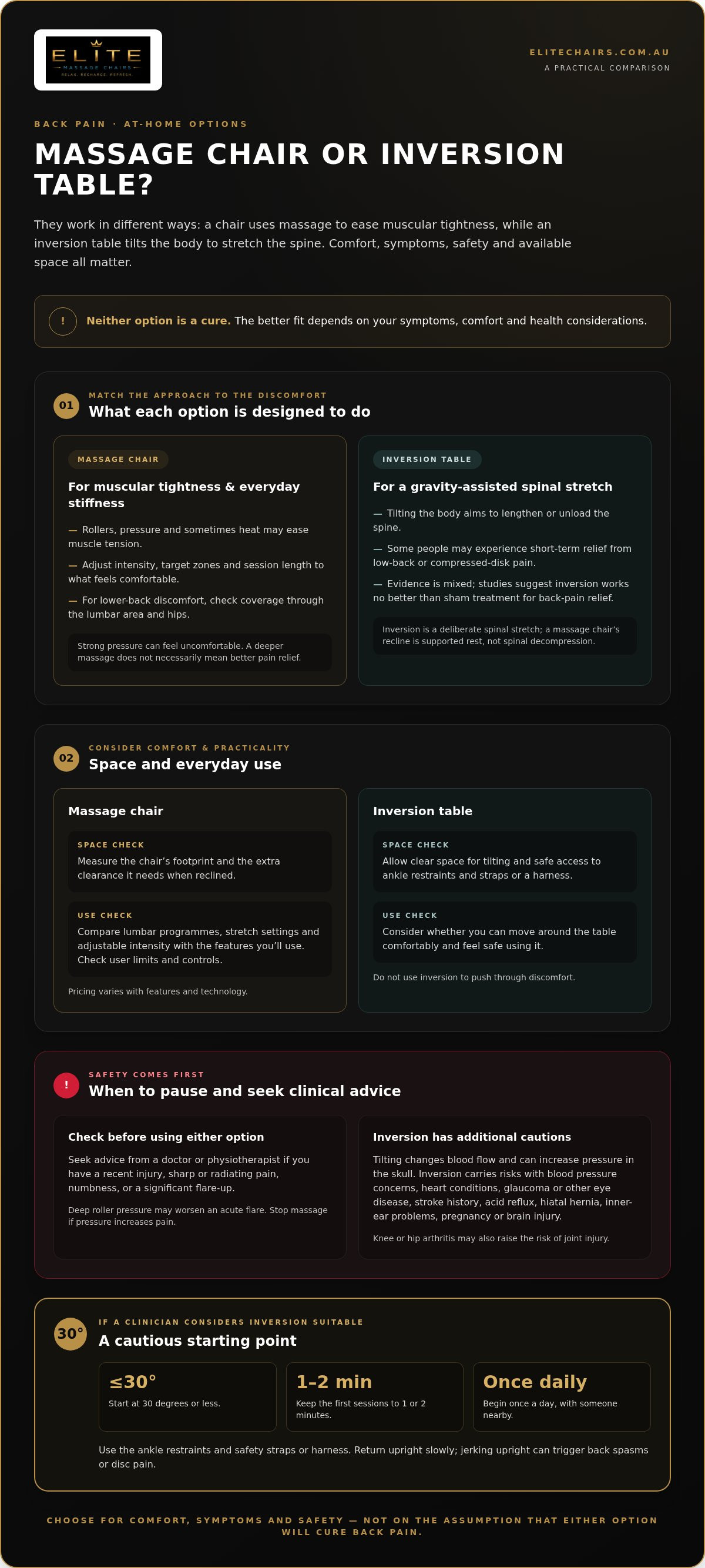
A massage chair may suit muscular tightness and everyday stiffness, while an inversion table aims to stretch the spine and can feel less comfortable or carry more safety cautions. In a massage chair vs inversion table for back pain comparison, the better fit depends on your symptoms, comfort and health considerations; neither should be treated as a cure. If you try inversion, start at 30 degrees or less for 1 or 2 minutes once a day.
It makes sense to want relief at home, but choosing between a supported massage and being tilted backwards is not simply a matter of which feels more powerful. This massage chair vs inversion table for back pain comparison looks at how each option feels, the space it needs and the cautions involved, so you can weigh them against your needs.
This guide explores the massage chair vs inversion table for back pain question, then compares cost, space and everyday usability in Australia. You’ll also find a cautious starting point for inversion and learn what to consider before making either option part of your routine.
Key Takeaways
- A massage chair may suit muscular tightness and everyday stiffness, while an inversion table uses a different approach by tilting the body to stretch the spine.
- With a recent injury, sharp or radiating pain, numbness or a strong flare-up, seek clinical advice before using massage or inversion.
- Compare the room each option needs, including the clearance a reclining massage chair requires, alongside how comfortable and practical it feels to use regularly.
- If you try inversion, begin at 30 degrees or less for 1 or 2 minutes once a day, and return upright slowly.
Can Massage Chairs Help Back Pain?
For muscular tension or everyday stiffness, a massage chair may feel more suitable; inversion may offer some people short-term relief from low-back or compressed-disk pain, but evidence is mixed. The massage chair vs inversion table for back pain comparison depends on the type of symptoms and the comfort of each position. For lower-back pain, massage may ease muscle discomfort, yet it isn’t established as a cure or treatment for spinal conditions.
Potential Relief from Massage Chairs
A massage chair uses rollers, pressure and sometimes heat to ease muscular tightness and day-to-day stiffness. That distinction matters: tension-related discomfort may respond differently from pain caused by a disk or irritated nerve. For example, gentle massage and heat may help relax muscles during a spasm, while strong pressure can feel uncomfortable. Set the intensity, target zones and session length to suit your body, rather than assuming a deeper massage means better pain relief.
For lumbar-area discomfort, coverage through the lower spine and hips matters. A reclined position may shift pressure away from the lower back and offer a supported place to rest. Heat may help muscles relax, but it doesn’t cure back pain or correct longstanding posture problems.
Spinal Decompression and Symptom Relief
Spinal decompression describes an attempt to lengthen or unload the spine, which is the principle behind inversion therapy. A massage chair’s recline changes how your weight is supported, but reclining is not the same as hanging upside down and should not be described as spinal decompression. This distinction matters when comparing supported rest with a deliberate spinal stretch.
Massage rollers can target tight muscles or tender trigger points around the back, while gentle stretching works through movement rather than pressure. Pairing comfortable massage with stretching or light resistance training may add variety to a routine. Neither approach should be expected to resolve severe nerve pain or a disk problem.
Evidence Across Back-Pain Types
How helpful a massage chair feels depends on the kind of back pain. Massage may ease muscular tension and general stiffness, but a chair should not be expected to treat severe nerve pain, a disc problem or longstanding poor posture. For lower-back discomfort, check whether the chair reaches the lumbar area and hips, and whether the pressure feels comfortable.
Evidence for inversion is mixed: studies suggest it works no better than sham treatment for back-pain relief, although some people may experience short-term relief. So the massage chair vs inversion table for back pain decision comes down to whether the method suits your comfort, not an expectation that either will treat a specific condition. Sharp, radiating pain or numbness calls for clinical advice.
Caution with recent injuries or acute symptom flares
A recent injury or sudden increase in pain changes the risks of home treatment. Deep pressure from rollers may worsen symptoms during an acute flare, even if a gentler recline feels comfortable. Stop massage if pressure increases pain, and do not use inversion to push through discomfort.
Seek advice from a doctor or physiotherapist if back pain is sharp, radiates into a leg, includes numbness, or worsens significantly with pressure. These signs matter before choosing a massage chair or inversion table, because the source of pain can affect which movements and pressures may aggravate it.
Inversion needs particular care because tilting changes blood flow and can increase pressure in the skull. It carries risks for people with high or low blood pressure, heart conditions, glaucoma or other eye disease, a history of stroke, acid reflux, hiatal hernia, inner-ear problems, pregnancy or brain injury. Knee or hip arthritis may also raise the risk of joint injury.
If a clinician considers inversion suitable, use the ankle restraints and safety straps or harness, have someone nearby, and return upright slowly. Jerking upright can trigger back spasms or disc pain. Ask a physical therapist whether this approach suits your symptoms and how it might fit alongside stretching, rather than treating inversion as a standalone therapy.
Chronic pain can fluctuate, so note what changes your symptoms: pressure, a particular movement or the angle of recline. This record can make a conversation with a doctor or physiotherapist more specific. If you are uncertain about a new symptom, raise it before using either device.
For muscular discomfort without a recent injury or acute flare, a gentle chair setting may feel more manageable than inversion. A supported massage-chair recline is still not a substitute for clinical advice when pain is sharp, radiating, or accompanied by numbness.
Cost, space and everyday usability
For everyday muscular tension, a massage chair offers adjustable massage settings; an inversion table tilts the body using gravity. Compare purchase cost against the functions you’ll use, then measure the available floor space and recline clearance before choosing. For example, a chair that fits upright may still need extra room behind it when reclined.
Massage-chair pricing varies with features and technology, so weigh the options rather than relying on a single price comparison. Consider whether lumbar programs, stretch settings and adjustable intensity match your needs. If lower-back discomfort is your main concern, check that the massage reaches the lumbar area and hips. Match the chair’s user limits and controls to the person who’ll use it.
An inversion table also needs clear space to tilt and safe access to its ankle restraints and straps or harness. Consider where it will sit during use and whether you can move around it comfortably. Before buying, think about how comfortable you feel securing your ankles and changing the angle. Its upside-down position may be less appealing than a supported recline if you dislike being inverted.
For either option, everyday practicality depends on fit, adjustment and how the device feels in your home. A chair’s rollers may soothe one person but feel uncomfortable to another, especially around sensitive muscles or nerves. An inversion table’s angle can be adjusted, but a steeper tilt changes the sensation and may make getting in and out feel less comfortable.
Use these checks to compare features for an Australian home:
- Massage chair: look for lumbar coverage, adjustable intensity, target zones and session-length controls.
- Inversion table: consider secure ankle restraints, safety straps or a harness, and a controlled angle adjustment.
- Room fit: measure the chair’s recline clearance or the table’s tilting area, not just its stored footprint.
- Everyday comfort: consider whether massage pressure or inversion feels manageable alongside any medical advice.
Before deciding, compare the features you’ll use with the space each device requires. A reclining chair may suit someone who wants supported rest, while a table is designed for an inverted position. Neither device replaces medical care for back pain linked to nerves or a specific condition.
Recommended starting duration and tilt
For a first inversion-table session, begin with a shallow tilt and a brief exposure. Start at 30 degrees or less; one cautious starting point is 30 to 45 seconds tilted backwards. Another recommendation is 1 or 2 minutes once a day. These are alternative starting guidelines, not a target to exceed when discomfort appears.
Older adults are advised to tip back as little as 10 degrees. The table may allow angles up to 180 degrees, but that maximum is not a sensible starting position. A research finding describes three minutes at a 60-degree tilt as a preferred duration and angle; it differs from cautious beginner guidance, so don’t treat it as a first-session instruction. Sessions are also advised to stay within 5 minutes, twice a day.
During inversion, secure your ankles and use the safety straps or harness. Keep someone nearby, then return upright slowly rather than jerking up. Stop if the position causes pain, pressure or dizziness. Clinical advice is especially relevant before trying inversion if you have a health condition or a recent flare.
A massage chair doesn’t use an inversion-table duration or tilt. Its zero-gravity setting is described as a 30-degree seat tilt, while session length and pressure should be adjusted to comfort. Begin with gentle pressure and a short sitting session, then stop if the rollers increase discomfort or trigger spasms. Relaxation should feel supported, not forced.
Gentle stretching can complement either approach, but it shouldn’t be used to push through pain. A physical therapist can suggest stretches that suit your symptoms, especially if a movement triggers spasms. For a practical feel of a chair’s recline and pressure settings, book a massage-chair showroom demonstration.
Elite Massage Chairs: Zero Gravity Massage Chairs
Elite Massage Chairs offers zero-gravity massage chairs for people who prefer supported reclining and massage to inversion. The zero-gravity position feels different from using an inversion table, so consider whether this supported position and massage better suit your comfort and home routine.
A showroom demonstration lets you experience a chair in person and assess roller placement, pressure and recline before deciding. This is useful when comparing the feel of a massage chair with an inversion table. Massage accessories are also available to complement your setup.
Choose the approach that feels practical for your space and routine, and keep clinical advice central if symptoms are sharp, radiating or worsening. To explore the chairs or arrange a showroom demonstration, contact Elite Massage Chairs.
Choose the option that fits your next step
Think beyond the first session. The more useful question is which approach feels realistic to include in your routine, while respecting how your back responds and any clinical advice you’ve received. Choosing between a massage chair and an inversion table for back pain is also a matter of personal comfort: a position that relaxes one person may feel unsettling to another.
Consider what you want from a home wellness option. Are you looking for a calm, supported pause, or are you interested in the sensation of being tilted? Think about how each option would fit your habits and home, rather than focusing only on promises of relief. For those looking to complement physical equipment with wider lifestyle and natural health support, resources like my-wellness.co.za offer insights into overall wellbeing. If you’re drawn to a massage chair, experiencing its recline and massage in person can help you decide whether it suits your preferences.
Explore your options and contact Elite Massage Chairs to take the next step at your own pace. A thoughtful choice can make your everyday wellbeing routine feel more comfortable and considered.
Frequently Asked Questions
What is inversion therapy?
Inversion therapy uses a table to tilt your body backwards, sometimes towards an upside-down position, while your ankles stay secured. The aim is to use gravity to stretch or lengthen the spine. The angle can be adjusted, so inversion does not have to mean hanging fully upside down. A shallow tilt, for example, feels different from a vertical position.
Does it work?
Evidence for inversion therapy and back-pain relief is mixed. Studies suggest it works no better than sham treatment, although some people report short-term relief from lower-back or compressed-disk pain. Massage may feel soothing for muscular tension, but that doesn’t establish it as a treatment for spinal conditions. Consider the type of pain and the limits of each approach.
So, is it worth it?
An inversion table may suit you if its position and routine feel comfortable and practical for your space. It may be a poor fit if being tilted feels distressing or a health condition makes inversion risky. A massage chair may appeal more if you prefer supported reclining and adjustable massage. Treat either as a comfort aid, not a replacement for care.
What are the risks and side effects of massage chairs for back pain?
Strong rollers can cause discomfort, and deep pressure may aggravate a recent injury or acute pain flare. Stop a session if pressure makes symptoms worse rather than easing them. Sharp or radiating pain, numbness, or pain that intensifies with pressure calls for clinical advice before using a chair. Start gently, especially around a sensitive area.
Who should avoid using an inversion table, and what are the risks?
People with high or low blood pressure, heart conditions, glaucoma or other eye disease, a history of stroke, acid reflux, pregnancy or brain injury should consult a healthcare provider before inversion. It can increase pressure in the skull as blood shifts towards the brain. Hiatal hernia, inner-ear problems and knee or hip arthritis also raise concerns, including the risk of joint injury.
How much do massage chairs and inversion tables cost in Australia?
Massage-chair prices vary with features and technology, so compare what each option offers with how often you’ll use it. Factor in the space each device needs, too. A massage chair may require room to recline, while an inversion table needs a clear tilting area. Compare overall value and practicality, not just the initial purchase cost.


