

A massage chair can soothe tight muscles, but it can’t assess posture-related pain or injury like a chiropractor can. The massage chair vs regular chiropractor visits decision depends on your goal: convenient, at-home massage for tension and relaxation, or professional assessment and hands-on care. These options serve different purposes.
It’s understandable to want relief that fits your routine, especially when discomfort makes everyday movement harder. A massage chair may help you unwind and ease muscle tension, while a chiropractor can assess possible contributors to your symptoms and recommend care.
This guide compares massage chairs and chiropractor visits in relation to posture, pain relief, circulation, recovery and spinal pressure. It explains how to weigh short-term comfort against professional care, when the options may complement each other, and which may be the more suitable starting point for your needs.
Key Takeaways
- Choose professional chiropractic care for assessment of posture-related pain or an injury; a massage chair is designed for at-home muscle comfort, not diagnosis.
- Compare the type of relief you need: massage can ease muscle tension and support relaxation, while chiropractic care involves a professional assessment and hands-on treatment.
- Think of an at-home chair as a convenient way to access massage regularly, rather than a replacement for care that addresses an injury or persistent pain.
- Zero-gravity reclining distributes body weight more evenly and can relieve pressure on the spine, but it isn’t the same as clinical spinal decompression.
- When weighing chiropractic costs in Australia, consider possible private health insurance cover and access to a small number of subsidised allied health visits through a GP Chronic Disease Management plan.
Choosing care for posture-related pain or injuries
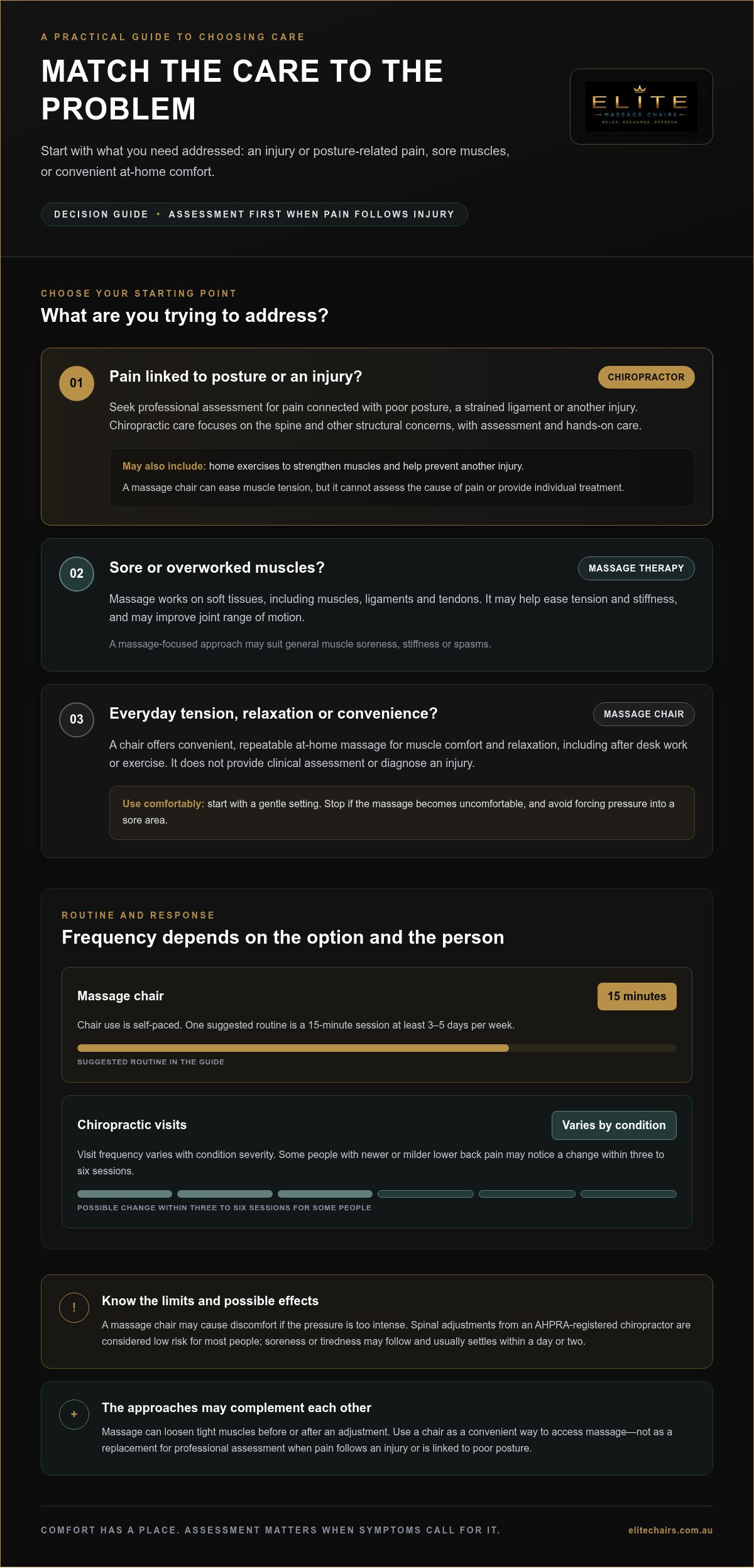
For pain linked to poor posture, a strained ligament or another injury, seek professional assessment rather than relying on massage alone. Chiropractic care focuses on the spine and other structural concerns, while massage therapy works on soft tissues, including muscles, ligaments and tendons. A massage chair may ease muscle tension, but it can’t assess the cause of pain or provide individual treatment.
| Option | Best suited to | What it offers |
|---|---|---|
| Chiropractor | Posture-related pain or injury | Assessment and hands-on care |
| Massage therapy | Sore or overworked muscles | Soft-tissue work to ease tension and stiffness |
| Massage chair | At-home comfort and relaxation | Convenient massage without clinical assessment |
Choose according to the problem you want addressed. A chiropractor may help with back pain, neck pain, sciatica and joint pain, and may recommend home exercises to strengthen muscles and help prevent another injury. For general muscle soreness, stiffness or spasms, massage therapy targets soft tissues and may help improve joint range of motion.
How often do people use massage chairs versus see a chiropractor? Chair use is self-paced; one suggested routine is a 15-minute session at least 3-5 days per week. Chiropractic visit frequency varies with condition severity, and some people with newer or milder lower back pain may notice a change within three to six sessions.
A massage chair may suit someone seeking regular, convenient relief for tight muscles after desk work or exercise, particularly when combined with fitness and wellness essentials from Motion Nest. It doesn’t replace an assessment when pain follows an injury or is linked to poor posture. For example, ongoing back pain with a suspected strain calls for assessment, while everyday shoulder tension may suit a massage-focused approach.
Massage chair use may cause discomfort if the pressure feels too intense. Start with a gentle setting and stop if the massage becomes uncomfortable. A chair isn’t a diagnostic tool or a way to treat an injury. For muscle spasms or overworked muscles, choose a comfortable level rather than forcing pressure into a sore area.
What are the risks and side effects of chiropractic adjustments? Spinal adjustments from an AHPRA-registered chiropractor are considered low risk for most people. Soreness or tiredness may follow an adjustment and usually settles within a day or two.
Can Medicare or private health insurance cover chiropractic care in Australia? Medicare usually doesn’t pay for standard chiropractic sessions on its own. Some people may be eligible for subsidised allied health care, and insurance coverage varies.
Massage and chiropractic care may complement each other: massage can loosen tight muscles before or after an adjustment. Choose professional assessment for posture-related pain or injury, and massage for muscle tension, relaxation or soreness.
Short- and longer-term relief
Relief depends on the method, the symptoms being addressed and how long comfort lasts. A massage chair offers repeatable at-home relaxation, while hands-on treatment involves a practitioner.
Short-term relief
A massage chair may provide temporary comfort by relaxing muscles and easing tension, though the duration varies. The evidence described for back pain supports massage as a general approach, including reduced pain and disability compared with usual care at around ten weeks. This finding doesn’t establish that a chair produces the same results as hands-on massage or chiropractic treatment.
Chiropractic care may bring immediate relief in some cases, but the effect after a visit can last from a few hours to a few days. Some people need several intense sessions before feeling relief. A practical difference is access: a chair is available at home, while chiropractic care involves scheduled professional treatment and individual assessment.
Longer-term relief
For longer-term outcomes, massage-related benefits for function can last up to a year. This measure concerns function, not a promise of continuous pain relief, and it shouldn’t be treated as proof that massage chairs deliver lasting results. A chair can make massage easier to repeat, but frequency alone doesn’t show whether the underlying cause of back pain has changed.
Chiropractic relief may be shorter after an individual visit, so longer-term care can involve multiple sessions. The pattern varies with the person’s condition and response. Soreness or tiredness after an adjustment usually settles within a day or two, which differs from the temporary comfort some people feel after massage.
What evidence supports massage chairs for back pain relief? Massage may ease muscle tension, promote relaxation and improve circulation. Reclining in a zero-gravity position distributes body weight more evenly and can relieve spinal pressure. These effects may support comfort, but they don’t show that a chair diagnoses or heals the cause of back pain.
To compare the options, track what changes after each session: pain, movement, sleep and how long relief lasts. For example, someone who feels relaxed after using a chair but still struggles to bend may need a different approach from someone mainly concerned with everyday muscle tension. A practitioner’s assessment can help address persistent symptoms, while a chair can provide convenient massage between appointments.
If at-home massage suits your routine, you can explore massage-chair options as a comfort-focused addition, rather than a substitute for care that assesses back pain.
At-home massage chairs
An at-home massage chair makes massage available without arranging an appointment or travelling to a clinic. It can suit someone who wants a convenient way to relax after sitting, standing or doing repetitive tasks. This gives the massage chair vs regular chiropractor visits comparison a practical starting point: home comfort and professional assessment serve different needs. A chair provides massage, but doesn’t assess why pain or tension has developed.
Massage can promote relaxation, improve circulation and relieve muscle tension. A chair may be useful when tightness builds during everyday routines, such as long periods at a desk or physical work. The experience differs from hands-on massage, which a practitioner can adapt to the areas and soft tissues assessed during a session.
Consider your intended use before adding a chair to your routine. If your aim is to unwind, a gentle session after work may feel more appropriate than strong pressure on a tender area. Pay attention to your comfort and stop if a setting causes pain or discomfort.
- For workday tension: use a chair as a relaxation break after prolonged sitting, rather than expecting it to correct posture.
- For muscle tightness: note which areas feel tense before and after use, so you can judge whether the massage feels helpful.
- For ongoing pain: treat chair use as comfort support, not as a substitute for professional assessment of the cause.
- For spinal pressure: a zero-gravity recline distributes body weight more evenly and can relieve pressure on the spine.
Massage techniques such as Swedish, shiatsu and deep-tissue massage are associated with improved blood flow, reduced inflammation and support for the body’s healing processes. These benefits relate to massage techniques generally; they don’t establish that every chair provides each technique or produces the same result. A chair is best understood as a way to access massage at home, with effects centred on comfort and relaxation.
For example, someone with shoulder tightness after computer work might use a chair to relax at the end of the day. If pain persists, affects movement or follows an injury, massage alone won’t identify the underlying issue. Keep a simple record of your activity, the area of tension and how you feel afterwards. This can help distinguish occasional muscle tightness from a problem that needs assessment.
A useful way to frame massage chair vs regular chiropractor visits is to identify the role you want at-home massage to play. A chair offers convenient comfort for everyday tension, not a diagnosis or complete treatment plan. For posture-related pain, injury or symptoms that limit normal movement, professional assessment remains a separate consideration.
Spinal pressure and decompression
Zero-gravity reclining and chiropractic adjustments affect the body in different ways. In a zero-gravity position, body weight is distributed more evenly, which can relieve pressure on the spine. This changes how the body is supported while reclining. It doesn’t mean the chair diagnoses a spinal problem or performs the same treatment as a chiropractor.
Imagine someone feeling pressure across their lower back after sitting at a desk. Reclining may help them feel more comfortable by changing how their weight rests against the chair. Massage may also ease surrounding muscle tension. These comfort effects differ from addressing a suspected structural issue, which calls for professional assessment rather than relying on a chair’s position alone.
Chiropractic care focuses on structural concerns, particularly the spine, and may involve hands-on adjustment. This differs from a chair’s support and massage: the chair offers a repeatable relaxation experience, while a chiropractor assesses symptoms and provides individual care. If pain follows an injury or affects normal movement, don’t treat a more comfortable reclining position as proof that the underlying cause has been corrected.
The word “decompression” can suggest that a chair actively treats spinal structures. A zero-gravity position doesn’t, by itself, establish that kind of clinical effect. Its stated benefit is more modest: distributing body weight more evenly and potentially relieving pressure while reclining. Feeling less pressure in that position describes comfort in the chair, not a measured change to the spine.
Use the distinction to guide your next step:
- For pressure while resting: notice whether reclining changes your comfort compared with sitting upright.
- For muscle tightness: consider whether massage eases tension around the back without aggravating discomfort.
- For posture-related pain: seek assessment instead of assuming a chair’s position corrects posture or spinal alignment.
- For injury-related symptoms: treat a chair as comfort support, not as a replacement for care that assesses the injury.
Keep the comparison practical. If someone relaxes in a zero-gravity position after a long drive, resting may feel more comfortable. If that person has persistent back pain or suspects a strained ligament, comfort alone doesn’t explain the cause. A chiropractor can assess the concern and consider appropriate care; a massage chair can’t provide that assessment.
Think of zero-gravity reclining as a way to alter support and potentially ease spinal pressure while resting. It isn’t interchangeable with chiropractic care or clinical decompression treatment. The deciding factor is the purpose: choose reclining for comfort, and professional assessment when symptoms suggest a posture problem, injury or another structural concern.
What is the average cost of a chiropractic consultation in Australia?
Chiropractic consultation costs in Australia vary, so one figure won’t describe every appointment. The cost depends on the consultation and care involved. An initial assessment and follow-up may involve different services, so consider the expected care pathway, not just one visit. No dollar estimate is included here because a verified national average isn’t provided.
For a useful budget, separate the consultation fee from any amount you may get back through cover. Consider the likely sequence: an assessment appointment, any recommended follow-up and the total out-of-pocket amount after applicable rebates. For example, someone planning ongoing care needs to consider more than the initial visit. Appointment frequency varies with the severity of the condition.
Medicare usually doesn’t pay for standard chiropractic sessions on its own. Some Australians can access a small number of subsidised allied health visits through a GP Chronic Disease Management plan. This isn’t a general Medicare payment for standard chiropractic care, so don’t assume it will cover every appointment. The plan is relevant when considering eligible allied health support.
Private health insurance may cover some chiropractic treatment, but cover varies by plan and provider. Your out-of-pocket cost depends on both the appointment charge and the benefits available under your policy. For instance, two people receiving similar care may pay different amounts because their policies differ. Consider the annual limits and remaining benefits under your own cover.
Use these steps to estimate the likely expense without relying on a broad average:
- Identify whether you’re considering an initial consultation, follow-up care or a course of treatment.
- Work out how often visits may occur, because frequency can change the total spend.
- Account for any applicable private health insurance benefit and the policy’s remaining limit.
- Consider whether a GP Chronic Disease Management plan may provide access to subsidised allied health visits.
For example, someone with a short-term concern should distinguish the first appointment from any later visits. Someone managing ongoing symptoms should consider the total number of recommended appointments, not just the initial charge. These are different budgeting situations, even before insurance or subsidy arrangements are considered.
Compare care by its purpose as well as its cost. A chiropractic consultation involves professional assessment and treatment; an at-home massage chair offers a different kind of comfort and isn’t a substitute for clinical assessment. If you’re weighing a one-off appointment against ongoing care, account for visit frequency, the treatment plan and any applicable cover before deciding what fits your budget.
Elite Massage Chairs: Zero Gravity Massage Chairs
Elite Massage Chairs offers Zero Gravity Massage Chairs for people seeking convenient, at-home massage and relaxation. Reclining in a zero-gravity position distributes body weight more evenly and can relieve pressure on the spine, making it a comfort-focused option, not a substitute for chiropractic assessment or injury care.
Massage Accessories can complement a home wellness routine, while a Massage Chair Showroom Demo lets you experience a chair before choosing. Consider what you want from regular use: a relaxing pause, support for easing everyday muscle tension, or an addition to professional care. For posture-related pain or injury, a chair doesn’t diagnose the cause or replace a chiropractor’s assessment.
To explore whether a zero-gravity chair suits your routine, contact Elite Massage Chairs.
Choose a next step that fits your wellbeing
Make your next move based on what you want to change, not simply which option seems easier. If discomfort affects daily movement or follows an injury, prioritise professional assessment. If your focus is a more relaxing routine at home, consider whether a massage chair belongs in your wellness space. These approaches have different roles, and your choice can reflect the support you need now.
For the massage chair vs regular chiropractor visits decision, identify your main goal: clinical assessment, hands-on care or convenient massage for relaxation. A clear goal makes it easier to choose an approach that fits your routine. If you’re considering an at-home option, experiencing a chair can help you decide whether its feel and support suit you.
Take the next step at your own pace. Explore Elite Massage Chairs and find a comfortable direction for your wellbeing journey.
Frequently Asked Questions
Which is the option for me?
Choose based on whether you need an assessment or a convenient way to relax tense muscles. For example, if discomfort began after lifting and is changing how you move, a consultation can assess the problem and guide care. If you want massage as part of winding down after desk work, a chair may suit that routine. Your main goal, symptom pattern and day-to-day impact are useful decision points.
Who should I see if I’m experiencing lower, upper or neck pain?
For lower back or neck pain linked to posture, injury or symptoms such as sciatica, consult a chiropractor for assessment. A GP can help determine whether massage or chiropractic care is suitable, particularly when the cause of pain is unclear. Upper back discomfort can have different possible contributors, so describe where it hurts, what activities affect it and whether movement has changed during your appointment.
What does a massage chair do compared with a chiropractor visit?
A massage chair provides at-home massage for comfort and relaxation; a chiropractor assesses your symptoms and provides professional care. For instance, a chair can offer a relaxing massage after a day at a desk, but it can’t discuss how your posture, work tasks or injury may relate to pain. A chiropractor can also suggest home exercises tailored to your needs, which a chair can’t provide.
How do I choose between a massage chair and chiropractic care for back pain?
Start by asking what you need addressed: the cause of your back pain, or muscle tension and relaxation. If pain is connected with an injury, posture or changes in movement, choose professional assessment. If your aim is to unwind after everyday activities, a chair can provide massage at home. You can also use both for distinct purposes, keeping comfort separate from clinical assessment and care.


