
A wooden foot roller isn’t the same as reflexology: it applies pressure to the soles, while reflexology is based on the belief that specific areas of the feet correspond with parts of the body. That distinction is the starting point for understanding reflexology foot rollers. Rolling may feel soothing, but any relief may be temporary.
It’s easy to see why the two are linked: both involve applying pressure to the feet, and a roller can offer a simple moment of comfort at home. But using one doesn’t automatically mean you’re practising reflexology or treating the cause of ongoing foot pain.
This guide explains how wooden rollers differ from reflexology, what research suggests about possible benefits, and where the evidence has limits. You’ll also learn when foot rolling may support comfort as part of a broader approach, and when persistent symptoms deserve more attention.
Key Takeaways
- A wooden foot roller applies pressure to the soles; reflexology uses pressure points linked, in its traditional framework, to other parts of the body.
- Research suggests foot massage may support comfort and wellbeing, but evidence does not establish that reflexology works better than an ordinary foot massage.
- Reflexology’s traditional Chinese medicine roots include the idea of balancing qi, or vital energy; this is a traditional belief, not proof of a medical effect.
- Foot rolling may ease discomfort temporarily, but persistent pain can have underlying causes that a roller won’t address.
Is a wooden foot roller the same as reflexology?
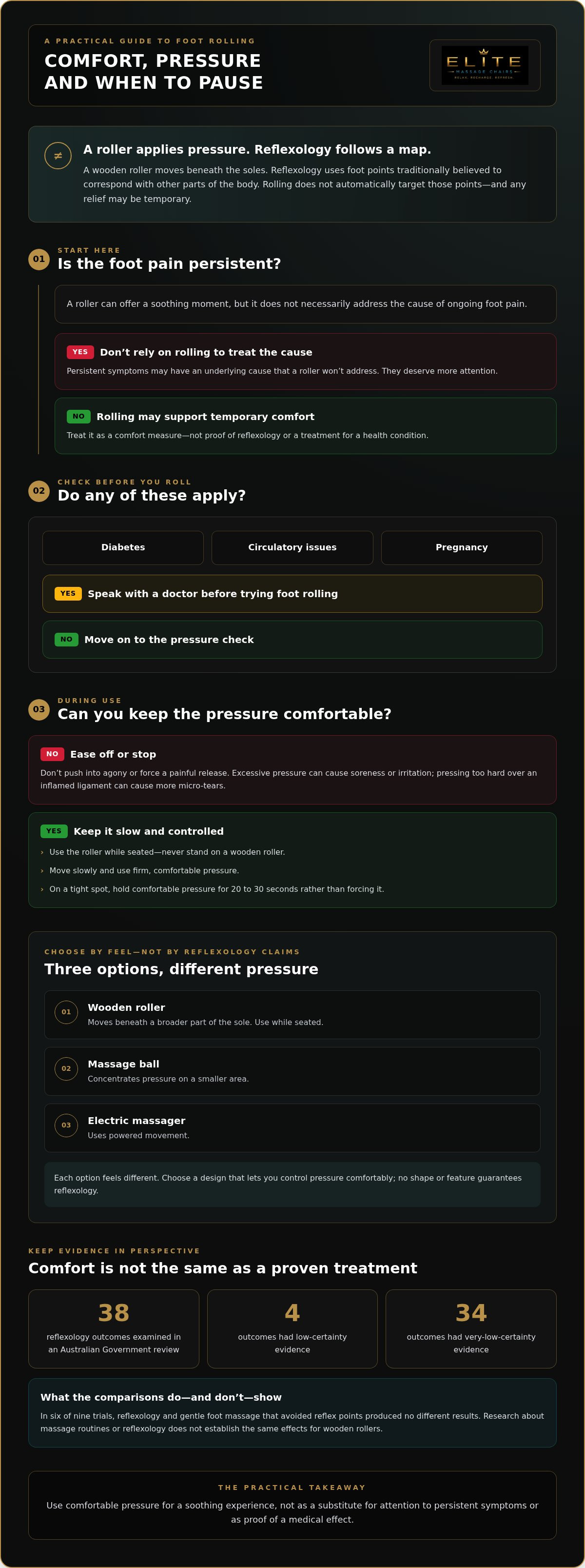
No. A wooden foot roller applies pressure as you move your feet over it; reflexology uses mapped foot points within a traditional framework. The distinction matters because using a roller doesn’t automatically target reflexology points.
Foot pressure points in reflexology
Reflexology uses pressure points on the feet that are believed to correspond with organs and other body parts. Some reflexologists use foot charts to guide where they apply pressure, while others may also work on points on the hands and ears. William Fitzgerald’s zone therapy divided the body into ten vertical zones in the 1910s. Eunice Ingham’s 1938 book, Stories the Feet Can Tell, is described as the basis of most reflexology charts. These maps explain the method, but a roller moving across the sole doesn’t necessarily follow them.
Pressure, pain and comfort during rolling
Comfortable foot rolling means using firm pressure without pushing into agony. Move slowly, and hold comfortable pressure on a tight spot for 20 to 30 seconds rather than forcing a painful release. A wooden foot roller should be used while seated, not stood on. Pressing too hard over an inflamed ligament can cause more micro-tears, while an overly intense foot massage may leave soreness or irritation.
A foot massage ball concentrates pressure on a smaller area, while a wooden roller moves beneath a broader part of the sole. Electric massagers use powered movement. Each option feels different, so choose based on the pressure and comfort you prefer.
Common options include wooden rollers, massage balls and electric massagers. Look for a design that lets you control pressure comfortably and use it while seated. Don’t assume a particular shape or feature will deliver reflexology.
Risks include soreness or irritation from excessive pressure. Don’t stand on a wooden roller. People with diabetes or circulatory issues, and those who are pregnant, should speak with a doctor before trying foot rolling.
Rolling applies pressure, stretches the plantar fascia and increases blood flow to the area. A Korean study found that systolic blood pressure and blood triglycerides decreased after relaxing foot massage, but this doesn’t establish the same effect from using a roller.
Research evidence and claimed health benefits
Research findings vary by treatment, outcome and study quality. The Australian Government’s 2025 review examined 38 reflexology outcomes. It found low-certainty evidence for 4 outcomes and very-low-certainty evidence for 34. These ratings call for careful interpretation; they don’t predict how each person will respond. Having reflexology foot rollers explained alongside the evidence helps separate possible comfort from proven treatment effects.
Some studies report benefits for mood and anxiety. Some research has explored foot massage for healthcare staff caring for older adults with dementia. The staff experienced improved mood, less anxiety and lower blood pressure. These findings relate to a particular group and massage routine, not wooden rollers generally.
Other research compares reflexology with ordinary foot massage. A study of menopausal women found both approaches effective in lowering feelings of anxiety and depression. In six of nine trials, reflexology and gentle foot massage that avoided reflex points produced no different results. That comparison doesn’t show that reflexology has a unique effect.
Claims also include benefits for sinus issues, digestion, arthritis pain, hormonal imbalances and infections. Reflexologists believe their therapy may help with these concerns, but belief alone doesn’t establish a medical benefit. A study involving women with advanced breast cancer found improvement in some symptoms, including shortness of breath, but not nausea or pain. Those results don’t establish broad treatment effects.
Sleep is another possible benefit: foot massage may help with sleep, mood, stress and energy. A relaxing session may ease discomfort, but research hasn’t established a reliable sleep outcome for foot rollers. A pilot trial found that rolling each sole for two minutes improved a sit-and-reach test immediately afterwards. That short-term flexibility result doesn’t demonstrate lasting change or medical treatment. Understanding reflexology foot rollers in practical terms means distinguishing a soothing experience from a proven health outcome. Claims about managing diabetes or lowering blood pressure shouldn’t be taken as proof that a roller can replace healthcare.
Reflexology’s traditional Chinese medicine roots
Traditional Chinese medicine offers one framework for understanding reflexology: the practice is thought to help balance qi, or vital energy. In this view, pressure on the feet is part of a broader approach to wellbeing, rather than simply a way to ease local foot discomfort. Qi is a traditional concept, not a measurement made by a wooden roller. Recognising the difference helps separate the cultural explanation from the physical sensation of rolling.
The idea of balance also shapes how reflexology is described. Rather than treating the sole as an isolated area, the practice connects pressure on the feet with the body’s wider state. Practitioners may interpret a gentle, relaxing session through the concept of qi, while a wooden roller has a direct mechanical action: it presses against the foot as it moves. These descriptions refer to different things, even though both involve pressure.
That difference matters when considering medical claims. A traditional belief can explain why people use a practice, but it doesn’t establish a medical effect by itself. Feeling relaxed after rolling is a personal response; it isn’t proof that qi has been balanced or that a health condition has changed. Keeping these ideas distinct helps describe the experience without treating a traditional explanation as a diagnosis.
The useful takeaway is to recognise both contexts. Reflexology draws on the traditional Chinese medicine concept of qi, while rolling is a form of physical foot massage. A wooden roller can provide pressure and a relaxing pause, but the sensation and weight placed through the foot don’t demonstrate an effect on vital energy. This distinction allows tradition to be discussed respectfully while keeping evidence and medical decisions separate.
Temporary symptom relief versus treating the cause
A wooden foot roller may ease foot discomfort for a while, but it doesn’t cure chronic foot conditions. Rolling presses and stretches tissues around the plantar fascia, which may feel relieving after time on your feet. That sensation is symptom management, not proof that the source of pain has changed. Notice whether the comfort lasts beyond the session or the pain returns during the same activity.
Ongoing symptoms can have mechanical causes. Poor gait mechanics, flat arches and unsupportive shoes can continue to load the feet, so rolling alone won’t correct the pattern. If standing or walking brings the same pain back, for example, the trigger may remain even after a soothing session. A roller can support comfort, but it can’t replace changes that address how the foot is being stressed.
For chronic foot conditions, a broader approach may be useful: combine foot rolling with calf stretches, strengthening exercises and good-quality shoes. Each addresses a different part of the load on the foot. A frozen water bottle or gel-filled roller combines tissue stretching with cold therapy, which can reduce swelling. Cold rolling offers a different kind of short-term relief, but it still doesn’t identify why swelling or pain began.
Track what happens after each session: where the pain is, what activity brings it on, and whether it settles or returns. Foot pain that continues for several weeks despite roller use can point to a deeper problem. If pain lasts more than two weeks, see a doctor. Persistent symptoms need attention beyond repeated rolling. A roller is best viewed as one comfort measure, not a treatment for every cause of foot pain or a way to restore circulation on its own.
Elite Massage Chairs: Zero Gravity Massage Chairs
Elite Massage Chairs offers Zero Gravity Massage Chairs for people seeking a relaxing massage experience beyond foot rolling. A wooden roller focuses pressure beneath the feet; a massage chair offers a different way to unwind across the body. Neither should be treated as a cure for persistent foot pain or a substitute for medical care.
If you’re considering a chair, a Massage Chair Showroom Demo lets you experience the chairs in person before deciding. Massage Accessories offer another way to create a comfortable routine at home. Choose based on the kind of relaxation you want, rather than expecting a chair to address the underlying cause of foot symptoms.
For a closer look at the options, visit elitechairs.com.au.
Make your next wellbeing choice with intention
A thoughtful next step is to shape your wellbeing routine around the kind of pause you want, rather than chasing a promised result. Decide whether you’re looking for a quiet moment at home, a more immersive relaxation experience, or simply a clearer sense of what feels comfortable. That intention turns information into a practical choice, without expecting one tool to do every job.
Understanding reflexology foot rollers in context can make the choice clearer: focus on the experience you want and keep expectations grounded in comfort, not cure. Let your next decision be guided by what fits naturally into your day and supports a considered approach to wellbeing. Relaxation can have a place in a broader routine without becoming its only foundation.
If you’d like to explore another at-home relaxation option, contact Elite Massage Chairs and share what kind of experience you’re looking for. Take the next step at a pace that feels right, and make room for more time to unwind.
Frequently Asked Questions
What is reflexology?
Reflexology is a complementary practice in which pressure is applied to areas of the feet, hands or ears, based on the belief that these areas correspond with other body parts. During an appointment, a reflexologist may ask about your health, lifestyle and eating habits before deciding where to work. That conversation helps shape the session, but it doesn’t make reflexology a medical diagnosis.
How can you enjoy a simple foot massage at home?
For a straightforward home massage, sit comfortably and slowly roll the soles for 3 to 5 minutes, using pressure that feels comfortable. You can also use your hands to massage the arch and heel gently. Treat tenderness as a cue to ease off, not push harder. If you have diabetes or circulation concerns, speak with a doctor before trying foot massage.
Does reflexology work on organs through the feet?
Reflexology proposes that pressure on particular areas of the foot relates to organs, but that connection isn’t established as a way to treat or change organ function. Feeling relaxed after foot pressure is a genuine experience, but it doesn’t show that an internal organ has been affected. Use reflexology for comfort, not as a replacement for medical assessment or care.
How does it work?
In reflexology’s traditional model, a practitioner selects foot areas believed to correspond with other parts of the body and applies pressure. A roller, by contrast, creates direct physical pressure where it meets the sole. Relaxation or a changed sensation may follow a massage, but those effects don’t demonstrate that a specific organ or body system has been influenced through the foot.
How much pressure should you use?
Use pressure that feels firm but comfortable, never painful or agonising. If a spot feels sharply tender, reduce the pressure or stop rather than trying to force a release. People with diabetes may have reduced foot sensation, making it harder to judge pressure, so speak with a doctor before using a roller. Circulatory concerns also call for medical advice first.
Test 1: do the foot maps hold up?
As a reliable way to identify medical conditions, the foot maps did not hold up in a blinded test. Two reflexologists examined the feet of 18 adults, but their findings didn’t reliably identify participants’ known conditions. This result challenges using a foot map as a diagnostic tool. It doesn’t prevent practitioners from using maps to guide a reflexology session.


